
- Noncoding Jobs That Work With AI: Career Fit Explained
- Why 'AI exposure' isn't a verdict on your job
- How to evaluate noncoding jobs that work with AI
- What transfers: verification work and domain roles
- Checking upskilling promises before paying for training
- What to check before pursuing a noncoding job that works with AI
Noncoding Jobs That Work With AI: Career Fit Explained
More than 30% of U.S. workers could see at least half of their occupation's tasks disrupted by generative AI, according to Brookings research published in 2024. But a separate barrier analysis estimates that only about 6% of U.S. wage-and-salary jobs, roughly 9.2 million positions, currently meet the full conditions for near-term displacement risk, SHRM reported last year.
The gap between those two figures matters for anyone weighing noncoding jobs that work with AI as a career direction. Career changers, administrative and education staff, health care workers, and students deciding how much to invest in AI training are all trying to figure out where their own role falls inside that gap.
The two studies aren't measuring the same thing. Brookings estimated how many tasks generative AI could technically perform within an occupation. SHRM asked a narrower question: whether those technically automatable tasks also clear practical hurdles, among them a client's preference for dealing with a person, before SHRM's model counts the underlying job as facing near-term displacement risk.
SHRM's own report flags that these conditions "can change quickly." A CEPR labor-market simulation published last year backs that up: as AI capability advances, the core skills inside lower-wage jobs become more exposed, not just the routine side tasks automated so far. Neither study treats current exposure levels as fixed, which is a reason to recheck a role's exposure periodically rather than accept a one-time verdict.
Why 'AI exposure' isn't a verdict on your job
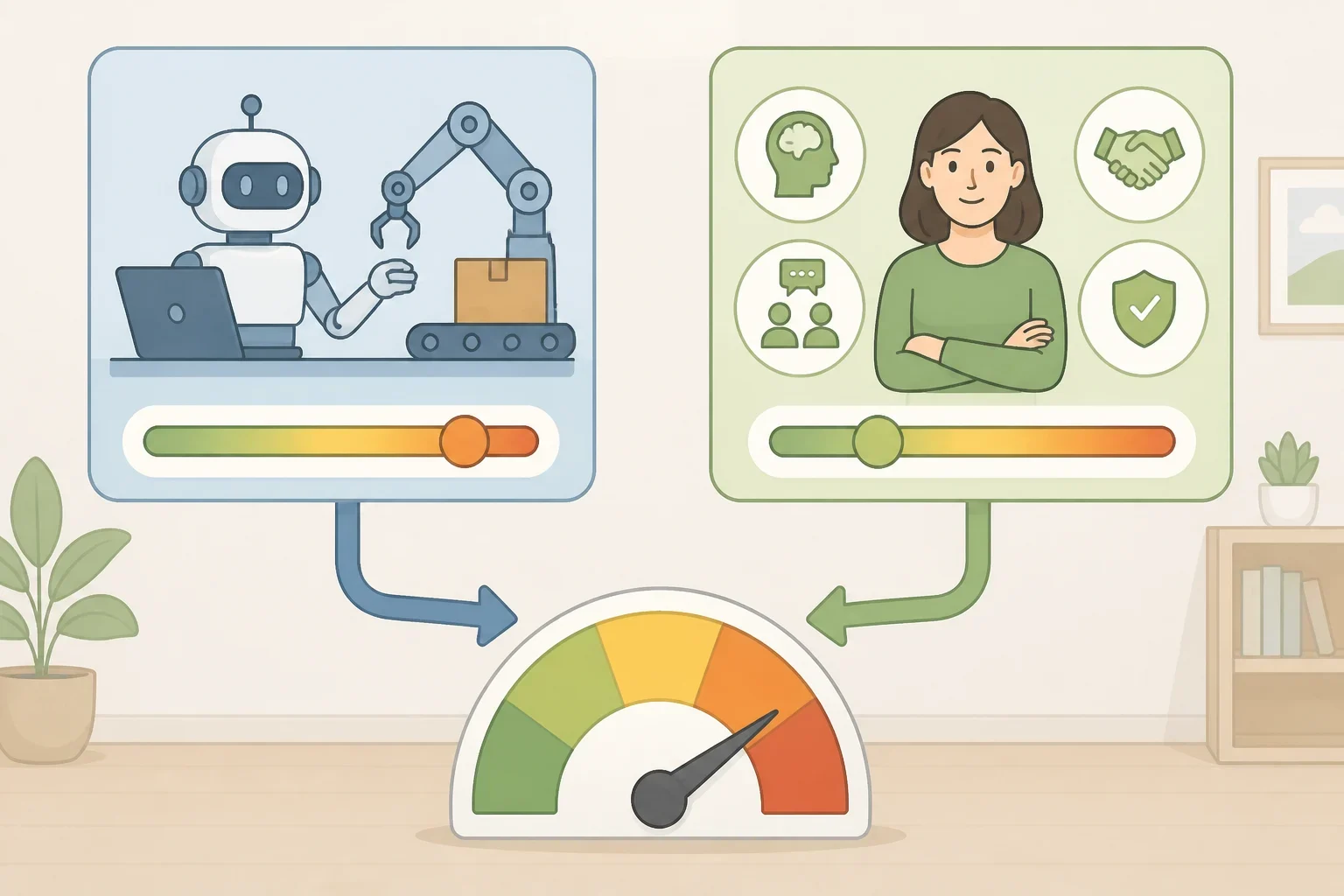
SHRM's displacement model has two parts. A task has to be technically automatable, and it has to clear nontechnical barriers, before SHRM counts the underlying job as facing high near-term displacement risk, according to SHRM.
More than 60% of U.S. jobs carry at least one such barrier, and a client's preference for interacting with a real person rather than a machine is the barrier SHRM cites most often, per SHRM's analysis. Education and health care occupations fall below a 5% share meeting both displacement conditions, compared with nearly 13% in computer and mathematical roles, the same analysis found.
CEPR's simulation of 711 occupations describes a related but distinct pattern. At current, lower AI capability levels, the technology mostly complements workers because the "side skills" it can handle are simpler than a job's core skills, the CEPR paper found. The researchers illustrate this with bookkeeping: AI capable of handling a doctor's bookkeeping frees time for patient exams, while the same capability raises risk for bookkeeping-only roles.
As AI capability rises, CEPR's simulation shows core skills in lower-wage occupations becoming exposed too, not just the side tasks automated first. Brookings adds a separate caveat: it remains unclear how measured task exposure will actually translate into real-world job losses or gains, Brookings noted. Low exposure today is a measurement of current conditions, not a guarantee against future change.
How to evaluate noncoding jobs that work with AI
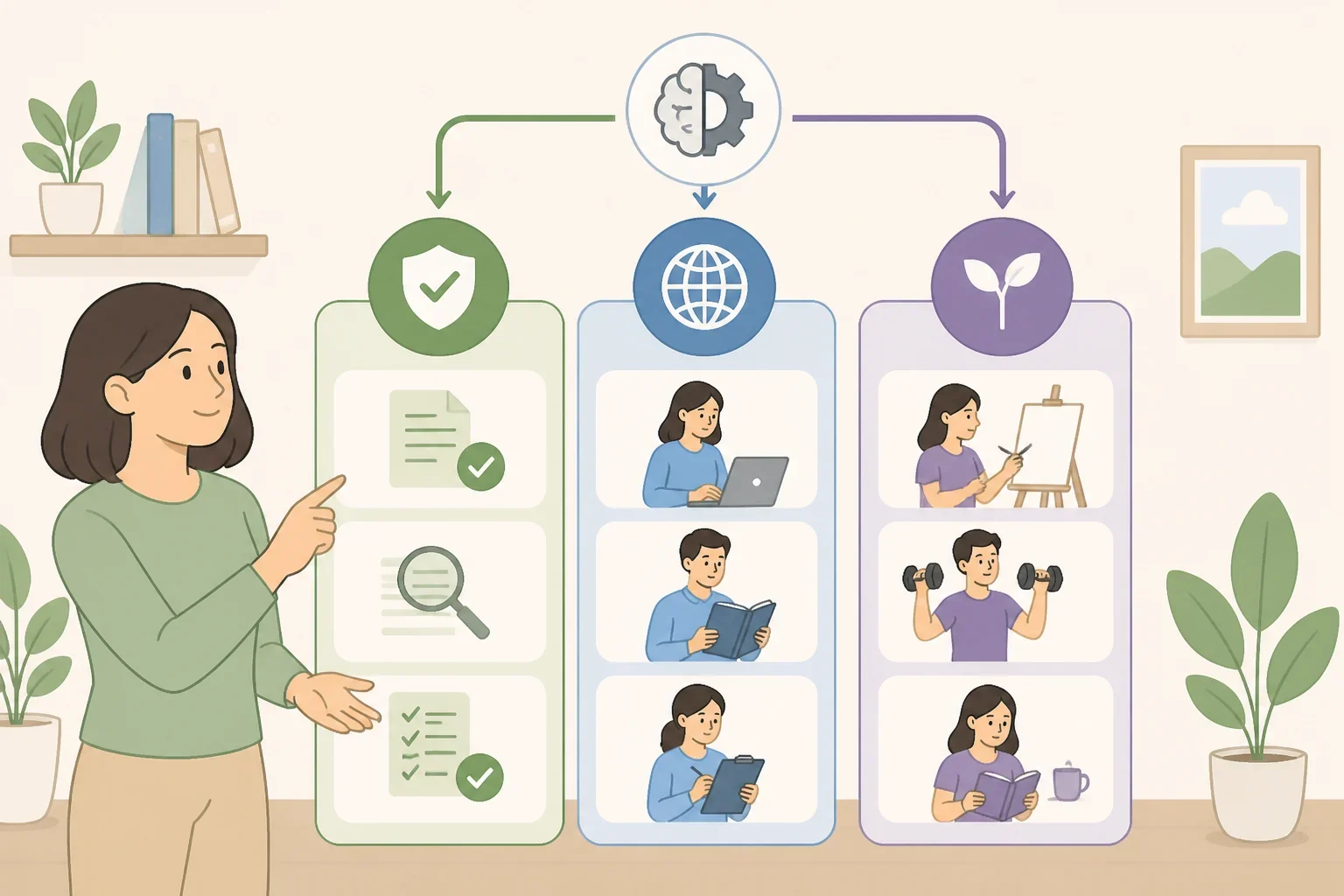
Rather than chasing a list of "AI job titles" that current research doesn't validate, the studies reviewed here point toward three broad categories of noncoding work.
The first covers tasks inside an existing job that involve reviewing or verifying AI-generated output, such as a claims processor checking an AI-drafted summary or an editor fact-checking AI-assisted copy. The second covers existing domain jobs, teaching, clinical work, coordination, where AI is one tool among several rather than the center of the job, such as a teacher or nurse using AI to draft routine paperwork while the instructional or clinical work stays human-led. The third covers roles projected to grow mainly for reasons unrelated to AI: the World Economic Forum projects frontline roles such as delivery drivers to see some of the largest job growth in absolute terms through 2030, while significant growth is also projected for care roles like nursing professionals and education roles like secondary school teachers, driven substantially by demographic trends in those specific sectors.
Sorting a current job into one of these categories starts with an honest look at which tasks are routine and document-based versus judgment- or relationship-based. That distinction, more than any job title, is what determines whether the realistic move is adapting in place or planning a transition.
What transfers: verification work and domain roles
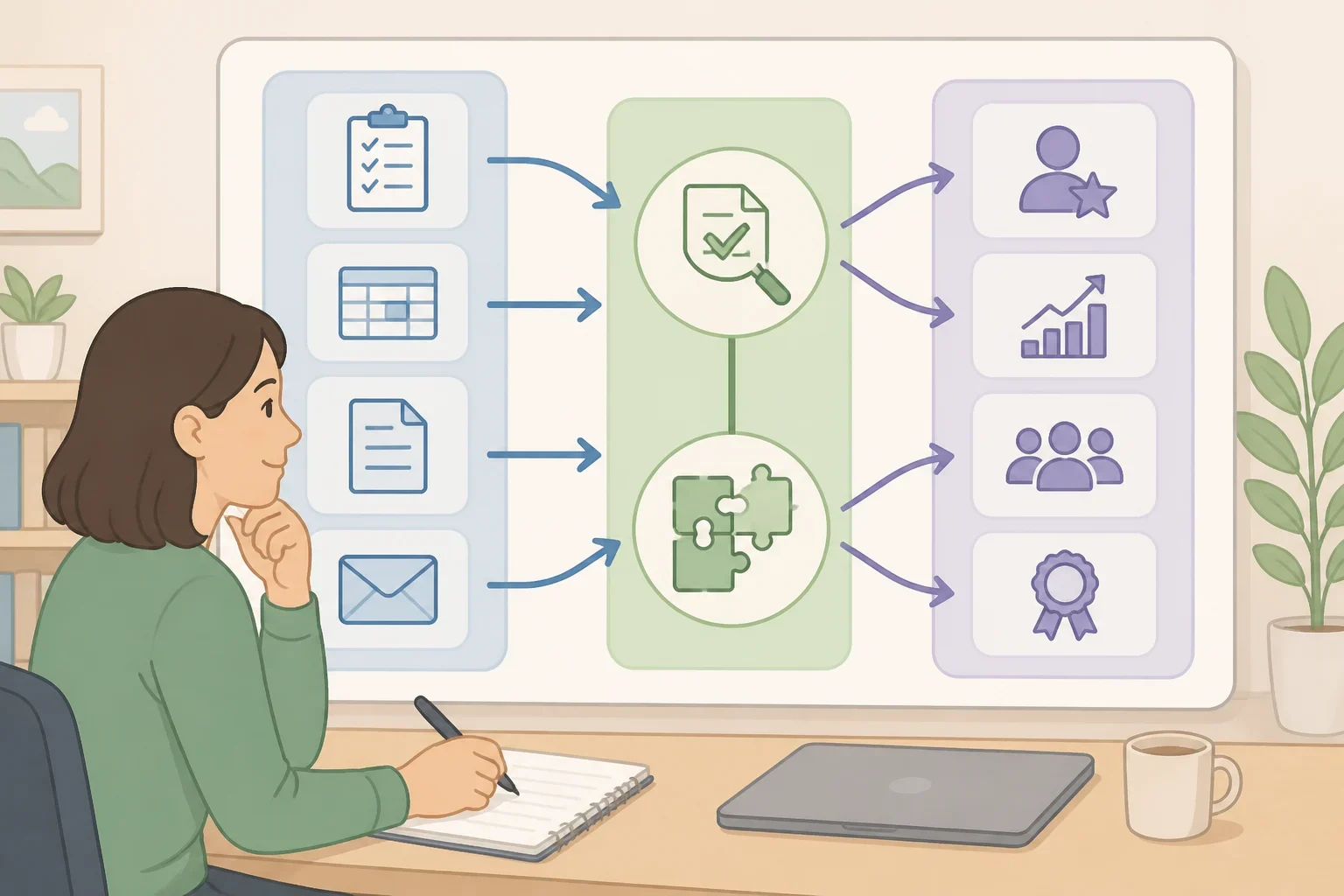
The first pathway from the framework above, reviewing or verifying AI-generated output, doesn't come with a validated job title or research consensus behind it. It does map onto skills many workers already use daily. Anyone who currently edits, fact-checks, coordinates, or signs off on someone else's work, editors, analysts, coordinators, claims processors, is already practicing a version of this task, since checking and integrating outside input sits at the center of what those jobs require.
A separate WEF employer survey reports that technology skills in AI, big data, and cybersecurity are expected to see the fastest growth in demand, while human skills, including analytical thinking, resilience, leadership, and collaboration, are expected to remain critical core skills. That's a different kind of evidence, employer expectations rather than worker self-reports, but it points toward the same conclusion: judgment and cross-checking skills aren't disappearing even as AI handles more first-draft work.
A second pathway covers domain roles rather than review tasks. Brookings finds elementary school teachers and registered nurses could see substantial time savings on roughly one-third of their tasks, per Brookings. SHRM's barrier analysis separately shows education and health care occupations sit among the lowest shares meeting both displacement conditions, below 5%.
Current teaching, clinical support, case-management, or coordination experience transfers fairly directly into this pathway, since these are the fields where SHRM's model currently finds the lowest displacement shares. That reflects today's conditions, not a permanent floor against future change.
Neither pathway comes with a validated degree requirement or certification path in the research reviewed here. A term like "AI quality reviewer" describes a cluster of tasks, not an established job category, and should be checked against current employer postings before anyone treats it as a target title.
Checking upskilling promises before paying for training
Employer intentions on training cut both ways. Seventy-seven percent of employers surveyed plan to upskill existing workers, but 41% also plan some workforce reductions as tasks automate, and 63% cite the skills gap as the top barrier to business transformation, WEF reported last year. Those are stated plans, not guarantees of a specific role or promotion for any individual worker.
WEF's own modeling estimates that of every 100 workers globally, 59 will need reskilling or upskilling by 2030, and 11 of those aren't expected to receive it, a gap that translates to more than 120 million workers at medium-term risk of redundancy, per WEF's Future of Jobs Report 2025. That's a reason to build evidence of AI-collaboration skills independently rather than counting on employer-provided training to reach everyone who needs it.
WEF's Future of Jobs Data Explorer offers one way to check a specific occupation against these trends before enrolling in paid training. Users can select a trend, such as "AI and information processing technologies," and see how it's projected to affect demand for a given job or skill by 2030, per WEF.
What to check before pursuing a noncoding job that works with AI
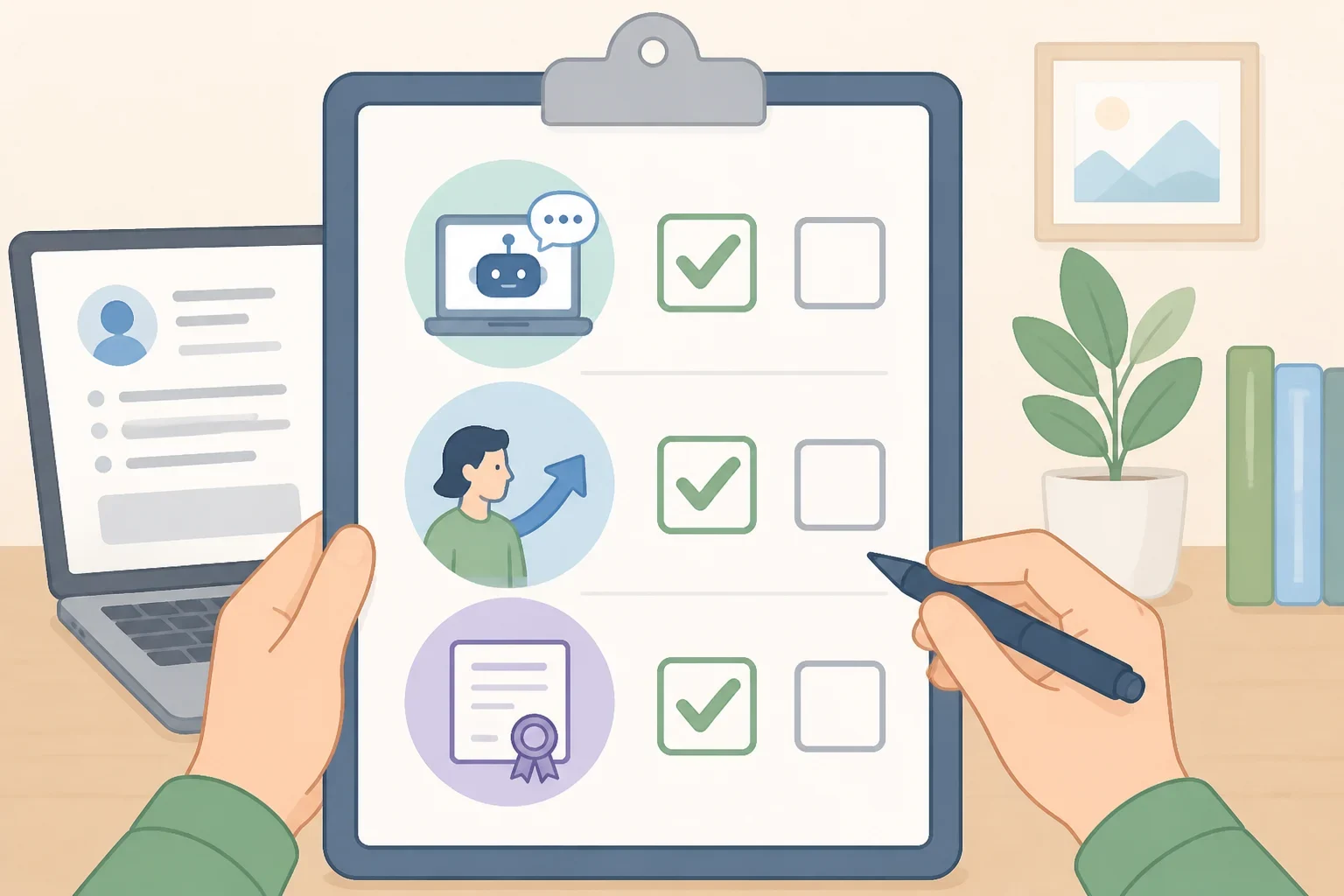
Three checks turn this research into something a job seeker can actually act on.
- Compare task exposure with real job postings. Pull two or three current listings in a target field and look for language about AI-tool use, verification duties, or oversight responsibilities. If that language isn't showing up yet, that's useful information too, and a reason to keep watching the same roles over the next few months.
- Identify which experience already transfers. Editing, fact-checking, coordinating, or approving others' work maps onto the verification pathway. Teaching, clinical support, or case management maps onto the domain-role pathway. Neither starts from zero.
- Verify whether a credential is actually requested. Before paying for a course marketed as "AI training," check whether a target employer's postings, or WEF's Data Explorer, show demand for that specific skill rather than assuming a certificate is required.
One more step matters more than any of those: documenting a concrete example, from a current job, a volunteer project, or a class assignment, where an AI tool's output was checked, corrected, or judged by a person. That's evidence a resume or interview answer can point to, and it doesn't depend on a training program or a hiring trend holding steady.
