
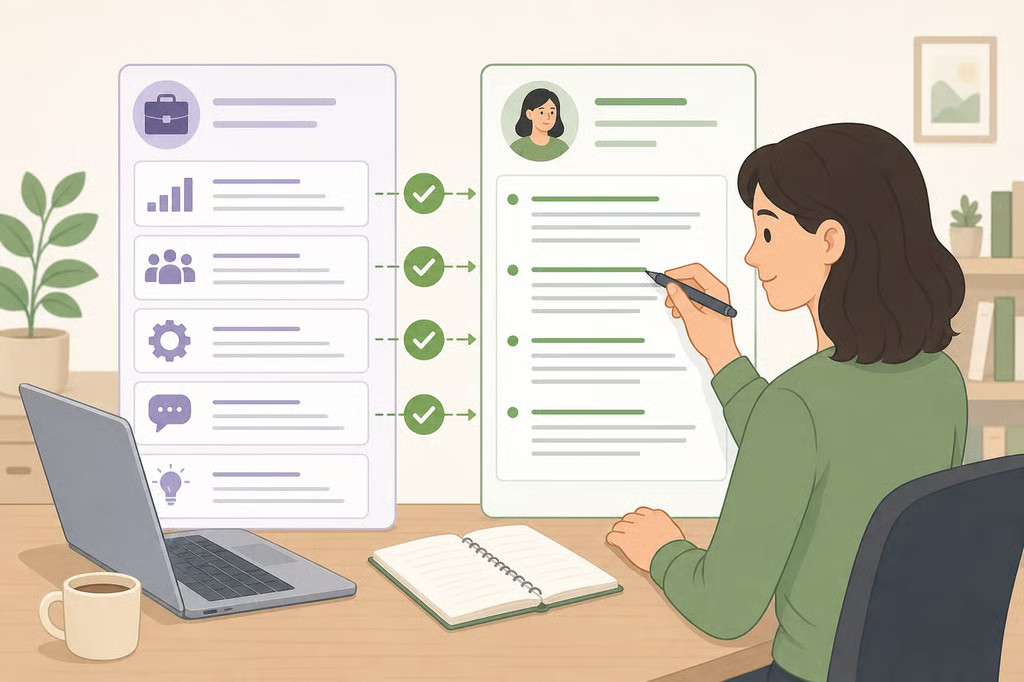
- How to use AI to tailor your resume without inventing
- Can recruiters tell if a resume was written by AI?
- What AI can do well, and what it cannot safely do
- Start with a fact sheet
- How to tailor a resume without copying keywords
- Replace vague duties with evidence
- Translating specialized experience for a new industry
- Protect information before using an AI tool
- A practical AI resume workflow
- Before submitting, run the defensibility test
How to use AI to tailor your resume without inventing
AI can help reorganize resume information, identify missing context, and suggest clearer wording. It can also produce polished claims that are inaccurate, exaggerated, or too vague to support in an interview.
That is the practical risk for students, career changers, experienced professionals, and applicants moving from specialized fields into a new industry. This article offers a process for using AI without inventing or overstating experience: start with verified facts, protect sensitive information, tailor the resume to one real job posting, and test every important bullet against what the applicant can explain.
The question is not simply whether AI was used. The more useful question is whether the final resume is specific, relevant, accurate, and defensible.
Can recruiters tell if a resume was written by AI?

The available source material points to concerns about generic language and unsupported claims, but it does not establish a reliable method for identifying AI use.
A SHRM source is cited for recruiter preferences around specificity and evidence of experience. A LinkedIn source is described as a workforce survey involving similar phrasing and resume structure. Without the exact reports, publication details, survey samples, response rates, or questions, those observations should be treated as reported perceptions rather than verified screening data.
The same limitation applies to a ResumeGenius survey about hiring professionals’ confidence in recognizing AI-assisted resumes. Confidence is not the same as accuracy. A recruiter may notice repetitive wording or a generic style without knowing how the resume was created.
An Indeed Hiring Lab source is also cited in connection with formulaic resumes, job-specific language, applicant tracking systems, and callbacks. The available material does not support a definitive claim that AI-written resumes are screened out earlier, that keyword matching causes callbacks, or that formulaic language has one consistent effect across employers.
That distinction should shape the applicant’s strategy. There is no need to hide ordinary editing assistance, and no evidence here that AI use itself causes rejection. There is a clear reason, however, to remove vague language, unsupported achievements, and claims that do not match the applicant’s experience.
What AI can do well, and what it cannot safely do
AI is most useful when the applicant supplies the facts and controls the boundaries of the task.
AI may help with The applicant must still handle Reorganizing supplied information for a target role Confirming job titles, dates, duties, and results Suggesting clearer verbs and sentence structures Deciding whether the wording accurately reflects the work Identifying vague bullets or missing context Finding the actual scope, numbers, or examples Comparing a draft with a job posting Determining whether a skill is genuinely transferable Offering several versions of a bullet Choosing language the applicant can explain naturally Flagging repeated terms or unclear sections Protecting confidential, personal, proprietary, or restricted information
AI cannot verify employment history. It cannot determine whether a metric is accurate unless the applicant supplies and checks that information. It cannot safely interpret confidential material merely because it produces a confident-sounding summary. It also cannot establish that a skill transfers directly from one industry, employer, or job title to another.
Those limits are not a reason to avoid every tool. They are a reason to use one as an editor and organizer, not as a source of facts.
Start with a fact sheet
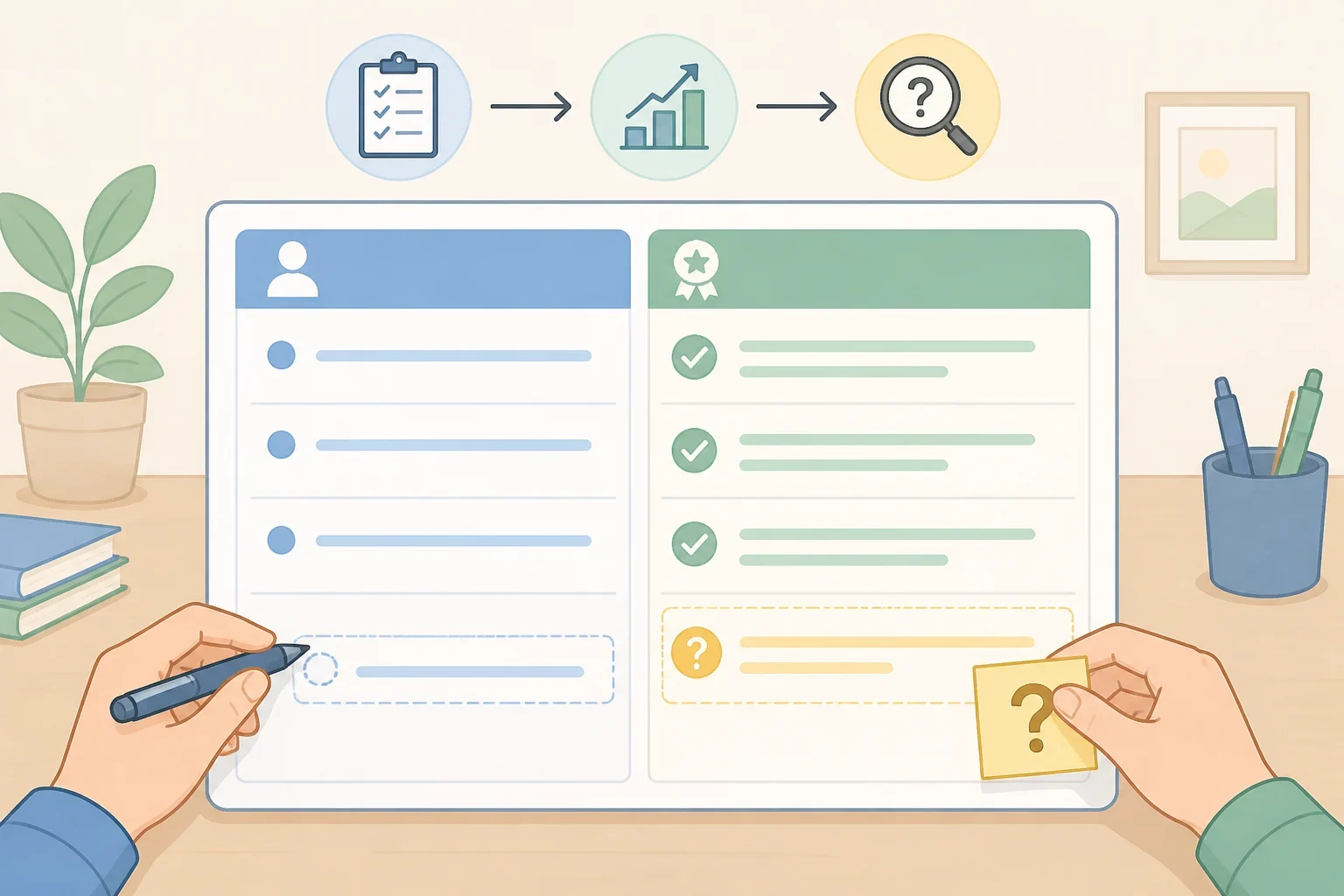
Before asking AI to draft or revise a resume, create a plain-language fact sheet. It does not need to sound impressive. It needs to be accurate.
Include:
- official job titles and employment dates
- major responsibilities
- tools, systems, and processes used
- projects completed
- types of customers, cases, records, stakeholders, or teams supported
- measurable results that can be verified
- training, licenses, certifications, and education
- awards or recognition
- problems solved
- procedures created, improved, or documented
Separate what happened from what the applicant believes it achieved. “Prepared weekly reports for department leadership” describes a responsibility. “Improved executive decision-making” describes an outcome that requires supporting evidence.
That separation gives AI safer material to organize. A prompt can ask the tool to identify missing context, suggest stronger verbs, compare the experience with a job posting, or offer wording options without adding facts. It can also be told to mark missing numbers, outcomes, or qualifications as questions rather than filling them in.
A useful instruction is simple: use only the supplied information, do not create employers, credentials, software, metrics, responsibilities, or results, and flag anything that needs confirmation.
The applicant still has to review the output line by line. A sentence that sounds complete may contain an assumption the fact sheet never supported.
How to tailor a resume without copying keywords
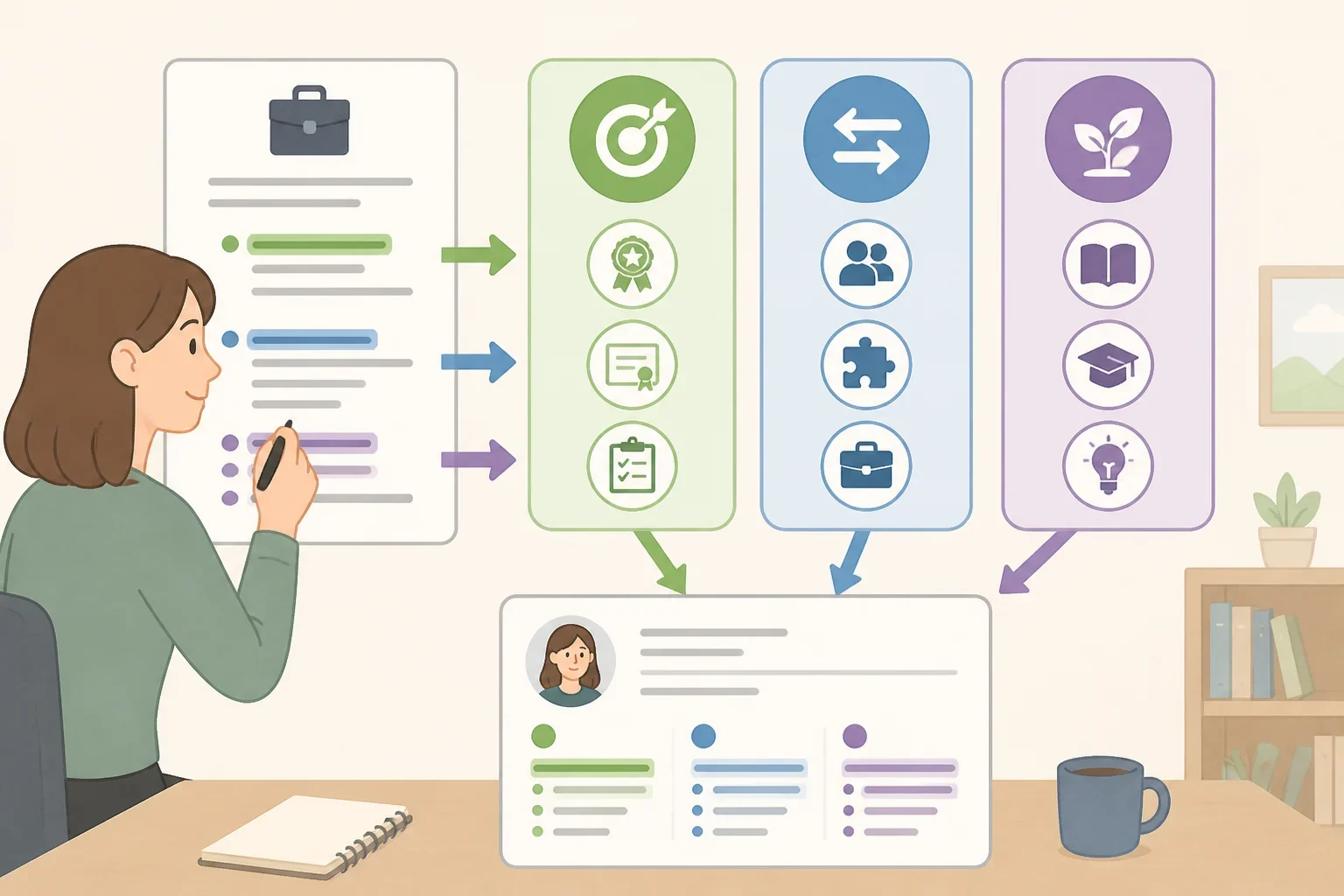
A tailored resume reflects the employer’s needs without pretending to have experience the applicant does not possess.
Read one job posting and sort its language into three groups:
- Direct match: The applicant has performed the task or used the tool.
- Transferable match: The applicant has handled a related responsibility in another setting.
- Development area: The posting asks for something the applicant has not done or cannot yet claim.
The first group can usually be described directly. The second requires careful translation. The third should not be presented as completed experience.
For example, an applicant who coordinated schedules, resolved service problems, and maintained detailed records may have relevant experience for an operations role. That does not justify claiming experience with the employer’s specific scheduling platform or internal procedures. The resume can describe the underlying work and name software only if the applicant actually used it.
AI can compare a draft with a posting, but the comparison should create questions rather than trigger automatic keyword insertion. If the tool highlights “project management,” the applicant should ask:
- Which project was managed?
- What was the scope?
- What decisions did the applicant handle?
- Who depended on the work?
- What changed as a result?
Those answers may produce a stronger bullet. They should not produce a broader claim than the experience supports.
Replace vague duties with evidence
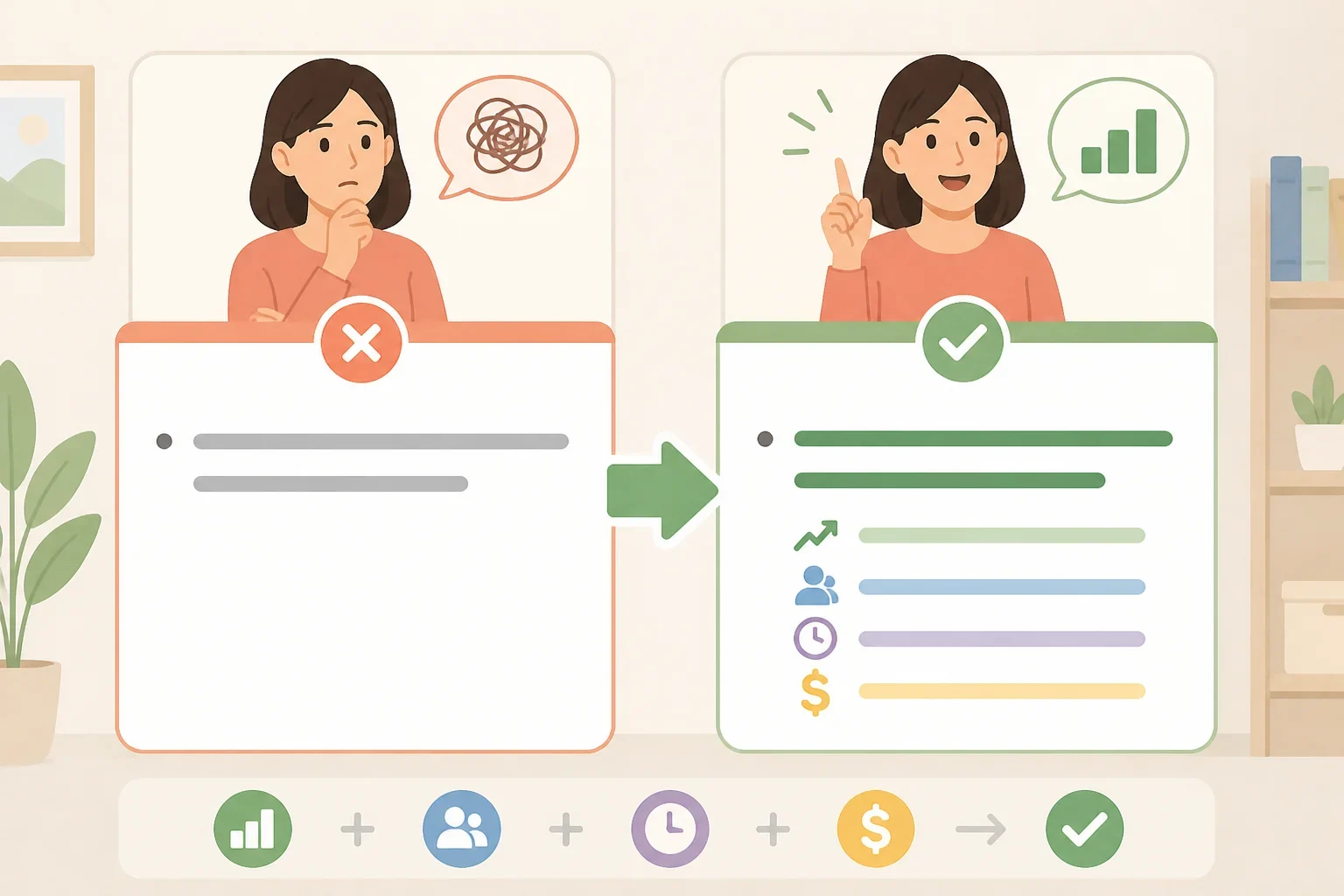
A resume does not need a dramatic metric in every line. It does need enough detail for a recruiter to understand the work.
Consider this statement:
Responsible for program oversight and stakeholder coordination.
It describes a broad activity but leaves important questions unanswered. What kind of program? Which stakeholders? What did oversight involve? What did the applicant personally handle?
A more useful version might say:
Coordinated reporting and compliance tasks across regional teams, tracked deadlines, resolved documentation gaps, and provided status updates to external partners.
That sentence remains general, but it explains the work. If the applicant can verify the number of teams, reports, partners, or deadlines, those details can be added. If not, they should not be invented to make the bullet sound more impressive.
Evidence can take different forms:
- volume of cases, requests, or records handled
- size of the team or area supported
- number of locations or stakeholder groups involved
- deadlines consistently met
- processing time reduced, if documented
- errors, backlogs, or delays addressed
- procedures created or improved
- reports, audits, or reviews completed
These details should describe actual work. They should not imply an outcome that cannot be demonstrated.
Translating specialized experience for a new industry
Career changers often face a translation problem. A job title or internal duty statement may make perfect sense inside one organization but tell a private-sector recruiter very little.
Federal experience is one possible example. Government Executive is cited in the original discussion for the difficulty of translating federal titles, classifications, acronyms, and agency-specific program names. The available link does not establish a universal conversion between federal and private-sector roles, so applicants should treat translation as a judgment task rather than an automatic title swap.
Start with the work itself:
- What function did the role support?
- Who depended on the work?
- What decisions or processes did the applicant manage?
- What information had to be reviewed?
- What deadlines, standards, or risks shaped the work?
- What would a recruiter outside the agency understand without additional research?
A clearance or classification may be relevant, but it should not replace an explanation of the work performed. Expand acronyms or replace them with plain-language descriptions where possible. Agency program names may need a brief explanation of the function they served.
The same approach applies to other specialized backgrounds, including technical, regulated, academic, and nonprofit work. Translate the responsibility, process, and outcome. Do not assume the reader knows the organization’s internal vocabulary.
The available Office of Personnel Management link also does not establish a broad claim about federal workforce reductions producing a particular wave of private-sector applicants. That broader labor-market conclusion should not be made without specific, current data. Federal-to-private-sector translation can still be offered as a practical example because the underlying resume problem is clear: specialized language may need context before an outside employer can evaluate it.
Protect information before using an AI tool
Privacy guidance should be treated as a verification step, not a universal rule based on one policy. Tools differ in their data-retention and training settings, and employer, agency, contract, and professional policies may impose additional limits.
Before pasting resume material into a public tool:
- check the tool’s current data-retention and training settings
- remove names, contact information, case details, internal identifiers, and other unnecessary personal data
- redact proprietary, controlled, restricted, or personally identifying material
- avoid including information that the applicant is not authorized to share
- review relevant employer, agency, contract, or information-security rules
- use generalized descriptions when exact details are not needed
- ask an appropriate official source when the applicable policy is unclear
This does not mean every resume contains protected information, or that one rule applies to every employer. It means the applicant should know what is being submitted and under which settings.
A mentor or former colleague can review whether a translation makes sense, but sensitive documents should not be forwarded simply to obtain feedback. A career counselor familiar with the target industry may be able to suggest civilian terminology from a redacted description.
A practical AI resume workflow
Use this sequence to keep the applicant in control:
1. Build the fact sheet
Collect duties, accomplishments, tools, education, credentials, and documented results. Mark uncertain details for later verification.
2. Redact before uploading
Remove unnecessary personal details and any information that may be confidential, proprietary, controlled, restricted, or subject to employer or agency rules. Check the tool’s privacy settings first.
3. Ask for gaps before polish
Have the tool identify vague bullets, missing context, repeated wording, and unsupported conclusions. A gap review is more useful than asking for language that merely sounds impressive.
4. Draft from verified material
Require the tool to use only the supplied facts. Missing numbers or outcomes should be flagged as questions, not guessed.
5. Compare with one job posting
Check whether the draft reflects the role and whether each claimed skill is supported by direct or transferable experience. Do not copy every preferred keyword.
6. Audit every detail
Check dates, titles, numbers, software names, scope, credentials, and outcomes against records or personal knowledge. Delete any sentence that cannot be explained clearly.
7. Read the bullets aloud
For each bullet, answer: What did the applicant do? How was it done? What was the scope? What changed? If the answer is unclear, revise the bullet.
8. Get a human review
Ask someone familiar with the target field to look for generic wording, confusing terminology, unsupported claims, and information that should not be shared. The reviewer is checking clarity and credibility, not certifying the resume.
Before submitting, run the defensibility test
Select each bullet that describes an accomplishment and explain it without reading the resume. The explanation should cover the applicant’s personal role, the process used, the people or resources involved, and the result that can be supported.
If a bullet cannot survive that conversation, revise it or remove it. A shorter resume with accurate, specific claims is more useful than one filled with polished language the applicant cannot defend.
The next step is practical: prepare the fact sheet, choose one target job posting, redact the material, and use AI only to organize or question the information. Then audit every final bullet and rehearse the ones most likely to invite follow-up. That process keeps the resume connected to real experience, regardless of how the first draft was created.
