

- How to Stand Out in an AI-Driven Job Market: Step-by-Step
- 1. Build an accurate resume before you try to make it impressive
- 2. Match each resume claim with evidence
- 3. Link the proof to the job you want
- 4. Prepare interview evidence for every important bullet
- 5. Prepare for a practical assessment when the posting calls for one
- 6. Use nontraditional experience as evidence, not an apology
- A one-role workflow for your next application
How to Stand Out in an AI-Driven Job Market: Step-by-Step
A resume can help get a job seeker considered. It cannot, by itself, show how that person makes decisions, solves problems, or handles the actual work. This guide explains how to stand out in an AI-driven job market by creating an accurate resume, building relevant proof of skill, preparing specific interview examples, and responding to practical assessments.
The advice applies especially to entry-level applicants, career changers, and professionals applying for roles where AI-assisted resumes, automated screening, portfolios, or skills tests may be part of the process. Hiring practices still vary by employer and industry, so treat each job posting as the starting point rather than assuming every company evaluates candidates the same way.
A survey from last year by Greenhouse found that 49% of U.S. job seekers had submitted more applications than the year before, while 69% had encountered fake job postings. The survey covered 4,136 respondents across the U.S., U.K., Ireland, and Germany, including 1,200 U.S. job seekers and 665 U.S. recruiters or hiring managers. Those figures describe one company’s survey, not the entire labor market, but they show why a credible, specific application matters.
1. Build an accurate resume before you try to make it impressive
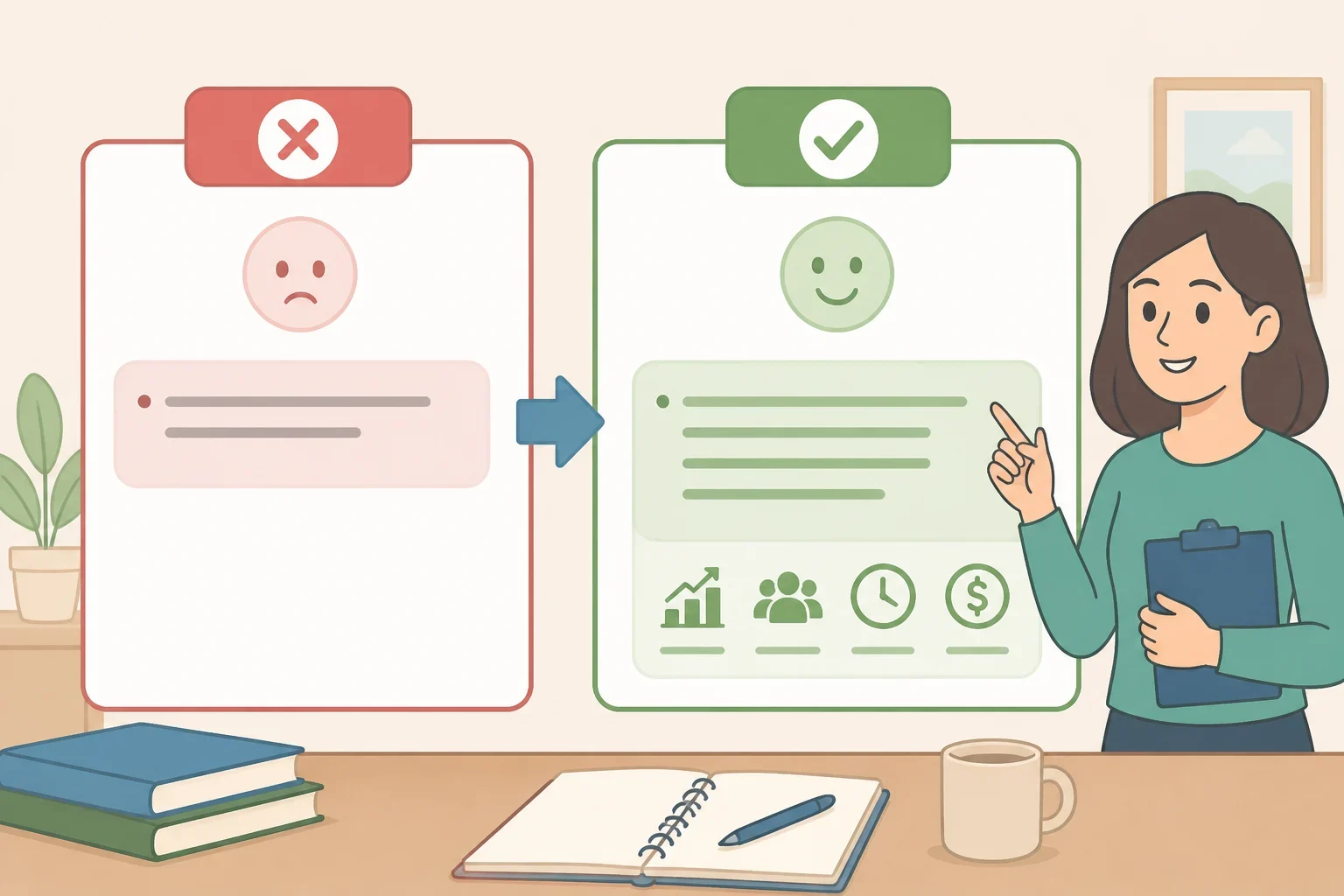
Start by reviewing every line of the resume and asking one question: Can this claim be explained with a real example?
SHRM used the term “skillfishing” earlier this year to describe credentials, skills, or experience that do not fully translate into real-world execution. Its guidance also notes that AI makes it easier to create a polished professional narrative that may not reflect genuine depth. The practical implication for a job seeker is straightforward: use polished language only when the underlying experience is real and defensible. (SHRM)
A vague bullet such as:
Helped improve the company’s social media presence.
does not tell an employer what the applicant actually did. A more useful version might be:
Planned and scheduled weekly social media content, reviewed engagement data, and adjusted topics based on audience response.
That revision is stronger because it identifies activities and decisions without inventing a result. If a measurable outcome is known and can be verified, it can be added. If not, do not make one up.
AI can help organize a resume, identify repeated wording, check grammar, or compare the document with the language in a job posting. It should not add a certification, software tool, leadership responsibility, or business result that the applicant cannot explain.
Avoid hidden text and prompt injections designed to manipulate an applicant tracking system. Greenhouse reported last year that 41% of the 1,200 U.S. job seekers in its survey admitted using hidden prompt injections, while 52% of those who had not used them said they were considering it. The same survey found that 65% of hiring managers had caught applicants using AI deceptively, including hidden prompt injections, AI-generated interview scripts, or deepfakes.
That tactic can create a credibility problem before a conversation begins. Put relevant keywords in visible, truthful sections of the resume, then make sure each one connects to an actual task, project, course, or result.
2. Match each resume claim with evidence

The next step is to create a proof layer beyond the resume. This does not mean every applicant needs a large personal website or a new certification. It means giving an employer something concrete to review when a claim would otherwise remain an assertion.
SHRM advises employers to look for relevant certifications, licenses, portfolios, and demonstrated project work as baseline indicators of invested expertise. The source also cautions that these signals are not foolproof. A credential can show study or training, but it does not automatically establish job readiness. (SHRM; SHRM)
Choose evidence that resembles the work in the posting:
- A software or data applicant might share a GitHub repository, dashboard, technical walkthrough, or documented project.
- A writer or communications applicant might provide a writing sample, campaign plan, editorial calendar, or before-and-after content example.
- A teacher or trainer might prepare a lesson plan, learning activity, or explanation of how a difficult concept was taught.
- A designer might show a mockup alongside the design decisions and revisions that shaped it.
- An operations applicant might create process documentation, a project retrospective, or a sample workflow.
- A career changer might use a class project, volunteer assignment, freelance deliverable, or self-directed work sample.
A useful portfolio item can be short. Structure it around five questions:
- What task or problem did the project address?
- What approach and tools did you use?
- What decisions did you make?
- What was the result, or what did the project demonstrate?
- What would you change or improve next time?
That final question is useful because it shows judgment rather than presenting a finished artifact as perfect. Do not include confidential employer information, private customer data, internal documents, or proprietary results. Create a redacted version, use public information, or build a separate sample that demonstrates the same skill.
Certifications require the same care. Compare the credential with the job posting, the relevant professional body, and any official licensing requirements that apply to the role or location. A certification may be useful, preferred, optional, or unrelated to the employer’s actual needs. Do not treat it as universal proof.
3. Link the proof to the job you want
A portfolio is most useful when a hiring manager can quickly see why it belongs with the application. Do not send a general collection of unrelated work if the role calls for one specific capability.
For example, an applicant for a marketing coordinator position could place a campaign plan near the top of a portfolio and label it clearly:
- Project: Launch plan for a local service
- Skills shown: Audience research, content planning, basic performance analysis
- Deliverables: Three sample posts, a two-week content calendar, and a short explanation of the choices made
The resume should refer to that project in the relevant skills or project section. The application can then point to the same item with a plain description such as “Campaign planning sample” rather than a vague label such as “Portfolio.”
Use the same approach for a career change. A customer service professional moving toward project coordination might feature a process-improvement exercise, a volunteer event plan, or a project schedule. The connection should be visible: what was done, what skill it demonstrates, and how that skill relates to the target role.
This is how to build a portfolio to validate job skills without overstating experience. The portfolio does not need to prove that the applicant has already performed every duty in the new role. It should show how the applicant approaches relevant work and where the limits of the experience are.
4. Prepare interview evidence for every important bullet
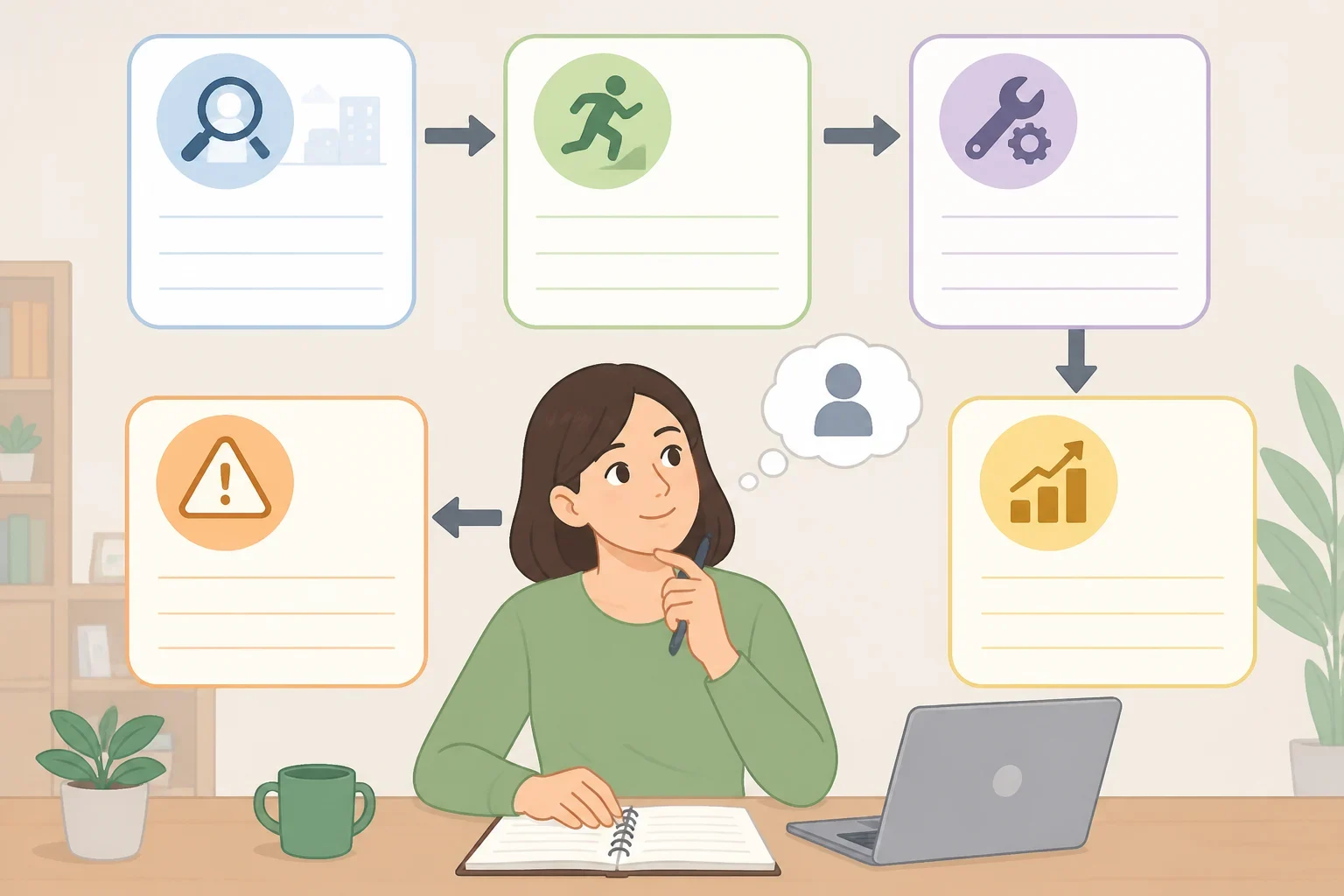
A resume bullet often becomes an interview question. Prepare for that before submitting the application.
SHRM recommends that employers ask candidates for specific examples of how they applied the skills they claim to have, rather than accepting general statements. Its guidance also supports follow-up questions that examine the details of a project, the candidate’s specific role, and the decisions made. (SHRM)
For each major resume bullet, write a short answer that covers:
- the situation or assignment
- the action taken
- the tool, method, or process used
- the result
- one limitation, complication, or lesson
Suppose the resume says:
Created a tracking system to organize volunteer outreach.
A weak interview answer would be, “I used a spreadsheet to keep everything organized.” A more useful answer would explain what was being tracked, how the spreadsheet was structured, which problem it solved, and how the process changed the work. If the system was used by other people, explain how it was introduced and maintained.
Practice answering follow-up questions such as:
- What part did you personally own?
- Why did you choose that approach?
- What went wrong?
- How did you measure success?
- What would you do differently now?
A Greenhouse survey from last year found that 54% of surveyed job seekers had encountered an AI-led interview, and 91% of recruiters said they had spotted candidate deception during the hiring process. (Greenhouse) These findings do not establish how every employer interviews, but they do support a practical preparation rule: know the details behind the claims on the page.
AI can help generate practice questions or organize notes. Do not rely on an AI-generated script during the interview. A memorized answer often breaks down when the interviewer asks what happened next.
5. Prepare for a practical assessment when the posting calls for one
Some employers may use a case study, realistic problem, work sample, or demonstration as part of hiring. SHRM recommends practical assessments where appropriate and says an effective assessment should reflect the actual demands of the role rather than attempt to catch a candidate making a mistake. (SHRM)
Read the posting carefully for terms such as:
- work sample
- case study
- skills test
- technical exercise
- presentation
- writing exercise
- portfolio review
- live demonstration
Before completing an assessment, ask what will be evaluated, how much time is expected, and whether the exercise uses confidential or proprietary information. A relevant assessment can provide another way to demonstrate skill, but its presence does not guarantee a favorable hiring decision.
Prepare by practicing the type of work, not by guessing a company’s answer. For a writing exercise, outline the audience, objective, and editing choices. For a data task, explain assumptions and show how the result was checked. For a presentation, make the recommendation clear before describing the supporting details.
The goal is not to produce an elaborate performance. It is to show a reasonable process and explain the decisions behind the final work.
6. Use nontraditional experience as evidence, not an apology
Resume gaps and career changes can make an application harder to interpret, but they do not automatically describe a person’s ability. In a report discussed earlier this year, Johnny C. Taylor Jr. emphasized overlooked talent pools, including workers with resume gaps and unconventional career paths. He also said employers may need to prioritize learning agility over traditional credentials alone. (SHRM)
If an explanation is relevant, keep it brief. A cover letter may not be requested, and no applicant should feel required to disclose private health, family, or caregiving details. An optional explanation could say:
After a planned career break, I completed training in project coordination and managed a volunteer scheduling process. I am now seeking a role where I can apply those planning and communication skills.
Then move to evidence. Include the training, project, volunteer work, freelance assignment, or other current example that shows readiness.
Taylor also noted that many hiring leaders gravitate toward degree-holders, while employers still face difficulty validating the capabilities represented by a growing number of credentials. Degrees and certifications can be useful benchmarks, but they do not replace evidence of applied skill. Requirements still depend on the employer, industry, and role, so compare the posting with the experience you can demonstrate.
A one-role workflow for your next application
Use this sequence for one target job rather than trying to rebuild every application at once:
- Identify the required skills. Mark the three or four abilities the posting emphasizes most.
- Revise two resume bullets. Use accurate verbs, name the task or tool, and add a result only when it can be supported.
- Create or select one relevant proof item. Use a work sample, portfolio case study, project, certification, license, or assessment example when it fits the role.
- Link the evidence appropriately. Add a visible portfolio or work-sample link only when it is relevant, safe to share, and appropriate for the application.
- Rehearse two examples. Prepare the action, decision, result, and follow-up details for the skills most central to the job.
AI can assist with editing this workflow, but the experience, evidence, and explanations must remain yours.
The EEOC’s 2022 guidance identifies potential risks involving discrimination in AI-assisted hiring and the treatment of individuals with disabilities. (EEOC) If a job seeker suspects unfair or discriminatory treatment, a resume revision may not resolve the issue. Raise the concern with the employer or consult the EEOC directly.
Before submitting the application, verify every claim, open every link, remove anything confidential, and confirm that the proof item actually matches the role. That is the practical way to use an AI-assisted resume without allowing polished language to outrun real experience.
