

- Human Skills Needed in the AI Workplace: 2026 Hiring Data
- What employers mean by judgment in AI skills and human skills
- Entry-level jobs are asking for human skills for AI jobs
- Where AI rewards expertise: skills employers want in an AI-driven workplace
- Training lags demand for soft skills in the age of AI
Human Skills Needed in the AI Workplace: 2026 Hiring Data
Employers are increasingly asking candidates to prove two things in the same interview: that they can use AI tools well, and that they can think, judge, and create without leaning on those tools completely. That combined pattern, visible across several employer surveys and hiring studies released this year, is what recruiters now describe as the core of human skills needed in the AI workplace. Nowhere is the shift sharper than at entry level, where AI-exposed junior postings increasingly carry requirements once reserved for managers and senior specialists.
Nearly all U.S. employers, 92%, report some level of AI adoption, and 74% now call AI skills a strong advantage or a requirement for at least some roles, according to a ZipRecruiter survey of more than 1,000 verified talent-acquisition professionals and hiring managers. Only 13% of employers said AI skills are required across every role at their company, so the standard is far from uniform. Half of respondents said they expect candidates to already be practical or advanced AI users, per the same survey.
"AI is changing the way employers plan for their workforce. New roles are emerging across the labor market, but the bar is rising with them," said Nicole Bachaud, ZipRecruiter's labor economist, in the report. "What we're seeing is a fundamental shift in expectations on both sides of the hiring process, employers want higher-skilled, higher-producing candidates, while job seekers want a faster, more transparent hiring experience." ZipRecruiter's panel was surveyed online between June 11 and 18, 2026, and drew from businesses across a range of sizes and industries.
That same report found a majority of employers say human-centered skills have grown more important over the past year, right alongside AI-specific ones. Workflow automation and data analysis each rose in importance for 60% of employers, with AI governance close behind at 56%, according to ZipRecruiter. Human skills climbed at a comparable pace: critical thinking, cited by 65%, outpaced both technical categories, and judgment and decision-making, at 59%, edged past AI governance. Creativity, at 58%, landed just under the technical figures but still marked a clear rise from a year earlier.
What employers mean by judgment in AI skills and human skills
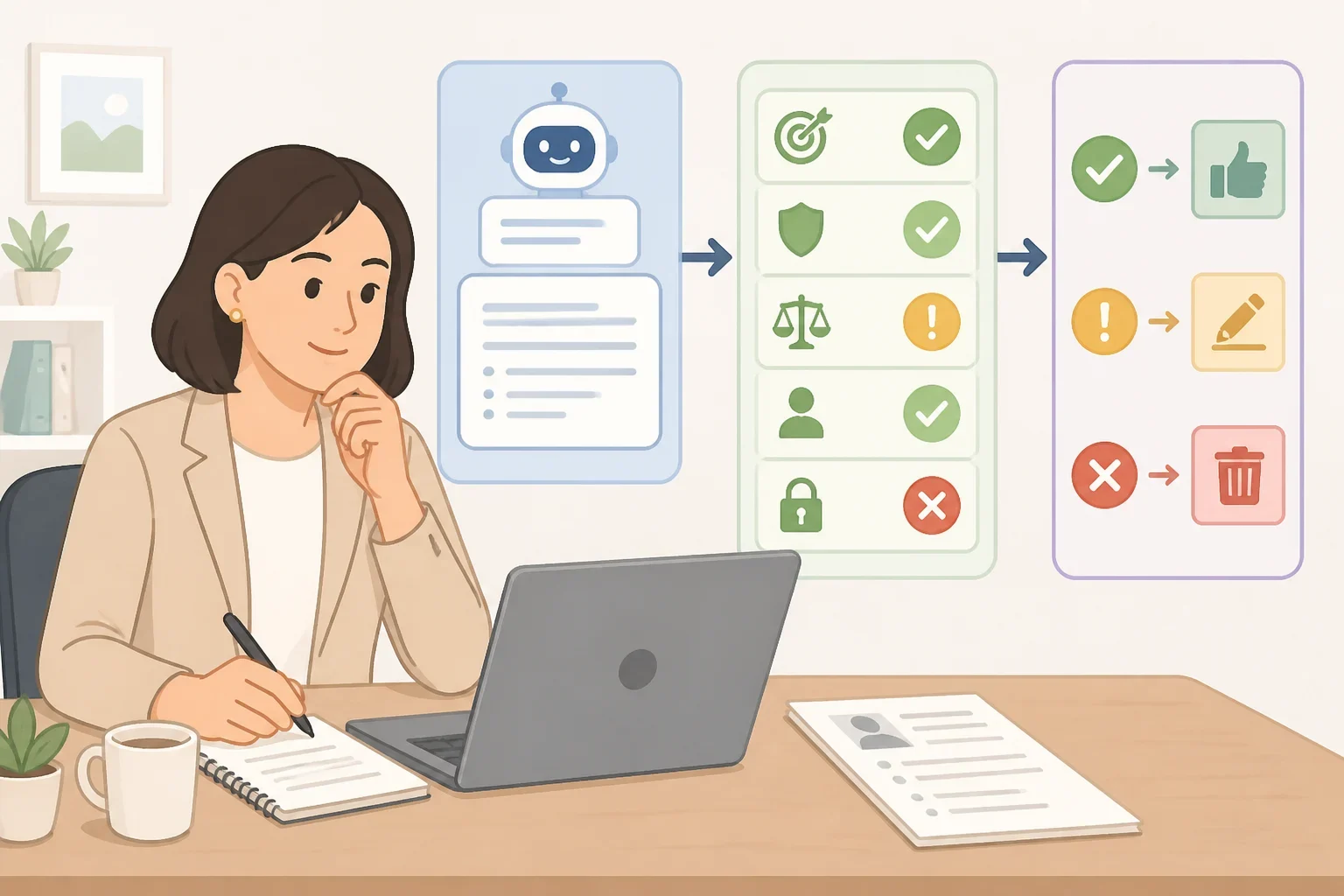
Analytical thinking remains the single most sought-after core skill worldwide, named essential by seven in ten companies surveyed for the World Economic Forum's Future of Jobs Report 2025, which polled more than 1,000 employers representing over 14 million workers across 55 economies. A controlled hiring experiment across the United States, United Kingdom, and Germany, involving 1,725 recruiters evaluating hypothetical, synthetically designed résumés, found that simply listing AI skills on a résumé raised a candidate's odds of an interview invitation by roughly 8 to 15 percentage points, tested across office assistant, software engineering, and graphic design roles, according to a preprint study revised earlier this year. The effect was weaker for graphic-design candidates, consistent with recruiters holding more skeptical attitudes toward AI use in creative work, the study's authors noted. Because recruiters evaluated hypothetical candidates rather than live applicants, the results isolate the effect of AI-skill language but don't fully capture how a real hiring process would play out.
Those percentages point to specific behaviors, not vague personality traits. Analytical thinking, in hiring terms, means weighing evidence and comparing alternatives before settling on an answer. Judgment means deciding whether an AI-generated output is accurate, appropriate, or too risky to use as-is. Creativity means developing or improving an idea rather than stopping at whatever a chatbot drafts first. Client-facing communication means translating a technical or AI-generated result into something a non-technical decision-maker can act on. Each of those shows up somewhere in the data above, tied to a measurable score or effect rather than a general call for "soft skills."
Entry-level jobs are asking for human skills for AI jobs
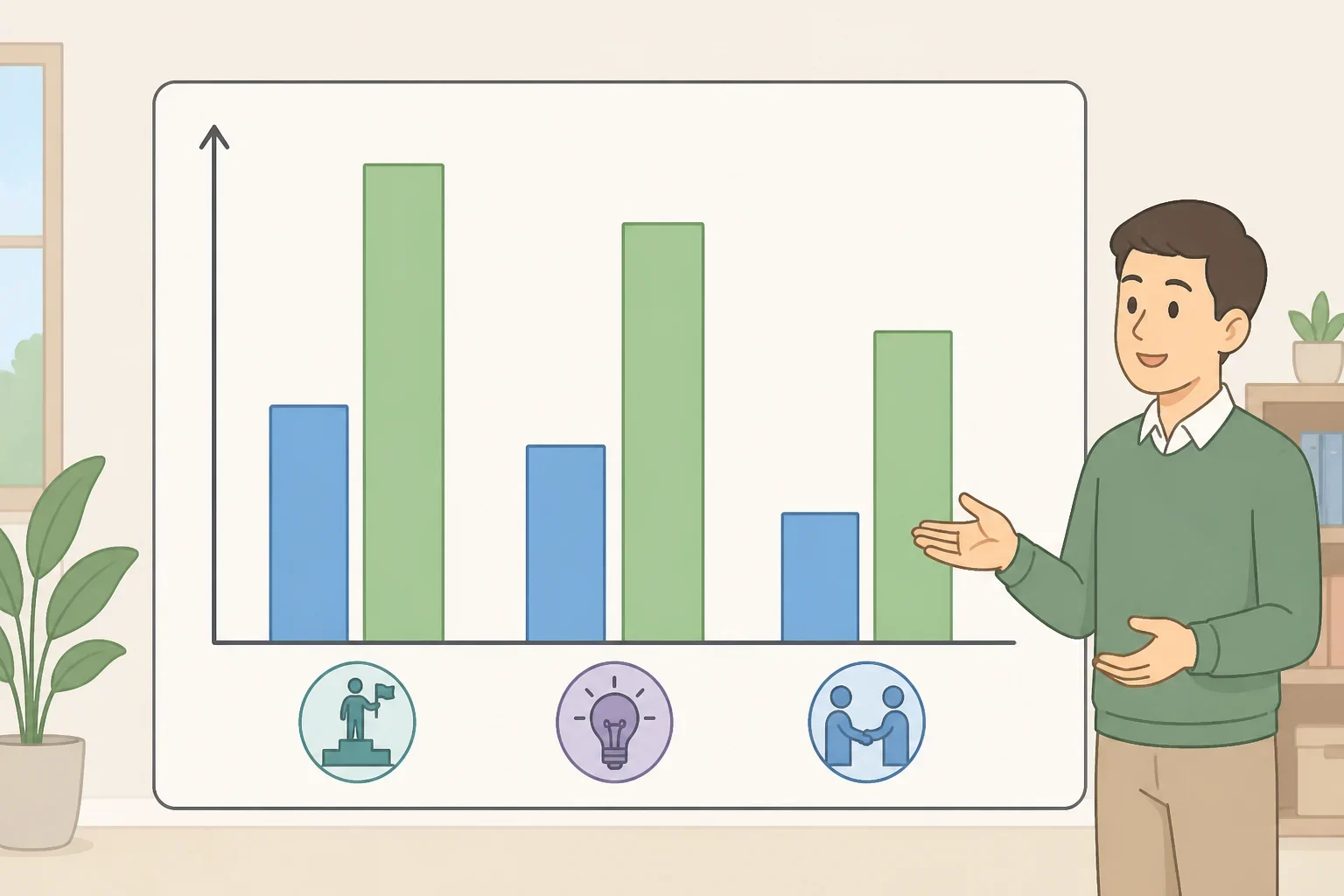
PwC's 2026 Global AI Jobs Barometer, drawn from more than one billion job advertisements across 27 countries and territories, includes a separate U.S. analysis of 2.4 million entry-level postings. That analysis found AI-exposed junior roles are seven times more likely than other entry-level roles to demand traditionally senior skills such as leadership, creativity, or face-to-face interaction, according to PwC's report, released three months ago.
Openings for these "seniorized" junior roles, PwC's term for the category, grew 35% since 2019, while other entry-level postings shrank 10% over the same stretch, the report found. PwC's economists attribute the shift to AI absorbing routine work that used to function as informal apprenticeship, raising demand for judgment, leadership, and adaptability earlier in a worker's career. ZipRecruiter's separate data points to a related shift on the ground: 38% of employers say they've already moved basic data entry and processing off entry-level staff and onto AI, and 31% say AI has raised experience requirements for entry-level roles, according to ZipRecruiter.
Where AI rewards expertise: skills employers want in an AI-driven workplace
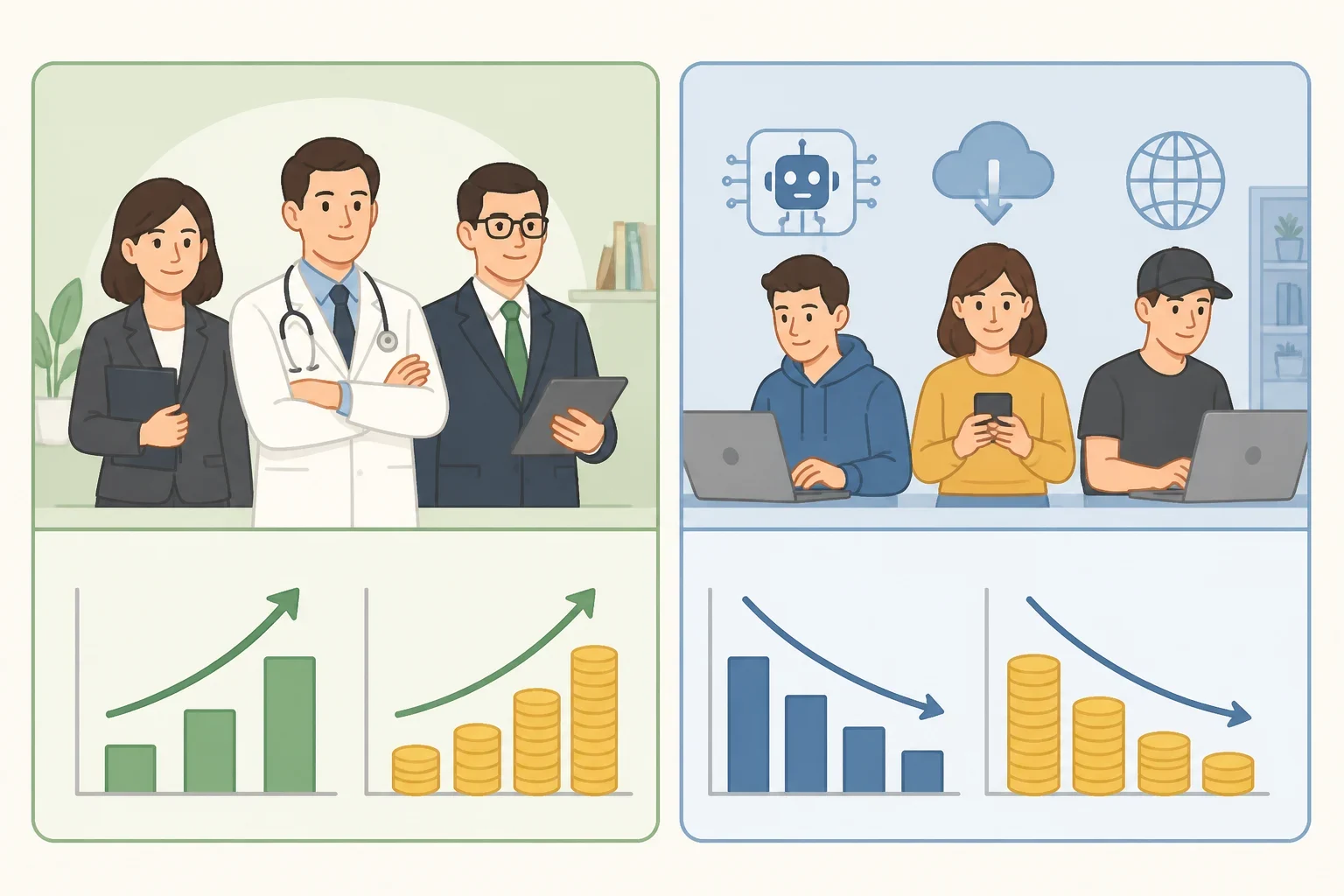
PwC sorts jobs into two categories. "Professionalized" roles are ones where AI automates routine tasks and elevates human expertise, such as radiologists or recruiters; "democratized" roles are ones where AI simply makes a task easier for a non-expert to handle, such as IT service managers or medical secretaries. Professionalized roles are seeing twice the job growth and 42% faster salary growth than democratized ones, according to PwC.
A related but separate pattern shows up at the company level. Measured against 2018 baseline levels, headcount at the most AI-exposed companies grew 52% by 2025, compared to 36% among the least AI-exposed companies, and wage growth followed a similar split, at 24% versus 17%, PwC found. The average wage premium associated with jobs requiring AI skills reached 62%, up from 57% a year earlier, though that figure is an observed pattern in PwC's wage data rather than a guaranteed raise for any individual worker. It also ranges widely by industry, from 118% in consumer markets down to 16% in government and public-sector work, per the same report.
Evidence for a broader "human skills" wage premium beyond AI skills themselves is thinner. A preprint analysis of nearly 30 million job postings across the United States, United Kingdom, Australia, and New Zealand, covering postings from 2018 through 2024, found a confirmed wage premium for only one complementary skill, resilience, at 5%; premiums for other named human skills couldn't be confidently detected in that dataset, according to the Research Square preprint. The study's authors describe it as preprint research that hasn't completed formal peer review, a limitation worth weighing before treating any of its figures as settled. The gap between PwC's broader wage-premium findings and this narrower preprint result is a reason to treat any single "soft skills pay more" claim with some caution.
Training lags demand for soft skills in the age of AI

The survey data points to a gap between rising expectations and formal support. Fully 57% of employers say they've raised baseline productivity expectations because of AI, according to ZipRecruiter, but training hasn't kept pace with that shift. Only 22% provide mandatory AI training for all employees, another 23% limit training to specific departments, and 17% offer no training at all, leaving many workers to rely on optional resources, cited by 34%, or figure it out on their own.
That gap shows up in how employers read applications, too. Most employers, 72%, view AI use in job applications as positive or potentially positive, but 24% say they can almost always detect AI-generated application content and another 60% say they can sometimes tell, per the same survey; those figures reflect employers' self-reported perception rather than a validated detection method. In the hiring experiment described above, formal AI credentials produced only a moderate boost in interview odds beyond simply listing AI skills, suggesting a certificate alone doesn't carry the weight of demonstrated, applied use, according to the preprint.
The pattern across these sources points to different stakes depending on where a reader sits in their career. Early-career applicants face the sharpest disruption: AI is absorbing routine tasks that used to double as informal training, and entry-level postings are responding by asking for leadership, creativity, or client-facing skills that used to come after a few years on the job, not before it.
Working professionals may see something closer to the opposite effect. PwC's data suggests the strongest pay and hiring growth is concentrated in roles where AI elevates existing expertise, not in roles where it simply makes a task easier for anyone to perform, and workers in the latter category may find AI narrowing what once made their experience hard to replace.
Checking whether a target posting pairs AI-tool language with judgment, leadership, or client-facing requirements offers a useful read on where a specific role, and a specific application, currently stands. Whether that pairing becomes standard across more industries, or whether employer training eventually closes the gap, is a question this year's data hasn't settled.
