

AI Skills in Job Postings: How to Spot Real Requirements
When a job posting mentions "AI," it can mean building machine-learning models, using a vendor's chatbot to draft emails, or nothing more than the employer's own applicant-tracking software. In an October 2025 analysis of several hundred thousand listings, Indeed Hiring Lab found that roughly a quarter of AI-mentioning postings provided little context for how the technology would actually be used in the role. That ambiguity is exactly why AI skills in job postings have become one of the hardest signals for applicants to read: the same word can describe a technical qualification, a routine mention of the employer's hiring software, or a marketing line with no bearing on the actual duties.
That distinction changes what a job seeker should do with a posting. A listing that names a model or deployment task calls for evidence of real project work. One that only describes how the company's AI-powered applicant system reviews resumes doesn't require any AI skill at all, no matter how prominently the word appears in the title.
Indeed's researchers found that the largest group of AI-mentioning postings, 52.1%, aligned most closely with developing or directly interacting with AI models, such as building tools or prompting them as part of the job (Indeed Hiring Lab). Nearly 74% of postings used the generic word "AI," while only 2% specifically named ChatGPT, which makes it hard to judge how much AI knowledge a role actually requires from word choice alone (same analysis). About 13.6% of AI-mentioning postings were categorized, based on the surrounding context, as describing the employer's own AI-powered recruiting tools rather than a job duty.
How AI requirements in job descriptions break down
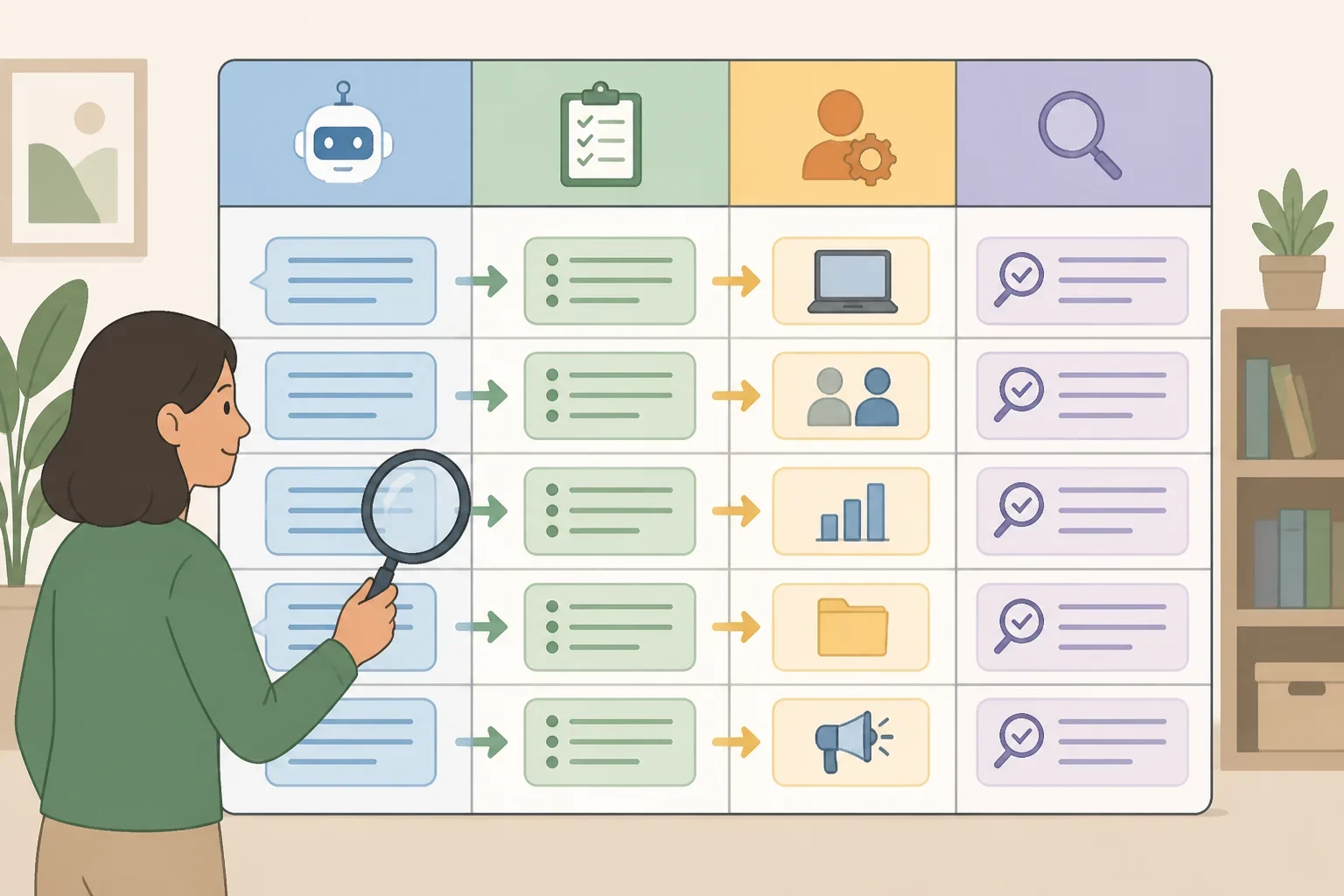
Indeed's researchers sorted AI mentions into 27 themes, then merged those into five formal categories, plus an informal sixth grouping of roughly 25% of postings that didn't fit any clear theme (Indeed Hiring Lab). For job seekers, those categories translate into a practical scan:
What the posting emphasizes What to look for Example wording Model development or use Building, deploying, or prompting AI models; cloud implementation "experience in AI/ML model development & deployment" Product or workflow tools Integrating AI into products, chatbots, customer-facing automation "integrating AI solutions into products" Recruiting technology AI used in the employer's hiring process, not the role itself "improve your job application experience" Systems or transportation use Infrastructure, cybersecurity, load matching, network or data management "match available loads to your specific vehicle," "networking and data storage" Vague signaling No named tool, task, or deliverable being part of "the next great AI growth story"
The systems-design, AI-powered-services, and transportation categories were each relatively small slices of the sample, but they show up often enough in specific fields, like logistics or IT infrastructure, that it's worth recognizing the wording (Indeed Hiring Lab). Postings that don't fit any of these patterns, meaning no named tool, task, or deliverable tied to AI, may belong in the vague category regardless of how central AI sounds in the opening lines.
Why the same word carries different weight by occupation
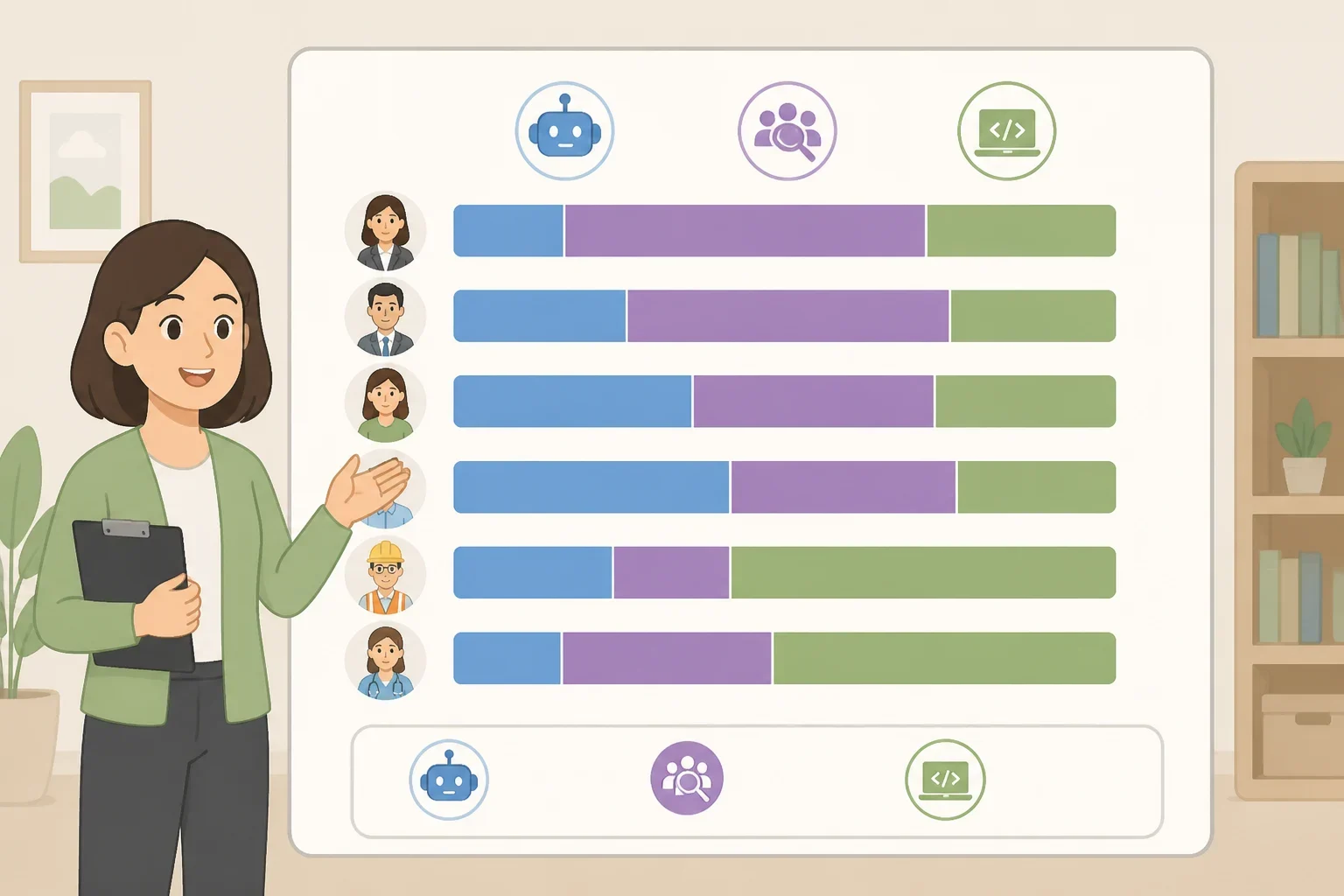
AI use in job postings skews sharply by field. Arts and entertainment, marketing, and management postings included core AI development or use in more than 60% of cases, while 95% of AI mentions in food-prep postings referred only to recruiting tools, and about 70% of nursing and medical-technician mentions were also recruiting-related rather than clinical (same analysis).
In driving jobs, AI-based load matching appeared in 47% of AI-mentioning postings, and insurance and human resources (HR) postings referenced AI-powered platforms in more than 40% of cases (Indeed Hiring Lab).
A quiet posting isn't necessarily a reassuring one. A November 2024 Indeed analysis found that sectors including insurance, medical information, and logistics support had fewer generative-AI mentions than their estimated skill-replacement exposure would suggest (Indeed Hiring Lab). Researchers linked that gap to GenAI's practical value remaining unproven in many of those sectors, even ones with high theoretical exposure to skill replacement, not to any absence of AI activity on the job. A job description staying silent on AI, in other words, may just mean the technology hasn't proven itself useful enough yet for the employer to mention.
What the categories mean for applicants
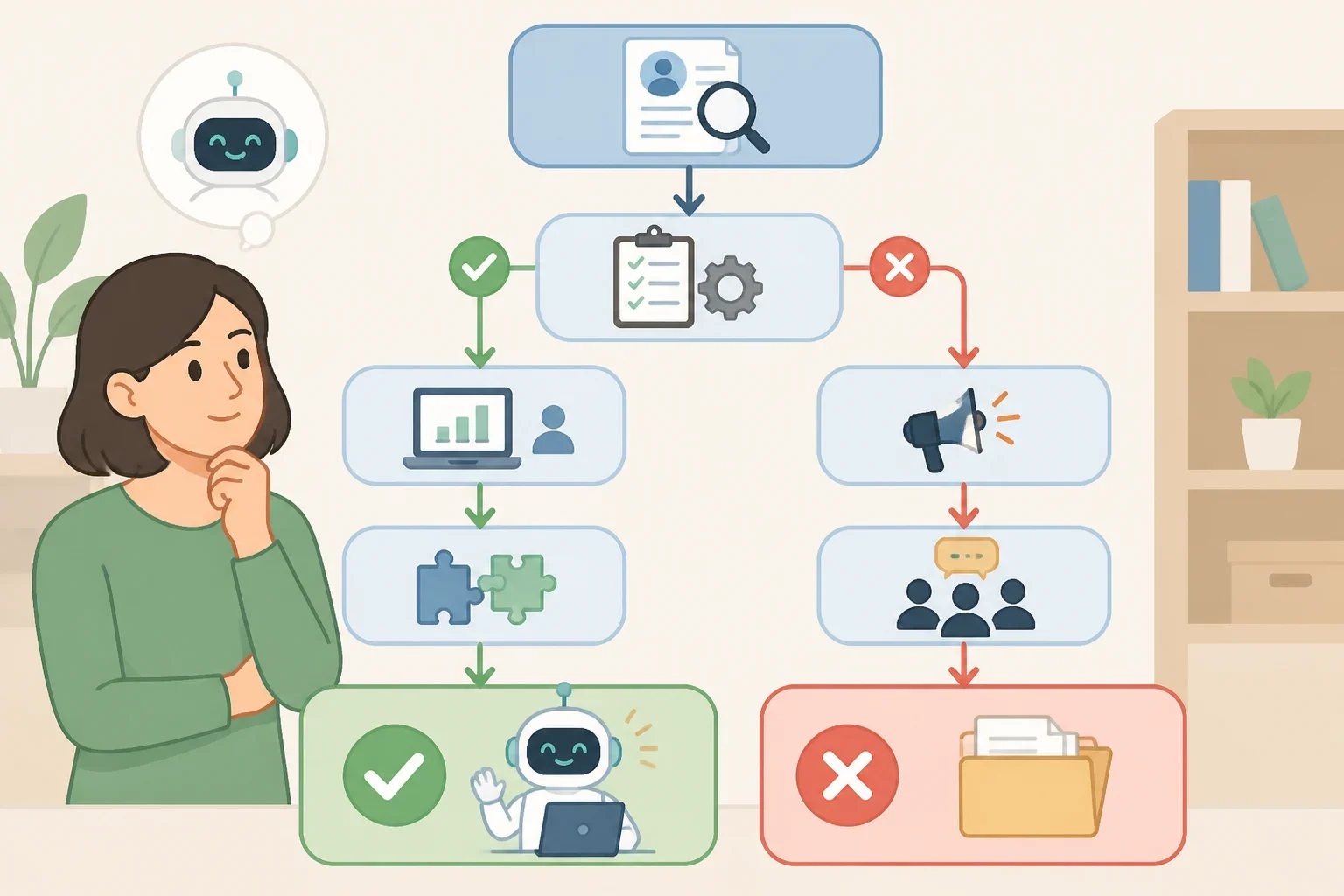
A short scan helps sort any posting: Does the text name a specific tool or model, or only the word "AI"? Is AI tied to a task, such as building, deploying, or integrating something, or only to a mission statement? Is the language required or preferred? And does the surrounding text describe the job itself or the employer's hiring process?
Postings that request "AI/ML model development & deployment" describe technical work that's difficult to fake with general enthusiasm (Indeed Hiring Lab). Applicants targeting those roles should be ready to describe specific projects, tools, and outcomes. Model-development language usually signals a more technical requirement than a posting that only mentions integrating an existing AI tool into a product.
In fields like HR and insurance, where postings often cite AI-powered platforms rather than model-development skills, candidates can focus on describing hands-on use of specific tools and how they verified or refined the results those tools produced. Recruiting-technology mentions describe the employer's application process rather than a job duty; that reference alone does not establish an AI skill requirement for the role, though it's still worth reading the actual listed duties closely.
For vague or branding language, the posting itself won't answer what's actually required. A direct question to a recruiter, such as which tools the team uses day to day or how AI factors into daily responsibilities, tends to surface more than a job title or a line about "the next great AI growth story" ever will.
AI job posting trends point to a growing baseline expectation
Even where AI isn't spelled out as a requirement, Indeed found that 46% of skills listed in a typical U.S. job posting fall into either the "hybrid transformation" category, where generative AI can handle much of the routine work but human oversight remains essential, or the smaller "full transformation" category, where AI could execute a task with little human involvement (Indeed Hiring Lab, September 2025 report). Software development sits at the deep end of that scale: 81% of skills listed in a typical software-development posting fall into the hybrid-transformation range, compared with 68% of skills in a typical nursing posting that fall into the minimal-transformation category, since core patient-care skills depend on physical presence and interpersonal judgment that current models rate as resistant to automation (same report).
Separately, more than half of hiring managers surveyed said they would not hire someone lacking AI-literacy skills, according to a January 2025 article from the World Economic Forum. That's a notable figure from one survey rather than a universal hiring standard, and it sits alongside a separate finding that only 1 in 500 LinkedIn job postings formally lists AI literacy as a skill (same source). Formal job-posting language and informal hiring expectations may simply be moving at different speeds.
What to do next

Rather than reacting to the word "AI" in a title, compare the AI language against the posting's required and preferred sections to see which category it actually fits: model development, workflow tools, recruiting technology, systems or transportation use, or vague signaling. That comparison determines whether the mention is worth building a resume around or safe to set aside.
For roles in fields where AI mentions in job ads fall below what exposure estimates would suggest, such as insurance, nursing, or logistics, it's worth preparing one evidence-based interview question about which tools the team currently uses. A posting's silence on AI says less about the workplace than it might seem.
