
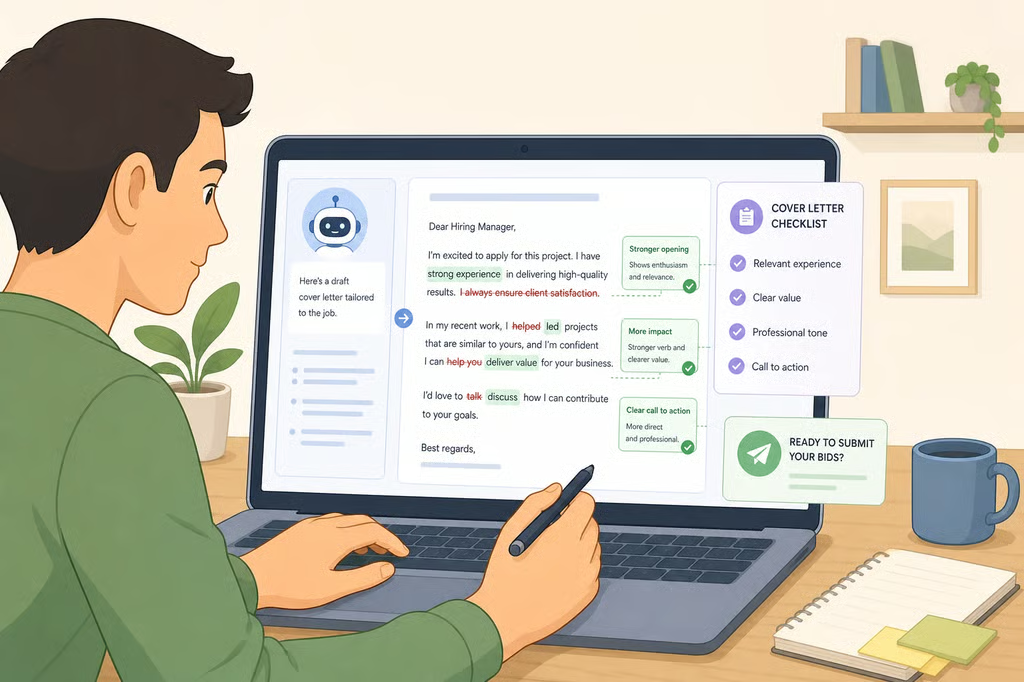
AI Cover Letter Tone: How Editing Time Affects Hiring
Job seekers who spent more time editing an AI-drafted cover letter were more likely to win freelance jobs and start a chat with a prospective client, according to a preprint analyzing bidding data from Freelancer.com posted six weeks ago (arXiv preprint, "Signaling in the Age of AI"). The finding speaks to a question job seekers keep running into: whether adjusting AI cover letter tone before hitting submit changes outcomes, or whether a fast, unedited AI draft performs just as well.
The analysis covers roughly 5.5 million bids submitted by more than 264,000 freelance bidders across upwards of 106,700 jobs, concentrated in two categories, PHP development and internet marketing (arXiv preprint). The paper hasn't yet gone through peer review, and its outcomes, winning a bid and starting a chat with a client, are specific to freelance bidding on one platform rather than the interview process at a typical employer.
Within that dataset, a one-standard-deviation increase in editing time, about 3.5 minutes, was linked to a 0.31-percentage-point higher probability of winning the job, equal to roughly 52% of the average win rate among AI-assisted bids (arXiv preprint). The same increase in editing time was linked separately to a 0.64-percentage-point higher probability of starting a chat with the client, about 9% of the average chat rate in the sample (arXiv preprint). Both figures describe an association between editing time and outcomes, not proof that the extra minutes caused the result.
Most AI-assisted bids in the dataset weren't edited much at all. More than 75% were submitted within one minute of the AI draft being generated, and only about 5% were submitted five minutes or more after (arXiv preprint).
A separate part of the same paper looked at callbacks specifically, and found a different pattern. Having access to the AI tool at all, regardless of editing time, raised the probability of a callback by 0.43 percentage points, rising to 3.56 percentage points for workers who actually used it (arXiv preprint). That callback result measures tool access and usage, not how long someone spent revising a draft, which makes it a distinct finding from the editing-time results above.
Why AI cover letter tone matters as application volume climbs
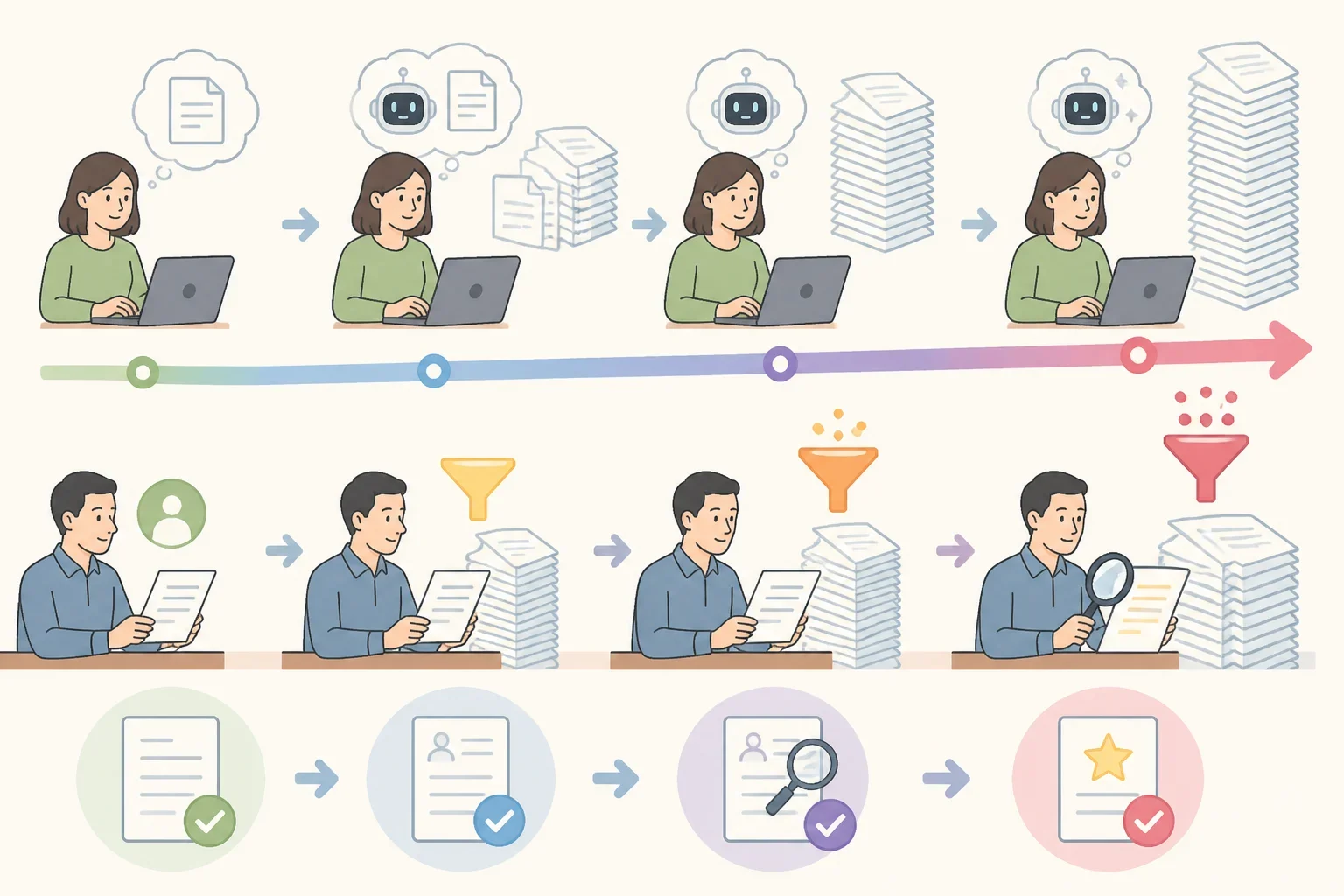
Tilburg University research, built on two field experiments involving job seekers and recruiters, found that large language models raised the overall quality of cover letters, with the biggest gains going to weaker writers (Tilburg University, published last year). Those quality gains didn't translate into more interview invitations, because the improvements were concentrated in sections of the letter the researchers describe as standardized and less influential in recruiters' decisions (Tilburg University).
The Freelancer.com paper found a similar pattern from a different angle: workers who already wrote more tailored letters before the AI tool existed gained less from using it, with the strongest pre-AI writers seeing about 27% smaller tailoring gains than the weakest ones (arXiv preprint). That result is consistent with the Tilburg finding that lower-quality applicants benefited more from AI assistance (Tilburg University).
Application volume has climbed alongside AI adoption. A 2025 Greenhouse survey of more than 4,100 job seekers, recruiters, and hiring managers, summarized by NACE, found nearly half of U.S. applicants, 49%, submitted more applications than the year before, and 34% of recruiters said they now spend up to half their workweek filtering spam or low-quality submissions (NACE).
A NACE career-readiness essay describes a recurring pattern inside that volume: an "authenticity gap," the distance between what a candidate submits on paper and what they can credibly explain once a conversation starts (NACE). The same essay frames the underlying issue as AI use without responsibility or grounding in an applicant's own voice, not AI use by itself.
One more detail from the Tilburg research complicates a simple read on all this. When recruiters were explicitly told a candidate had used AI, they rated non-AI letters more favorably by comparison (Tilburg University). That shows disclosed AI use can shift how a recruiter weighs a letter. The research doesn't say whether recruiters can otherwise spot AI-written text on their own, and polished prose by itself isn't evidence of anything either way.
The distinction that matters for a job seeker: disclosed AI use changes how a letter gets judged, while generic phrasing, unverifiable claims, and a missing connection between background and role are what make a letter forgettable or hard to defend once someone asks about it.
How to make an AI cover letter sound human: Career Trend's four-check review

A NACE career counselor's review of AI-generated cover letters submitted by international students identified recurring failure patterns: heavy reliance on job-description keywords, no transitions between experiences, vague unsupported claims, and no clear connection between an applicant's background and the role (NACE, 2024). Career Trend built those four patterns into four checks, a practical way to apply the findings to any AI-drafted letter before it goes out:
- Fact check: every claim is true and something the applicant can support.
- Evidence check: at least one paragraph shows what the applicant actually did.
- Voice check: the wording sounds like the applicant's normal professional voice.
- Relevance check: the letter connects that evidence to this employer's specific role.
The fact check addresses a documented failure. In one case reviewed by NACE, an AI tool inserted coding skills into a cover letter for a catering job, based only on a scan of the applicant's resume, producing a claim with no connection to the position (NACE, 2024). Any AI-inserted skill or experience is worth treating as unverified until the applicant can trace it back to something they actually did.
The evidence check is where personalizing an AI cover letter actually happens. A generic AI sentence such as "I am a results-driven professional with strong communication skills" could describe almost any applicant and offers nothing to verify. A hypothetical applicant might replace that line with a sentence describing an actual task, something pulled from a resume bullet, an internship log, a class project, or a volunteer role, such as coordinating event logistics for a student organization. The swap works because it gives the applicant a concrete experience to discuss if an interviewer follows up.
The voice check is more straightforward: a sentence that doesn't sound like the applicant's normal professional voice when read back gets revised. This check only tests naturalness, which is why it comes after the fact check rather than replacing it.
The relevance check confirms the letter explains why a specific company or role matters to the applicant, instead of repeating the job posting in different words, the keyword-dependency weakness NACE's review flagged as a core problem with AI drafts (NACE, 2024). None of this argues against using AI for job applications. It argues for treating the first draft as unfinished.
What to check before sending an AI-generated cover letter
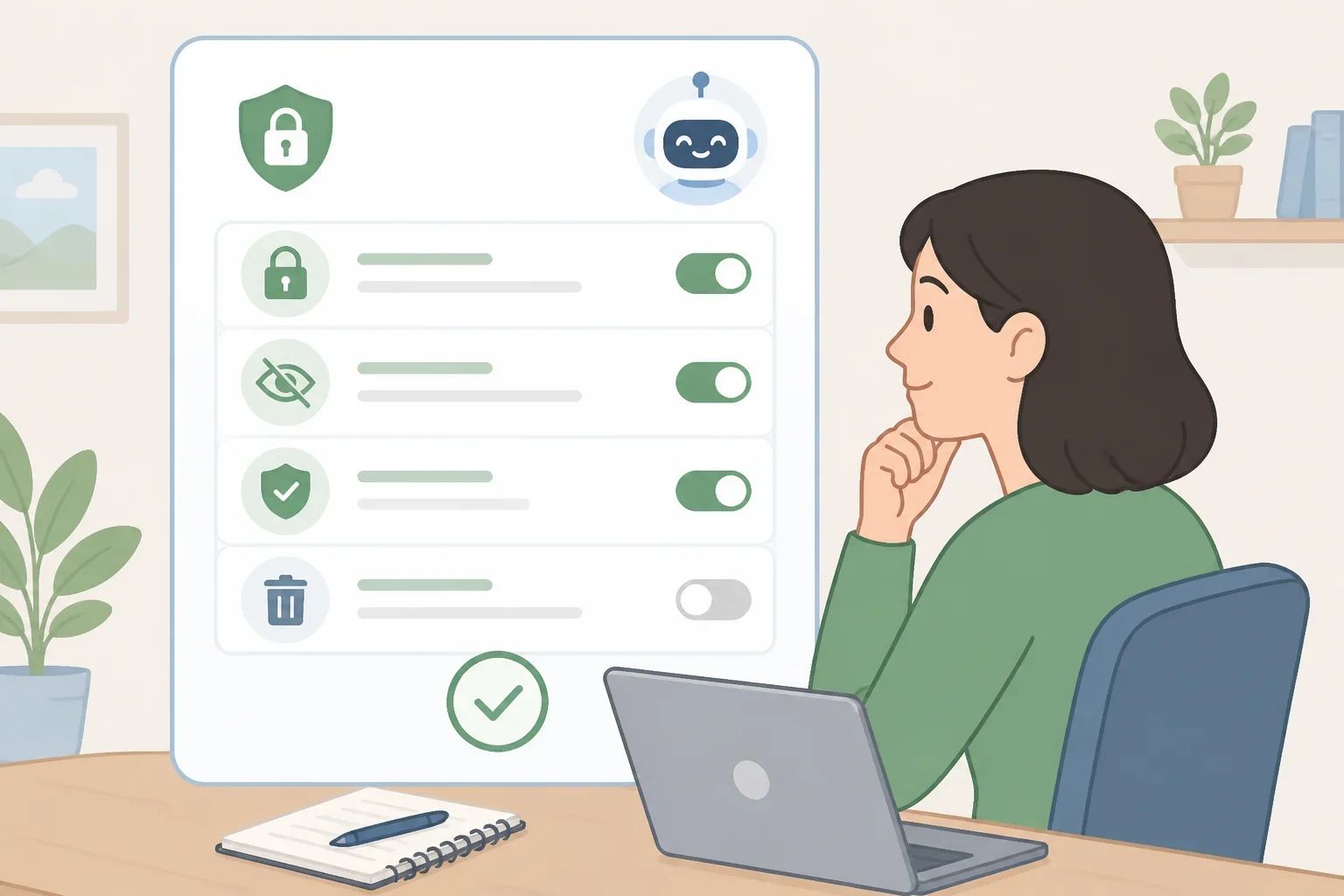
NACE warns that job seekers may enter personal information into an AI platform without understanding how it will be handled (NACE, 2024). Applicants should review the specific tool's privacy settings and avoid pasting unnecessary sensitive details before using it to draft a letter.
The Freelancer.com findings don't show that spending 3.5 minutes editing a ChatGPT draft will raise interview odds at a typical employer, and they don't prove that any particular AI cover letter tone causes a hiring decision; the evidence is specific to bidding on one freelance platform (arXiv preprint). What it supports is narrower and still useful: within that platform, more editing time tracked with stronger outcomes, and genericity, not AI use itself, is what NACE's practitioner reviews consistently flag as the problem recruiters notice (NACE, 2024). Before sending an AI-assisted letter, verify every claim traces back to something documented on a resume, in a portfolio, or in an actual project, and swap at least one generic sentence for a detail only that applicant could have written.
