

AI impact on college graduate job market: what studies show
The AI impact on the college graduate job market is showing up in some Texas hiring data, but national evidence does not yet establish AI as the main cause of weaker entry-level hiring. That distinction matters for students and recent graduates deciding whether to change majors, build new skills, or adjust a job search.
Are college graduates facing fewer job openings because of AI, or are other labor-market forces doing more of the work? The available research points in both directions. A Dallas Fed analysis suggests that Texas employers have shifted away from some AI-exposed roles. A New York Fed analysis of national job postings finds little evidence of a distinct AI-driven drop in labor demand. Other research points to remote work and a weaker hiring pipeline as important parts of the explanation.
The practical answer is not to avoid every occupation with AI exposure. It is to examine what the evidence measures, compare it with current postings in a target field, and ask employers how AI is changing the work.
What the Texas evidence measures
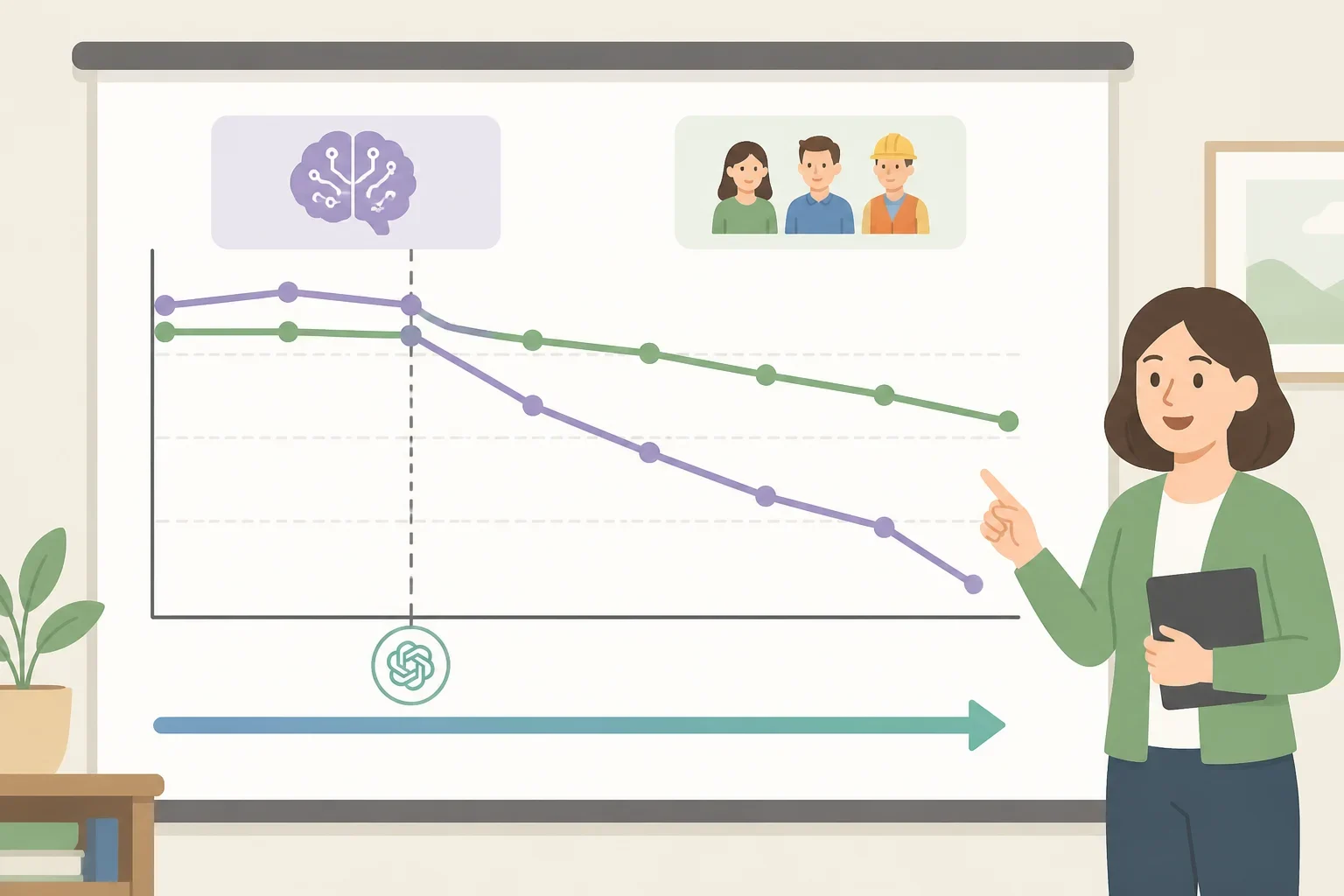
A Dallas Fed analysis published earlier this month draws on millions of online job postings to examine labor demand in Texas. The postings come from Lightcast, so they measure employer demand signals, not filled jobs, employment levels, or layoffs. That distinction is central: fewer postings can indicate a change in hiring plans, but they do not show exactly how many people lost work or whether a role disappeared altogether. The Dallas Fed also reports that two-thirds of firms surveyed in the May 2026 Texas Business Outlook Survey said they were using AI, up from 40 percent two years earlier.
The Dallas Fed compares occupations with more tasks that generative AI can automate with less-exposed occupations. The analysis finds that postings for more-exposed positions fell by about 5 percent relative to less-exposed positions by the end of 2023 and by approximately 8 percent by the first quarter of 2025. This is an occupation-level comparison, not an 8 percent decline in all Texas hiring or all entry-level jobs. The Dallas Fed describes the result as evidence of an early shift in labor demand after ChatGPT’s release.
The researchers also examine existing firms. More AI-exposed firms reduced postings by approximately 5 to 6 percent by the middle of 2024 and by 8 to 9 percent by early 2026, relative to less-exposed positions. Because the decline was not confined to new firms or caused by fewer surviving firms, the pattern is consistent with established employers changing the mix of jobs they advertise. The Dallas Fed
That does not prove that an AI system replaced each missing position. An employer may have combined tasks, delayed hiring, redesigned a role, or responded to another business condition at the same time. The Dallas Fed’s estimate is best read as evidence that AI exposure is associated with a change in posted demand, particularly among existing firms.
The size of the change also depends on how the job is defined. Firms whose pre-ChatGPT listings were destined to become 10 percent more automatable posted jobs with about 2 percentage points fewer automatable tasks afterward, a reduction of nearly 50 percent relative to the sample mean. That comparison describes the task mix in postings, not a 50 percent reduction in total hiring. The Dallas Fed
Using AI usage rates, occupational exposure scores, and Texas’s industry composition, the Dallas Fed estimates that GenAI exposure reduced total Lightcast postings in Texas by approximately 1.8 percent in 2024 and 2.6 percent in 2025. Those figures are estimates for Texas job postings, not a count of confirmed job losses. The Dallas Fed
For a job seeker, the useful signal is narrower than “AI is taking jobs.” Compare postings for one target occupation over time. Track whether employers are removing routine responsibilities, adding AI-related tools, changing experience requirements, or describing the same work in a new way. Then verify whether a listed skill is required or merely preferred.
What the AI automation impact on entry-level jobs research shows
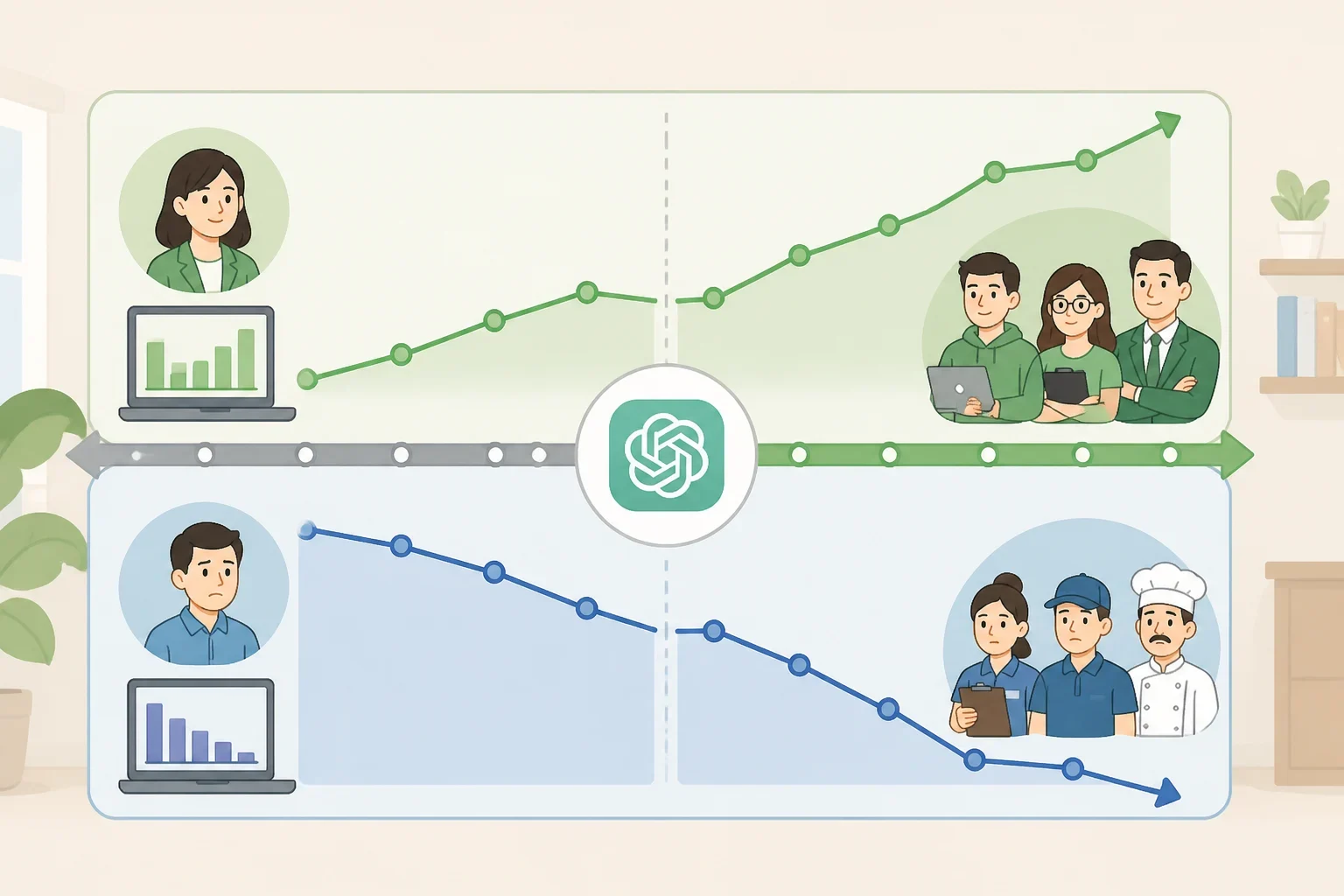
The Texas results suggest a possible employment effect, especially for recent graduates entering exposed occupations. The Dallas Fed notes that recent graduates experienced unusually high unemployment during the period of rapid GenAI adoption. Its administrative data from Texas also suggest that AI automation affected employment and earnings outcomes for recent graduates and prompted some current students to adjust their studies. The Dallas Fed
The wording matters. The administrative data suggest an association between AI automation and graduate outcomes. They do not establish that AI alone caused unemployment to rise. Recent graduates are also especially sensitive to a slower hiring market because they have less experience, fewer professional contacts, and no existing employer relationship to protect them from a pause in entry-level recruiting.
National evidence provides a test of whether the Texas pattern appears more broadly. In an analysis published in May, the New York Fed combines an occupational AI-exposure measure with Lightcast postings from across the United States. Its measure is based on task descriptions from O*NET and observed AI usage. It estimates potential exposure, not the number of jobs that will be automated.
That distinction is easy to lose. An occupation can contain tasks that AI might perform, while the occupation still requires judgment, communication, accountability, physical presence, or one task that limits full automation. The New York Fed says a job’s exposure may not translate into reduced hiring or increased layoffs for the occupation as a whole. The New York Fed
Its event study finds that postings for higher-exposure occupations were already declining relative to less-exposed occupations before ChatGPT was released in late 2022. The gap does not show a clear additional break afterward and stabilizes after 2023. That pattern is difficult to reconcile with a simple explanation in which ChatGPT steadily caused employers to displace exposed occupations. The New York Fed
The New York Fed also finds no clear divergence between junior and senior postings inside highly AI-exposed occupations. If AI were disproportionately reducing entry-level work, junior postings would be expected to fall relative to senior postings after ChatGPT’s release. Instead, the two groups fluctuate without a clear directional separation. The New York Fed
That finding does not show that graduates are unaffected. It shows that national posting data do not identify a distinct AI-related decline concentrated in junior roles. Overall hiring has slowed, and unemployment has increased among young workers and recent college graduates, but the New York Fed finds little indication that AI is the main driver of the slowdown. The New York Fed
The source also reports that firms in the New York Fed’s Second District are more likely to report retraining workers in AI-exposed occupations than reducing hiring. That survey result should not be generalized to every U.S. employer, but it gives job seekers a useful question to ask: Is the company using AI to eliminate tasks, or to change how current employees perform them?
Exposure is not the same as displacement
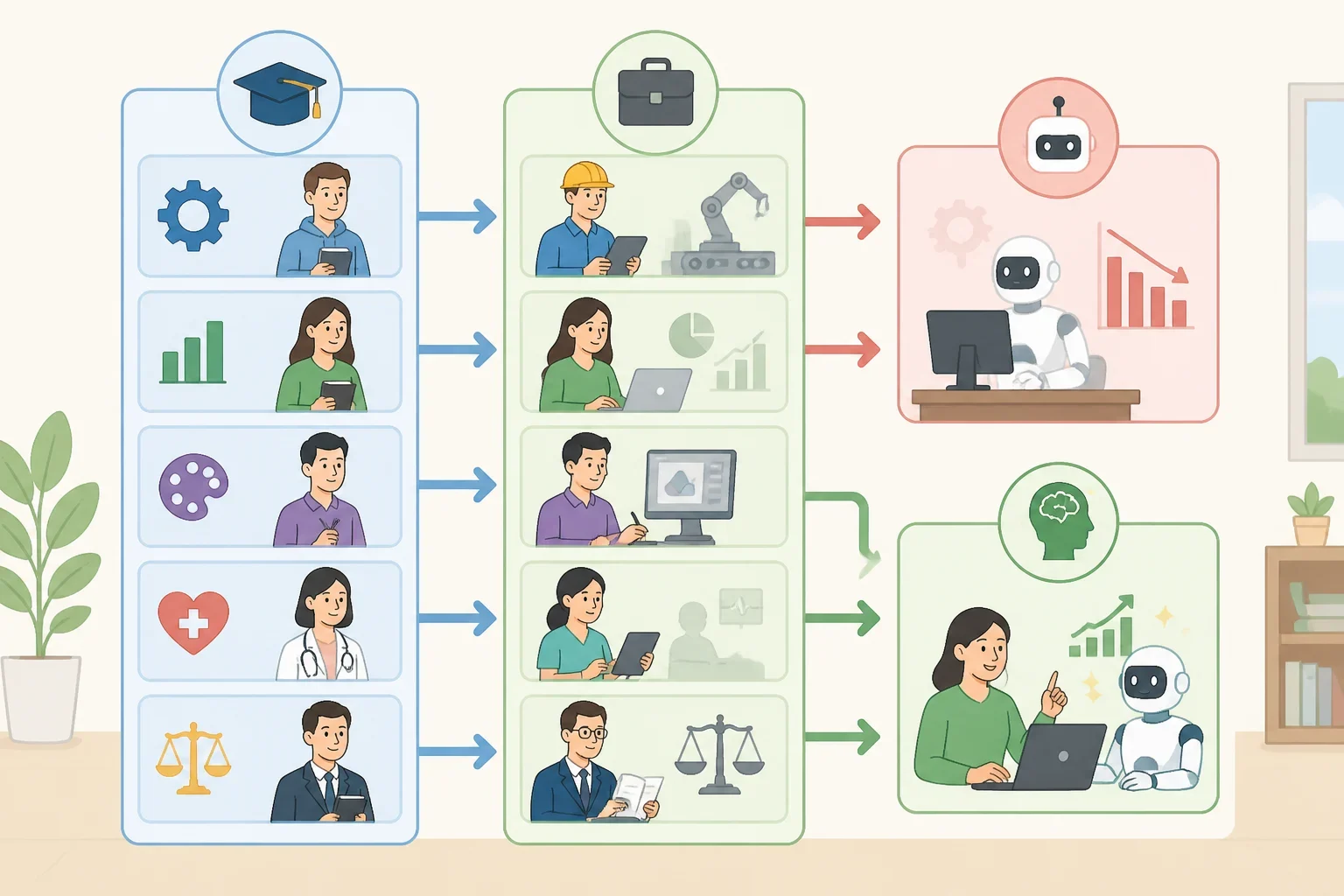
Students often hear that a major is “high risk” because graduates commonly enter exposed occupations. The Federal Reserve Board research, published last year, does not assign an automation score to a major itself. It maps graduates into occupations and then evaluates the exposure of those occupations.
At least 67 percent of graduates with Mathematics and Computer Science-related, Engineering and Technology-related, and Accounting majors are in mathematics and computer science, engineering, and management occupations that have relatively high occupational exposure scores. The Federal Reserve Board
Political Science and Government graduates are distributed across several kinds of work. The research finds that 30 percent are in management occupations and 35 percent are in legal or office and administration occupations, which are among the occupational categories evaluated for exposure. The Federal Reserve Board
Those findings describe where graduates work, not whether their degrees are becoming obsolete. The Federal Reserve Board explicitly presents two possible paths. If associated occupations are automated away, demand for some graduates could decrease. If the work is augmented, demand could rise because employers still need people who understand the field and can use the technology effectively. The Federal Reserve Board
The New York Fed’s national measure reinforces that caution. Fewer than 10 percent of workers and vacancies are in occupations with an exposure score of at least 0.4, while 40 percent of workers are in occupations with zero measured exposure. The 0.4 figure is that study’s research cutoff for high exposure, not a universal definition of an unsafe job. Its event study uses a different cutoff, 0.2, to compare higher- and lower-exposure occupations. The New York Fed
For students, this argues against changing a major based on an exposure label alone. A better review asks what work graduates actually do, which tasks employers are changing, and whether the field is using AI for automation, augmentation, or both.
Skills such as checking AI output, documenting decisions, managing workflows, and learning an employer’s tools may be worth investigating. The cited research does not prove that prompting, oversight, or tool integration improve hiring outcomes, so those skills should not be treated as a guarantee. Check current postings in the target occupation and ask instructors, alumni, or employers how those abilities appear in real work.
Remote work and the broken hiring ladder
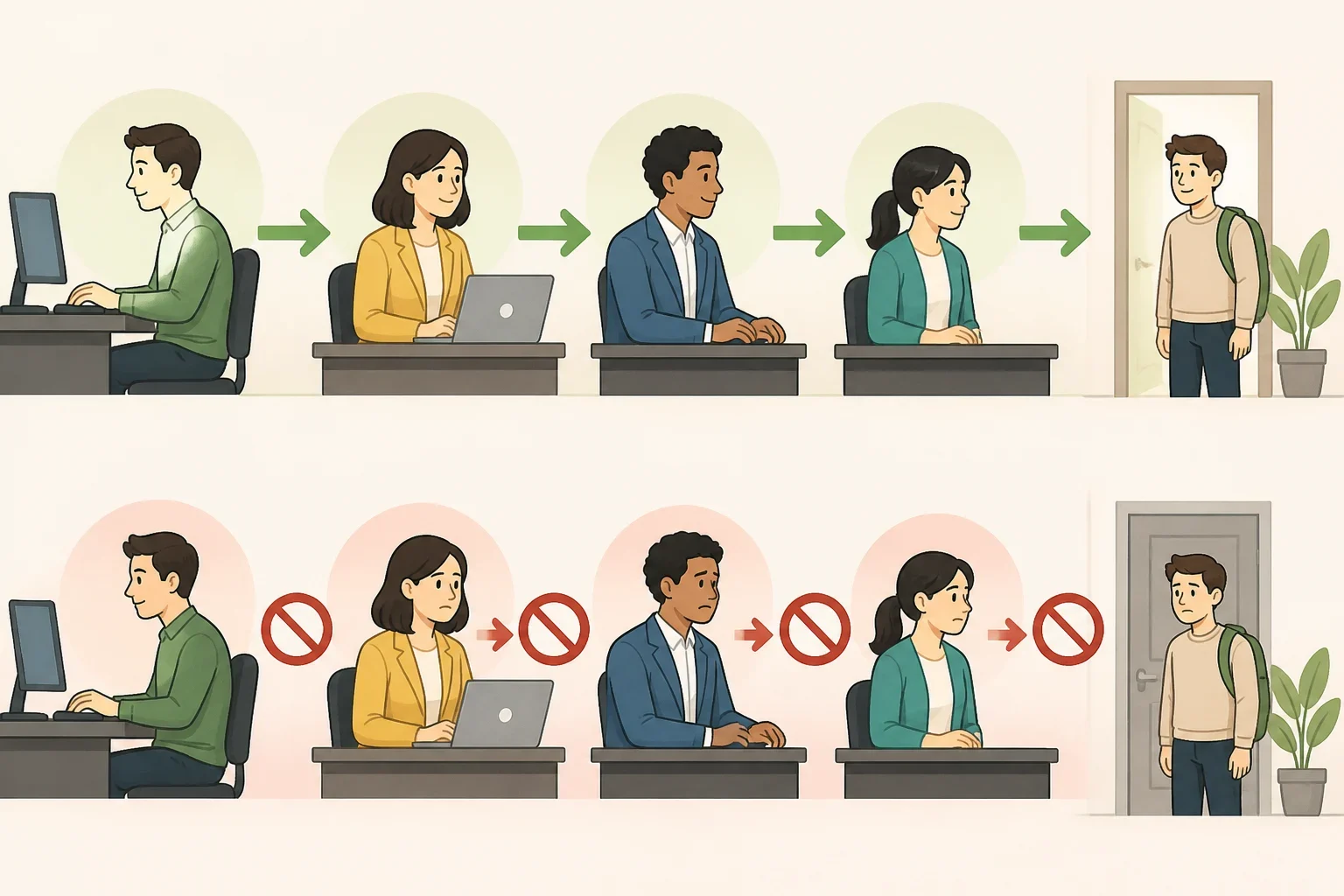
The national evidence becomes harder to interpret because AI exposure overlaps with other changes in the labor market. A June working paper titled “The broken ladder” examines 243 million new hires and 407 million online job postings across the United States, the United Kingdom, Canada, and Australia from 2017 through 2025. The CEP working paper is research in progress, not settled consensus.
When the paper estimates AI exposure and working-from-home exposure separately, each is associated with a decline in junior hiring. When the two are estimated together, the working-from-home relationship remains while the GenAI relationship becomes much smaller and is often statistically indistinguishable from zero. The paper therefore argues that remote-work exposure may explain more of the decline in early-career hiring than AI exposure alone. The CEP working paper
That conclusion does not erase the Texas findings. The studies ask different questions. The Dallas Fed examines changes in Texas postings and connects them with graduate outcomes. The New York Fed tests for a national break in postings after ChatGPT. The working paper separates two overlapping exposures across several countries. Different samples and methods can produce different signals without one automatically invalidating the others.
Broader labor-market conditions add another layer. In research published in May, the Dallas Fed finds that a falling job-finding rate and a rising firing rate each account for roughly half of the increase in U.S. unemployment since 2023. The analysis identifies the movement of workers between unemployment and employment, but it does not identify AI as the cause of those changes.
The same research describes a weakened “vacancy chain.” In a healthy chain, an employed worker changes jobs, leaving an opening that another worker can take, while openings continue to move down toward people who are unemployed. When employed workers switch jobs less often and hiring from unemployment falls, fewer openings reach new graduates. The Dallas Fed
This mechanism may affect graduates as part of the unemployed pool, but the research does not separately measure new graduates in that result. It is a labor-market explanation, not evidence that AI weakened the chain.
A practical decision framework for students and graduates
The evidence supports a cautious strategy rather than a single prediction. Before changing a major or abandoning an occupation, readers can:
- Compare a set of current postings in one target occupation with older postings from the same employers or industry.
- Record changes in required tools, task descriptions, experience levels, and whether AI knowledge is required or preferred.
- Ask employers whether AI is reducing the number of tasks, changing workflows, or creating new review and quality-control responsibilities.
- Separate a posting decline from an employment decline. Fewer advertisements are a warning signal, not proof that every missing posting represents a lost job.
- Look beyond national headlines. Texas evidence may not describe the market in another state, industry, or occupation.
- Use informational interviews and referrals alongside online applications. The research does not measure whether networking produces more hires, but direct conversations can help clarify how a specific employer is using AI when postings do not provide that detail.
- Build skills that can be verified against actual job requirements, rather than collecting generic AI credentials.
The clearest conclusion available as of September 2026 is limited but useful. Texas data show a measurable shift away from more AI-exposed postings, including an approximately 8 percent relative decline by the first quarter of 2025 and an 8 to 9 percent decline by early 2026 among existing, more-exposed firms. National data do not show a clear junior-specific break after ChatGPT, and other research points to remote work and a weaker hiring ladder as competing explanations.
For a student or graduate, the next step is concrete: choose one target occupation, compare its postings, identify how AI appears in the work, and verify the findings with employers or professionals in that field. That approach leaves room for automation, augmentation, and a labor market that may not move uniformly in either direction.
