

- Is switching jobs worth it? Compare pay, benefits, and flexibility
- What labor-market data can and cannot tell you
- Why job hopping pays more for some workers than others
- When to switch jobs for higher pay, and when flexibility changes the answer
- Why some workers cannot switch jobs easily
- A practical test for deciding whether to move
Is switching jobs worth it? Compare pay, benefits, and flexibility
Is switching jobs worth it when the main goal is a higher salary? Sometimes. But the available labor-market data does not show a universal payday for changing employers. Job openings indicate where employers are hiring, while quits indicate how many workers leave voluntarily. Neither measure proves that people who switch jobs earn more than people who stay.
That distinction matters for workers with family responsibilities, limited savings, health-care needs, or little control over their schedules. A move may be worthwhile when the verified total-compensation gain and career value outweigh the costs of changing jobs. The practical test is broader than the offer letter: compare pay, benefits, schedule stability, transition risk, and the reason for moving.
What labor-market data can and cannot tell you

The BLS data available from nine months ago showed 6.9 million job openings in January, with a 4.2% openings rate. Hires were unchanged at 5.3 million, while quits stood at 3.1 million and the quits rate remained 2.0%, according to BLS data.
Those figures show continued movement between employers and workers, but they do not explain why people quit. A voluntary departure could reflect a better offer, a schedule problem, a career change, relocation, or another personal decision. The data also does not compare the wages of job switchers with the wages of workers who remain in place.
That limitation is central to the job-hopping-for-better-pay debate. A high number of openings may give workers more choices, but it does not promise that a particular opening will pay more than a current job. Even the quits rate is best understood as a broad measure of workers’ willingness or ability to leave, not as a salary gauge.
Industry differences make the headline even less useful. In January, openings increased by 184,000 in finance and insurance while the overall number of openings changed little, according to BLS data. That suggests that opportunity can vary by field. It does not establish that finance workers, or workers in any other sector, received a premium for changing jobs.
Before assuming a switch will pay off, research the demand behind the job title:
- Compare current openings in the specific industry and region.
- Check whether employers are hiring for roles matching the worker’s experience.
- Separate an advertised opening from a guaranteed offer.
- Ask whether the new position is permanent, full time, hourly, salaried, or dependent on variable hours.
- Treat the quits rate as market context, not evidence of a guaranteed raise.
So, does changing jobs increase salary? The supplied labor-market data does not establish a general answer. A worker needs to evaluate the actual employer, role, location, schedule, and compensation package.
Why job hopping pays more for some workers than others
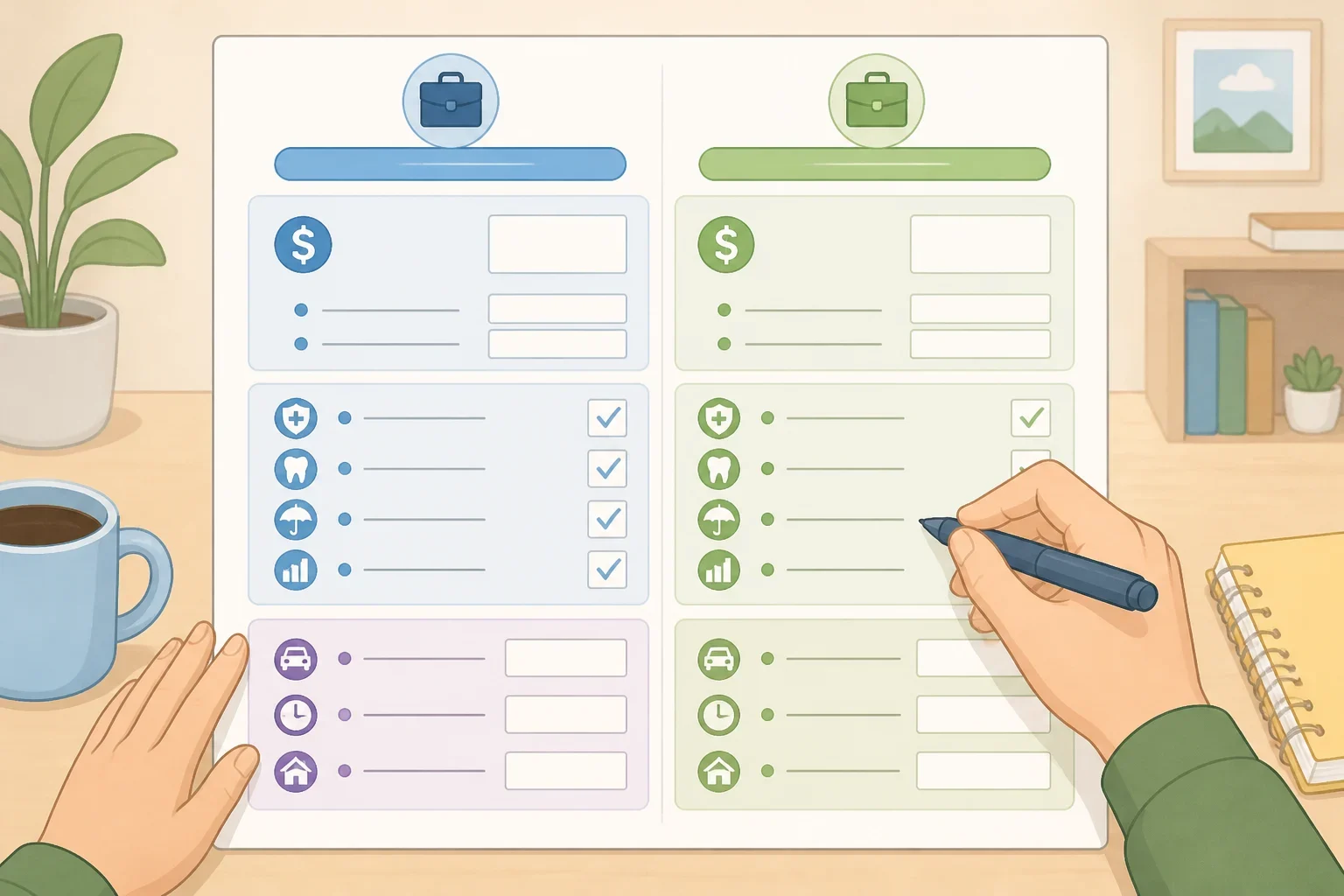
Salary is only one part of compensation. Private-sector compensation costs increased 3.5% from September 2024 to September 2025. During the same period, wages and salaries rose 3.6%, while benefit costs rose 3.5%, according to the BLS Employment Cost Index.
These are employer compensation-cost measures, not a prediction of what an individual worker will take home. The figures also describe a period ending more than a year ago. They still provide useful context: compensation includes wages and benefits, and a pay increase should be weighed against what the worker gives up.
Health insurance can change the calculation quickly. KFF found that health insurance made up 8% of average employee compensation. Its analysis also found that coverage was available to 94% of workers in higher-wage occupations, compared with 44% of workers in lower-wage occupations. Among workers offered coverage, enrollment was 72% and 49%, respectively, according to KFF’s analysis.
Those figures describe groups rather than every individual job seeker. They do show why workers should not assume that health coverage will be equally accessible at every employer. A new plan may have different employee premiums, deductibles, provider networks, eligibility rules, or start dates. The value of a higher salary depends partly on those details.
A side-by-side comparison should include:
- annual base pay and the number of paid hours used to calculate it
- bonuses, commissions, or other variable compensation, separated from guaranteed pay
- employee health-plan premiums, deductible, out-of-pocket exposure, and coverage start date
- employer retirement contributions or matching terms
- paid leave, holidays, and any waiting period before leave becomes available
- transportation, parking, relocation, or other work-related costs
- childcare or caregiving costs caused by a different schedule
- remote-work terms, required office days, and advance notice for schedule changes
Recurring costs should be converted into comparable amounts. For hourly work, use the expected hours and check whether the schedule is guaranteed. For variable pay, ask what portion is guaranteed and what conditions apply. A larger salary is not automatically a larger financial gain if the new role adds costs or removes benefits.
Career value belongs in the comparison too. A new job might offer training, a clearer advancement path, or experience that supports a later move. Those are potential advantages, not guaranteed returns. Ask what the role actually involves, how performance will be evaluated, and whether advancement practices are documented or simply mentioned during recruiting.
When to switch jobs for higher pay, and when flexibility changes the answer
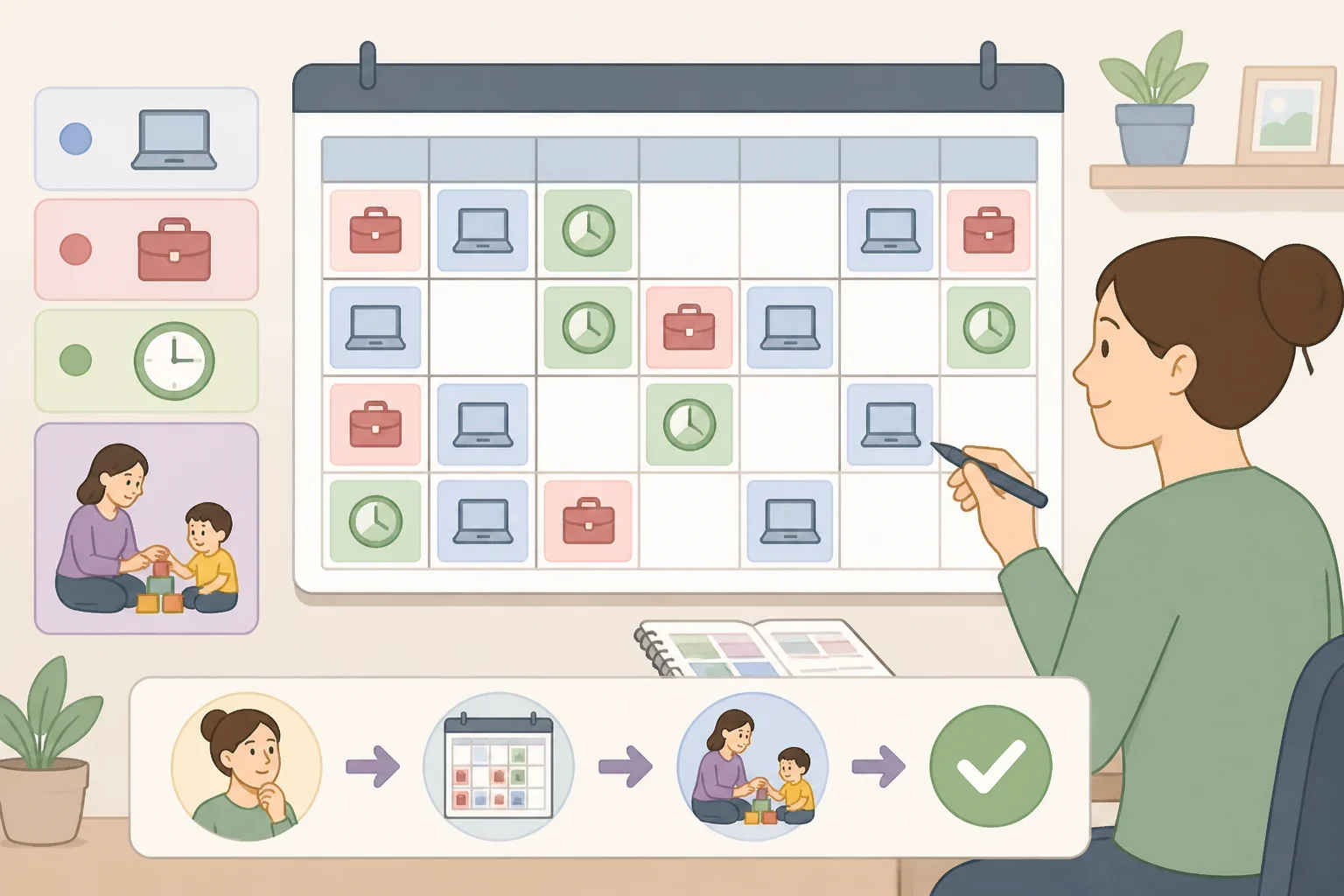
Career mobility and workplace flexibility are connected. A worker may find a higher-paying role and still be unable to accept it if the schedule conflicts with caregiving, transportation, school, or another fixed responsibility.
Pew Research Center’s survey of 2,242 U.S. working parents was conducted seven months ago, from March 2 to March 15, 2026. The findings focus on parents, not all workers, and some questions specifically concern parents who are not self-employed. That makes the research a focused example rather than a description of the entire labor force, according to Pew Research Center.
More than eight in ten non-self-employed working parents said paid parental, family, or medical leave would be extremely or very helpful, but only half said they had access to it, according to Pew Research Center. A new job that pays more but delays access to leave could therefore create a practical cost for a worker who depends on that benefit.
The same survey found that 71% of working parents considered the ability to work from home highly helpful, and 71% said the same about choosing when to work their required hours. Yet only 23% reported having a great deal or fair amount of work-from-home flexibility, and 25% reported that level of control over when they worked their hours, according to Pew’s survey findings.
That gap makes flexibility worth treating as a job requirement, not a recruiting perk. Ask whether hours are fixed, posted in advance, or subject to frequent changes. Ask who approves schedule adjustments, how often employees work outside the stated hours, and whether remote work is a written policy or an informal arrangement tied to one manager.
Predictability may matter as much as flexibility. Among surveyed parents, 71% of those with unpredictable work hours said balancing work and family was difficult, compared with 53% of those whose hours were at least somewhat predictable, according to Pew Research Center. The comparison does not prove that unpredictable hours caused every difficulty. It does show why schedule stability belongs in the offer comparison.
Why some workers cannot switch jobs easily
The question of when to switch jobs for higher pay assumes that a worker can manage the transition. That assumption does not hold for everyone. A new job can involve a gap between paychecks, a delay before health benefits begin, a longer commute, or new caregiving arrangements. The same raise can be manageable for one household and impractical for another.
Pew found that 14% of lower-income non-self-employed parents said their work hours were not too or not at all predictable, compared with 9% of middle-income parents and 7% of upper-income parents. The survey also found that 54% of upper-income parents said they had a great deal or fair amount of flexibility to attend their children’s events during work hours, compared with 40% of lower-income parents, according to Pew’s analysis.
These results do not show who can afford to change jobs or who would gain the most from a raise. They do show that workers enter job searches with different levels of schedule control. Someone with unpredictable hours or limited flexibility may have less room to attend interviews, complete onboarding, absorb a delayed benefit, or accept a role with uncertain scheduling.
The financial and professional risks can also feel immediate. Thirty percent of non-self-employed working parents said they would be extremely or very worried about losing pay if they needed time off. Smaller shares said they would be highly worried about losing their job, at 16%, or about their boss viewing them as less committed, at 18%, according to Pew Research Center.
For workers facing those constraints, preparation matters more than speed. Build whatever financial cushion is realistic before giving notice. Confirm the date when benefits begin, and ask for schedule terms in writing. Do not resign based only on a verbal promise, an informal remote-work arrangement, or an estimate of future earnings.
A practical test for deciding whether to move

A new job deserves serious consideration when it improves the parts of work that matter most to the worker, not merely the advertised salary. Use this sequence before accepting:
- Verify the offer. Confirm base pay, expected hours, start date, location, reporting relationship, and conditions attached to bonuses or commissions.
- Calculate total compensation. Add employer contributions and paid benefits, then subtract employee premiums and predictable work-related costs. Keep guaranteed pay separate from possible pay.
- Check the benefits timeline. Find out when health insurance, retirement contributions, paid leave, and other benefits begin.
- Test schedule reality. Get specific about start and end times, required office attendance, remote-work rules, overtime expectations, and notice of schedule changes.
- Compare transition risk. Consider commuting, childcare, transportation, onboarding, a possible gap in coverage, and what happens if the new role differs from the posting.
- Assess the reason for moving. Identify the skill, experience, advancement path, pay improvement, or work condition that makes the change valuable beyond the first paycheck.
Staying may be the safer choice when compensation is unclear, benefits are weaker, schedule terms are vague, or the transition would create costs the raise cannot cover. That does not close the door on career mobility. A worker can keep researching the market, build skills, update a resume, and apply selectively while retaining current income and benefits.
Switching can be worthwhile when the new offer’s total value is documented and clearly better for the worker’s circumstances. The available data shows that opportunities vary by industry, but it does not supply a universal salary premium for changing jobs.
Before giving notice, compare the two jobs line by line. Ask whether the new role improves pay after benefits and added costs, preserves the flexibility the household depends on, and offers a career advantage concrete enough to verify. If those answers are incomplete, keep asking questions before treating the offer as an upgrade.
