
AI Job Interview Explained: How to Prepare and What to Expect
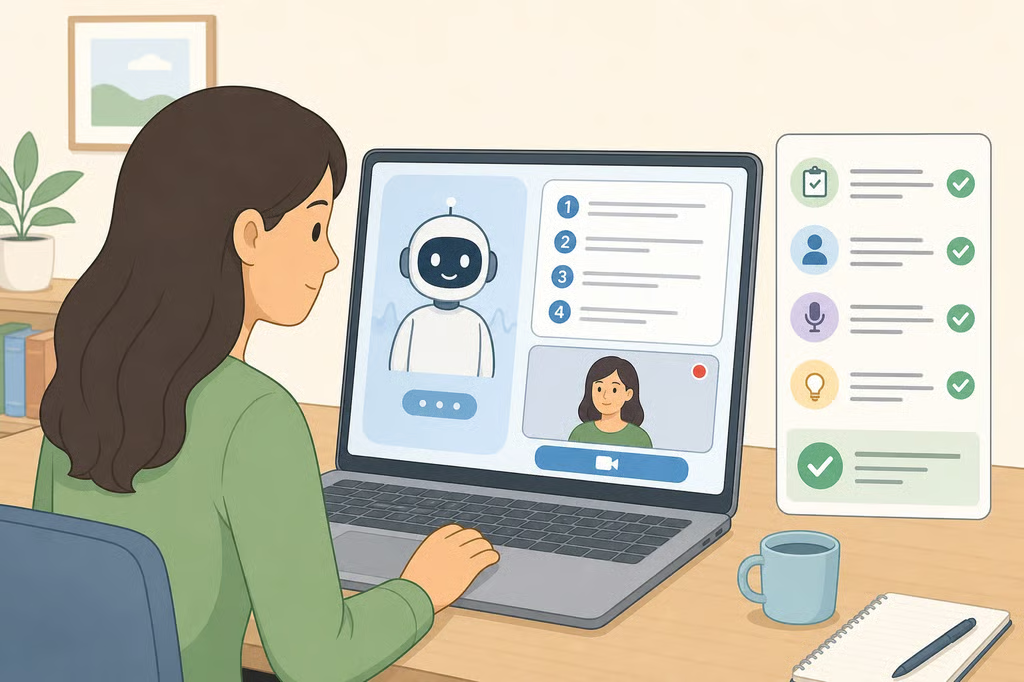
An AI job interview may be a recorded video interview, an automated assessment, a chatbot conversation, or a human interview later analyzed by software. Before practicing, identify which format the employer is using. Preparation looks different when answers are recorded on your own time than when you are speaking with a recruiter or a live interviewer.
This guide explains how to identify the format, prepare useful examples, handle timed responses, test your technology, and ask what the system evaluates. It also separates practical preparation from legal questions, because disclosure and accommodation requirements can vary by jurisdiction, employer, tool, and use case.
What is an AI job interview?
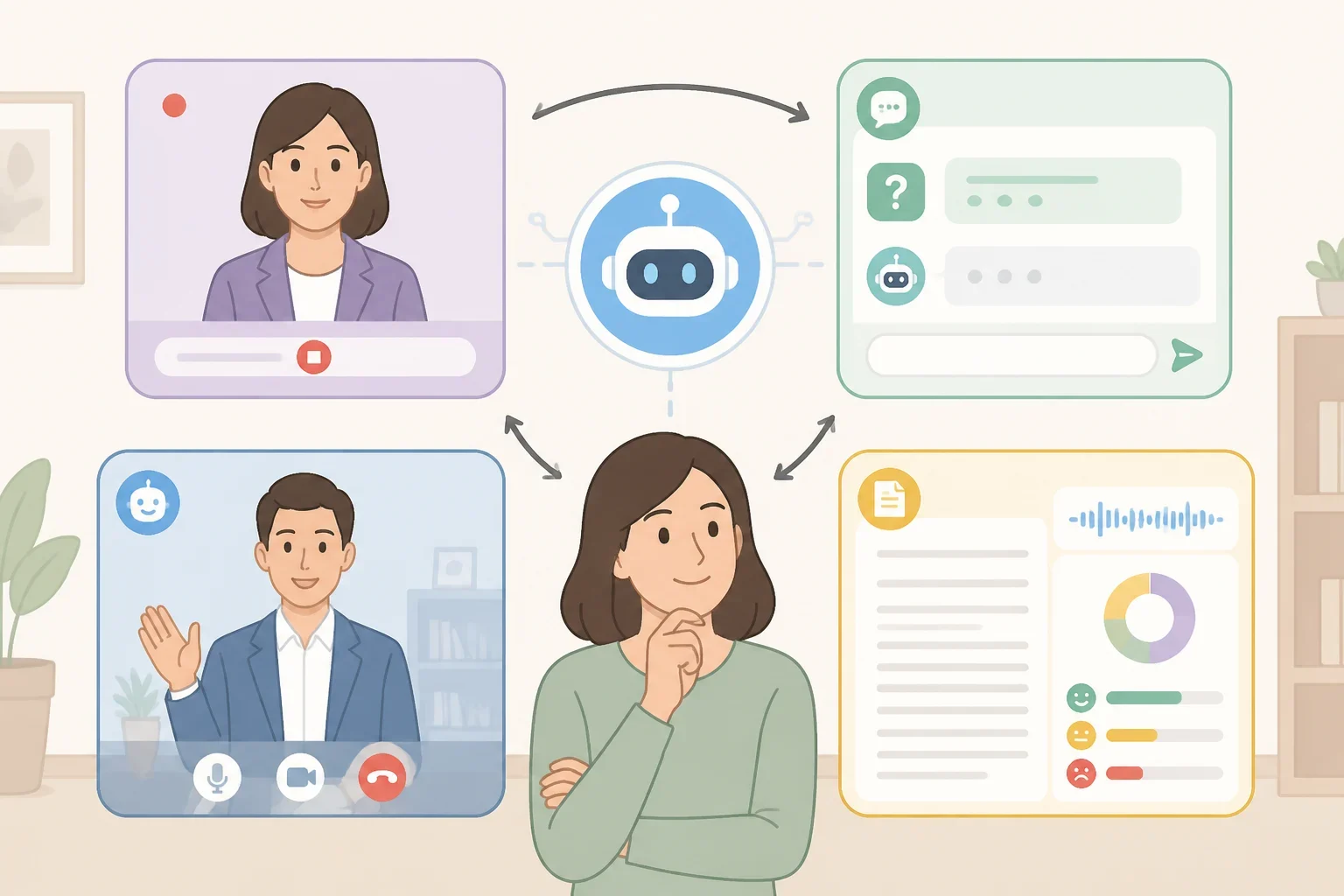
An AI job interview is not one standardized process. Software may screen a résumé, administer a gamified assessment, prompt a candidate through a recorded video platform, or analyze interview responses after they are submitted. Automated systems can appear at several points in employment, including recruiting, interviewing, hiring, performance evaluations, and promotions, according to an EEOC public hearing transcript from three years ago.
The tools also vary in complexity. Some are basic applicant-tracking systems. Others use assessments or machine-learning processes to sort, rank, or source applicants. Testimony presented to the EEOC described this range, from simple applicant tracking to gamified psychometrics and systems used to source candidates on social platforms, according to Klein testimony from three years ago.
A newer research question involves large language models, or LLMs, evaluating interview transcripts. A study examined two datasets, one containing 100 transcripts from UK job seekers and another containing 100 from Indian job seekers. The research does not establish how widely employers use this method in actual hiring. It examines how models responded under study conditions, not how a particular employer will evaluate an application, according to Rao et al., AAAI/ACM AIES last year.
Start by checking the job posting, interview invitation, and scheduling email for:
- The name of the video or assessment platform
- Instructions for recording or uploading answers
- A time limit for each response
- A notice that AI, automated scoring, or software analysis will be used
- Contact information for technical questions or accommodation requests
If the format is unclear, ask before the interview. Knowing whether the process is recorded, live, timed, or reviewed by software gives you something concrete to practice.
How to prepare for an AI interview
Prepare for the job, not for an imagined algorithm. Candidates cannot know the vendor’s model, scoring weights, training data, or whether a human will review the result. They can control the relevance of their examples, the clarity of their delivery, their technical setup, and whether they follow the instructions.
Research on LLM transcript scoring found lower scores for transcripts from Indian job seekers than for transcripts from UK job seekers. The differences were associated with linguistic features including sentence complexity and lexical diversity. In the same study, changing names by gender, caste, or region did not produce statistically significant effects when those names were isolated from other contextual signals, according to Rao et al., AAAI/ACM AIES last year.
Those findings do not prove that a candidate should use a particular accent, rewrite their identity, or speak in a way that sounds unnatural. They also do not prove that every automated hiring system penalizes fragmented answers. A sensible preparation choice is simpler: answer in complete, understandable sentences, give specific evidence, and avoid rushing through a response just to sound polished.
1. Build three or four work examples
Use a situation, action, result structure for behavioral questions. The example does not need to come from a full-time job. Class projects, internships, volunteer work, and part-time roles can show planning, teamwork, problem-solving, or responsibility when they connect clearly to the position.
For example:
In a group class project, two members disagreed about the research method and the deadline was approaching. I organized a short meeting, listed the requirements we had to meet, and divided the remaining work according to each person’s availability. We submitted the project on time, and the final presentation included both the survey data and the comparison the assignment required.
The answer works because it names the situation, explains the action, and ends with a result. Replace the general details with a real example from the candidate’s background.
2. Practice within the time limit

Recorded interviews often provide a prompt, preparation time, and a fixed period for speaking. The exact format depends on the platform and employer, so use the instructions in the invitation rather than assuming every automated interview works the same way.
Practice with a timer. Answer the question directly in the first sentence, give the example, and finish with the result or lesson. Do not fill the entire time with background information.
If a thought disappears, pause briefly and continue. A natural reset can sound like this:
The main point is that I clarified the priorities before starting the work. The result was that the team met the deadline and avoided duplicating tasks.
A pause is easier to recover from than a rushed answer that never reaches the point. If the platform allows a retake, read the rules before using it. Some systems may limit retakes or make the final submission clear only after confirmation.
3. Test the recording setup
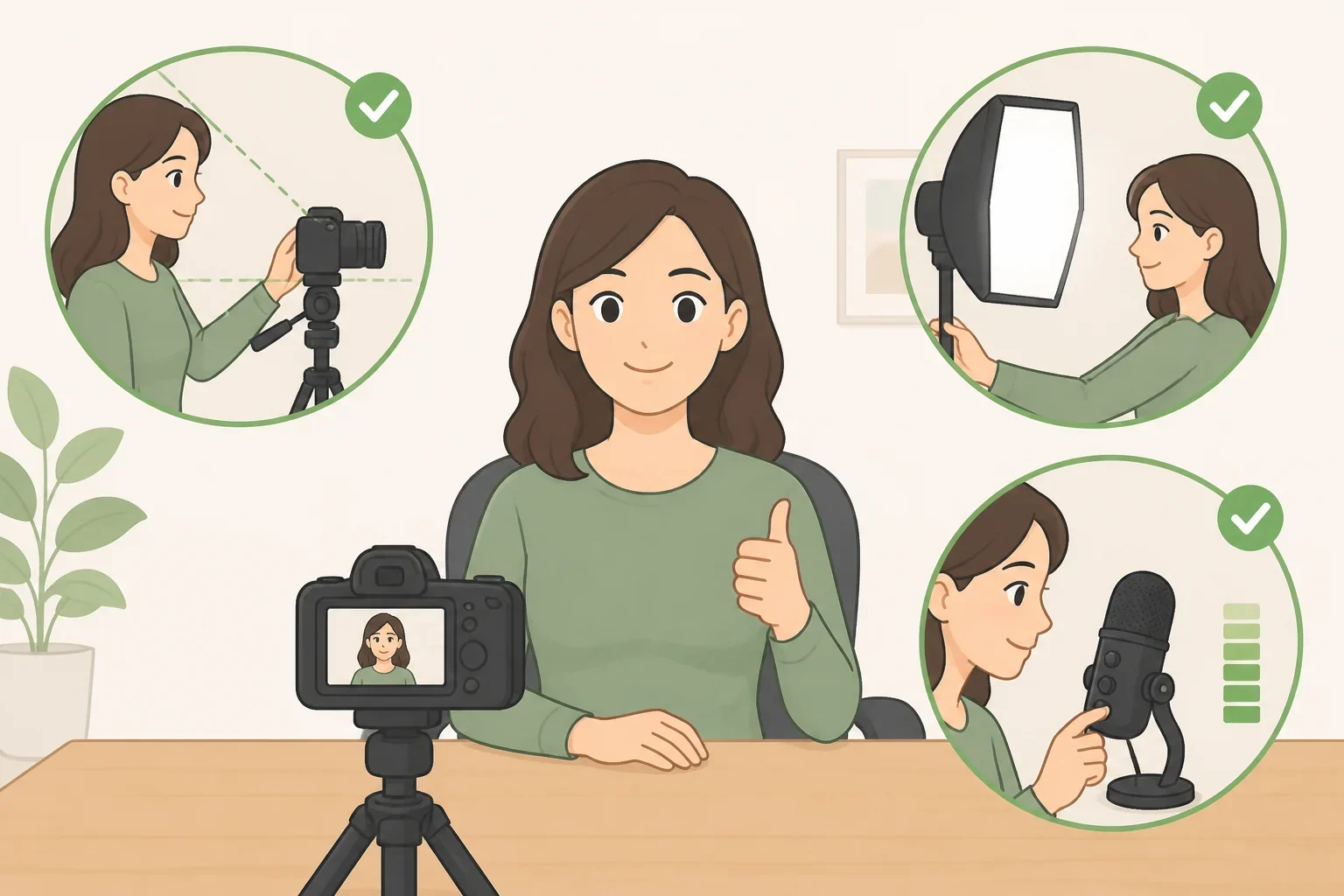
Complete a test run before the deadline. Check:
- Camera framing, with the face visible and the camera at eye level
- Lighting that makes the face easy to see
- Microphone clarity and background noise
- Internet stability
- Captions or accessibility settings
- Browser permissions for the camera and microphone
- File upload requirements, if answers are recorded separately
- Whether the platform works on the device being used
Use a quiet, ordinary setting. The goal is not to create a studio. It is to make the answer easy to hear and the speaker easy to see.
4. Read the notice before consenting
Some jurisdictions have required notices for certain uses of AI in video interviews. Testimony presented to the EEOC described Illinois requirements involving notice, information about how the AI works and the general characteristics it evaluates, and applicant consent, according to Friedman testimony from three years ago.
That testimony should not be treated as a complete statement of Illinois law in September 2026. Check the current Illinois statute or state guidance before relying on a specific notice, consent, deletion, retention, or reporting requirement.
What to expect in an AI interview
A recorded interview usually presents fixed prompts on screen. A candidate records an answer, checks the submission, and moves to the next question. A live chatbot or avatar format may present questions interactively. In another setup, the interview may feel completely ordinary to the candidate while software analyzes a transcript afterward.
The available research does not establish how common each format is. Treat the following as possibilities to identify in the employer’s instructions, not as a universal sequence:
- Recorded video prompts: The platform displays a question and gives a set period for preparation and response.
- Written or chat prompts: The candidate types answers into an automated interface.
- Interactive systems: A chatbot or avatar asks questions during a live-looking exchange.
- Post-interview analysis: A transcript or other interview record is reviewed with automated tools.
Expect prompts that could also appear in a human interview, such as:
- Tell us about a time you worked with a difficult teammate.
- Describe a problem you solved.
- Explain how you handled competing deadlines.
- Why are you interested in this role?
- What would you do if a customer or colleague disagreed with your approach?
These are examples for practice, not a claim about the questions any particular platform uses. Prepare the underlying stories rather than memorizing a script. A memorized answer can become difficult to adapt when the wording changes.
An avatar can also affect how candidates experience the process. A study published earlier this year involved 215 participants who interviewed with photorealistic AI avatars, followed by a standardized rejection. The researchers measured perceptions of trust, fairness, and bias. They found that racial mismatch heightened perceptions of ethnic bias, while partial identity matching produced lower fairness judgments than full or no matching, according to the ACM “Skin-Deep Bias” study earlier this year.
The study examined fairness perceptions in a controlled setting. It did not show that avatar appearance changed hiring decisions or caused employers to select different candidates. If an avatar or automated voice feels distracting, practice looking at the screen, listening fully to each prompt, and answering the question rather than reacting to the technology.
Ask what the system evaluates
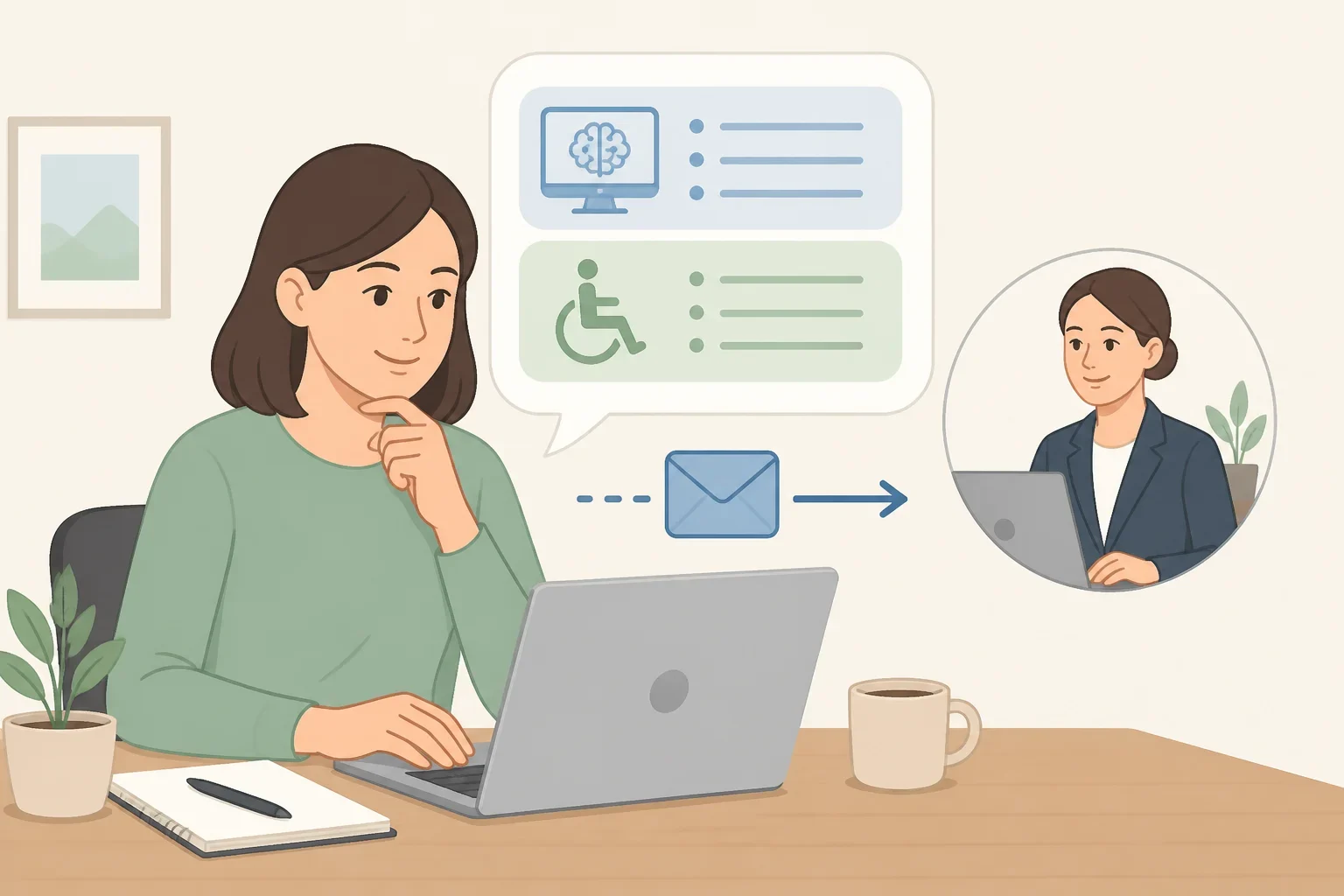
A candidate does not need to guess silently. Ask the recruiter or hiring contact for basic information before submitting an interview.
Useful questions include:
- “Could you tell me whether AI or automated scoring will be used?”
- “What part of the interview does the tool evaluate?”
- “What general characteristics or qualifications does it assess?”
- “Is a person involved in reviewing the results?”
- “How long will the interview or recording be retained?”
- “Could you tell me how to request an accommodation during this stage?”
The employer may not provide every technical detail. Still, the response can clarify whether the tool analyzes the video, audio, transcript, written answers, or another assessment.
Rules differ by location and by the type of tool being used. Testimony presented to the EEOC described New York City’s automated employment decision tool law as covering tools that produce a score, classification, or recommendation that substantially assists or replaces discretionary decision-making. It also described independent bias audits and advance notice requirements, according to Friedman testimony from three years ago.
That historical description is not a substitute for current New York City Department of Consumer and Worker Protection guidance. It should not be read as saying every employer must offer a general alternative interview whenever software is present. Coverage, notice rules, audit obligations, exemptions, and any alternative process can depend on the tool and the employer’s use of it.
Disability accommodations require separate attention. The EEOC/DOJ guidance from four years ago warns that software and algorithmic tools may disadvantage applicants with disabilities and says employers should have a process for requesting reasonable accommodation. It does not establish that every candidate is entitled to a particular replacement interview format.
Request help early and describe the process issue clearly. A candidate might ask whether captions, additional time, a different response method, or another adjustment is available. Current requirements and the appropriate next step depend on the situation, so consult the employer’s HR contact or current official guidance rather than assuming a particular legal right.
Use this pre-interview checklist
Before starting an AI-powered job interview:
- Identify whether the process is recorded, live, written, timed, or interactive.
- Save the employer’s instructions and note the submission deadline.
- Prepare three or four situation-action-result examples.
- Practice answering directly without memorizing every sentence.
- Test the camera, microphone, lighting, browser, captions, and internet connection.
- Confirm whether retakes are allowed and how the final answer is submitted.
- Read any disclosure about AI analysis, evaluation criteria, consent, or data handling.
- Ask who reviews the result and how to request an accommodation.
- Keep the job description nearby so examples stay relevant.
The practical script is short: “Could you tell me whether AI or automated scoring will be used, what part of the interview it evaluates, and how I can request an accommodation?”
That question will not reveal every feature of a hiring system. It will give you the information needed to prepare honestly, follow the process, and decide what to clarify before submitting an answer.
