
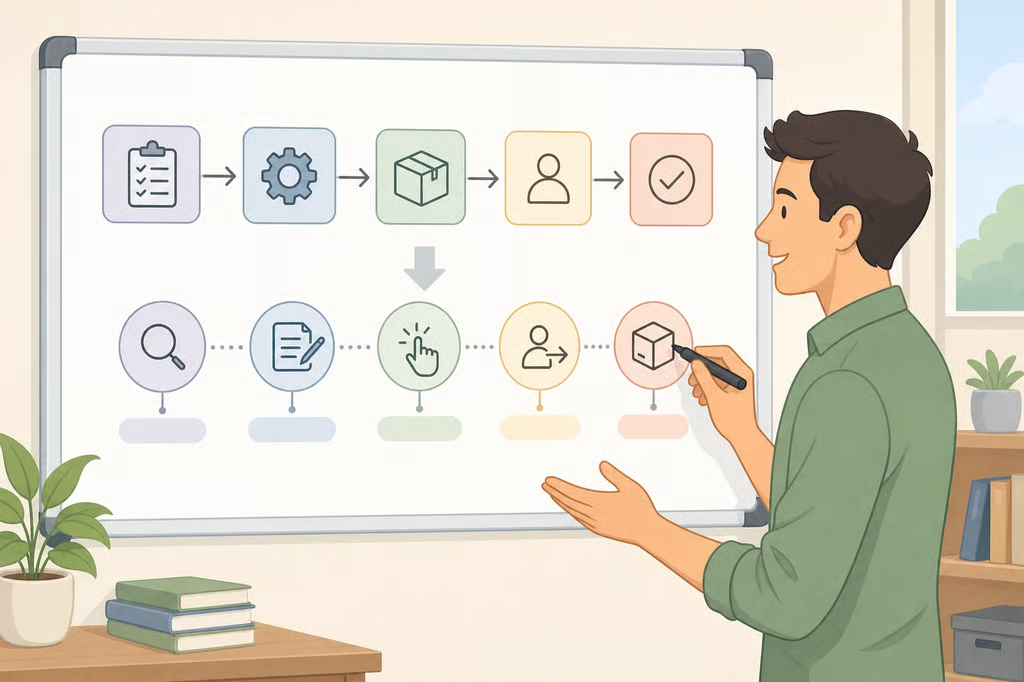
Teaching a coworker a routine task doesn't always require a lengthy presentation. If the process is straightforward, a 10-minute training session can be enough to demonstrate the essential steps, give the employee time to practice, and check whether they can complete the task correctly.
The Centers for Disease Control and Prevention (CDC) identifies clear learning objectives, practical exercises, assessment, and follow-up support among its eight Quality Training Standards. Although these standards apply to training developed or funded by the agency, they offer useful principles for everyday workplace instruction.
A systematic review of 40 studies, published online in December 2024 and included in a 2025 issue of Heliyon, examined microlearning, an approach that delivers focused instruction in short segments. The researchers found no universally ideal duration; the appropriate length depends on the learning objective.
Consider an employee learning to submit an expense report. A short session could demonstrate the required fields, expense categories, and receipt attachments, followed by a practice submission using fictional information.
Choose a task that fits 10 minutes
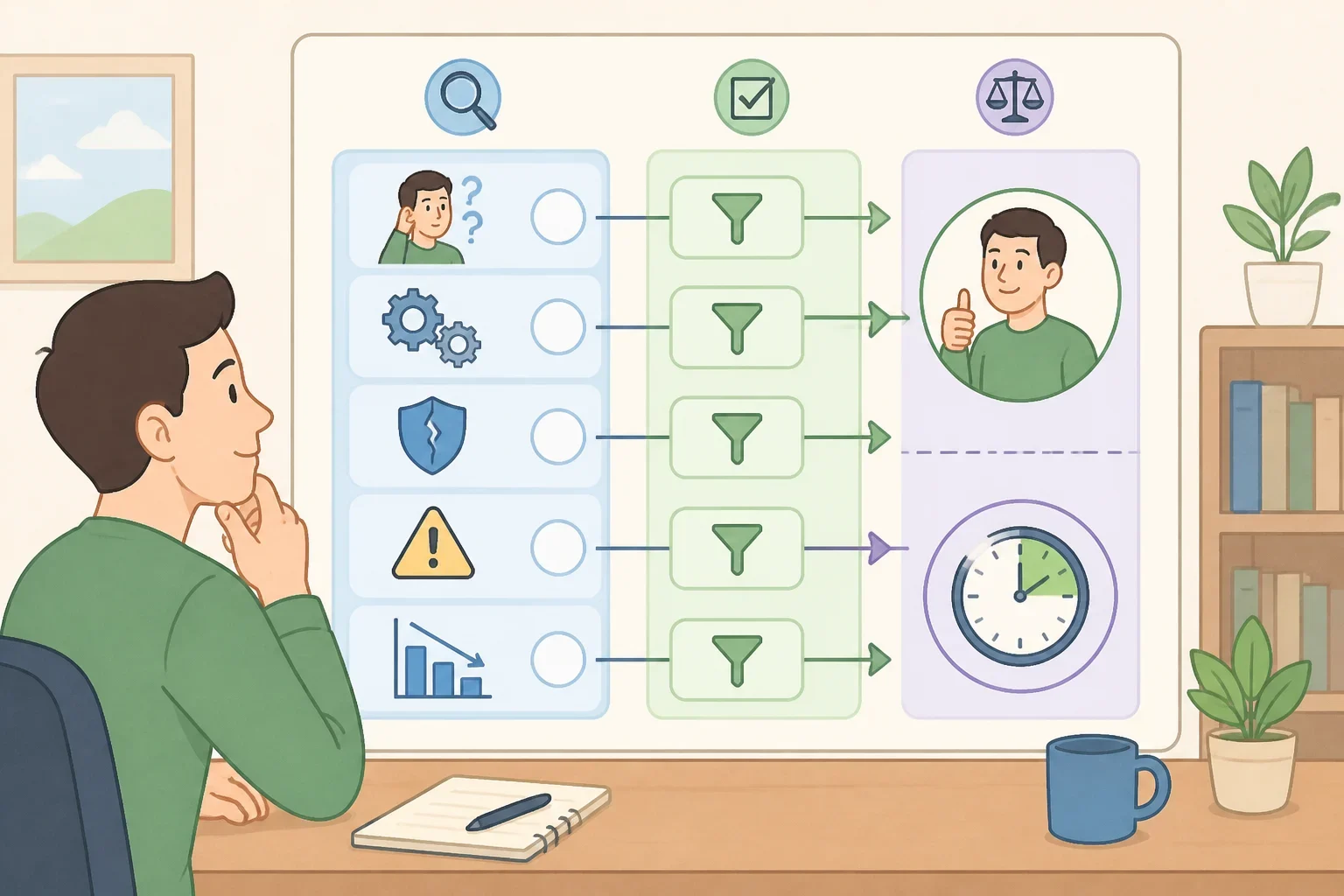
Before creating the session, identify what employees need to learn and what's preventing them from doing it correctly. A short lesson is best suited to a specific, repeatable task rather than an entire complicated workflow.
Consider the employee's experience. Someone familiar with the expense-reporting system may only need a reminder about a changed step. A new hire might need a demonstration, system access, and additional practice.
A longer or more formal training session may be necessary when:
- The process is still changing or hasn't been finalized.
- Mistakes could have safety, legal, or compliance consequences.
- The task requires complex decisions or involves numerous exceptions.
- Employees lack the tools, permissions, or system access needed to practice.
Identify the specific mistake employees are making and why it happens. If the problem involves missing permissions rather than missing knowledge, resolve that issue before scheduling training.
For complicated workflows, select one portion to teach instead of trying to cover everything in 10 minutes.
Set one clear learning goal
Write one objective describing what the employee should be able to do by the end of the session. Use an observable action, such as submitting a form or updating a record, rather than a vague goal such as "understand the process."
The CDC recommends making learning objectives specific and measurable, with expectations that are achievable within the available time.
For expense-report training, the objective could be:
"By the end of the session, the employee will be able to submit a sample expense report with all required fields completed, the correct expense category selected, and the necessary receipts attached."
An employee meets this objective by demonstrating four actions:
- Completing every required field.
- Selecting the correct expense category.
- Attaching receipts when required.
- Submitting the sample through the designated system or training environment.
Use this template for another process:
"By the end of this session, [employee] will be able to [specific action] with [measurable standard]."
Keep longer-term performance measures separate. Whether employees make fewer mistakes in their actual work can be evaluated after training.
Build your 10-minute training agenda
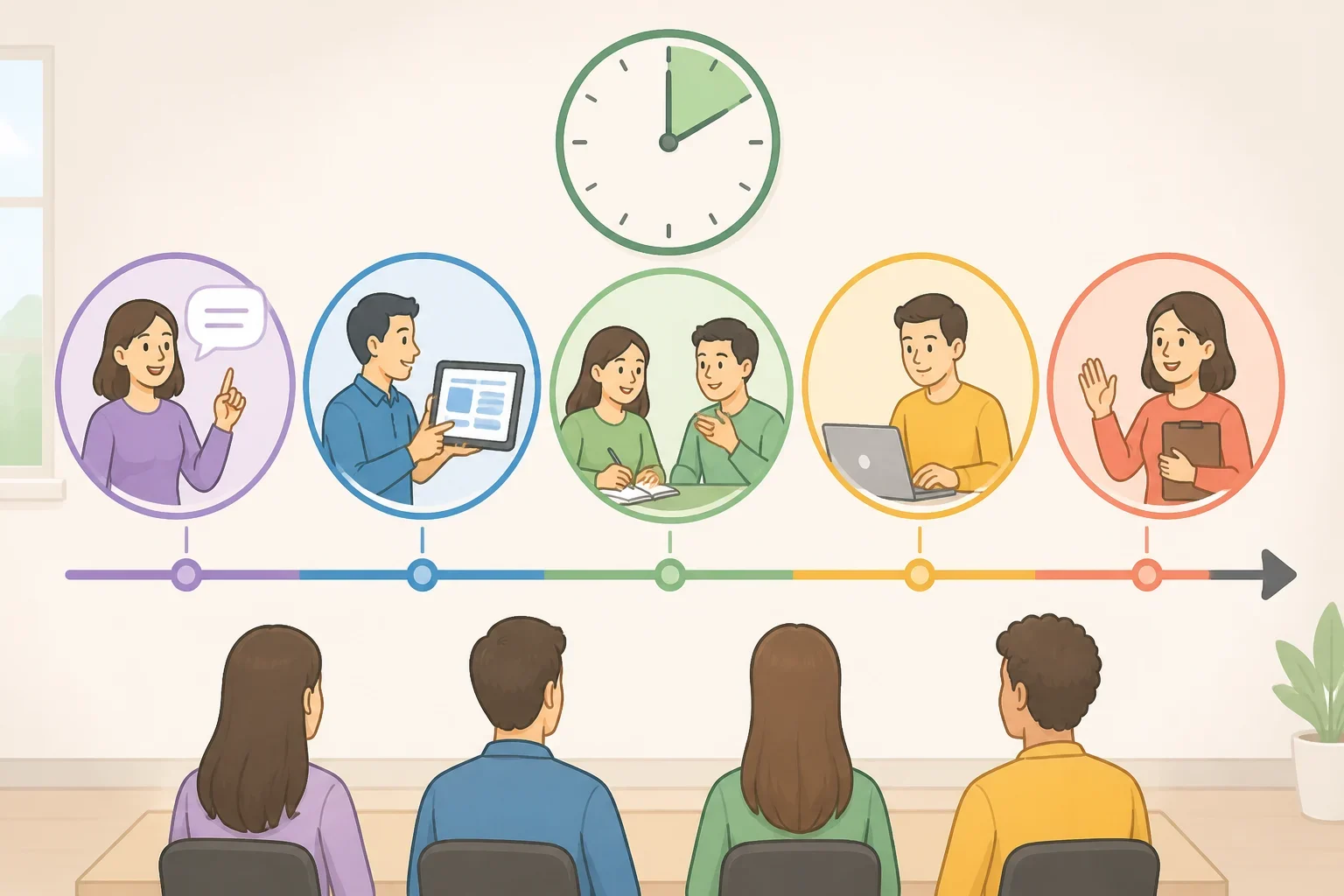
Divide the session into short segments so employees have time to watch, practice, and complete the task independently. Keep explanations brief and reserve enough time for hands-on learning.
For an expense-reporting lesson, use this sample agenda:
| Time | Activity |
|---|---|
| 1 minute | Explain when the task comes up and what employees will learn. |
| 2 minutes | Demonstrate the process using a sample expense report. |
| 4 minutes | Guide employees through the task, providing feedback as they practice. |
| 2 minutes | Have employees complete a second sample independently. |
| 1 minute | Review mistakes, answer questions, and provide a quick-reference checklist. |
This schedule is an example, not a required formula. Adjust the timing to suit the task and the employee's experience.
Use fictional information or a training environment rather than real employee financial records. Rehearse the session with a timer before delivering it. If the practice exercise takes longer than expected, simplify the task instead of rushing through the final assessment.
Turn the process into a demonstration and checklist
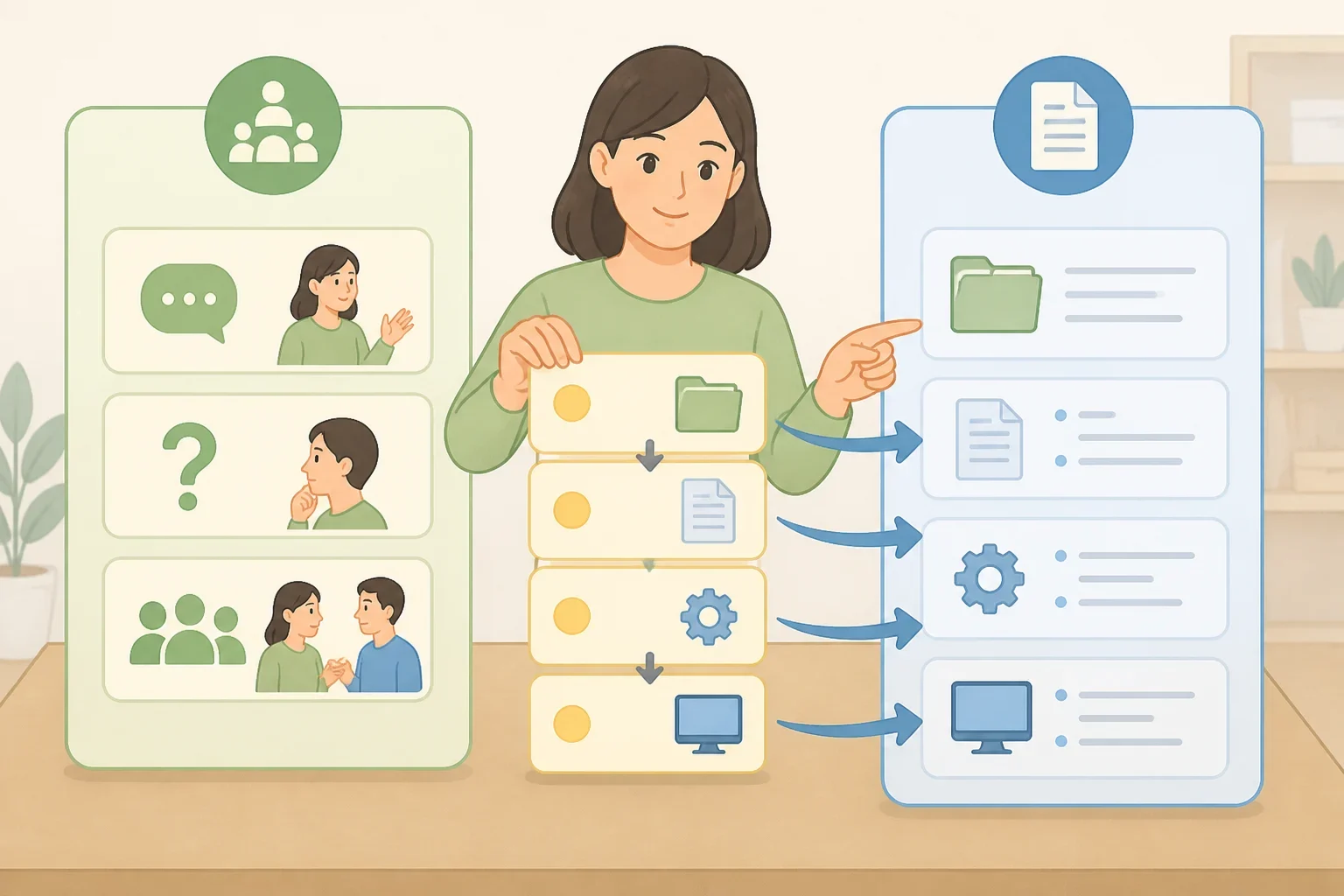
Completing a training session doesn't necessarily mean an employee can perform the task independently. A brief assessment can reveal whether they need more practice or instruction.
Check understanding at three points:
- During training: Observe whether the employee completes the sample task correctly without prompting.
- After training: Ask the employee to perform the task independently during regular work, with appropriate support available.
- During follow-up: Review recurring errors or another relevant performance measure to determine whether further instruction is needed.
For expense reporting, you might review correction requests after 30 days to see whether mistakes have decreased. Treat that change as one measure of progress, not proof that the training alone caused the improvement.
For safety-sensitive, regulated, or judgment-heavy tasks, check whether company policies require additional instruction, supervised practice, documentation, or formal approval. A 10-minute session may not satisfy those requirements.
10-minute training session worksheet
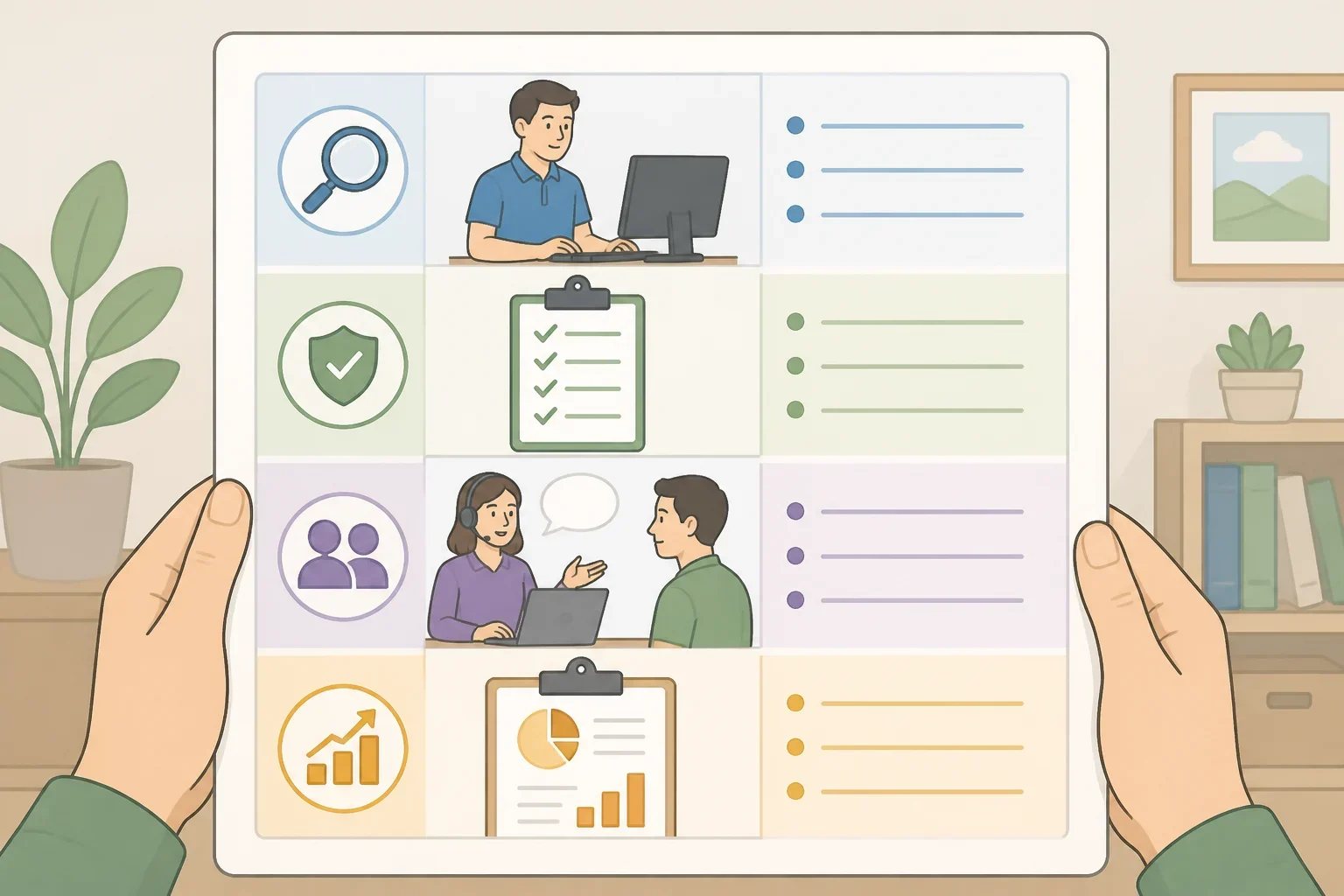
Complete these fields before preparing your training materials:
- Learner: Who needs training, and how familiar are they with the process?
- Task trigger: When does the employee perform this task?
- Learning objective: What specific action should they complete?
- Success standard: What does a correct result look like?
- Practice activity: What realistic sample can they use?
- Tools and access: What software, permissions, or materials are required?
- Job aid: Which steps or exceptions need written reference instructions?
- Follow-up: How and when will you check independent performance?
Choose one routine workplace task and complete the worksheet before building your session. Test the agenda with a coworker, note where they hesitate, and revise the demonstration or checklist before training the rest of the team.
The goal isn't to squeeze an entire procedure into 10 minutes. It's to give employees enough instruction and practice to perform one useful task correctly, with a reliable reference they can return to when questions arise.
