
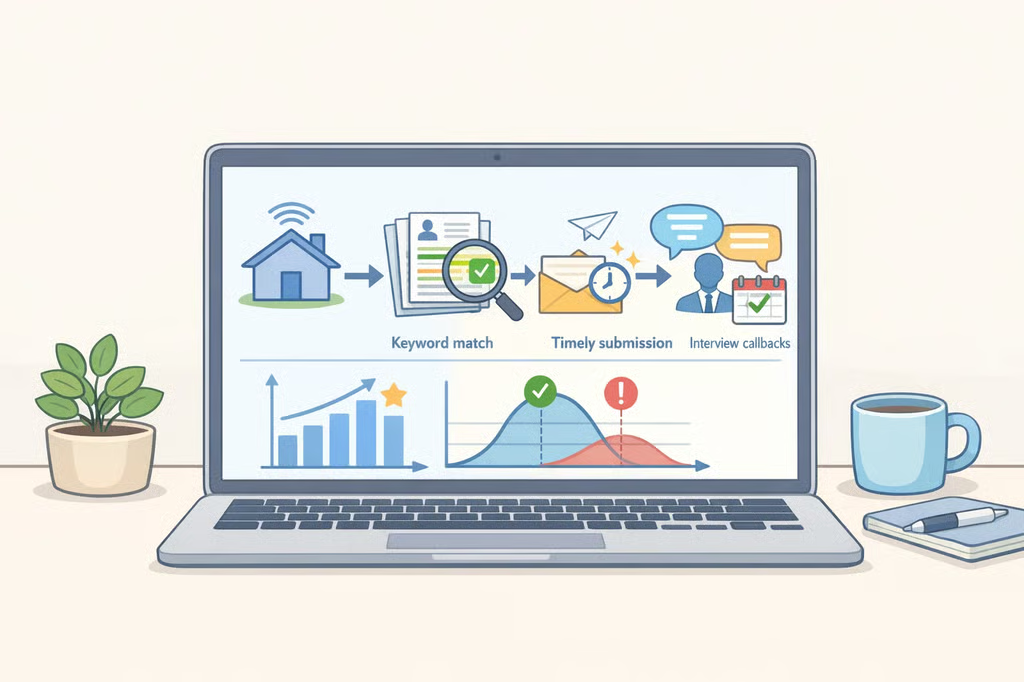
- How to Get More Interviews for Remote Jobs: New Dataset
- What the dataset tracks, and what it leaves out
- How candidates describe the current market
- Keyword matching and file format show the widest measurable gaps
- Timing and applicant tracking system shape response speed
- AI application volume is reshaping how candidates compete
- A practical workflow based on the findings
- What this means for a remote-only job search strategy
How to Get More Interviews for Remote Jobs: New Dataset
Job platform Jobloo published a dataset of 466,810 job applications two months ago, breaking down callback rates by resume keyword match, file format, submission day, and applicant tracking system (Jobloo, 2026). Anyone researching how to get more interviews for remote jobs will hit one immediate limit: the published findings do not break results out by work arrangement, so they cannot answer whether remote postings draw fewer interviews than on-site roles. Questions about why remote jobs are harder to get are common right now, but this dataset simply wasn't built to answer that one.
What it does show is narrower and more useful in a different way: measurable associations between how an application is prepared and submitted and whether it gets a response, drawn from platform submission logs rather than survey answers. Those associations, keyword matching, file format, submission timing, and the applicant tracking system on the receiving end, may be relevant to any high-volume application process, remote-only included, though Jobloo's data reflects its own platform users rather than the labor market at large. Read alongside a separate survey on how competitive the market currently feels, the numbers point to a few specific checks worth testing before the next batch of applications goes out.
What the dataset tracks, and what it leaves out
The figures come from anonymized submission logs covering January 1 through June 15, 2026, gathered from active Jobloo users applying through 10 different applicant tracking systems (Jobloo, 2026). Jobloo counts a callback as recruiter-initiated contact, or a status change to "Under Review" or "Interview" inside an ATS, within 21 days of submission (Jobloo, 2026). That's a broader measure than a confirmed interview invitation, a methodological distinction rather than a separate finding Jobloo reports, so a callback rate and an interview rate describe different things.
The dataset excludes postings that closed within seven days of going live, job descriptions shorter than 100 words, and duplicate submissions to the same role by the same user (Jobloo, 2026). Jobloo publishes the data under a CC BY 4.0 license and credits it as an internal dataset built from its own platform users; the source material does not present it as a random sample of the broader labor market (Jobloo, 2026). That distinction matters for how far the findings can travel: the patterns describe how Jobloo users' applications were handled, not a scientifically representative cross-section of every job seeker or every remote posting.
How candidates describe the current market
Separate from Jobloo's submission logs, Greenhouse's 2025 Workforce & Hiring Report surveyed 2,200 active job seekers across the US, UK, and Ireland and found just 7% believe the market currently favors candidates. Eighty percent of US workers reported feeling insecure in their current roles, and 28% said they were facing some form of employment uncertainty, according to the same survey (Greenhouse, 2025).
Seventy-two percent of respondents said a job they applied for turned out to be different from what was ultimately offered (Greenhouse, 2025). Greenhouse's report doesn't isolate remote postings from other job types, so the mismatch figure describes the overall candidate experience surveyed, not a specific remote job interview rate. Set next to Jobloo's numbers, it adds context for why applying feels difficult to the candidates surveyed, without establishing what's actually driving that difficulty.
Keyword matching and file format show the widest measurable gaps
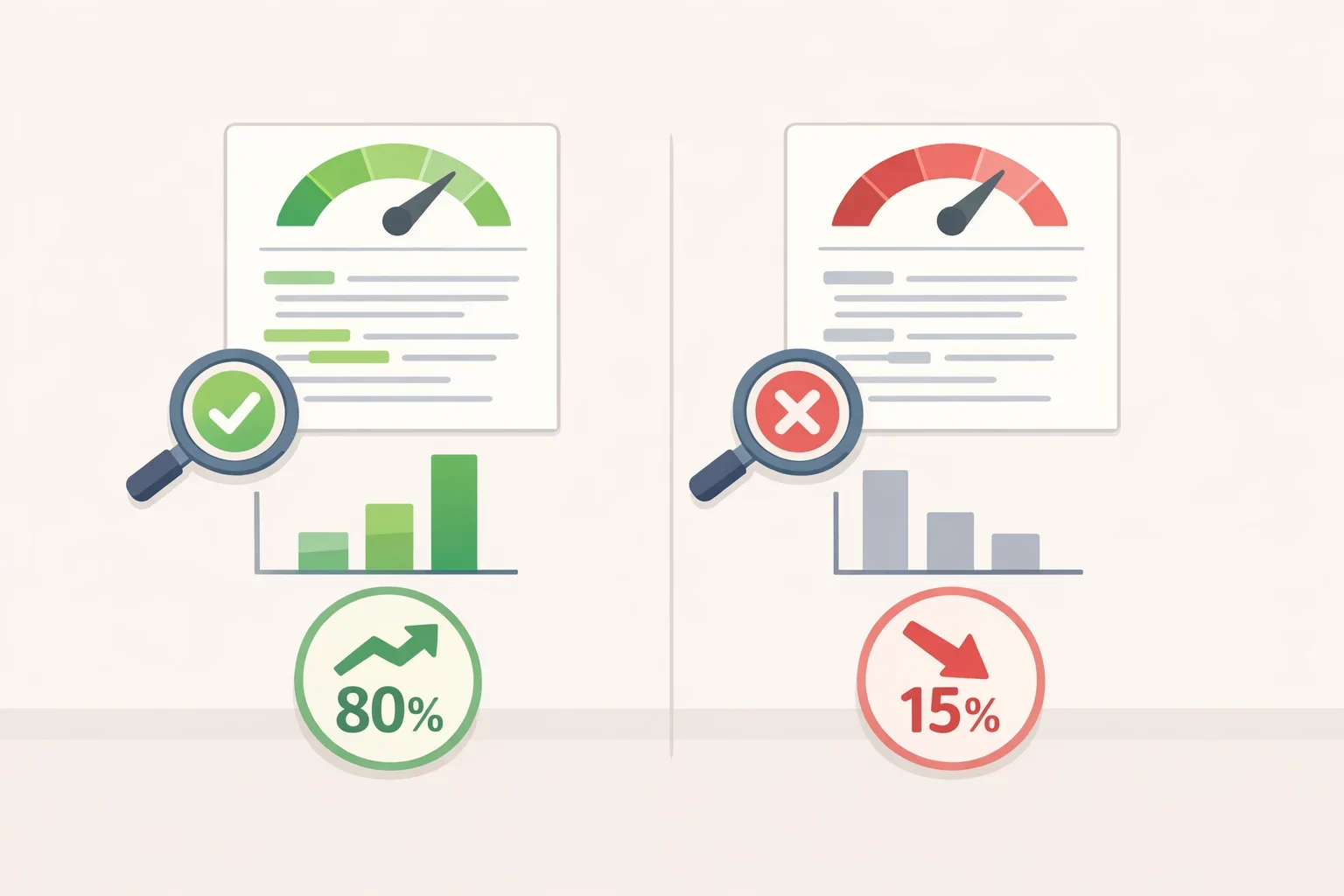
Among the factors Jobloo did measure, resume keyword matching produced the largest difference in callback rates. Applications scoring an 85% or higher match against the job description's language achieved an 11.4% callback rate, compared with 0.4% for applications scoring below 45%, roughly a 28.5-fold difference (Jobloo, 2026).
File format was associated with a similarly wide gap, tied to different parse-success rates across formats. Standard text-layer PDFs exported from Word or Google Docs parsed successfully 99.2% of the time and carried an 8.9% callback rate. Canva-designed PDFs parsed successfully only 71.4% of the time and had a 3.1% callback rate, while scanned image PDFs had a 0.9% callback rate (Jobloo, 2026).
Both figures describe correlations Jobloo observed in its own submission logs, not a controlled test of cause and effect. Because the study is observational, these gaps should be treated as signals to test rather than expected results.
Timing and applicant tracking system shape response speed
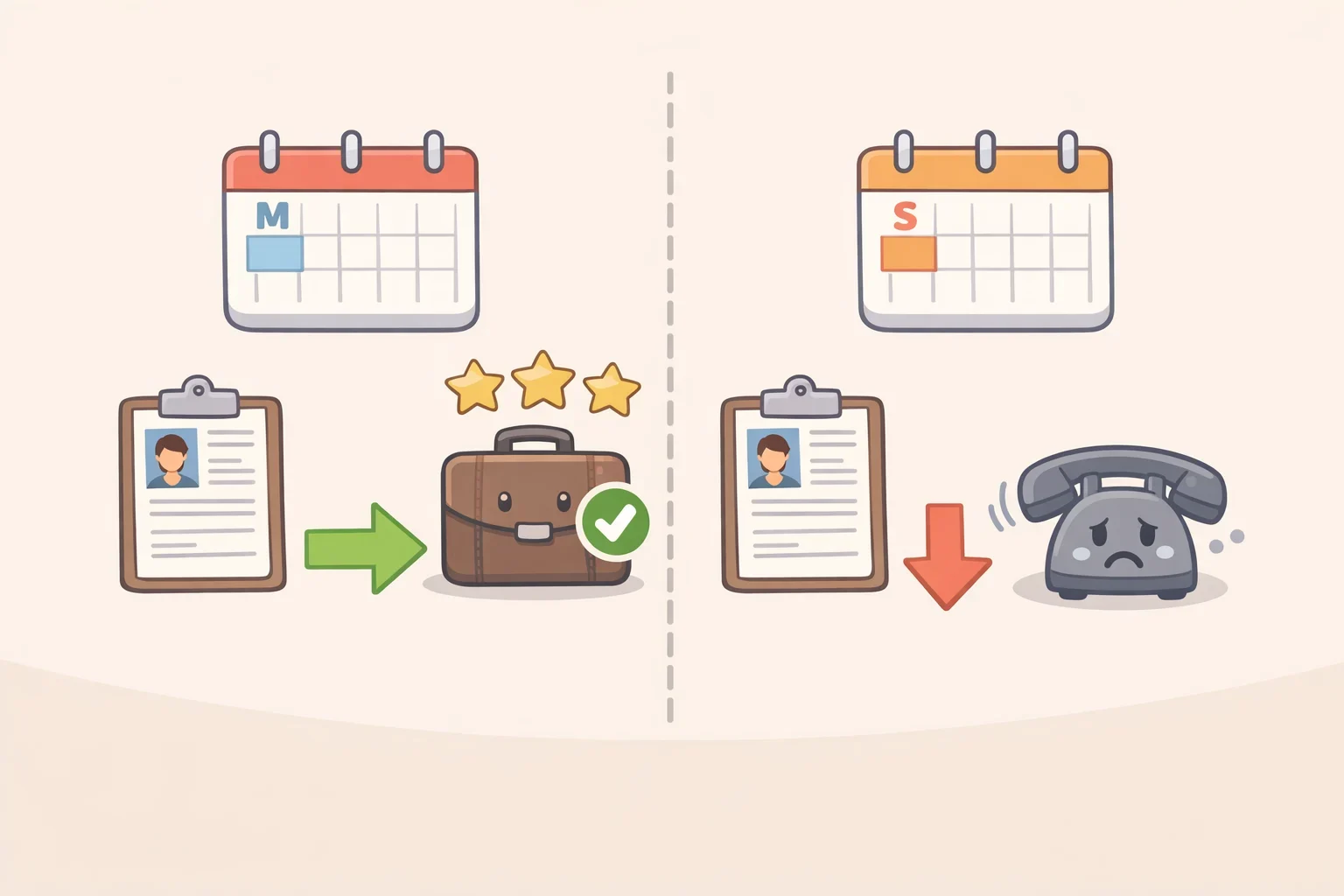
Submission day produced the single largest timing variable Jobloo identified. Applications submitted on Monday achieved an 11.2% callback rate, compared with 1.9% for applications submitted on Sunday, a 5.9-fold gap (Jobloo, 2026). Jobloo's published tables attribute the pattern to recruiters clearing a Monday-morning queue while Sunday submissions land behind a full weekend backlog, an explanation presented alongside the data rather than behavior independently verified from the logs themselves (Jobloo, 2026).
Callback speed also varies by which applicant tracking system a company uses, and the range across all 10 platforms Jobloo tracked is wide. BambooHR produced the highest callback rate in the dataset, at 9.3%, averaging 8.1 days between submission and callback. Lever followed at 8.9%, with a 9.8-day average, and Greenhouse's own ATS came in at 7.2%, averaging 12.3 days (Jobloo, 2026).
Response rates drop further down the list. Ashby averaged 6.8% with an 11.2-day turnaround, and SmartRecruiters averaged 5.6% at 14.3 days. Workday, iCIMS, SuccessFactors, and Taleo all fell below 5%, with response times stretching from roughly 19 to nearly 25 days; Taleo was slowest and lowest overall, at a 2.9% callback rate and a 24.6-day average (Jobloo, 2026). The reported data does not establish why the platform-level results differ this much, which makes the gap more useful for calibrating follow-up timing than for assuming silence on a slower platform means rejection.
AI application volume is reshaping how candidates compete

Application volume driven by AI tools is changing how candidates compete for attention, according to Greenhouse's survey. Twenty-six percent of candidates said AI-driven application volume has made it harder to stand out, a figure that rises to 45% among Gen Z respondents (Greenhouse, 2025). At the same time, 31% said AI tools have genuinely helped their own job search, according to the same report.
For anyone trying to figure out how to stand out in remote job applications, that split, harder for some, easier for others, matters more than either number alone. It suggests the advantage goes to candidates who use AI tools deliberately to sharpen an application rather than to submit more of them faster.
Greenhouse CEO Daniel Chait has argued that hiring is "stuck in an AI doom loop" and said intent, rather than added hoops or friction, will be the new differentiator in hiring, comparing it to how early admissions in college show which applicants are committed (Greenhouse, 2025). That's Chait's forecast about where hiring is headed, not a measured callback-rate outcome, and it reads better as one executive's view of the market than as a tested strategy.
A practical workflow based on the findings
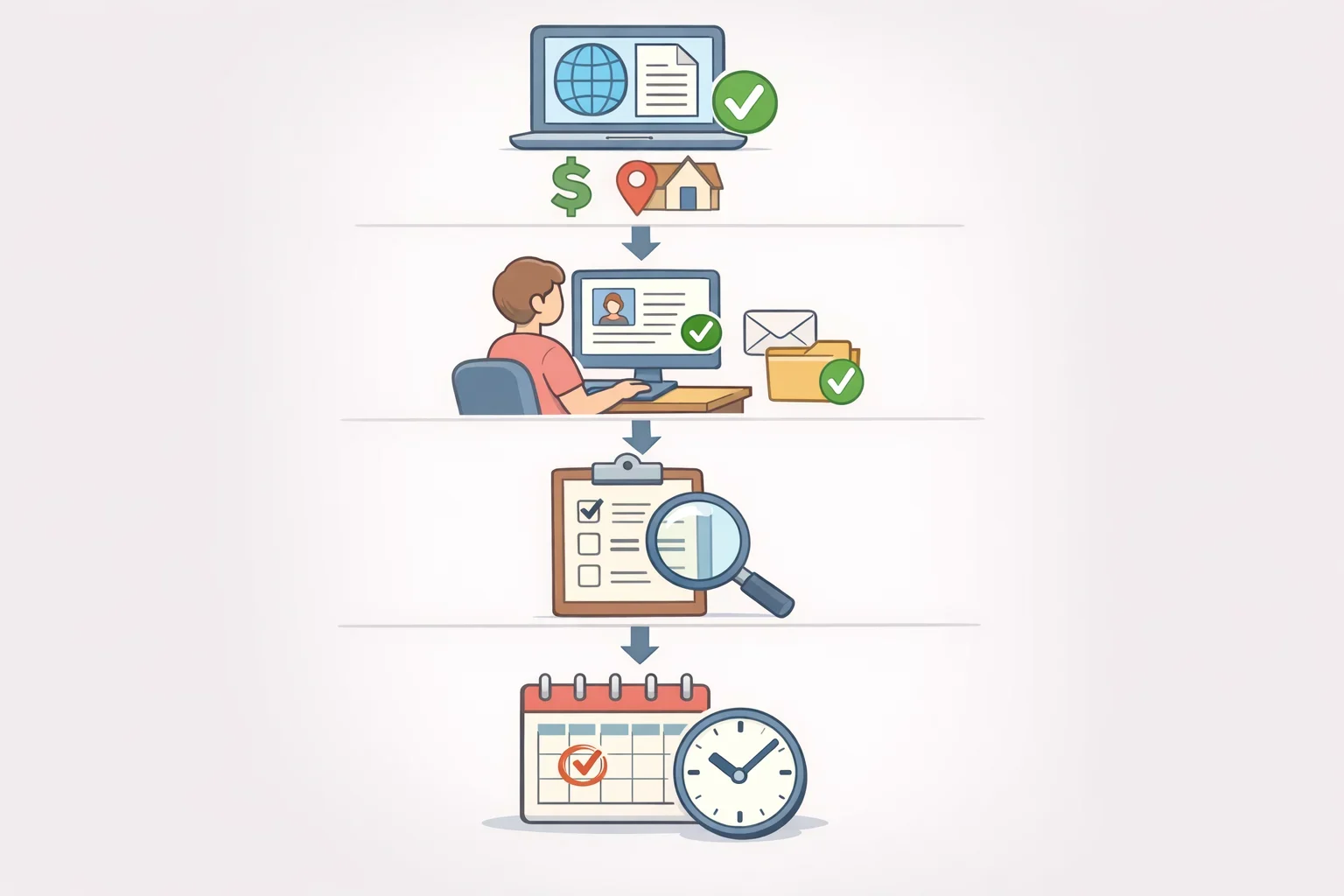
None of this data proves that following these steps produces more interviews. It shows which factors were associated with higher callback rates in Jobloo's own submission logs, which is different from proving what caused them. With that limitation in mind, the findings support a short verification routine worth testing on the next batch of applications, particularly in a remote-only search where confirming a listing's actual terms matters before any resume work begins.
- Confirm the remote terms first. Before tailoring a resume, verify the permitted hiring states or countries, required time-zone overlap, any in-office or travel expectations, employment classification (W-2 versus 1099), and the posted compensation range, either from the listing or by asking a recruiter directly.
- Match keyword language truthfully. Pull the required skills, tools, and responsibilities from the posting's own wording, then revise only the truthful, applicable parts of the resume to reflect that terminology, rather than adding skills not actually held.
- Export as a text-layer PDF. Confirm the file's text is selectable, not a scanned image, before submitting; Jobloo's data associates that format with the highest parse-success and callback rates among the formats it tracked (Jobloo, 2026).
- Submit on a reasonable schedule, without stalling a strong match. Jobloo's data associates weekday submissions, Mondays especially, with higher callback rates than weekend submissions, though a freshly posted role shouldn't sit unsubmitted to fit a calendar (Jobloo, 2026).
- Identify the ATS and calibrate follow-up. Note which applicant tracking system the application URL routes through, and set follow-up timing to that platform's typical response window instead of assuming a few days of silence means rejection.
What this means for a remote-only job search strategy
Jobloo's published results do not answer whether remote postings draw fewer interviews than on-site roles; work arrangement isn't a category the released data breaks out. Anyone repeating that claim based on this dataset is going beyond what Jobloo has actually published.
What the dataset does establish is which parts of the application process are worth checking before hitting submit: resume keyword match, file format, submission timing, and the ATS behind a posting. The gaps tied to keyword match and file format are among the clearest associations with getting a response in this dataset, even though they remain correlational rather than proven causes.
Before sending the next batch of applications, build a simple tracker with columns for posting date, verified location and time-zone details, resume version and keyword match check, file-format confirmation, ATS used, application date, and planned follow-up date. Apply it to the next five applications in a remote-only search rather than increasing the total number sent out.
