

- Company Career Page vs Job Board: What the Data Really Shows
- Company career pages vs job boards: the evidence gap
- How the Q1 2026 data was collected
- What the reports measured, and why the numbers don't line up cleanly
- Why the biggest boards draw traffic but not interviews
- What the volume data actually supports
- Verification and legitimacy, a separate concern from conversion rates
- Referrals: a route the source comparisons don't cover
- The realistic next step
Company Career Page vs Job Board: What the Data Really Shows
Job seekers who apply through LinkedIn and Indeed have repeatedly reported lower interview and response rates than those who found their listing through Google-related sources or smaller niche platforms, according to three Huntr reports covering the third quarter of 2025 through the first quarter of 2026. None of the three answers the company career page vs job board question directly, because no dataset in any of them isolates applications submitted straight to an employer's own career site. The comparison job seekers actually want, career page versus board, remains untested.
The clearest single figure comes from Huntr's full-year 2025 analysis of 598,627 applications: applications sourced through Google Jobs recorded an 11.3% response rate, compared with 4.5% for Indeed and 3.1% for LinkedIn, according to Huntr's 2025 Annual Report. LinkedIn and Indeed still account for most of the jobs seekers save, according to Huntr's Q3 2025 report, which is part of why the gap draws attention despite the measurement limits.
The timing raises the stakes. Median time from search start to first offer reached 108 days in the first quarter of 2026, up 30% from the previous quarter and the longest median Huntr has recorded since it began publishing quarterly reports in early 2025, according to Huntr's Q1 2026 report. With searches stretching longer, applicants have less room to spend limited effort on a channel that produced lower reported conversion in Huntr's data, even though that doesn't guarantee a worse outcome for any one applicant.
Company career pages vs job boards: the evidence gap
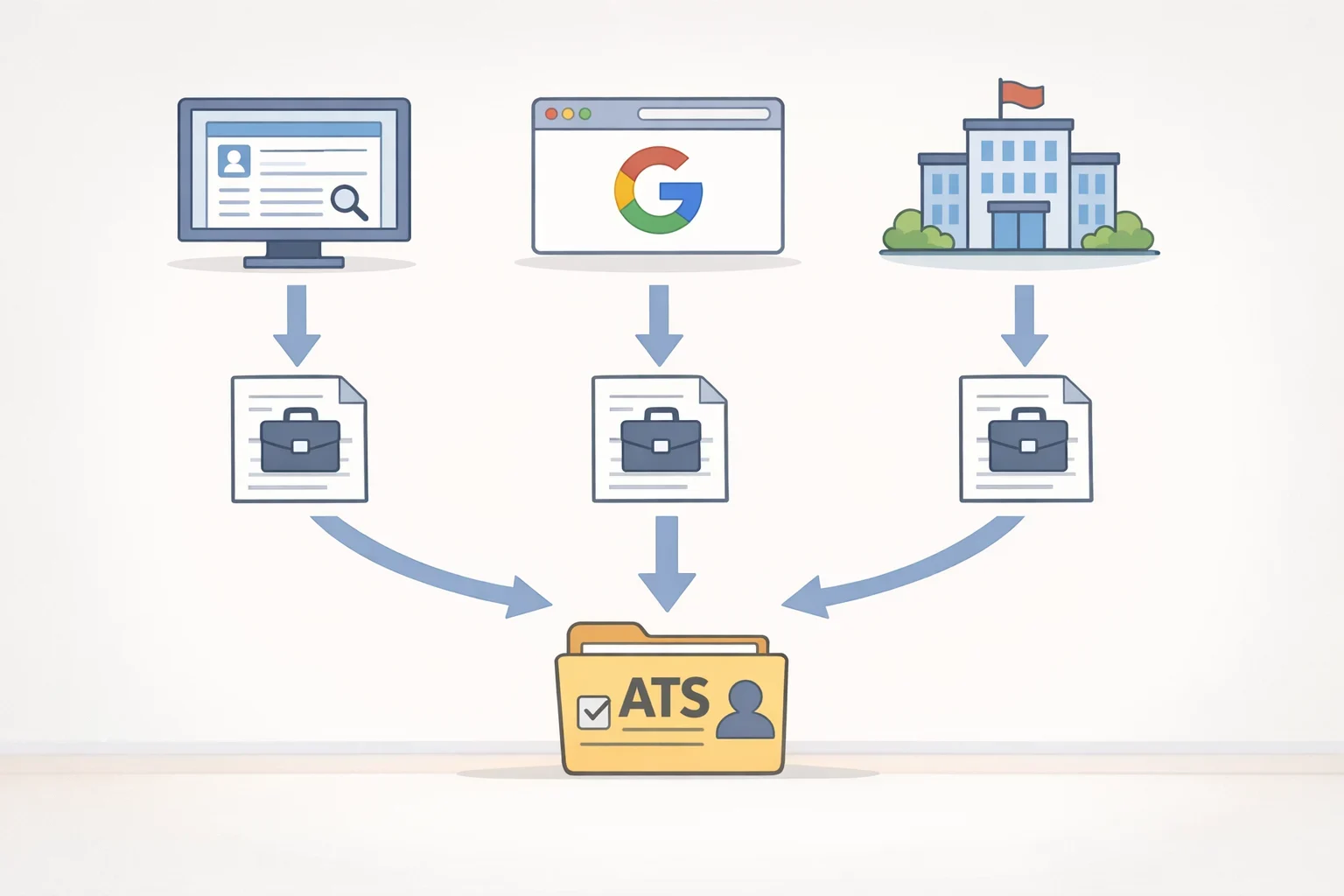
A job seeker typically reaches a posting through one of several routes: finding it on a board like LinkedIn or Indeed and applying inside that platform's system, finding it through a Google search and getting redirected to an employer's applicant tracking system, or navigating directly to a company's career page. Huntr's source categories, labeled inconsistently as "Google.com," "Google Jobs," and "Google's career portal" across its three reports, group some of these paths together without separating them cleanly. That's the core reason the data can't settle where to apply for jobs to get more interviews in a career-page-versus-board sense; it measures the entry point a user logged, not the final application destination.
Job seekers weighing direct applications vs job boards should read these figures as evidence that source may matter, not as proof that applying through an employer's website beats applying through a board. Huntr itself frames its findings as directional guides rather than validated rankings.
How the Q1 2026 data was collected
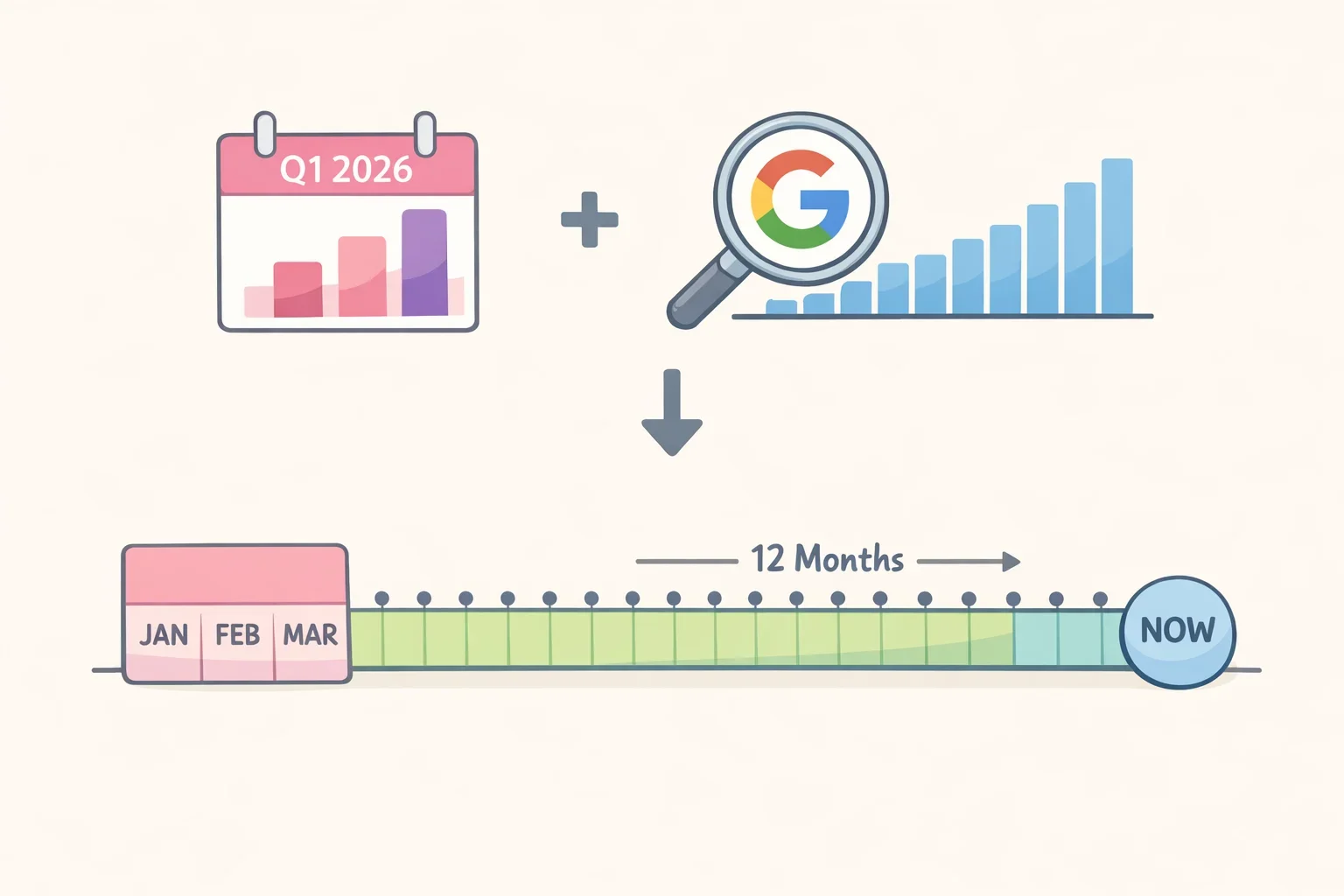
Huntr's Q1 2026 report draws on 139,927 applications logged by 25,635 active job seekers, alongside 39,184 tailored resumes and a 593-respondent survey fielded between April 13 and May 3, 2026, according to Huntr's Q1 2026 report. The company describes all interview and offer figures as self-reported and likely undercounted.
The 2,064 Google.com applications behind the 7.12% interview-rate figure cover a trailing 12-month window, not the first quarter alone, while most other Q1 2026 headline numbers, including the volume and resume-tailoring breakdowns, cover January through March 2026 specifically, according to Huntr's Q1 2026 report. Mixing a 12-month figure with quarterly ones is part of why the three reports don't line up into one continuous trend.
What the reports measured, and why the numbers don't line up cleanly
The 2025 annual report used a "response rate" across 598,627 applications. By that measure, Google Jobs (11.3%), GovernmentJobs (8.7%), and Wellfound (6.0%) all beat LinkedIn (3.1%), Indeed (4.5%), and ZipRecruiter (2.8%), with Dice lowest at 0.35%, according to Huntr's 2025 Annual Report.
The Q3 2025 report switched to an "interview rate" over a shorter window, recording an 11.21% interview rate for applications sourced through what it called Google's career portal, compared with rates below 4% for LinkedIn and according to Huntr's Q3 2025 report. The Q1 2026 report narrowed the source label again, tracking those 2,064 Google.com applications at a 7.12% interview rate, 2.4 times LinkedIn's 2.94%, according to Huntr's Q1 2026 report.
These are three related snapshots from one platform's user activity, using three different labels and windows, not a single continuous trend. Job seekers who search through Google or niche sites may also apply more selectively to begin with, which could inflate a channel's apparent edge independent of the source itself.
The sample skews geographically, too. Among Q3 2025 postings with location data, North America accounted for 68.78% of job listings, with the United States alone making up 56.62% of located postings, according to Huntr's Q3 2025 report. Results drawn from that population may not hold evenly elsewhere.
Why the biggest boards draw traffic but not interviews

LinkedIn alone accounted for nearly half of all saved jobs in the third quarter of 2025, and LinkedIn plus Indeed made up roughly two-thirds of job saves, according to Huntr's Q3 2025 report. Huntr describes this pattern as a "tradeoff between scale and employer engagement" in its own annual report, its characterization for why high-traffic boards may draw more competition per posting, according to Huntr's 2025 Annual Report. The report doesn't measure applicant volume per posting directly, so that explanation is Huntr's interpretation, not a separately tested finding.
Mid-tier and niche sources held up better on conversion in the same annual dataset. Glassdoor (5.5%), Handshake (5.1%), and Welcome to the Jungle (4.5%) all outperformed LinkedIn despite far lower application volume, according to Huntr's 2025 Annual Report. The largest board isn't necessarily the board most likely to convert a given application in this dataset.
What the volume data actually supports

Huntr's Q1 2026 data shows a clear pattern between overall application volume during a search and interview rate. Interview rates fell as total applications rose across a search: 9.25% for job seekers who sent 11 to 20 applications, 6.96% for 21 to 50, 4.65% for 51 to 100, and 2.58% for 100 or more, according to Huntr's Q1 2026 report.
A separate figure gets closer to applying repeatedly to the same employer. A single application to a given company interviewed at 6.07%, two or three applications dropped that to 4.64%, four to seven fell to 3.34%, and eight or more collapsed to 1.91%, according to Huntr's Q1 2026 report. That's an association in Huntr's data, not proof that repeat applications cause the drop; applicants who apply repeatedly to one employer may already be facing longer odds for other reasons.
Resume tailoring is a third, distinct finding. Tailored resumes converted at 4.23% across all logged applications, compared with 2.07% for untailored ones, according to Huntr's Q1 2026 report. Huntr's data doesn't test whether combining low application volume with tailored resumes compounds the advantage; the two are reported as separate patterns.
Verification and legitimacy, a separate concern from conversion rates
In a question answered by 559 of the 593 survey respondents, 520, or 93%, said they had applied to, believed they had applied to, or suspected they had applied to a posting that was fake or never intended to be filled, according to Huntr's Q1 2026 report. That figure reflects respondents' beliefs and suspicions, not confirmed cases, and it's a legitimacy concern that sits apart from any channel's reported interview rate.
Checking a company's own careers page against a board listing can surface a mismatch, a different title, salary range, or posting date, and it identifies an employer-controlled application route. A mismatch is a reason to look closer, not automatic proof that the board listing is stale or that the employer page is the more current one. None of Huntr's data measures whether this verification step changes interview odds.
Referrals: a route the source comparisons don't cover
Among 503 Huntr survey respondents who landed at least one interview, 38% got there through a referral-related path: 14% through an employee referral, 13% through recruiter outreach, and 12% through networking, according to Huntr's Q1 2026 report. That's a separate channel from the board-versus-Google comparisons above and isn't measured on the same scale.
A different, employer-side dataset points in a similar direction without validating Huntr's numbers. Ashby's analysis of 54 million applications and 93,000 job postings reported higher screening progression for referred candidates, 52% passing initial screens compared with 35% overall, according to Ashby's Recruiting Operations Benchmarks. That measures screening progression at the employer level, a different stage than Huntr's applicant-reported interview rates.
The realistic next step
None of this data proves that applying directly on a company's career page produces more interviews than applying through a job board. It shows that specific sources in Huntr's user base reported higher conversion than LinkedIn and Indeed during specific windows, that interview rates fell as total application volume rose, and that tailored resumes converted at roughly twice the rate of untailored ones, three separate findings rather than one tested strategy.
The evidence supports using boards and search broadly for discovery, checking a high-priority listing against the employer's own career page before applying, and tailoring the resume to the posting. It doesn't establish that any single submission route, board, redirect, or direct application, produces more interviews on its own. For the next role that's a genuine fit, search the company name plus "careers" to compare title, salary range, and posting date against what's saved from a board, apply once with a tailored resume through whichever listing looks current, and ask about a referral or recruiter introduction if a relevant contact exists before moving on.
