
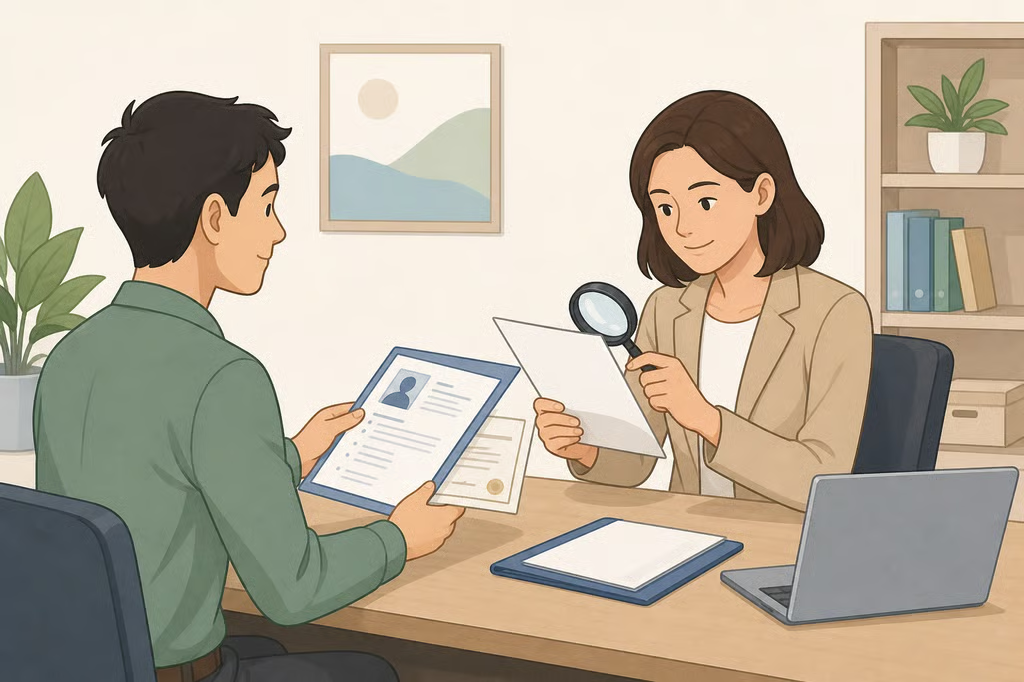
A college degree listed on a resume may be checked during hiring, especially when a job posting makes education a requirement. Because employers do not all verify education the same way, applicants should make sure the information on their resume matches their school records before a discrepancy complicates the hiring process.
Degree verification can involve confirming the institution attended, degree earned, field of study, or date the credential was awarded. An employer may conduct the check internally, use a background-screening company, contact the school, or ask the applicant for documentation.
That does not mean job seekers need to collect every academic record before applying. The priority is to submit accurate education information and know what an employer may ask them to verify later.
- What employers can verify about your degree
- When employers may verify your education
- Which degree records you may need
- Fix education discrepancies before you apply
- Degree checks and professional licenses are separate
- What to do if your degree cannot be verified
- Degree verification checklist before applying
What employers can verify about your degree
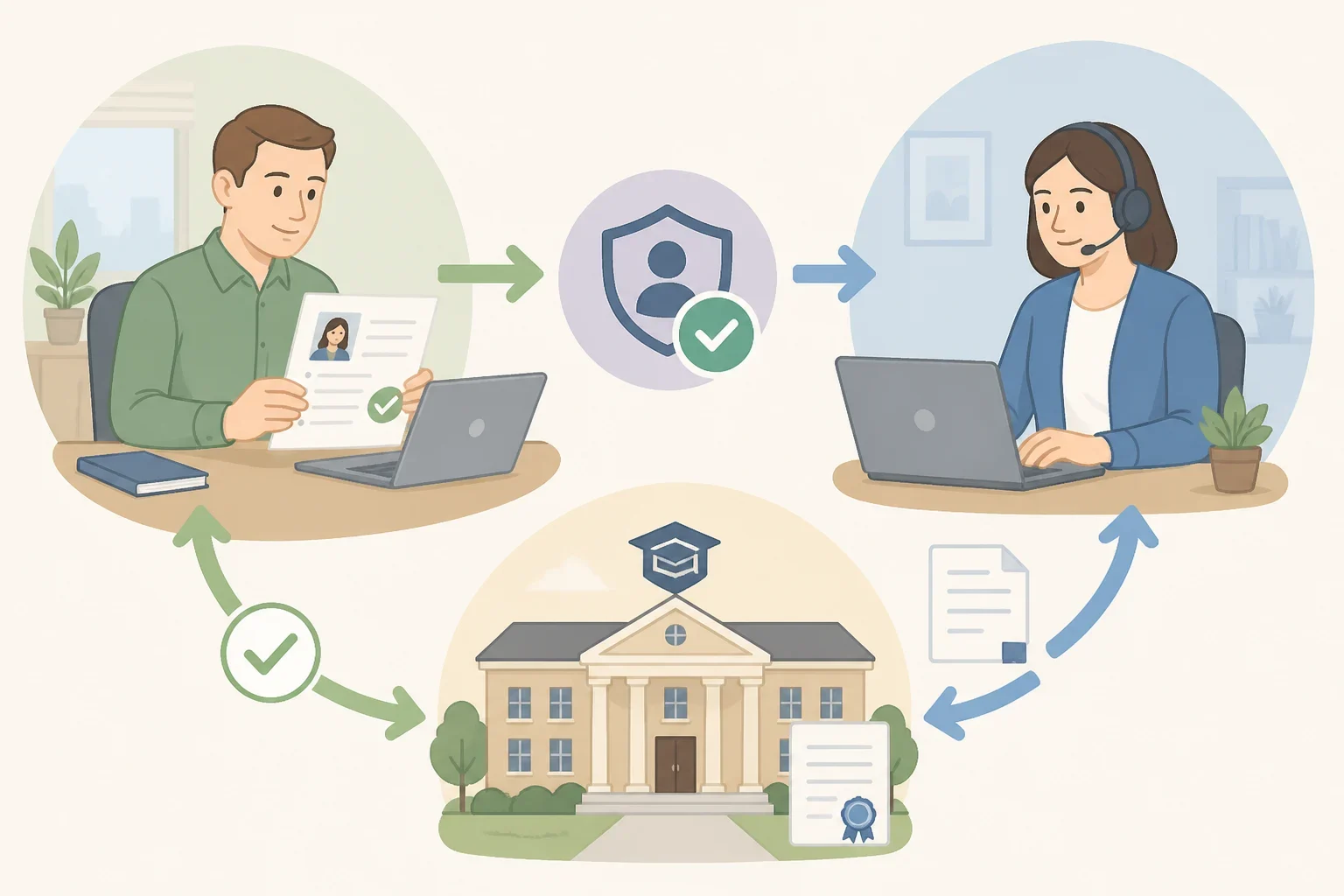
The person reviewing a resume may not be the person checking the education history. A hiring manager might evaluate the application while a background-screening company handles education verification. In another process, the employer may ask the applicant to provide records or authorize the school to release information.
Whether authorization is required can depend on the information requested, the school's disclosure policy, and applicable privacy rules. Under the federal Family Educational Rights and Privacy Act, or FERPA, schools may designate certain information—including dates of attendance, major field of study, enrollment status, and degrees received—as directory information, subject to the institution's policy and federal requirements. The U.S. Department of Education explains those FERPA disclosure rules.
A basic degree check may seek answers to questions such as:
- Did the applicant earn the degree listed?
- Which institution awarded it?
- What type of degree or credential was awarded?
- When was it officially awarded?
- Does the education history match the application?
A degree check does not necessarily include every course, grade, academic-standing record, or class rank. Before sending a transcript, ask what the employer needs and whether a less detailed record will suffice.
Employers and background screeners can also use third-party verification services. The National Student Clearinghouse says its verification network covers 96% of U.S. four-year postsecondary degrees and offers automated degree-verification services.
When employers may verify your education

Education verification can happen at different points in the hiring process, including during a broader background check, after interviews, or as an employer prepares to finalize an offer. Some employers request information earlier, so do not assume verification always begins after a conditional offer.
The wording of the job posting can offer useful clues:
- Degree required: The credential is part of the stated qualifications.
- Degree preferred: The employer wants the credential but may consider applicants with other backgrounds.
- Equivalent experience accepted: Relevant work history may be considered, although the employer determines what qualifies.
- Official transcripts required: The application or hiring process is likely to include a document request.
Read the qualification section and application instructions carefully. If the requirements are unclear, ask what education documentation may be needed and when.
Which degree records you may need
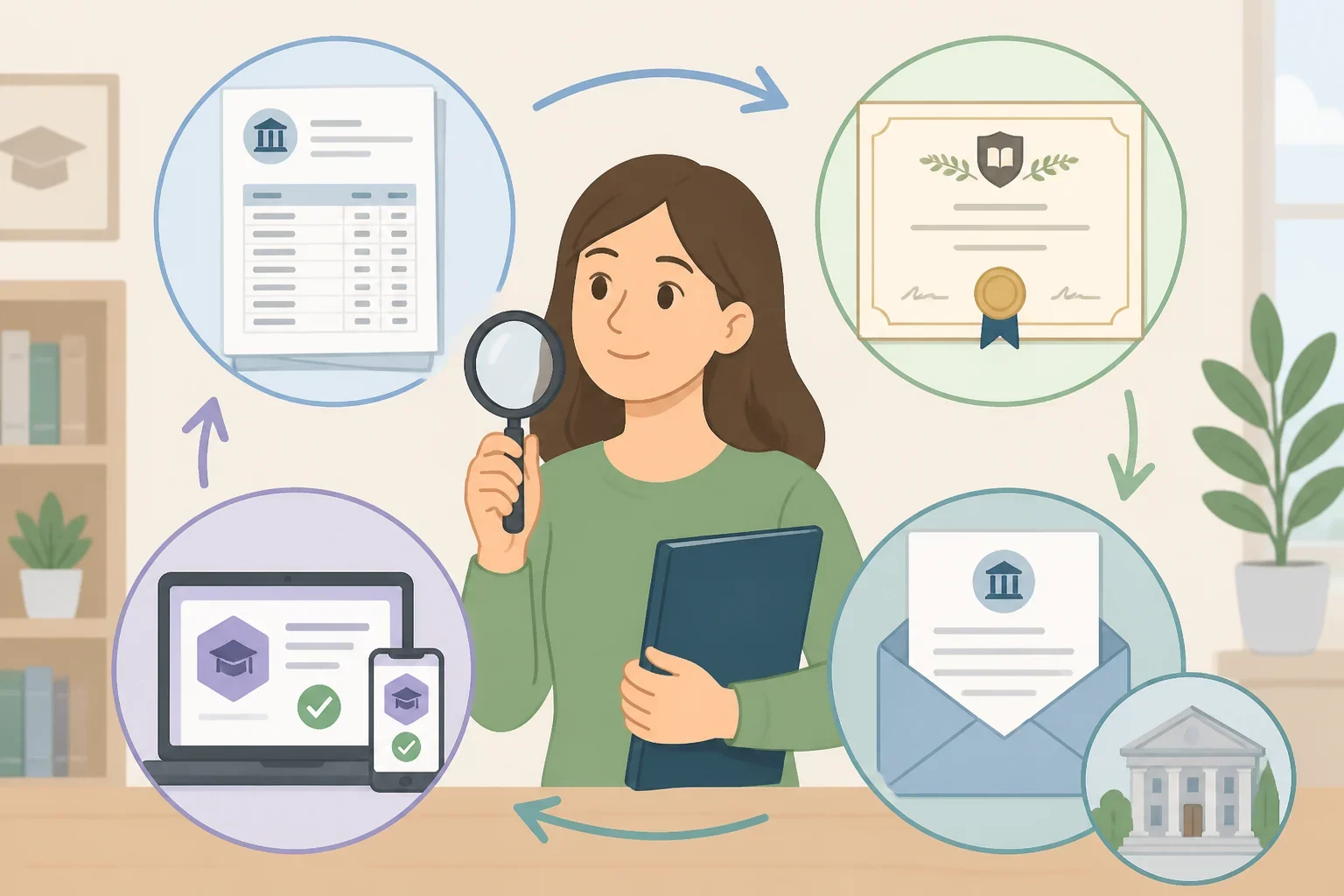
There is no single document every employer accepts. Depending on the process, an employer may verify education directly with the institution or request a diploma, transcript, electronic credential, or another record. Follow the employer's instructions before ordering or sending anything.
An official transcript can disclose courses and grades that may not be necessary for a basic degree check, while a diploma may not contain every detail a screening request requires.
Before paying for a record or sharing personal information, find out:
- Whether the employer needs direct verification from the school
- Whether a diploma or electronic credential is acceptable
- Whether a transcript must come directly from the institution
- What information the record must show
- How the record should be submitted securely
The school's registrar or records office can explain how records are issued and delivered. Keep copies for your own reference, but use the submission method required by the employer or screening company.
Fix education discrepancies before you apply
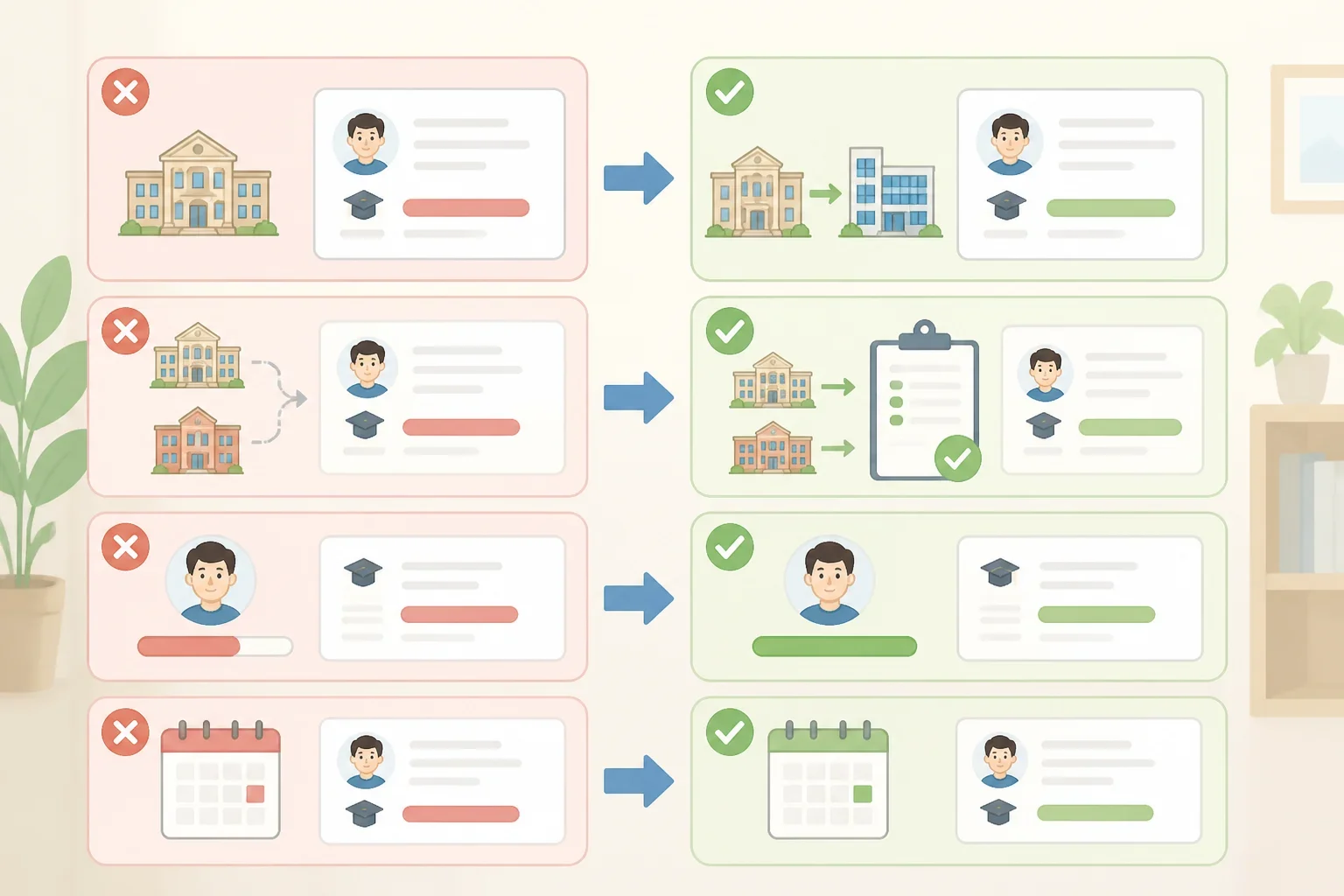
A discrepancy does not automatically mean an applicant intentionally provided false information. School names change, students transfer, and the date classes end may differ from the date a degree is formally awarded.
Your school changed its name
If your records use a former institution name, list the name requested by the application and add the former or current name if needed to make the connection clear.
You transferred between colleges
Attending a school is not the same as earning a degree there. If an application asks for every college attended, list each institution accurately. If it asks where the degree was earned, identify the degree-granting institution.
You did not complete the degree
Do not list an unfinished program as a completed degree. It can be listed as completed coursework, attendance in a field of study, or another accurate description, as long as the wording does not imply that a degree was awarded.
The degree-award date does not match
A resume may list the year classes ended rather than the date the degree was officially awarded. Older resumes and simple memory errors can also create discrepancies.
Check the school's record before applying. If you discover an error after submitting an application, correct it promptly. A short explanation is enough: “My earlier resume listed the wrong year. The school record shows that my degree was awarded in 2022.”
Degree checks and professional licenses are separate
An employer's education verification does not replace professional licensing requirements.
For regulated careers, a licensing board or credentialing organization may require additional records, examinations, supervised experience, or other evidence before determining whether someone qualifies for a license. Applicants pursuing licensed work should check the requirements of the applicable state board or credentialing body separately.
What to do if your degree cannot be verified
A verification can stall because of a former school name, an incorrect date, a different name in the school record, or a request sent to the wrong office or service.
If an employer or screening company cannot verify your education, ask what information is missing and which documents it will accept. Then contact the registrar or records office to confirm the correct degree name, award date, institution name, and verification procedure.
If the problem appears in a report prepared by a third-party background-reporting company, federal law provides additional protections. According to the Federal Trade Commission's guidance on employment background checks, an employer must obtain written permission before having a background-reporting company run a check. Before deciding not to hire, retain, or promote someone because of information in that report, the employer must provide a copy of the report and a summary of the applicant's rights under the Fair Credit Reporting Act. Applicants can also dispute inaccurate or incomplete information with the reporting company.
Correcting a school's records does not necessarily update a separate screening company's report, so follow the company's dispute procedure as well.
Degree verification checklist before applying
Before submitting an application for a role with an education requirement:
- Compare your resume with the school's records.
- Confirm the exact degree name and official award date.
- Check whether a former school name needs explanation.
- List transfer schools and unfinished education according to the application instructions.
- Note whether the posting says a degree is required, preferred, or replaceable with equivalent experience.
- Ask what education documents or verification the employer may require.
- Check licensing requirements separately for regulated occupations.
- Know your rights if a third-party background report contains inaccurate information.
- Prepare a brief explanation for any honest discrepancy.
Employers do not all verify education the same way, but most avoidable problems come down to the same issue: information that does not match the record. Check the details before you apply, correct honest mistakes promptly, and send only the documentation the employer or screening company actually requests.
