

- How to Show High Agency in a Job Interview: What It Means
- What does high agency mean (and what it isn't)
- How employers may assess high agency in interviews
- A framework for drawing the authority line
- High agency interview examples
- How to show high agency without full-time experience
- Preparing two stories before the interview
How to Show High Agency in a Job Interview: What It Means
FounderSide, a startup hiring advisory site, published a scorecard on August 28, about six weeks ago, pushing back on a common assumption about so-called "high agency" candidates: that the trait rewards people who bypass approvals, override colleagues, or promise deadlines nobody could hit. The framework defines high agency instead as useful action taken within real constraints, a distinction that matters for anyone trying to figure out how to show high agency in a job interview without reading as reckless, according to FounderSide.
A separate hiring guide from startup consulting site WithAgility, published last year, describes high-agency hires as people who take initiative without being asked and work through blockers instead of waiting on direction, according to WithAgility. Both sources frame the trait as something startups look for specifically, since smaller companies tend to have less process standing between an employee and a decision.
This piece breaks down what FounderSide and WithAgility say high agency actually means, how their frameworks suggest employers might test for it, and what a candidate's answer needs to include to hold up under follow-up questions. The preparation guidance below is Career Trend's interpretation of how to get ready, not a report on how widely these two specific frameworks are used across hiring.
What does high agency mean (and what it isn't)
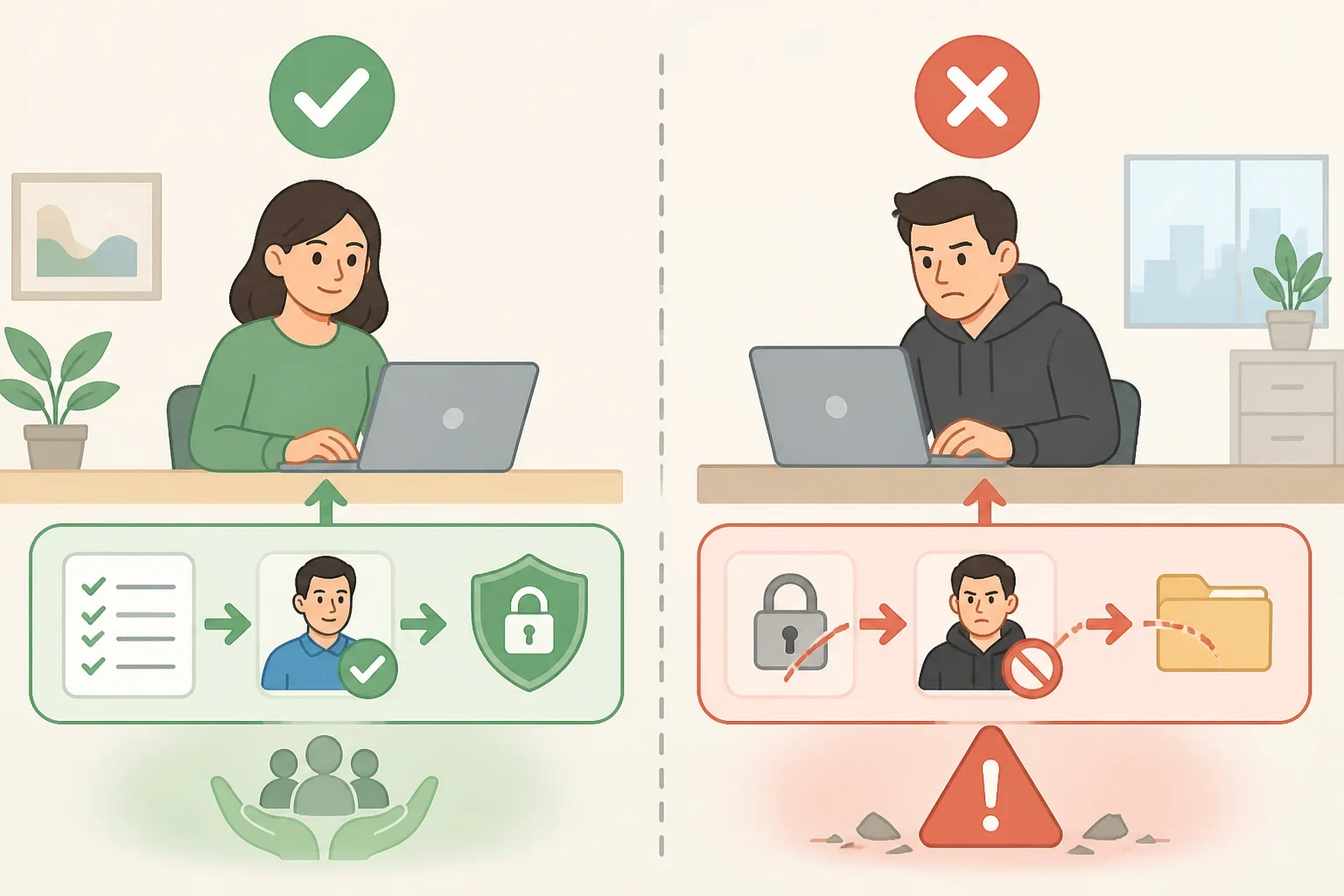
FounderSide's definition centers on constraints: high agency means taking useful action within real limits, not projecting confidence or forcefulness. It specifically does not mean bypassing approvals, ignoring colleagues, or promising deadlines that were never realistic. The source frames the assessment around a candidate's decisions and follow-through, not how confidently they narrate their own story, per FounderSide.
WithAgility's version breaks the same idea into five observable behaviors: taking initiative without being asked, identifying gaps in the business, breaking through blockers instead of waiting, looking for solutions rather than problems, and adapting quickly when circumstances change, according to WithAgility. Those behaviors are specific enough that a candidate can check past examples against them, instead of relying on a vague label like "proactive."
FounderSide draws a concrete line between agency and overreach. Noticing why invoices keep stalling, pulling in the right people, and implementing a workable fix counts as agency. Changing payment terms without the authority to do so does not, even though it might technically solve the same problem faster, per FounderSide.
A narrower piece of research offers related context, though it doesn't validate the hiring label itself. A 2024 study of 272 rehabilitation officers at a narcotics penitentiary in Sumatra found associations between proactive work behavior and two factors: supportive supervision, and what researchers called role breadth self-efficacy, or employees' belief that they can handle a broader, more proactive role, according to PLOS One. The study never measured "high agency" as a hiring trait, and the sample was narrow and occupation-specific. What it suggests, cautiously, is that initiative is shaped by workplace conditions as well as individual choice, worth remembering before writing off a past job as proof of low agency.
How employers may assess high agency in interviews

WithAgility argues the trait matters most at companies where, in the source's words, "there isn't a playbook for how things get done," since early-stage companies often have thinner process layers, according to WithAgility. That's the main reason both sources tie high agency specifically to startup hiring rather than describing it as a universal interview standard.
The underlying skills, though, overlap with a broader interviewing approach. Behavior-based interviewing relies on highly specific, performance-based questions rather than general qualifications, according to SHRM. The sources here don't establish how widely that approach is used across company sizes, but the format itself, asking for a specific past action rather than a general trait, is the same format FounderSide recommends for testing high agency.
FounderSide's suggested version gives candidates a fictional, time-pressured scenario: a launch due next week, sales and product disagree about readiness, and the founder is unavailable for two hours. The candidate is asked for a one-page action plan. There's no single correct answer, but FounderSide recommends interviewers look for fact-finding, whether the proposed action is reversible, how the candidate prioritizes competing demands, and a clear point where they'd escalate rather than act alone, per FounderSide. A candidate who pauses an irreversible external commitment while gathering more information may show more agency than one who simply pushes forward.
FounderSide also recommends scoring ownership, resourcefulness, judgment, and follow-through as separate dimensions rather than one blended impression. That distinction is useful for candidates too: a story heavy on ownership but thin on judgment reads differently than one that balances both.
A framework for drawing the authority line

The follow-up questions FounderSide recommends interviewers ask double as a planning tool for building an answer in advance. Before an interview, it helps to run a past example through four prompts:
- What could I do safely on my own, without asking anyone first?
- What decision was outside my actual authority, even if I had an opinion about it?
- Where did I pause to escalate or gather more facts, and why there specifically?
- What would I have done if my first attempt had failed?
Those four questions map onto the distinctions FounderSide draws between independent action, action that needs approval, and action that should wait for escalation. A story that only answers the first question tends to read as either passive or reckless depending on the stakes. A strong answer touches all four.
High agency interview examples
Illustrative example: the stalled project. The following is a sample answer built for this article, not a reported case from FounderSide or WithAgility.
"A launch kept slipping because nobody had formally picked up a vendor integration that three other workstreams depended on. I flagged it to my manager and asked who owned it. There wasn't a clear answer, so I asked for permission to scope the fix myself over two days, with the understanding that I'd check back before touching anything live. My first attempt used the wrong API version and broke a test environment. I reported that immediately, proposed a second approach, and got sign-off to try it. It worked, and I documented the dependency so it wouldn't get missed again."
The sequence lines up with what FounderSide points to as credible evidence: identifying a missing dependency, clarifying who actually had decision rights, getting approval before changing course, and returning with an alternative after the first approach failed, per FounderSide. Authority and reversibility both show up here: permission was requested before acting, and the failed attempt was reported rather than hidden.
Illustrative example: the disagreement. This is also a constructed sample, not a verified case.
"Two teams disagreed about whether a feature was ready to ship. I didn't have authority to make that call, so I set up a short conversation with both leads, asked each to walk through their concerns, and wrote up the two positions side by side along with the risk each one carried. I brought that to the decision-maker with a recommendation but left the final call to them. They went with my recommendation. We shipped on schedule, and the two leads kept using the side-by-side format for later launches, which cut down on repeat disagreements."
SHRM reports that leaders who handle conflict well tend to show empathy and the ability to see a dispute from the other side's perspective, rather than overriding whoever disagrees with them. That reporting isn't framed as a high-agency test specifically, but the overlap with FounderSide's escalation threshold is useful: naming the disagreement directly, listening before responding, and bringing options forward for approval instead of making the call alone shows initiative paired with judgment. The detail about what happened after the launch, not just that it shipped, answers the follow-through question FounderSide's framework flags as a common gap in weaker answers.
How to show high agency without full-time experience
Candidates without years of full-time work history don't need to manufacture a corporate example. FounderSide tells hiring teams to accept evidence from smaller companies or independent projects rather than insisting on large-company titles, per FounderSide. Career Trend's extension of that logic: a class project, internship, or volunteer role can work the same way, as long as the story still answers the same questions: what gap was noticed, what was done personally, who was checked with, and what the outcome was.
A student who reorganized a disorganized group project after noticing the team was about to miss a deadline, checked with a professor before changing the division of labor, and documented what happened next has the same shape of evidence as a mid-career professional's workplace story. What changes is scale, not structure.
Preparing two stories before the interview
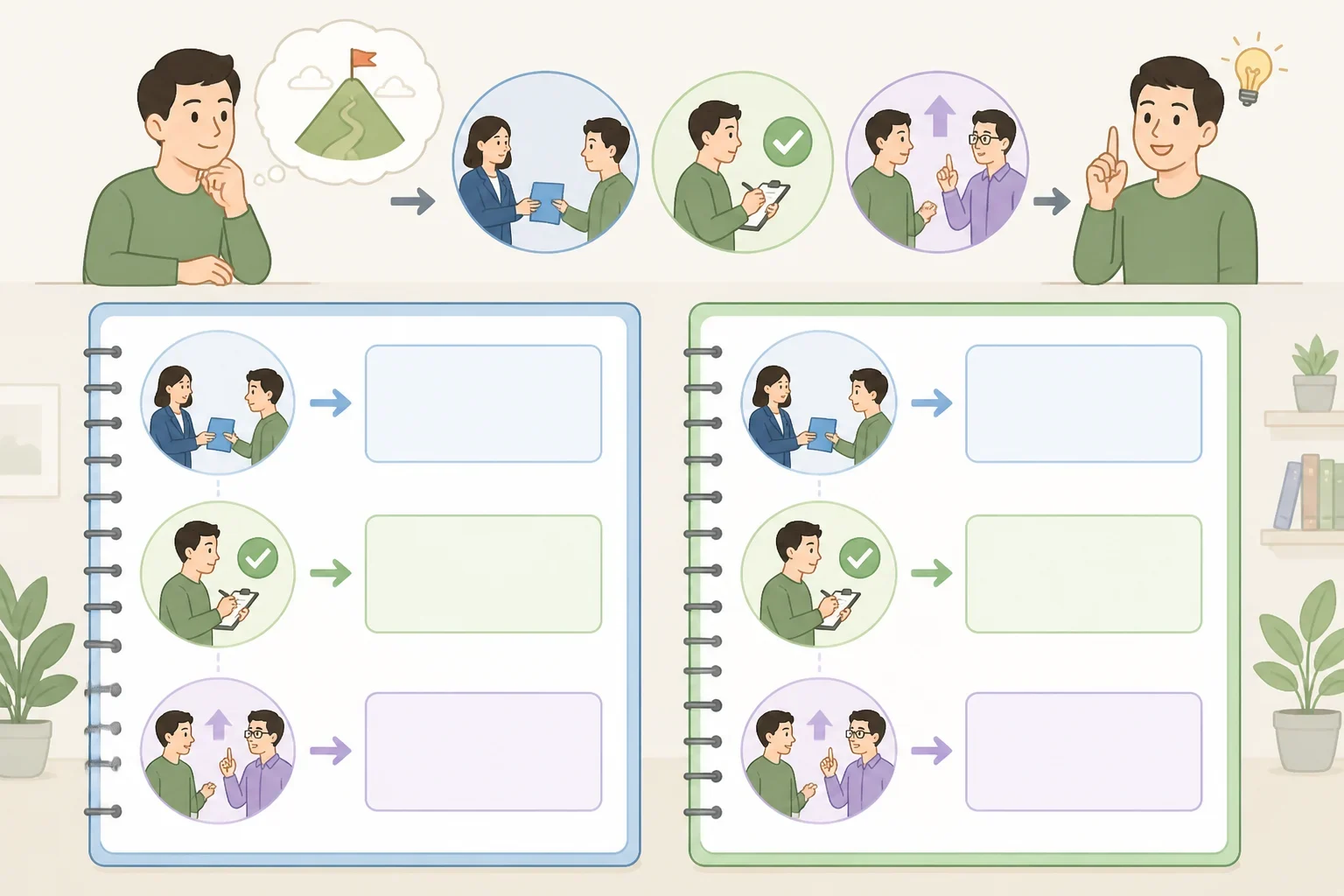
FounderSide frames the goal for employers as hiring someone who can turn uncertainty into responsible progress, not someone who says yes to everything, per FounderSide. For a candidate, the practical version of that same standard is having two stories ready rather than one all-purpose line about being "proactive."
Draft one story built around solo initiative within a clear limit, and a second built around initiative that required escalation or disagreement. For each one, write down the exact moment authority changed hands, where approval was requested or where escalation happened, since that's the detail interviewers are most likely to probe. Running both stories through the four-question framework above before the interview beats trying to reconstruct the sequence out loud for the first time in the room.
