
- What to Ask in a Skip-Level Meeting With Your Boss's Boss
- How to prepare for a skip-level meeting with senior leadership
- Questions to ask in your first skip-level meeting
- How to talk about your work without overselling
- What not to say in a skip-level meeting
- Preparing for the meeting and what comes after
What to Ask in a Skip-Level Meeting With Your Boss's Boss
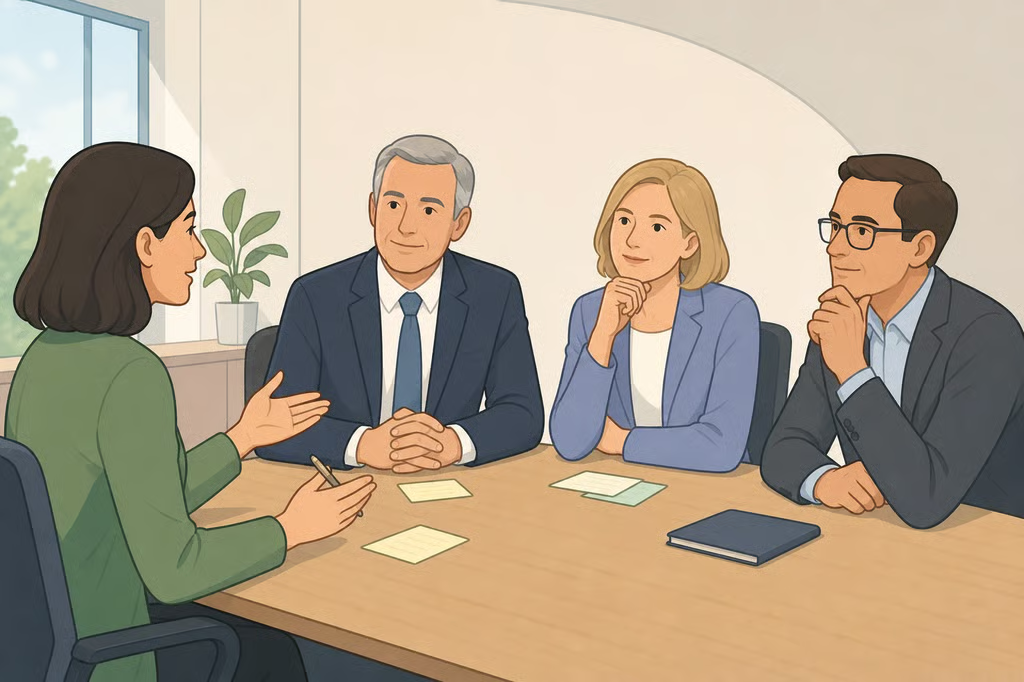
A first skip-level meeting can give you a chance to show a senior leader how you communicate and think about your work. It's not the moment to vent about your team, go around your direct manager, or ask for a raise. Knowing what to ask in a skip-level meeting, and what to leave out, shapes how that first conversation with your manager's manager unfolds.
Researchers describe the skip-level leader as "an often-overlooked yet highly influential figure in organizations," according to an integrative review published in Leadership Quarterly last year. The same review cautions that research on skip-level leaders remains dispersed, inconsistent in how it defines the role, and largely disconnected from broader leadership literature. That's worth keeping in mind before treating any single piece of meeting advice, including the suggestions below, as a proven formula rather than informed judgment.
Executive coach Melody Wilding, author of Managing Up: How to Get What You Need from the People in Charge, tells HBR IdeaCast that managing up "has to extend beyond" a direct supervisor, since some employees now work with project leads, report to more than one boss, or navigate frequent reorganizations. MIT Sloan Management Review frames the same skill, upward leadership, as listening to leaders above you and helping your team advance organizational goals, not as informal access-seeking, according to its analysis of managing up, published earlier this year.
This article draws on that research, along with University of Minnesota HR guidance and a one-on-one meeting framework from UNC Executive Development, to walk through how to prepare, what questions to bring, how to talk about your work without overselling it, and what to leave out. The question lists and talking-point suggestions below are an editorial application of that research, not tested scripts.
How to prepare for a skip-level meeting with senior leadership
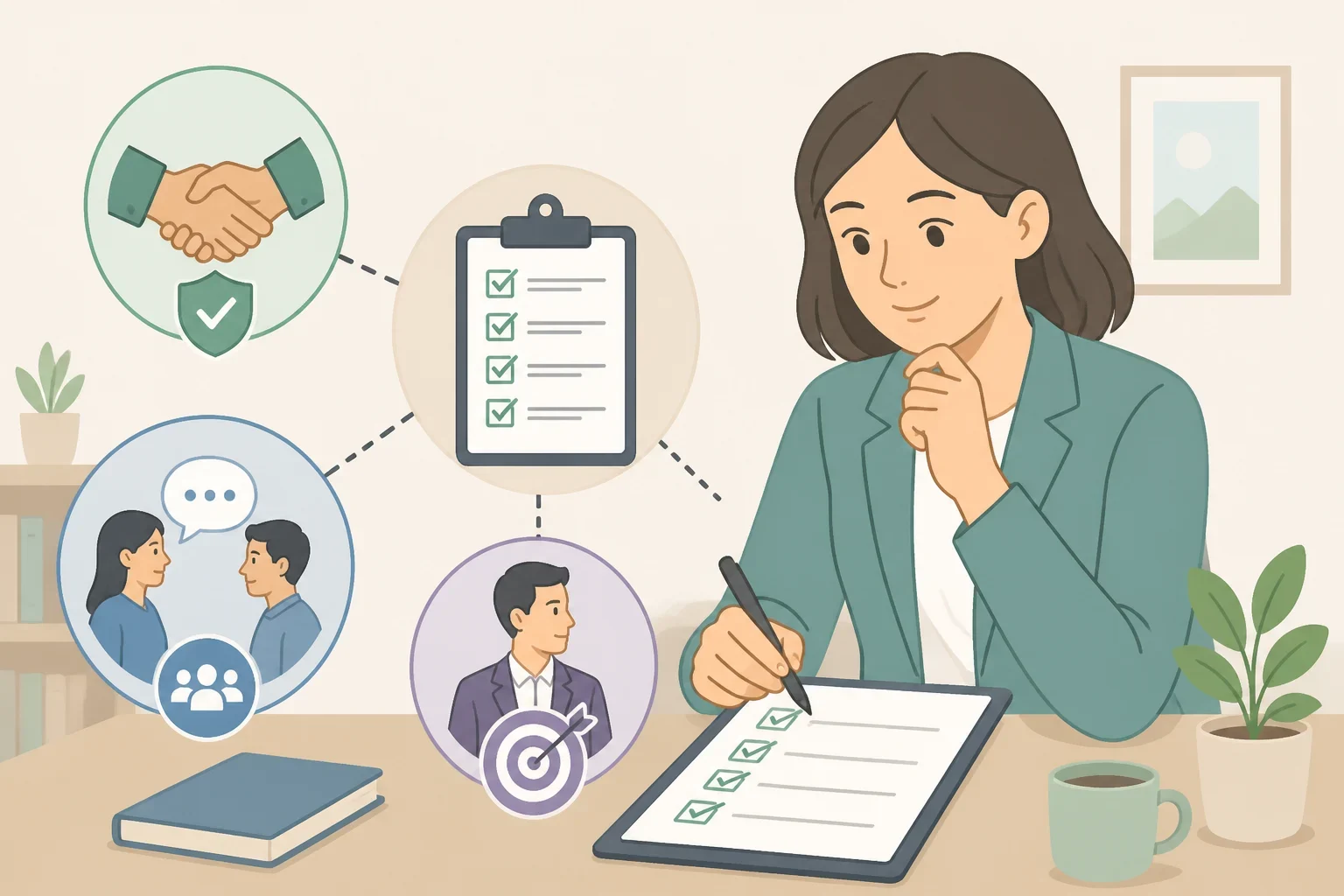
University of Minnesota HR defines managing up as consciously working with a supervisor to get the best possible results for the employee, the manager, and the organization, according to its guidance for managers from last year. Wilding applies similar logic to a skip-level leader: as organizations shift toward project leads and frequent reorganizations, building that relationship becomes part of the same skill set rather than a separate one.
Trust underlies both relationships. Following through on commitments, and owning a mistake before someone else surfaces it, builds the credibility a skip-level relationship depends on, per University of Minnesota HR.
Communication norms around skip-level meetings vary by workplace. When a topic feels sensitive, checking with a direct manager beforehand about which topics are appropriate to raise is a reasonable step, even though none of the sources here spell out a rule for when that check-in is required.
Wilding also describes two senior-leader communication styles worth watching for. A "commander" style, high on dominance and low on sociability, tends to want concise, outcome-focused updates and can read as blunt to people expecting more warmth. A "cheerleader" style is also high on dominance but leans toward big-picture, story-driven conversation, according to the HBR IdeaCast interview. One practical way to prepare: ask a colleague who has already worked with the leader which style seems to fit.
From there, consider preparing two or three specific talking points rather than a general status update. A skip-level leader generally has less day-to-day context on your work than your manager does, so plan on filling in background rather than assuming they're already caught up.
Questions to ask in your first skip-level meeting
MIT Sloan's research on managing up, based on employee surveys and manager interviews, identifies three roles people juggle when working with those above them: buffer, translator, and advocate. The buffer absorbs frustration from both directions. The translator receives information from above and below and reframes it so each audience can act on it. The advocate makes the case for people or ideas further up the chain, according to MIT Sloan Management Review.
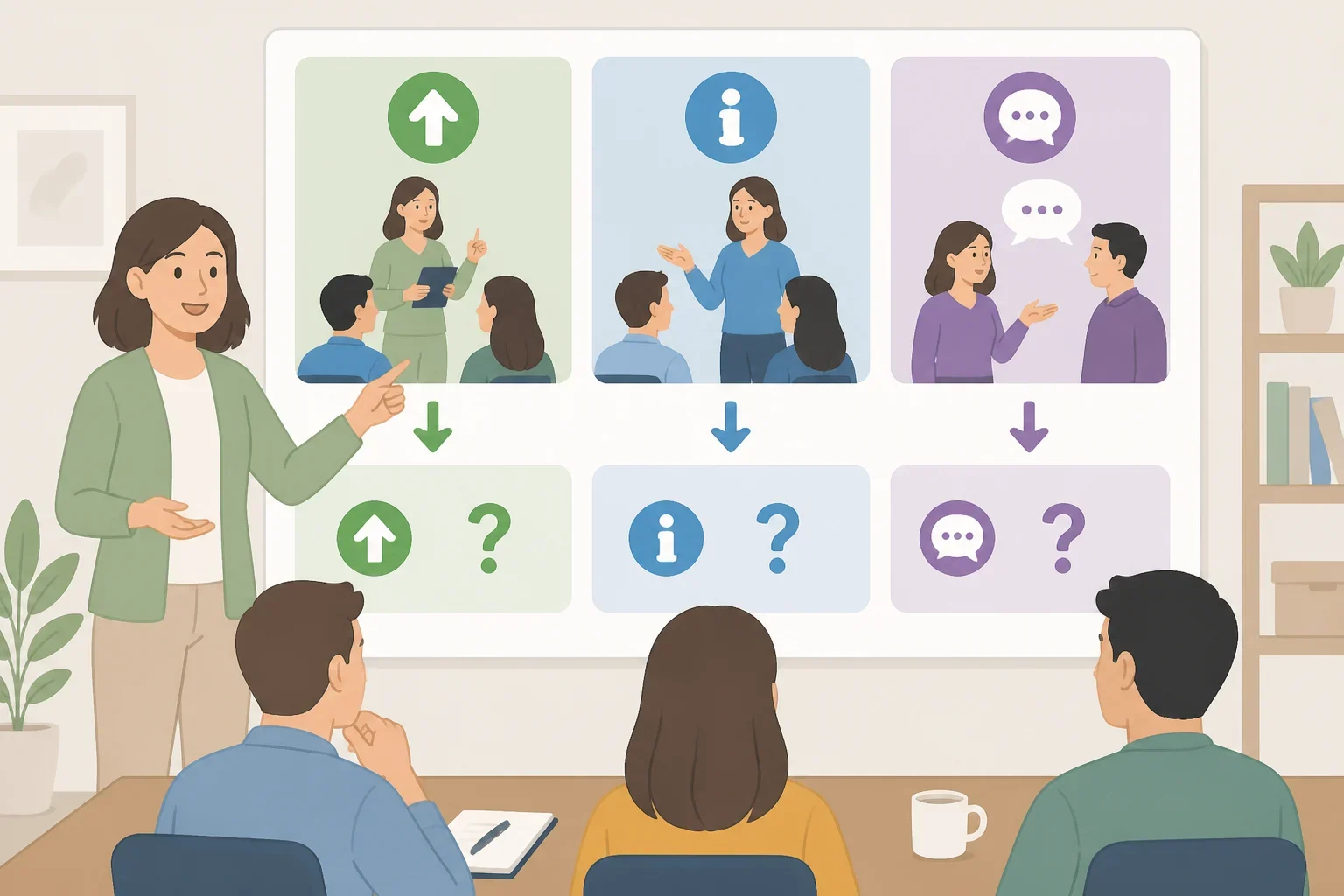
A first skip-level meeting is one place where the translator role can show up in practice, since it's often when leadership frames priorities directly for the first time and that framing can be carried back to a team. A one-on-one framework from UNC Executive Development, published last year, organizes meeting input into three categories: Update (what's progressed), Inform (current priorities and next steps), and Consult (a specific problem where guidance is needed). The source defines the categories but doesn't rank which fits a first meeting best, so treat the following as a practical way to apply the framework rather than a tested sequence:
- Ask Update questions when the leader needs context on progress you've made.
- Ask Inform questions when you need to understand team priorities or how success gets measured at their level.
- Ask Consult questions only when you can describe the problem, its impact, and the specific decision or perspective you need from them.
Not every question below belongs in one meeting. A first skip-level conversation typically supports two or three questions, depending on its length and whether the leader has already set an agenda.
Leadership priorities and strategy.
- What are the team's top priorities this quarter, and how do they connect to company goals?
- What's the biggest challenge you see facing our group right now?
How success gets measured.
- How is our team's success measured at your level?
- What matters most to you when you're evaluating a team like ours?
Cross-team dependencies and friction.
- Are there other teams where closer coordination would help our work move faster?
- Example: "I've noticed handoffs with the design team tend to slow down our releases. From your perspective, is that worth addressing?"
Growth and skill-building.
- What skills or experience would help someone in my role contribute at a higher level?
- Example: "I've been leading the onboarding project this quarter. What else would show I'm ready for more responsibility?"
MIT Sloan offers a general rule of thumb for how these roles shift as trust builds over time: buffering ideally shrinks toward 10-20% of upward-facing effort while translating and advocating each grow toward 40-45%, according to MIT Sloan Management Review. That's a directional guide for a relationship over months or years, not a formula to apply inside a single meeting.
How to talk about your work without overselling

Wilding recommends a structure she calls "we, then me": describe the group's effort first, then the individual contribution. She says it works in one-on-ones, presentations, and skip-level conversations alike, according to the HBR IdeaCast interview, and it's a way to show impact without sounding self-serving.
If more responsibility is the eventual goal, Wilding describes that conversation as most effective when approached incrementally: planting the idea early and following up over time rather than presenting a fully formed request out of nowhere.
Compensation and promotion conversations need lead time. Wilding's guidance is to start raising related context roughly six months before an expected decision point, not to wait until the decision is already on the table. That timing point is about starting early, not about waiting a set number of months after first meeting a skip-level leader. A first skip-level conversation is a better place to connect current work to team or business goals and express interest in growth broadly, something like asking what would help you contribute at the next level, rather than requesting a title or raise outright.
What not to say in a skip-level meeting
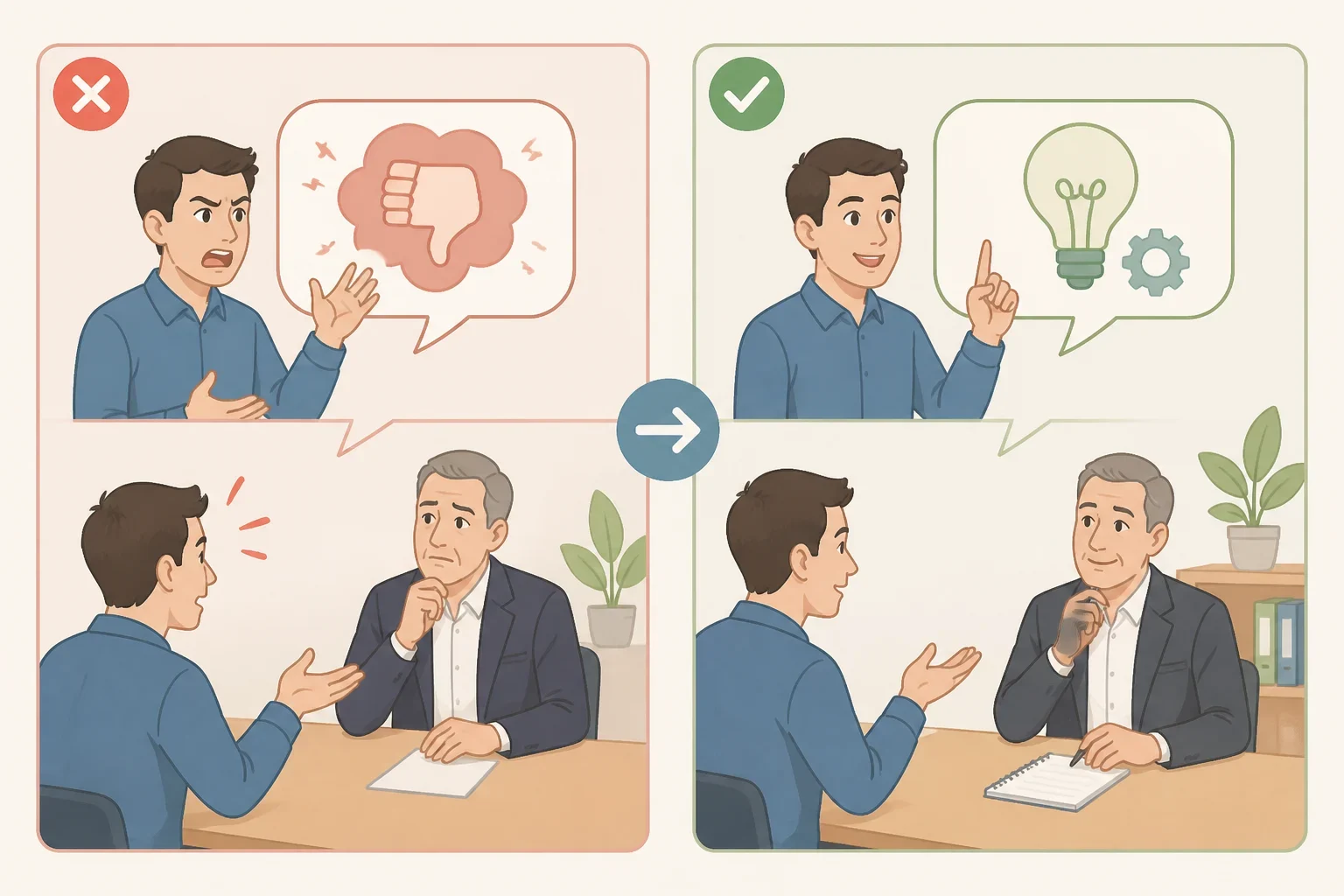
Managing up doesn't mean absorbing every frustration or agreeing to everything asked of you. Boundaries remain part of a healthy working relationship even with senior leaders, per both University of Minnesota HR and the HBR IdeaCast interview. Wilding frames the modern version of managing up as positioning yourself as a thought partner or trusted advisor, a shift from older, more ingratiating approaches to pleasing people above you.
A few patterns are worth avoiding, based on that framing:
- Unfiltered complaints about a manager. Reframing frustration as an operational question, something like asking how other groups have solved a coordination problem, may be a more constructive approach than a direct complaint, though that's practical judgment rather than a tested finding.
- Vague criticism without context. General frustration may give a leader little to act on. A specific, concrete description of a process or bottleneck gives them something to respond to.
- Asking the executive to fix a day-to-day problem directly. Going over a manager's head to resolve an operational issue may strain trust with that manager, even when the leader means well by stepping in.
- Promises that aren't confident commitments. Overcommitting to sound capable in the moment can cost more credibility later than acknowledging a limit up front.
The Leadership Quarterly review notes that most research on skip-level leadership relies on non-causal studies, meaning it identifies patterns rather than proving that any specific phrase or tactic directly causes a particular outcome. That's the main reason to treat this "what not to say" list as informed judgment shaped by a specific workplace and leader, not a fixed script.
Preparing for the meeting and what comes after
Draft three questions before the meeting: one about team priorities, one about a specific cross-team friction point, and one about growth. Then, once the meeting's purpose and length are confirmed, pick the two that fit best rather than trying to cover all three.
Bring one "we, then me" example ready in case the conversation turns to your own work, and note any commitments made during the meeting so they can be confirmed afterward. A short follow-up message confirming those commitments can reinforce the kind of reliability that University of Minnesota HR ties to trust, and it's a low-effort way to turn one introductory meeting into an ongoing relationship worth building on.
