

- How to Build a Work Portfolio for Non-Creative Jobs
- What counts as portfolio material in a non-creative job
- How to build a work portfolio for non-creative jobs from everyday projects
- Protecting confidential information while still proving your work
- A reusable portfolio case study template
- Packaging and sharing your portfolio during a job search
- What to do next
How to Build a Work Portfolio for Non-Creative Jobs
A portfolio doesn't have to mean a public website stacked with polished files. For non-creative workers, building a portfolio means assembling a small, private bank of case studies that proves you can spot a problem, make a decision, and produce a result. That bank can live in a PDF, a password-protected page, or simply in your head until an interviewer asks for an example.
Employers are increasingly asking for that kind of proof. Seventy percent of employers responding to NACE's Job Outlook 2026 survey report using skills-based hiring, up from 65% last year, according to NACE.
The same survey found GPA screening has dropped sharply on its own track, from 73% of employers in 2019 to 42% in the 2026 survey, NACE reports. Both numbers point the same direction, toward hiring decisions built on demonstrated work rather than credentials alone.
Candidates haven't necessarily caught up. Fewer than 40% of graduating seniors said they were familiar with the term "skills-based hiring," suggesting many students may still be unfamiliar with the approach even as more employers adopt it, NACE finds.
This data comes mostly from NACE's campus-recruiting research, which makes it strongest evidence for students, recent graduates, and other early-career job seekers. The underlying direction, proof of skills over credentials alone, still matters for career changers and working professionals putting together a portfolio for the first time.
This guide walks through how to find portfolio-worthy material in ordinary work, turn it into a short case study, protect information that isn't yours to share, and decide when and how to bring it up during a job search.
What counts as portfolio material in a non-creative job
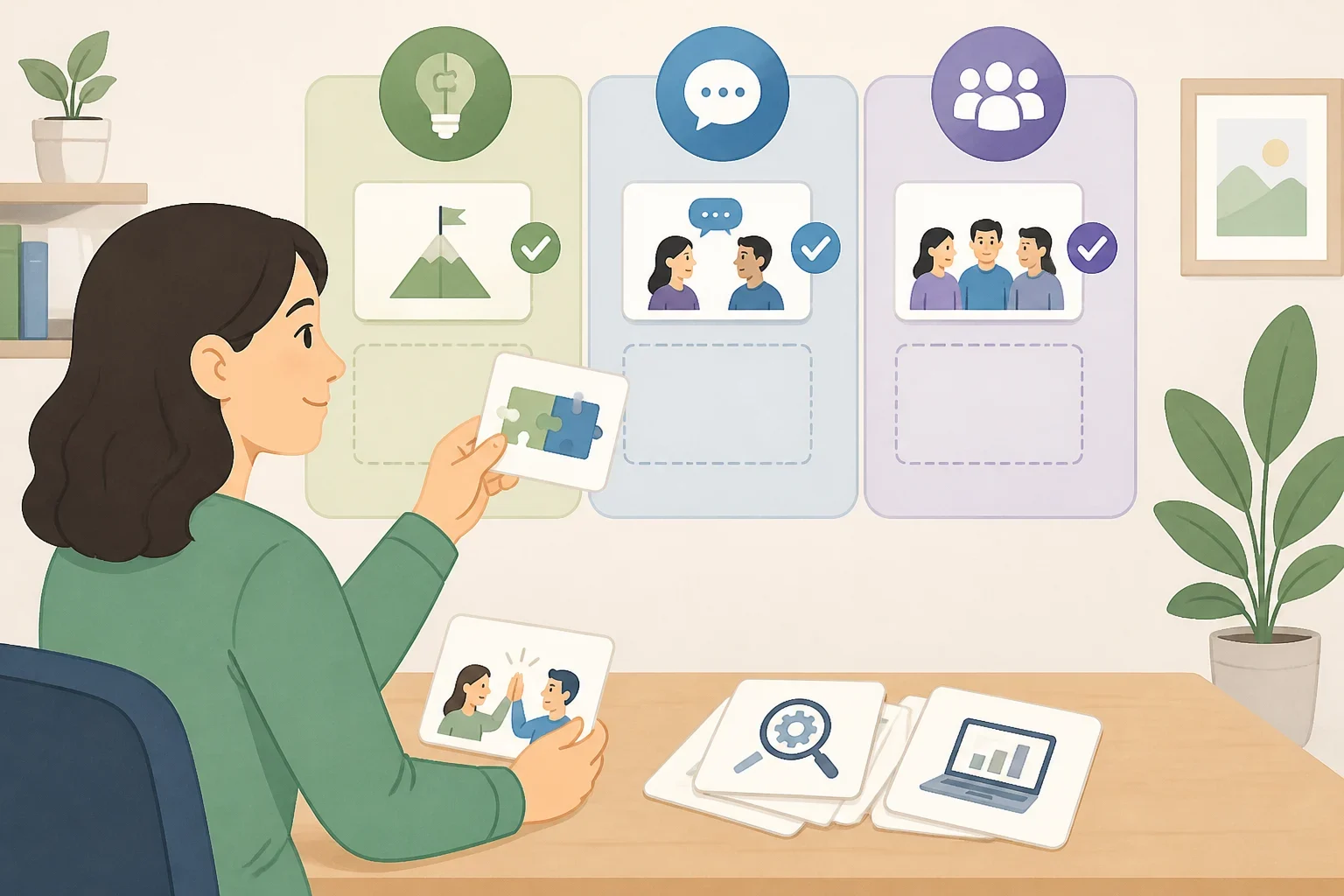
A professional portfolio for non-creative roles is evidence of judgment and contribution, not a gallery of finished deliverables, according to RemoRoute. That means it can center on the problem you faced, your role, the constraints involved, and the result, rather than a polished file pulled from a company system.
NACE's employer research points to the same underlying ask. The organization advises candidates to share specific examples of how they used their skills to solve problems, rather than simply listing abilities on a resume, NACE reports.
Employer surveys consistently show that critical thinking and problem-solving, communication, and teamwork matter alongside job-specific skills, according to NACE research. Use those three categories as a sorting tool when deciding which moments from your job are worth developing into a case study first.
Start by listing three to five times at work when you solved a problem, improved a process, or helped a team hit a goal. Tag each one with the category it demonstrates best: problem-solving, communication, or teamwork. That short list becomes the raw material for everything that follows.
How to build a work portfolio for non-creative jobs from everyday projects
Material doesn't need a flashy title to count. Harvard's graduate career office advises building a "bank" of experiences, from coursework to detailed research projects, that can later be shaped into examples tailored to a specific job, according to Harvard FAS. That advice is aimed at graduate students, but the habit of banking experiences transfers well to any non-creative job.
When current experience feels too thin or too tied up in confidentiality, career-relevant volunteering is a legitimate way to build something new to point to, and virtual project platforms such as Forage offer another route to a demonstrable project, per Harvard FAS.
Usable material is more common than people assume. Among students responding to NACE's 2025 Student Survey, 88.1% had already participated in projects, internships, or volunteer work that built career-relevant skills, NACE reports.
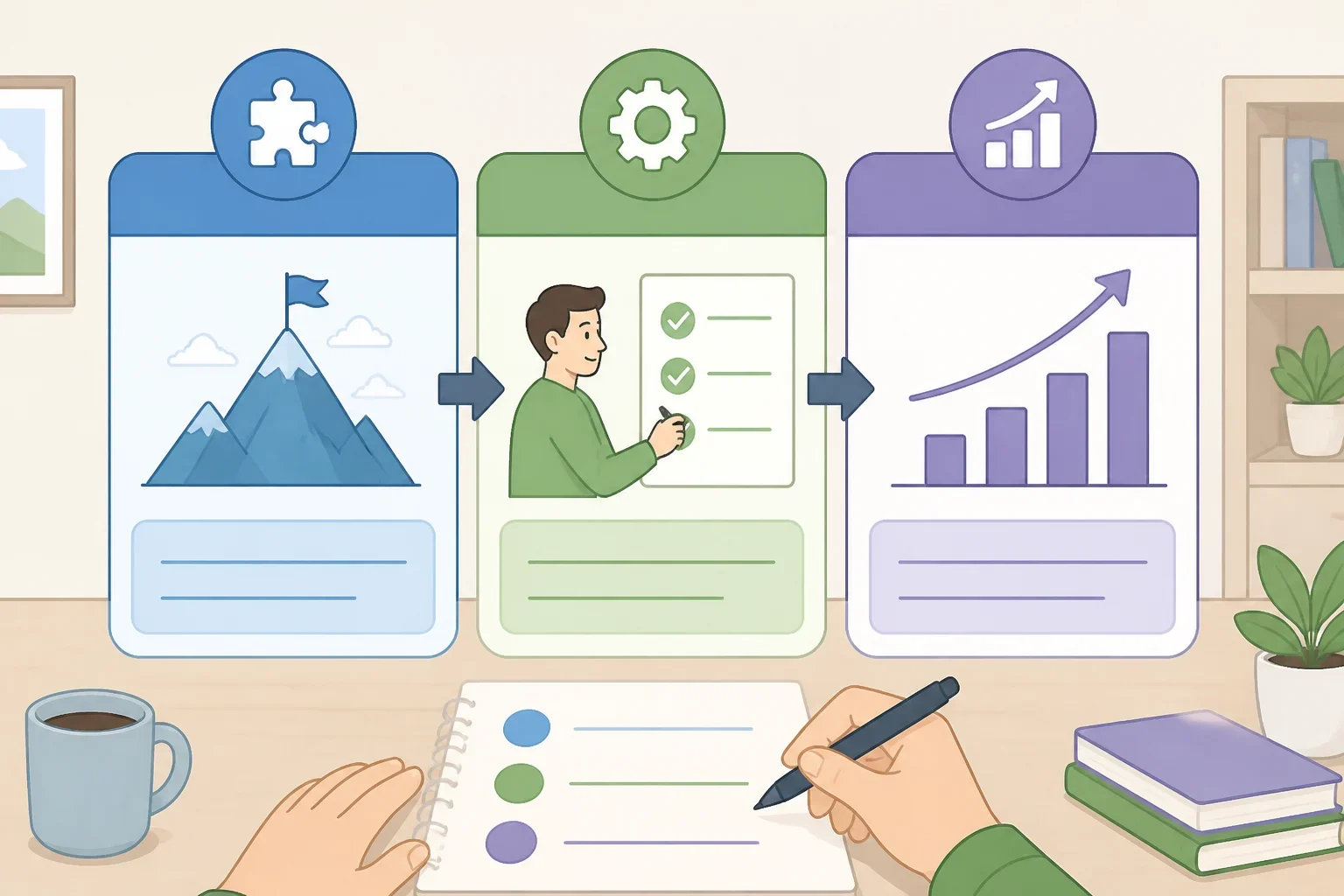
One useful structure for turning a raw experience into a short narrative is the P-A-R framework: Project, Action, Result, as outlined by Harvard FAS. It breaks an experience into what the situation was, what you did about it, and what happened as a result.
Here's how that looks in practice. The following is a hypothetical example built for illustration, not a sourced case study, so treat any figures as placeholders to swap for your own approved details. Picture an operations coordinator who noticed that a department's shift-scheduling process kept producing last-minute coverage gaps. The project was to redesign the scheduling process. The action was building a structured approval window for shift swaps instead of handling them ad hoc over email. The result, described only in general terms, was fewer uncovered shifts over the following months.
Pick one example from your own list, quantify the result where you can (time saved, volume processed, errors reduced), and draft it in three or four sentences using the project, action, result shape.
Protecting confidential information while still proving your work
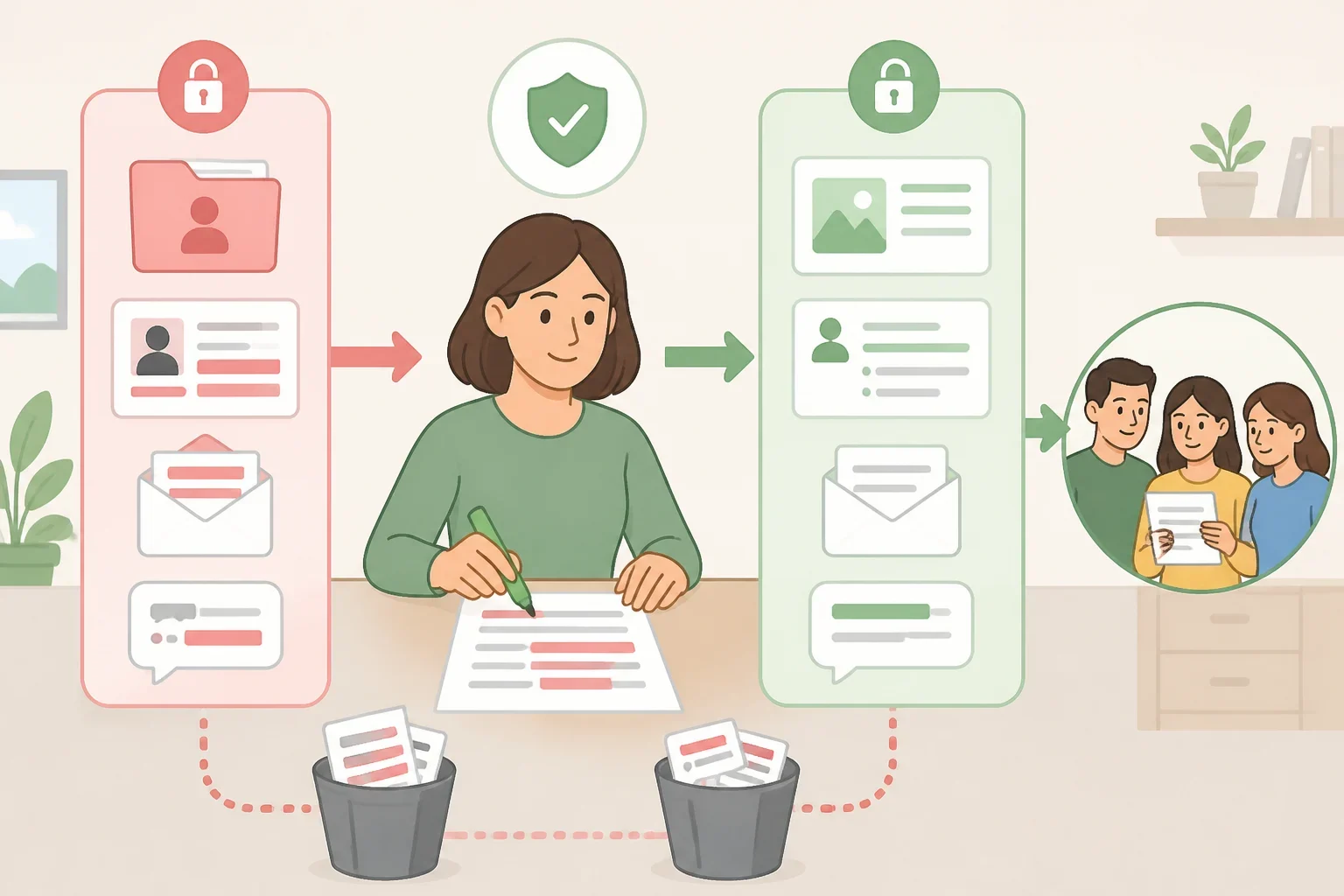
Knowing how to showcase work experience without confidential information starts with separating the story from the artifact. A case study can describe the problem, your role, the constraints, and the result without attaching the original dashboard, client list, proprietary deck, or internal repository that produced it, according to RemoRoute.
Generally safe to describe at a high level: the type of problem, the general scope of your role, the tools or methods used, and a generalized outcome. Generally unsafe to transfer or upload anywhere: client names, internal systems, source code, non-public pricing or metrics, and exported files or screenshots, which can carry hidden metadata, account details, or URLs even when the visible content looks harmless, per RemoRoute.
Applied to the scheduling example above, that means the coordinator could describe the general nature of the fix, in approved or rounded terms, without naming the scheduling software, the department's budget, or any specific employees involved.
When the original material can't be shared, a clearly labeled recreation, synthetic data, or a personal demonstration project can stand in, and a mock-up should never be presented as a live company document, RemoRoute advises.
Confidentiality and trade-secret obligations can extend beyond the end of employment, depending on the specific contract and jurisdiction, according to the World Intellectual Property Organization, cited by RemoRoute. This is a general caution rather than legal guidance; readers should review any confidentiality or IP agreements that apply to them and check with a qualified professional if something is unclear.
If a recruiter asks for a live file that can't be shared, offering an anonymized case study or a short new exercise instead keeps the conversation moving, and it helps to keep the request and your response in writing when the scope feels ambiguous, RemoRoute recommends.
A reusable portfolio case study template
Most of the work above is prep. Here's what a finished entry can look like once it's written up, using the scheduling example as a stand-in:
- Situation: A department's shift-scheduling process kept producing last-minute coverage gaps.
- Role: Owned the redesign of the swap-request and approval process.
- Action: Replaced ad hoc email swaps with a structured approval window.
- Result: A general, approved description of fewer uncovered shifts over the following months, not a specific internal figure.
- Confidentiality check: No scheduling software name, budget detail, employee names, or exact metrics included.
- Interview version: A 30-second verbal answer covering the same four points, ready to expand if an interviewer asks follow-up questions.
Build one of these for each item on your original list of three to five moments, using your own details in place of the placeholders here.
Packaging and sharing your portfolio during a job search

A portfolio doesn't need a public website to be useful. Depending on the role, it might work better as a private PDF, a password-protected page, a one-page leave-behind for an interview, or simply talking points rehearsed well enough to share only when asked. Whichever format you pick, tailor which case studies you lead with to the specific job you're applying for rather than sending the same set everywhere.
Screening may involve an applicant tracking system, a human reviewer, or both, and Harvard advises mirroring the language of the job posting when describing your experience, according to Harvard FAS. More than 80% of employers highlight the specific skills they're evaluating directly in job postings, NACE finds, which gives applicants a practical map for deciding which case study to lead with.
Anything listed on a resume or in a portfolio is fair game in an interview, so each case study should be rehearsed well enough to hold up under follow-up questions, per Harvard FAS. The scheduling example might come out as something close to the interview version in the template above: the team kept missing coverage because swaps were handled over email, the fix was a structured approval window, and the result was fewer last-minute gaps for the manager who inherited the process afterward.
Writing these case studies can have value even before an employer sees them. A course-based study within a single biology program found that the reflective benefits of building a student ePortfolio persisted whether or not a potential employer ever reviewed the material, according to NACE's ePortfolio research. The study was narrow in scope, but it suggests that the reflection involved in writing a case study may help students articulate their own skills more clearly, regardless of their field.
Before an interview, pick the two or three case studies most relevant to that specific role, decide which format fits the conversation, and practice walking through each one aloud, including the result and what you'd do differently.
What to do next
Draft one case study this week from a recent project, using the project, action, result structure and the template above. Run it through the confidentiality checklist: strip anything that identifies a client, system, or non-public figure, and swap in a labeled recreation if the original material can't leave your old employer's systems.
Save the finished version in whatever format you're actually likely to use, whether that's a document, a slide, or a private folder. As skills-based hiring continues to spread, a small set of clearly labeled, well-chosen examples is a reasonable bet for standing out the next time a job posting asks for proof instead of a list of claimed abilities.
