

Highest Paying Entry-Level Jobs: A Guide Using BLS Data
Several occupations tracked in the BLS Occupational Outlook Handbook report 2024 median pay of $100,000 or more, but that figure covers every worker currently in the role, from someone hired last month to someone with three decades on the job. It's not a starting paycheck. Still, it's a real reference point for comparing the highest-paying entry-level jobs against pay across the broader workforce: the median annual wage for all U.S. occupations was $49,500 in May 2024, according to the same BLS data.
Some of the highest-paying jobs for recent graduates still require a doctoral or professional degree in hand before day one. General internal medicine physicians, for example, list a doctoral or professional degree plus an internship or residency as the typical entry path, while lawyers list that same degree level with no additional formal training beyond it (BLS OOH). Other high-median-pay fields set a lower bar: a bachelor's degree, with no additional formal training listed, as the typical way in. This guide is built around that gap: doctoral-level fields versus bachelor's-level fields.
This guide applies one consistent screen to BLS data to build a list of direct-entry, high-pay occupations, compares that list with paths that trade something away for a different requirement, and walks through a method for testing whether any of these roles are realistically attainable in a specific metro area.
What counts as a high-paying, direct-entry job
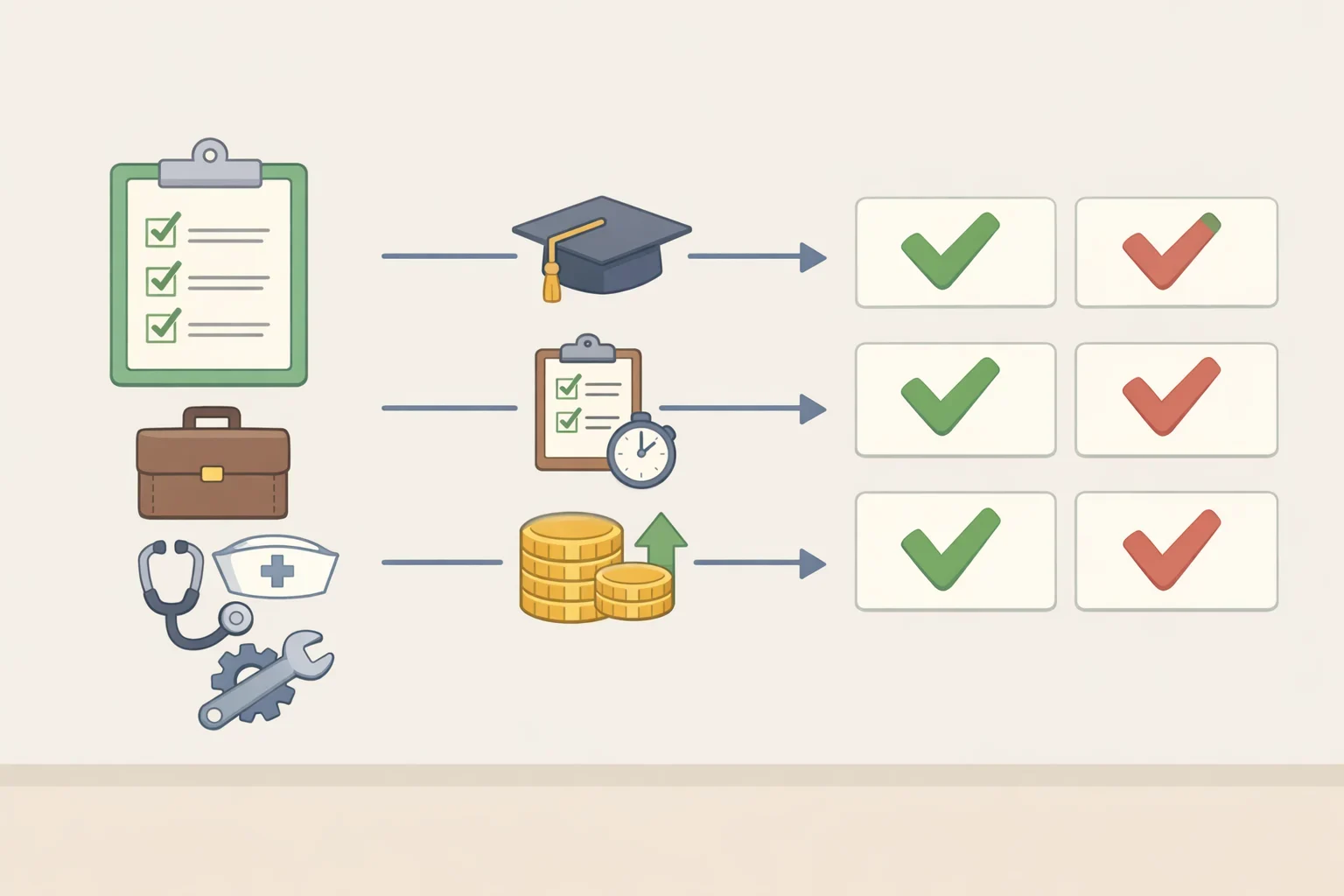
The core screen used here looks for three things at once, all drawn from the BLS Occupational Outlook Handbook: a typical entry-level education of a bachelor's degree, no additional formal on-the-job training listed, and 2024 median pay of $100,000 or more. Occupations that need a master's or doctoral degree are left out entirely, since that's a higher entry-education tier than a four-year degree. Occupations that need less than a bachelor's, an associate degree, or a postsecondary award are covered separately in the section on other paths below, since they sit in a different entry-education tier than the bachelor's-level screen used here.
Two caveats apply throughout. First, "no additional formal on-the-job training" is BLS's typical minimum entry category. It doesn't confirm what employers actually ask for beyond the degree, so checking current job postings for specific requirements still matters. Second, median pay and projected job growth describe the whole occupation nationally over the long term, not a starting salary or a local count of open positions.
The BLS data used throughout this guide, covering typical entry education, training, and pay categories, was last updated in August 2025, about a year ago. Regional wage tables have since moved to more current estimates, so check those directly for the most recent local pay figures before making an education or training decision based on any number here.
Web and digital interface designers show how narrow some of these gaps are. They clear the bachelor's-degree, no-extra-training half of the screen and post much-faster-than-average projected growth, but median pay for the occupation sits at $75,000 to $99,999, just under the $100,000 cutoff (BLS OOH). That's why the occupation doesn't make the table below.
Occupations that meet the BLS education, training, and pay screen
Every occupation below combines a bachelor's degree as the typical entry education, no additional formal on-the-job training, and a 2024 median pay of $100,000 or more, according to the BLS Occupational Outlook Handbook. This reflects every occupation that met all three parts of the screen among those checked for this guide; the tool covers hundreds of occupations, so a search by major or interest area may turn up others not listed here.
Meeting this screen doesn't mean the occupation is normally a first job, or that a bachelor's degree alone satisfies every employer. Some titles below are broad occupational categories that mix new hires with workers who have years of experience, which is why they're split into two groups.
Technical and specialized roles
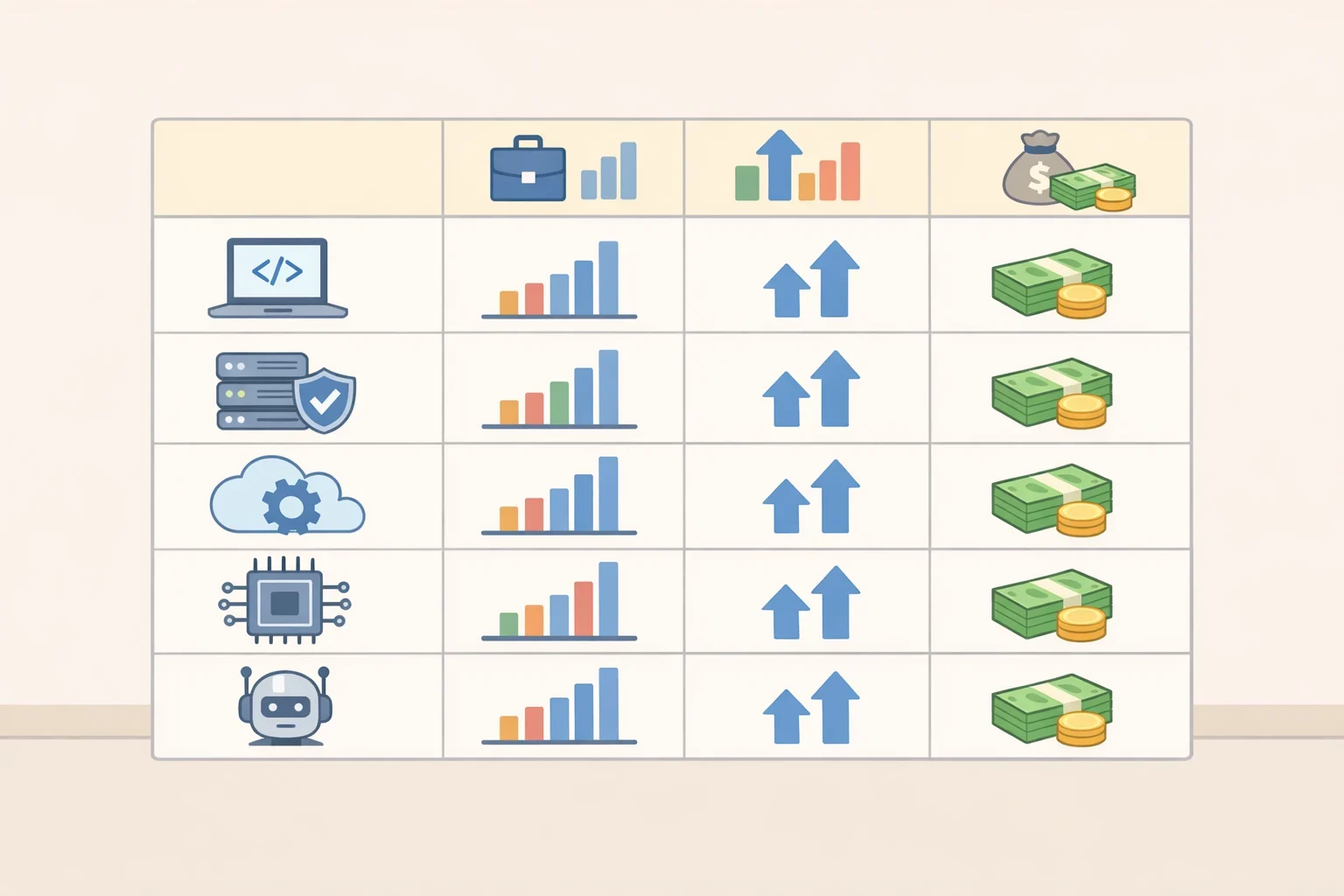
Occupation Projected new jobs Growth rate 2024 median pay Software developers 50,000 or more Much faster than average $100,000 or more Industrial engineers 10,000 to 49,999 Much faster than average $100,000 or more Financial and investment analysts 10,000 to 49,999 Faster than average $100,000 or more Computer hardware engineers 5,000 to 9,999 Much faster than average $100,000 or more Aerospace engineers 1,000 to 4,999 Faster than average $100,000 or more Financial risk specialists 1,000 to 4,999 Faster than average $100,000 or more Medical dosimetrists 0 to 999 As fast as average $100,000 or more Mining and geological engineers, including mining safety engineers 0 to 999 Slower than average $100,000 or more Petroleum engineers 0 to 999 Slower than average $100,000 or more
(BLS Occupational Outlook Handbook)
The summaries below describe the work in plain terms. For a full duty list on any title, check that occupation's individual profile in the BLS Occupational Outlook Handbook linked above.
- Software developers design, build, and test applications or software systems. When comparing current postings, look for entry titles like "software engineer I" or "associate software engineer," and note whether they list anything beyond the degree, such as a coding sample or a specific programming language, since BLS's entry-education category doesn't capture that detail.
- Industrial engineers work on improving efficiency in production or service systems. Note whether postings for this title mention coursework in process improvement or manufacturing systems, or ask for internship experience with an operations or manufacturing employer.
- Computer hardware engineers research, design, and test physical computing equipment. Note whether postings ask for electronics or computer engineering coursework, along with lab or testing experience, since that's the piece most closely tied to how this specific role is filled.
Aerospace engineers, mining and geological engineers (including mining safety engineers), and petroleum engineers follow the same bachelor's-degree, no-extra-training pattern, but each reports a much smaller projected count: 1,000 to 4,999 new jobs for aerospace engineers, and under 1,000 for the other two (BLS OOH). A smaller national count doesn't mean the role is unavailable locally, but it does mean a metro-level posting search matters more before assuming the title is common where you're looking.
Financial and investment analysts and financial risk specialists clear the identical bachelor's-degree, no-extra-training, $100,000-plus screen. Requirements for finance roles vary a lot by employer, so weighing the BLS category against what current postings actually list is worth doing before assuming the job is as directly accessible as the engineering roles above.
Medical dosimetrists also meet the full screen, but this is a narrow specialty tied to radiation therapy planning. Confirm what certification or additional coursework employers expect beyond the bachelor's degree listed here, since BLS's entry-education category doesn't capture credentialing details.
Management and broad-category roles
Occupation Projected new jobs Growth rate 2024 median pay Management analysts 50,000 or more Much faster than average $100,000 or more General and operations managers 50,000 or more As fast as average $100,000 or more Managers, all other 50,000 or more As fast as average $100,000 or more Project management specialists 50,000 or more Faster than average $100,000 or more Human resources managers 10,000 to 49,999 Faster than average $100,000 or more Purchasing managers 1,000 to 4,999 As fast as average $100,000 or more
(BLS Occupational Outlook Handbook)
These are broad occupational categories that combine workers across many company sizes and career stages, from someone newly moved into a first management role to someone with fifteen years in the position. Before treating any of these titles as a realistic first job, check whether current postings for entry-sounding versions of the role, such as "management trainee," "HR coordinator," or "associate consultant," actually appear in your target metro, and how much prior experience they typically ask for.
Other high-pay or lower-credential paths worth comparing
Two occupations fail the core screen in opposite directions: one on pay, one on training.
Physical therapist assistants: BLS lists an associate degree as the typical entry education and no additional formal on-the-job training. The occupation projects 10,000 to 49,999 new jobs at a much-faster-than-average rate, but median pay lands at $50,000 to $74,999 (BLS Occupational Outlook Handbook), below the $100,000 cutoff used above. Whether state licensure applies, and what it requires, varies; confirm current rules with the relevant state physical therapy licensing board before enrolling in a program, since that detail sits outside the BLS figures used here.
Air traffic controllers: BLS lists an associate degree as the typical entry education, but adds long-term on-the-job training, which is why this occupation fails the screen on the training criterion despite median pay of $100,000 or more. Projected growth is slower than average, with only 0 to 999 new jobs nationally (BLS OOH), a much smaller count than any occupation in the tables above. Applicants should review the FAA's current hiring and eligibility requirements directly, since specific selection steps fall outside the BLS dataset used here.
BLS lists an associate degree as the typical entry education for both occupations. Beyond that, the two paths diverge: physical therapist assistant work reports a lower median-pay band alongside much-faster-than-average growth, while air traffic control reports a higher median-pay band alongside slower-than-average growth and a far smaller number of projected new jobs. Verify the actual program, licensing, or hiring route with the relevant authority, the state physical therapy board for PTA or the FAA for air traffic control, before enrolling in anything.
How to compare the highest paying entry-level jobs in your area
Pick one or two occupations from the sections above before starting this exercise.
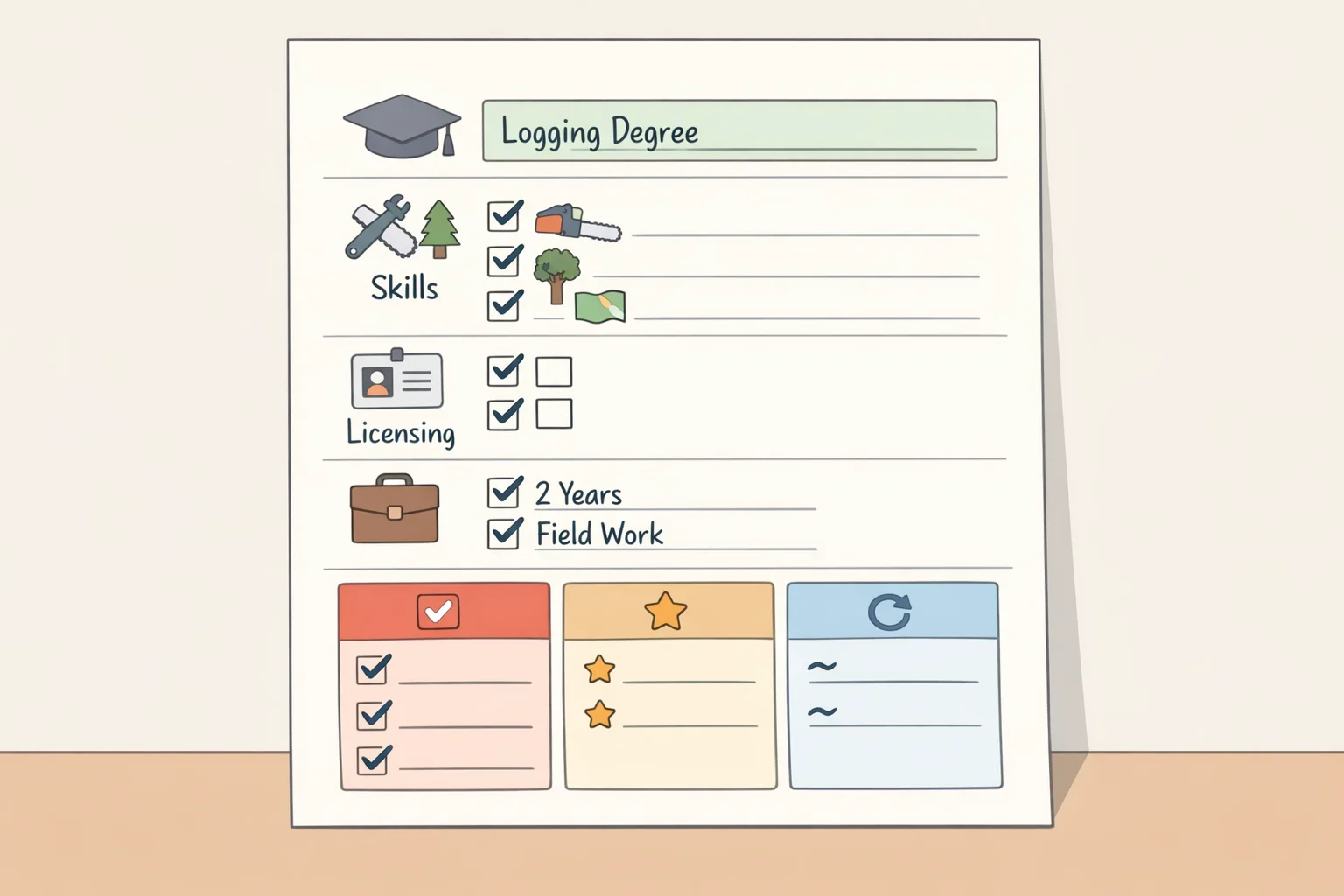
- Pull 10 to 15 current postings for the occupation's typical entry titles in a target metro, including adjacent titles employers use for entry-level versions of the role, not just the exact BLS occupation name.
- Log each posting on a simple worksheet: degree required, specific skills or tools listed, any license or certification named, minimum experience requested, and the exact job title. Sort each requirement into must-have, preferred, or substitutable, meaning coursework or project work that could reasonably stand in for a "preferred" item.
- Count how many postings ask for experience beyond the degree. A high count suggests the BLS "no additional training" label may not match how the role is actually filled in that market, though 10 to 15 postings are a reader's sample, not a statistically reliable measure of the whole local labor market. Compare the pattern against the national projections above to see where local hiring and the BLS category diverge.
- Compare occupation-wide regional pay using the state or metropolitan-area tables in BLS OEWS data, not the narrower industry-specific or ownership breakdowns, which cover a smaller slice of workers and are harder to compare across states or over time. This is still occupation-wide pay, not new-hire pay.
- Weigh four factors side by side: occupation-wide pay tier, projected national growth rate, training or licensure requirement, and the experience gap from step 3. No occupation on either list above wins on all four.
- Build application materials around the specific gap found in step 2, mapping coursework, class projects, or transferable experience directly to the "preferred" and "substitutable" items on the worksheet.
A hypothetical filled-in row might look like this for a software developer search in a mid-size metro: title, "Software Engineer I"; degree required, bachelor's in computer science or related field; skills listed, Python, SQL, one cloud platform; certification, none named; experience requested, "0 to 2 years"; category, must-have on the degree, preferred on cloud experience, substitutable with a personal or class project. Reviewing 10 to 15 postings this way can help you see patterns, whether most listings genuinely treat the degree as sufficient, or whether most quietly expect a project or internship on top of it.
Next step
Pick one occupation from the tables above, save 10 to 15 current postings from your target metro, and run the worksheet from the previous section to verify the actual degree, experience, licensing, and pay expectations before enrolling in a program or building a job search around that title.
