

- Does a career gap hurt your chances of getting hired?
- What the study measured: motivation, not skill
- Ratings in an experiment aren't the same as a hiring decision
- Resume gap explanations and hiring decisions: the caregiving evidence looks worse
- How to explain a career gap in an interview: what the findings can and can't support
- What the research doesn't establish
Does a career gap hurt your chances of getting hired?
Does a career gap hurt your chances of getting hired? A preregistered experiment published earlier this year suggests there's no single answer, and that how a candidate explains a gap matters more than whether one exists at all. Evaluators who reviewed fictional résumés rated candidates who described a gap as time spent "pursuing another passion" as less hireable than candidates who left the gap unexplained, and researchers traced the entire difference to perceived motivation rather than perceived skill, according to a study titled "Passion or Obligation: How Career Gap Explanations Shape Hiring Evaluations Through Motivation Inference," posted through UChicago Knowledge in early June.
That finding covers one framing out of many possible explanations, and it comes from ratings, not real hiring decisions. A separate 2018 audit study on caregiving gaps found something different, and most other common reasons for leaving work, layoffs, illness, education, relocation, weren't tested by either piece of research. Treating one study as the full answer to "does an employment gap hurt job prospects" would overstate what's actually known.
Employment gaps themselves are ordinary. A majority of individuals experience at least one lapse at some point in their careers, most often tied to job loss or family caregiving, according to research published in the American Sociological Review (Weisshaar, via Carolina Population Center). A separate BLS analysis of workers born in the late 1950s and early 1960s found that women spent 24% of the weeks between ages 18 and 58 outside the labor force entirely, more than double the 12% rate for men, according to a report published last year (BLS).
What the study measured: motivation, not skill
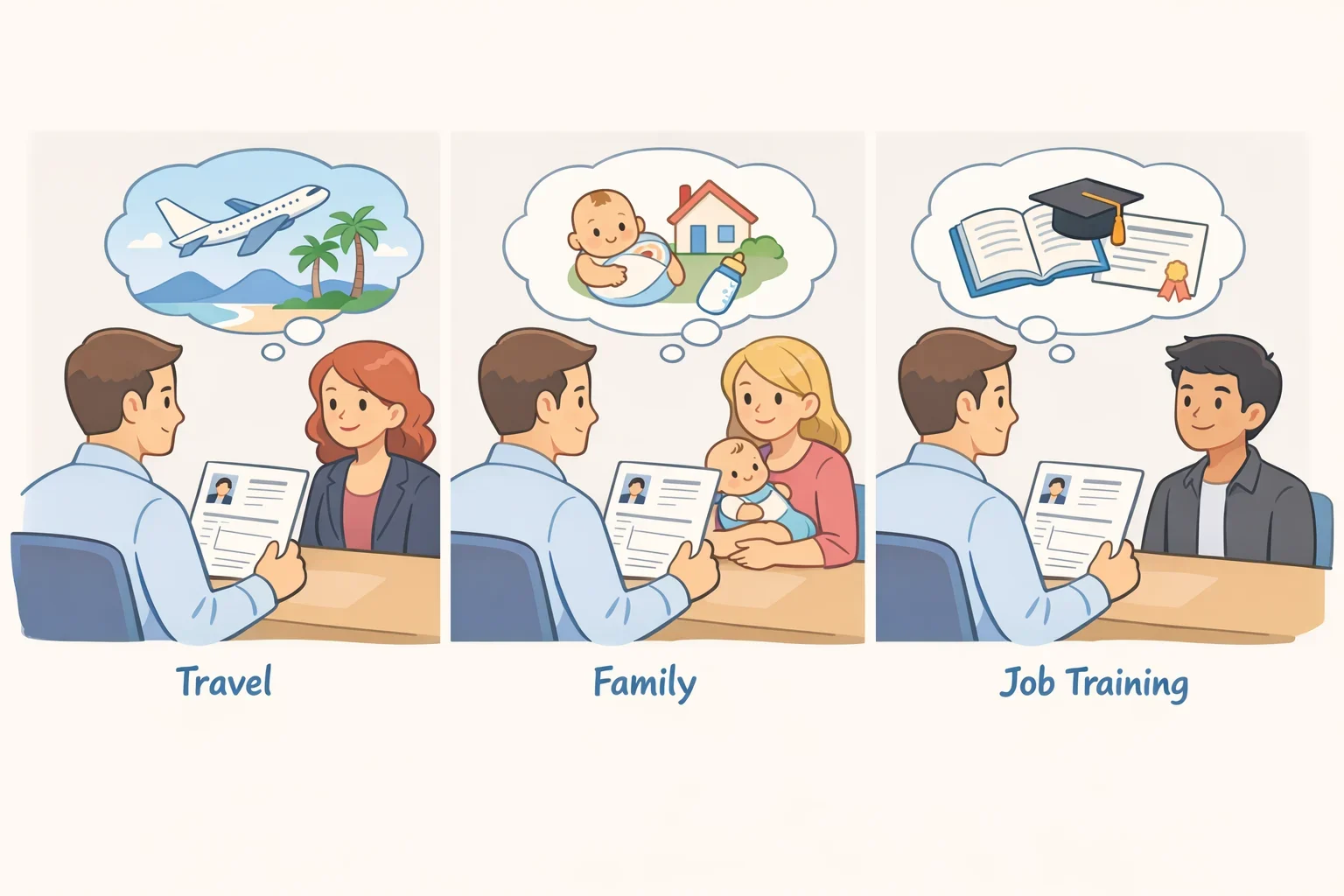
Researchers tested three résumé conditions involving fictitious candidates: a gap left unexplained, a gap explained as pursuing an alternative passion, and a gap explained as family caregiving (UChicago Knowledge).
Candidates in the passion-framed condition were rated less motivated and less hireable than candidates who offered no explanation at all. Perceived motivation fully accounted for that hireability gap, meaning evaluators didn't rate those candidates lower across the board, they specifically doubted the candidate's drive to do this job (UChicago Knowledge).
Perceived skill didn't differ across any of the three conditions (UChicago Knowledge). The passion explanation lowered how motivated candidates appeared to evaluators; it didn't change whether evaluators thought those candidates could handle the work.
The caregiving condition produced a different pattern. In exploratory analysis, candidates who explained their gap as caregiving were perceived as more motivated than candidates with an unexplained gap, though that perception boost didn't translate into a statistically significant increase in hireability ratings (UChicago Knowledge).
Ratings in an experiment aren't the same as a hiring decision
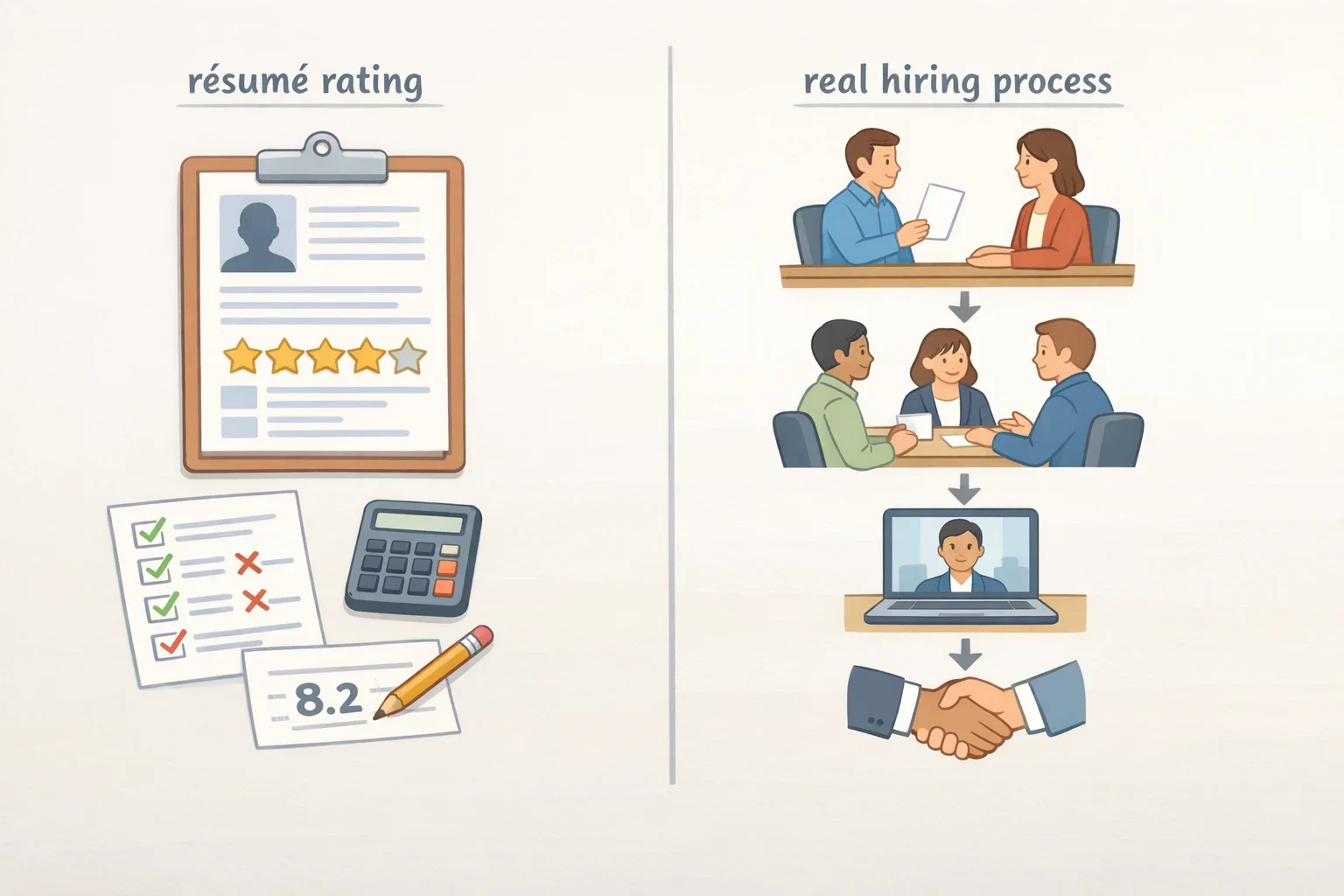
Separating what this study can and can't show matters here. The 298 evaluators rated fictional résumés in a single sitting; they weren't conducting interviews, weighing a real slate of applicants, or making an actual hiring call. Perceived hireability is a stand-in for how a candidate comes across on paper, not a measurement of who gets an offer.
Real hiring outcomes involve additional steps, interviews, reference checks, competing candidates, and employer-specific priorities that a rating exercise can't capture. That gap between a controlled experiment and a live hiring process is exactly why the caregiving research below carries a different kind of warning.
Resume gap explanations and hiring decisions: the caregiving evidence looks worse
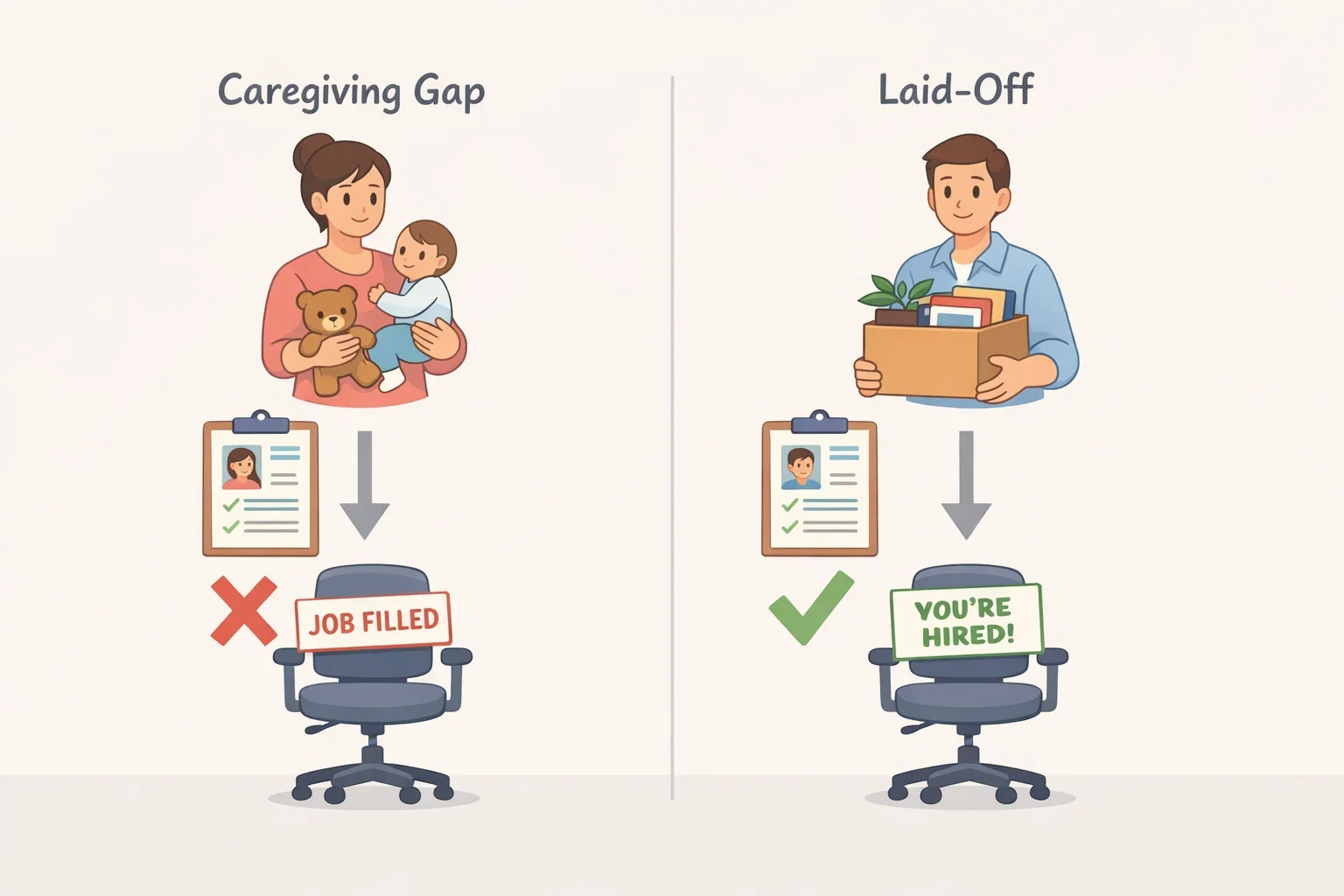
The UChicago findings on caregiving explanations describe perception in one rating exercise, not what happens when real applications reach real employers (UChicago Knowledge). Earlier audit research paints a starker picture of what caregiving gaps do to actual hiring prospects.
Katherine Weisshaar's 2018 study combined a survey experiment with a large-scale audit of real job applications. It found that parents who left work for caregiving fared significantly worse in hiring prospects than applicants who were unemployed after a layoff, and worse than continuously employed parents, according to the American Sociological Review (Weisshaar, via Carolina Population Center).
That penalty grew larger for caregiving fathers, and it showed up even for continuously employed mothers once the local labor market got competitive, the same research found (Weisshaar, via Carolina Population Center). Weisshaar's audit is now several years old and reflects labor-market conditions from that period; the research supplied here doesn't establish whether the pattern has shifted since.
Perception data from a single rating exercise and audit data from real job applications aren't measuring the same thing. One is a first impression; the other is what actually happened when real résumés reached real employers. Candidates weighing a caregiving explanation are working with two different kinds of evidence pointing in somewhat different directions, and neither one guarantees a specific outcome.
How to explain a career gap in an interview: what the findings can and can't support

The experiment only tested résumé-stage wording, and it only compared silence to one specific framing of an alternative pursuit (UChicago Knowledge). It didn't test how candidates should answer a question out loud in an interview, and it didn't test whether mentioning training, freelance work, or other activity during a gap changes hireability ratings.
Anything beyond the study's own conditions is inference, not a tested result. With that caveat in place, the motivation finding still offers a reasonable starting point for interview preparation: since the passion framing lowered perceived motivation without affecting perceived skill, an explanation that ties clearly back to interest in the role at hand avoids the specific pattern the study flagged as risky. That's a plausible application of the research, not a guarantee drawn from it.
Candidates may choose to keep an explanation focused on the timeline and current qualifications rather than personal or health details; the study didn't test disclosure of that kind of information one way or the other. Anyone with specific concerns about what an employer can ask or how much to share about a health-related gap may want to check with an HR professional or the relevant state labor agency, since this research doesn't address disclosure rules.
Candidates may also want to prepare a concrete example of how they kept relevant skills current during the gap. That's general interview preparation, not a finding this study measured, since perceived skill didn't move in either direction across any of the three conditions.
Other common reasons for a gap fell outside this experiment entirely, so candidates in these situations are relying on general job-search practice rather than tested findings:
- Layoff or unemployment: a factual, timeline-based explanation is standard advice, not something either study measured.
- Education or training: tying the explanation to how it prepared a candidate for the target role is common practice.
- Relocation: a brief factual note is typically sufficient.
- Entrepreneurship: this can resemble the passion framing the study flagged, since it may read as a competing commitment, so treating it with similar caution is reasonable.
What the research doesn't establish
The study's summary doesn't specify whether its 298 evaluators were recruiters, hiring managers, or a general sample, and it doesn't report effect sizes, job type, seniority level, or gap duration (UChicago Knowledge). Applying the results uniformly across industries or career stages goes beyond what the available data supports.
Only three framings were tested. Conclusions about layoffs, illness, education, relocation, or entrepreneurship extend well beyond what researchers actually examined, and neither study followed candidates into interviews or offers.
Interviewers commonly raise a handful of questions around a gap, even though this research didn't measure how often or in what order they come up. Preparing for them is standard interview practice rather than a study-backed formula:
- Why are you returning to work now? Answering with current readiness, rather than re-justifying the earlier decision, matches the study's finding that motivation toward the job at hand is what evaluators weigh.
- What have you been doing to stay current in the field? A specific, verifiable example is a reasonable way to address this, though the study didn't test it directly.
- Why this role, specifically? Tying the answer to the job's actual duties speaks to the same motivation question the research identifies, rather than repeating the gap explanation itself.
Candidates can draft a short, factual explanation for their own gap, rehearse answers to those likely follow-ups, and have a mentor or career counselor review the wording before an interview. None of this research shows that any particular phrasing guarantees an interview or an offer; it points to one factor, perceived motivation, that evaluators appear to weigh, and leaves plenty of open questions for anyone whose gap doesn't match the two situations these studies actually tested.
