

- Boss's Day Card Messages for 2026: How to Write One
- What to write in a Boss's Day card: a three-part formula
- Boss's Day card message ideas for five work relationships
- Boss's Day wishes without sounding generic or overdone
- Personalizing a Boss's Day thank-you message when trust is limited
- What to do before Friday
Boss's Day Card Messages for 2026: How to Write One
National Boss's Day lands on Friday, October 16 this year, according to Hallmark. Most employees already know the date is coming. Fewer have figured out what to actually write once the card is sitting open in front of them, which is usually where generic Boss's Day card messages happen: a vague line about being "a great boss" that could apply to anyone.
The holiday itself dates back further than most people assume. Secretary Patricia Bays Haroski registered it with the U.S. Chamber of Commerce in 1958 to mark the birthday of her own father, who she worked for at State Farm Insurance Co. in Deerfield, Illinois, according to SHRM. Illinois recognized it as an official state holiday in 1962, and it spread across the country by 1979, the same reporting notes.
That history explains why the date exists. It doesn't solve the harder problem, which is finding something to say that doesn't sound like a greeting-card template. Only 22% of U.S. workers say they get the right amount of recognition on the job, and 55% receive none that satisfies any of the five pillars Gallup uses to describe strategic recognition, according to Gallup research from 2024. Well-recognized employees in that same research were also 45% less likely to have left their organization two years later, though that figure reflects broader recognition practices across a workplace, not a single annual card. Together, those numbers suggest genuine appreciation is scarce enough that a specific message still stands out.
What follows is a formula for building that message, example lines sorted by relationship type, a short list of what tends to backfire, and guidance for relationships where a personal note doesn't fit easily.
What to write in a Boss's Day card: a three-part formula
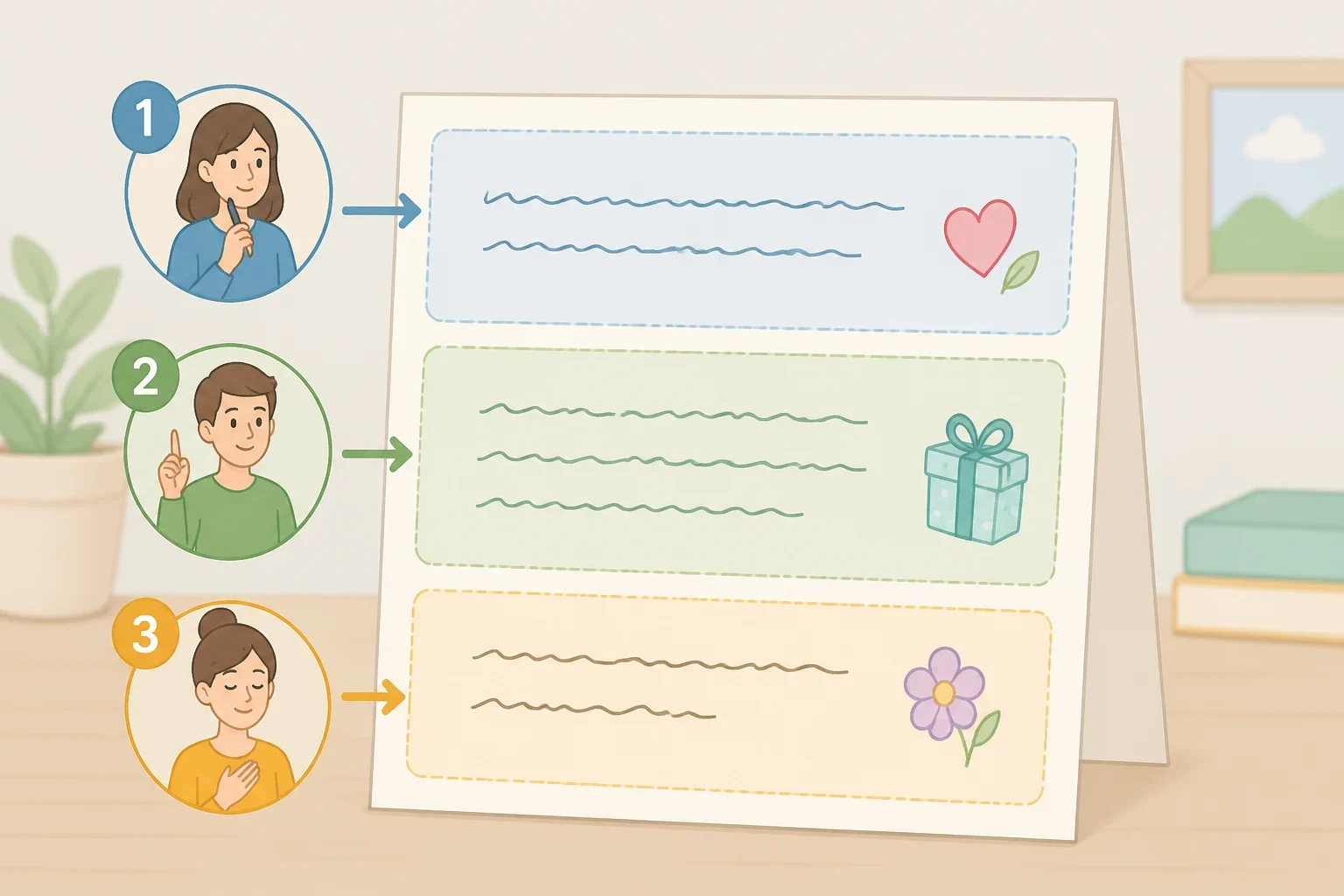
Hallmark's own advice breaks a message into three steps: pick a main line, add a specific detail about how the manager's actions made a difference, then close with a sign-off. The middle step is where the actual work happens, according to workplace consultant Audrey Epstein, who told SHRM that naming one concrete moment, how a manager reacted to a mistake, or what pushed someone toward better work, is "much more powerful" than a generic line of thanks.
Epstein described the cards leaders keep displayed in their offices for years as the ones tied to a specific memory of being helped, developed, or supported, not the ones built on broad compliments. That's a useful filter before signing anything: does the message name something that actually happened, or could it be copied onto any card in the store?
One way to apply that filter directly: "Thank you for [specific action]. It made a difference because [impact on the work or the team]." A filled-in version might read: "Thank you for walking through feedback on my first client presentation line by line. It made a difference because I walk into presentations now without second-guessing every slide." Another: "Thank you for covering my deadline when my kid was sick last month. It made a difference because I didn't have to choose between work and home that week." Neither line uses a Hallmark phrase directly, but both follow the structure Hallmark and Epstein both point toward.
Boss's Day card message ideas for five work relationships

Tone should shift with the relationship, not stay fixed because of the holiday. Hallmark's message bank includes formal gratitude, mentoring language, and lighter office humor, and each category suggests a different use depending on who's receiving the card.
- New or formal manager: Hallmark's "I've learned a lot from you" pairs well with one specific detail. Example: "I've learned a lot from you. The way you explained the budget process last month made something I was dreading actually make sense."
- A manager who's also a mentor: Hallmark's "Thank you for being a good coach and mentor" leaves room for a specific skill. Example: "Thank you for being a good coach and mentor. Pointing me toward the certification program last spring changed what I thought was possible in this role."
- A consistently supportive manager: Hallmark's "I feel like you really have my back, and I appreciate that" works alongside a concrete moment. Example: "I feel like you really have my back. Stepping in during that client call when things went sideways is something I still think about."
- A group or team card: Hallmark's "You're great at rallying the troops" suits a card several coworkers are signing together, since it describes a shared experience rather than requiring one person's individual story to carry the message.
- A remote manager: Hallmark's "Thank you for always taking the time to listen to me and your employees" acknowledges something easy to overlook without daily office contact. Example: "Thank you for always taking the time to listen. The weekly check-ins have kept me from feeling like just a name on a screen."
Length matters less than what's inside it. Licensed professional counselor Shenella Karunaratne told Lafayette College's Gateway Career Center that even a physical card with just a few words reminds a manager they have value and impact in the office. For a newer or more formal relationship, that suggests a short card can still communicate appreciation without needing to stretch into a longer letter.
How a message lands also depends on the manager's own style, not just how long the relationship has existed. A manager interviewed by SHRM said a card feels uncomplicated within a trusting relationship, but added that someone more private or guarded might experience the same gesture differently.
Boss's Day wishes without sounding generic or overdone

Overcorrecting carries its own risk. CEO Amanda Bunch, who has both sent and received appreciation messages at work, told Lafayette College's Gateway Career Center that it's important not to get too personal or pile on flattery. "There's a balance that you need to strike," she said.
SHRM reporting points toward the same caution on gifts. Cord Himelstein, a vice president at employee recognition company HALO Recognition, suggested keeping gestures simple: a funny card or e-card, a gag gift, or even offering to buy coffee gets the message across without the awkwardness of something extravagant, according to SHRM. He added that seeking recognition for a gesture of recognition undercuts its own sincerity.
Timing creates a separate risk from the gesture itself. Paul White, co-author of The 5 Languages of Appreciation in the Workplace, told SHRM that a large annual gift given right around a promotion decision "could indeed look like currying favor," regardless of the intent behind it.
Humor needs similar calibration. Hallmark's own message bank includes playful lines like "Thanks for not firing me... so far" and "It's Boss's Day... does that mean drinks are on you?" Those can work in an established relationship where a manager already jokes around with the team. For a newer or more formal dynamic, it's worth skipping lines that touch on job security or pay, since the same joke can land as presumptuous rather than funny depending on the audience.
A few things worth scanning for before signing a card:
- Vague superlatives with no specific detail behind them
- Gifts expensive enough that a coworker might feel awkward
- Humor about firing, pay, or performance that doesn't match the relationship
- Any line implying the manager owes the employee something in return
Personalizing a Boss's Day thank-you message when trust is limited
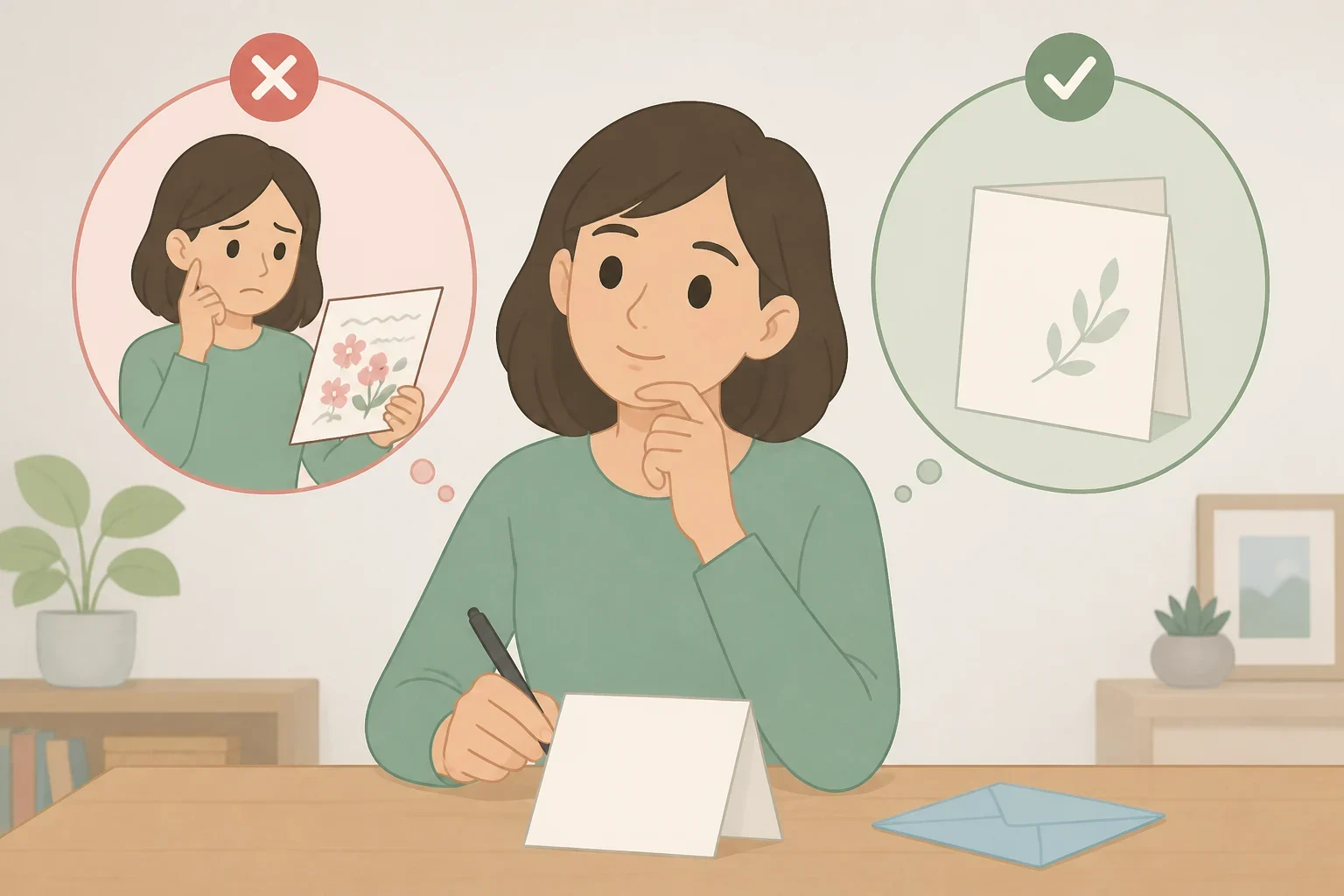
Not every manager relationship supports a personal note, and Epstein's advice to SHRM addresses that directly. She said each employee has to judge whether a Boss's Day gesture feels authentic, since a card disconnected from the real relationship can come across as insincere or like sucking up. "This is really more about how you show up the other 364 days of the year," she said, a comment that frames the holiday itself as a small symbol rather than a stand-in for day-to-day trust.
White described a separate tension many employees feel about whether to participate at all, calling it "a sort of damned if you do and damned if you don't" dynamic, including discomfort over joining in only because coworkers are, according to SHRM.
When trust is limited, the manager is new, or office norms around the holiday are unclear, a short, neutral line, something like "Happy Boss's Day, thank you for your support this year," covers the gesture without overreaching. Based on Epstein's comments about authenticity, skipping the card is also a reasonable option where a personal note would feel forced rather than genuine.
What to do before Friday
The guidance across both sources narrows to a few practical calls. If the relationship is genuinely positive, write one specific thank-you built on an actual moment rather than a general compliment. If the relationship is newer or more formal, a brief, professional line covers the gesture without overreaching. If participation feels forced, or office norms around the day are unclear, check whether the workplace already has a practice in place before assuming an individual card is expected.
Himelstein argued that recognizing managers "should not be left in the hands of employees alone" and suggested companies take the lead with something like a managers' lunch, a lighthearted award, or a note from leadership, according to SHRM. Asking HR or a manager's own supervisor about an existing practice can settle that question before Friday arrives, rather than guessing at what's expected.
