
- AI Resume Screening Bias: Study Finds Self-Favoring Tools
- What the AI resume screening bias study found
- Can LLM-based resume screening tell who's actually qualified?
- Trying to game AI screeners produces inconsistent results
- What regulators have said about automated hiring
- What this means for a job search right now
AI Resume Screening Bias: Study Finds Self-Favoring Tools
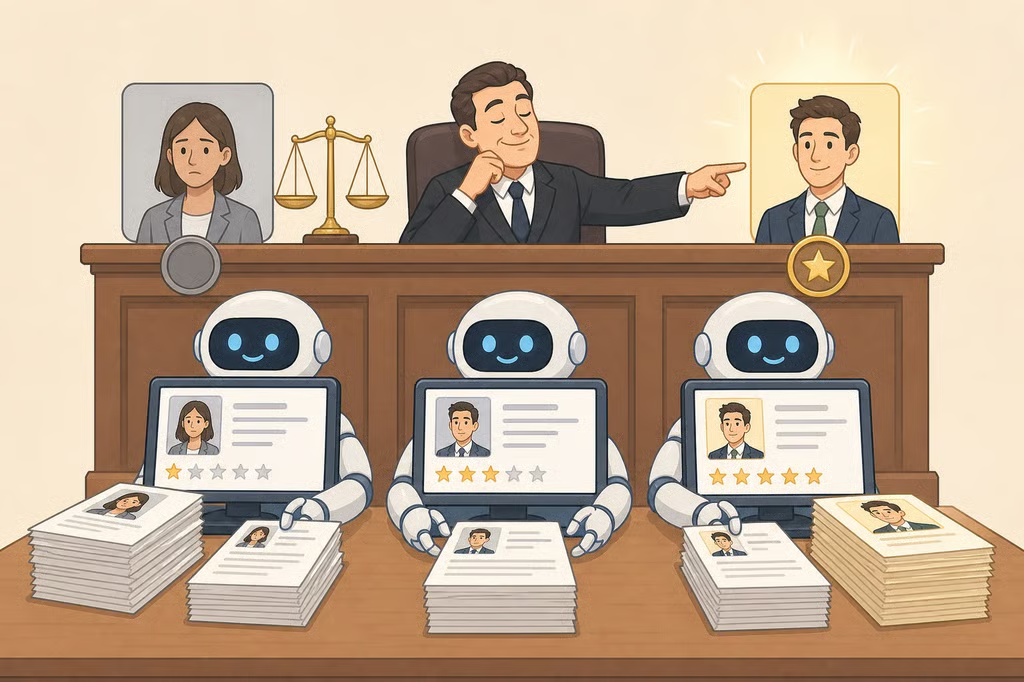
A working paper on AI resume screening bias reports that hiring tools built on large language models may rate resumes they generated themselves more favorably than equally qualified resumes written by humans. Self-preference rates ranged from roughly 67% to 82% across the commercial and open-source models tested, according to a June release from the University of Maryland's Robert H. Smith School of Business.
Candidates whose resumes happened to match an employer's screening model may gain a measurable advantage, with 23% to 60% higher odds of being shortlisted than equally qualified candidates who submitted human-written materials, the same release reported. The findings come from controlled experiments described in a working paper, not an audit of live hiring software, and the research doesn't name which tools employers currently use to screen resumes.
Two other studies examine related but distinct problems in automated resume screening research: whether AI rankings reliably identify the most qualified candidate, and whether applicants can manipulate AI evaluators through self-promotional wording. Both help fill in what LLM-based resume screening can and can't be trusted to do.
What the AI resume screening bias study found
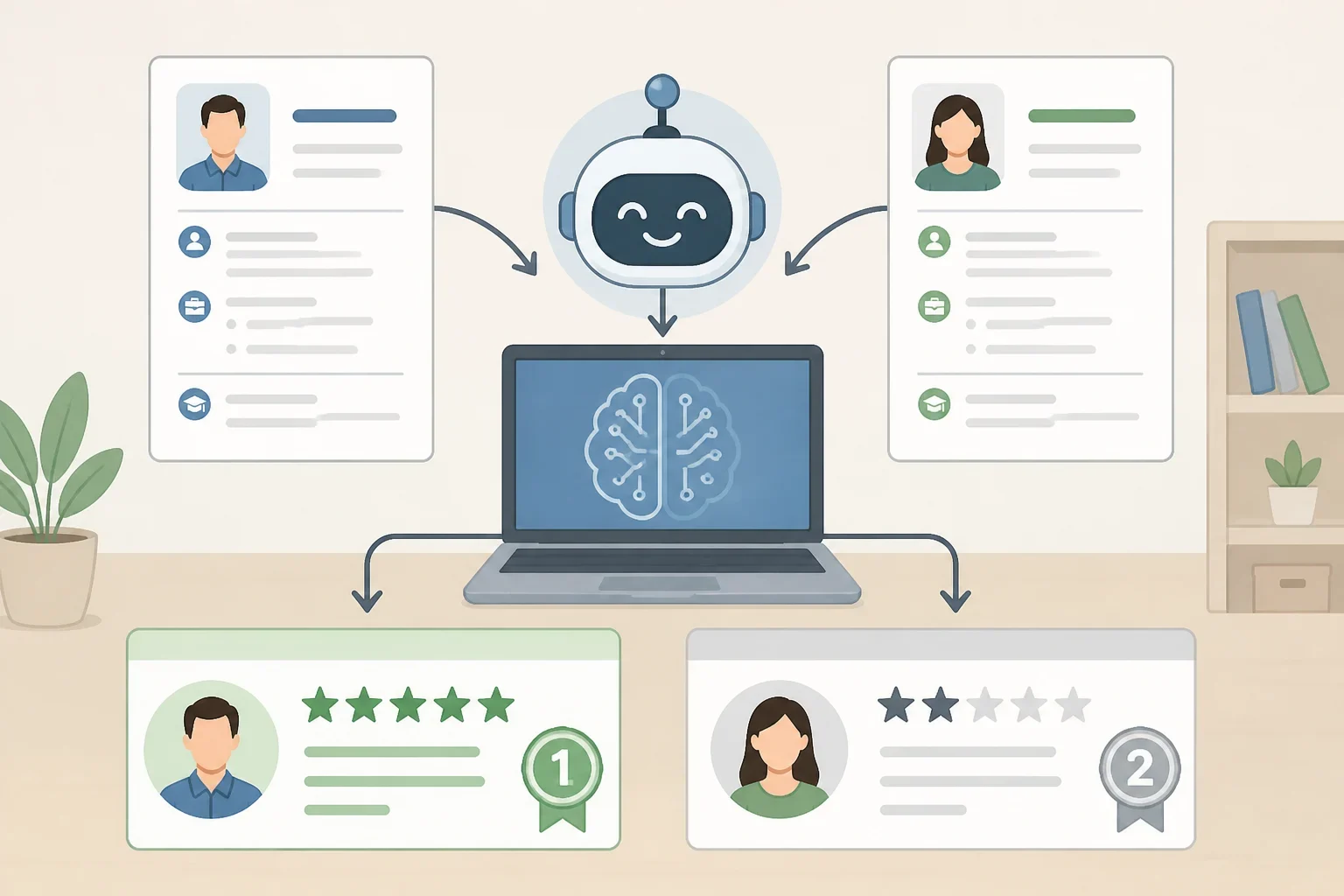
Smith Ph.D. candidate Jiannan Xu, along with Smith graduates Gujie Li of the National University of Singapore and Jane Yi Jiang of Ohio State University, documented the effect in a working paper titled "AI Self-preferencing in Algorithmic Hiring: Empirical Evidence and Insights." The release says the researchers compared resumes of equivalent quality, pitting human-written, rival-model, and same-model versions against each other, according to the release.
Xu, who is affiliated with UMD's Institute for Trustworthy AI in Law & Society, frames the result as a bias that can emerge from interactions between AI systems rather than from human data or human decisions. "The central contribution is to show that bias can emerge not only from human data or human decisions, but also from the way AI models respond to one another," Xu said.
The researchers also tested fixes. Two interventions cut the self-preference effect by more than half in their experiments, bringing outcomes closer to neutral:
- Instructing the AI evaluator to disregard a resume's origin and judge only skills and qualifications
- Using multiple models together in a majority-vote process instead of relying on one system's judgment
Xu treats hiring as an early test case for a larger pattern. "These interactions are likely to become much more common as AI tools increasingly create, screen, rank, and evaluate information across society," Xu said, calling AI-to-AI bias "an important new frontier for fairness research and governance."
Can LLM-based resume screening tell who's actually qualified?
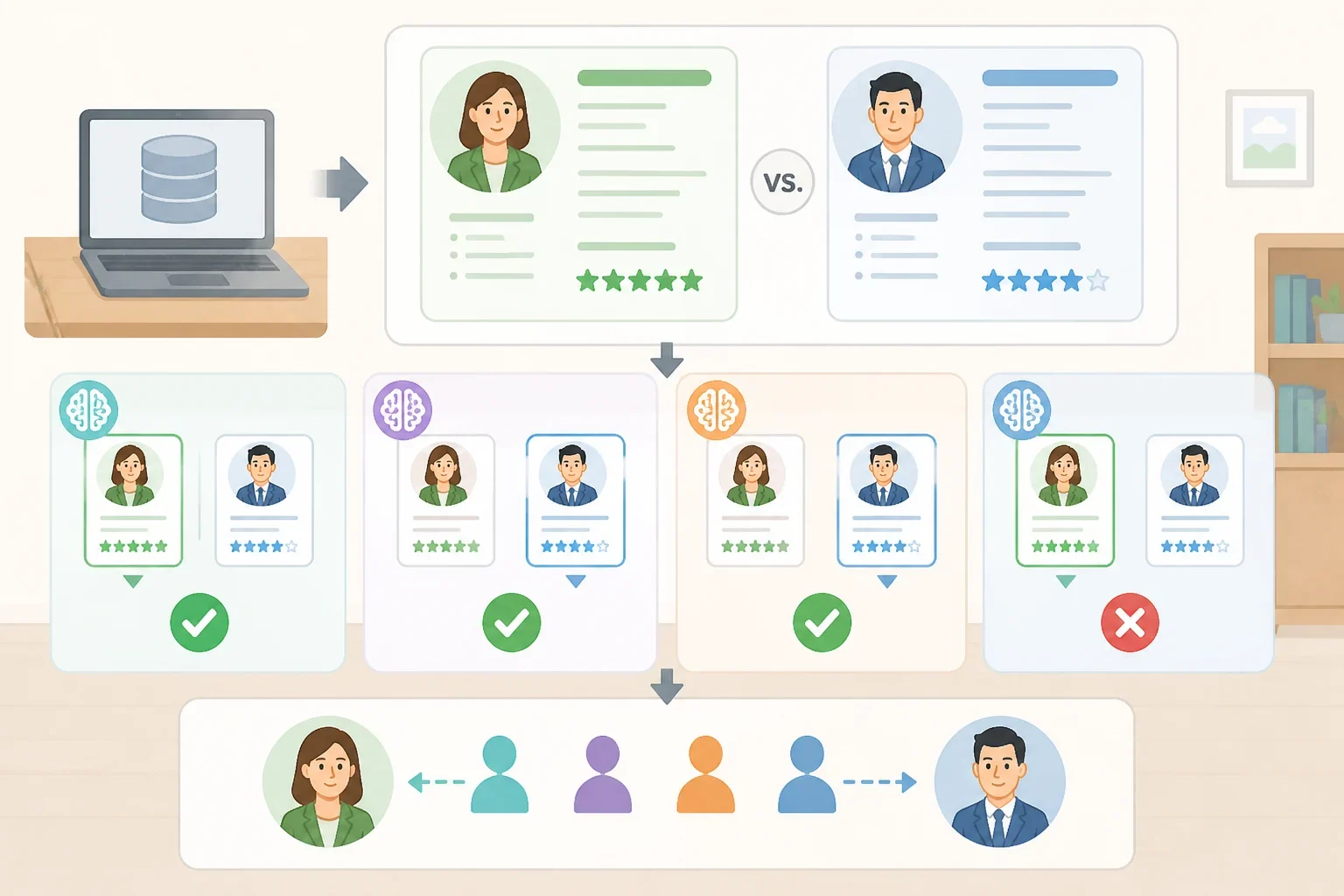
A second study, reported in AAAI/IASEAI conference proceedings this past July, looks at a more basic question: can these tools rank qualifications correctly at all? Resume screening looks like a natural fit for LLMs because the tools can parse natural language, which is part of why many entities rely on general-purpose models for the task without adapting them specifically for hiring, the paper notes.
Testing that assumption is harder than it sounds. Researchers rarely have access to a large set of real resumes with a known ground truth for which candidate is actually more qualified, since most available resumes may have already been absorbed into model training data. To work around that gap, the team built a dataset of resumes tailored to the same jobs, directly comparable, with a known quality ordering baked in from the start, a step the paper says overcomes that measurement challenge, per the proceedings.
Using that dataset, the researchers found that many models could not consistently identify the more qualified candidate and did not reliably decline to choose when two candidates were equally matched. The study also found different selection rates across demographic groups, occasionally favoring historically marginalized candidates, according to the proceedings.
This is a separate line of inquiry from the Smith School's self-preference findings. It doesn't point to AI authorship as a cause of bias. It points to a more basic accuracy problem in how some models weigh qualifications in the first place, regardless of who or what wrote the resume.
Trying to game AI screeners produces inconsistent results
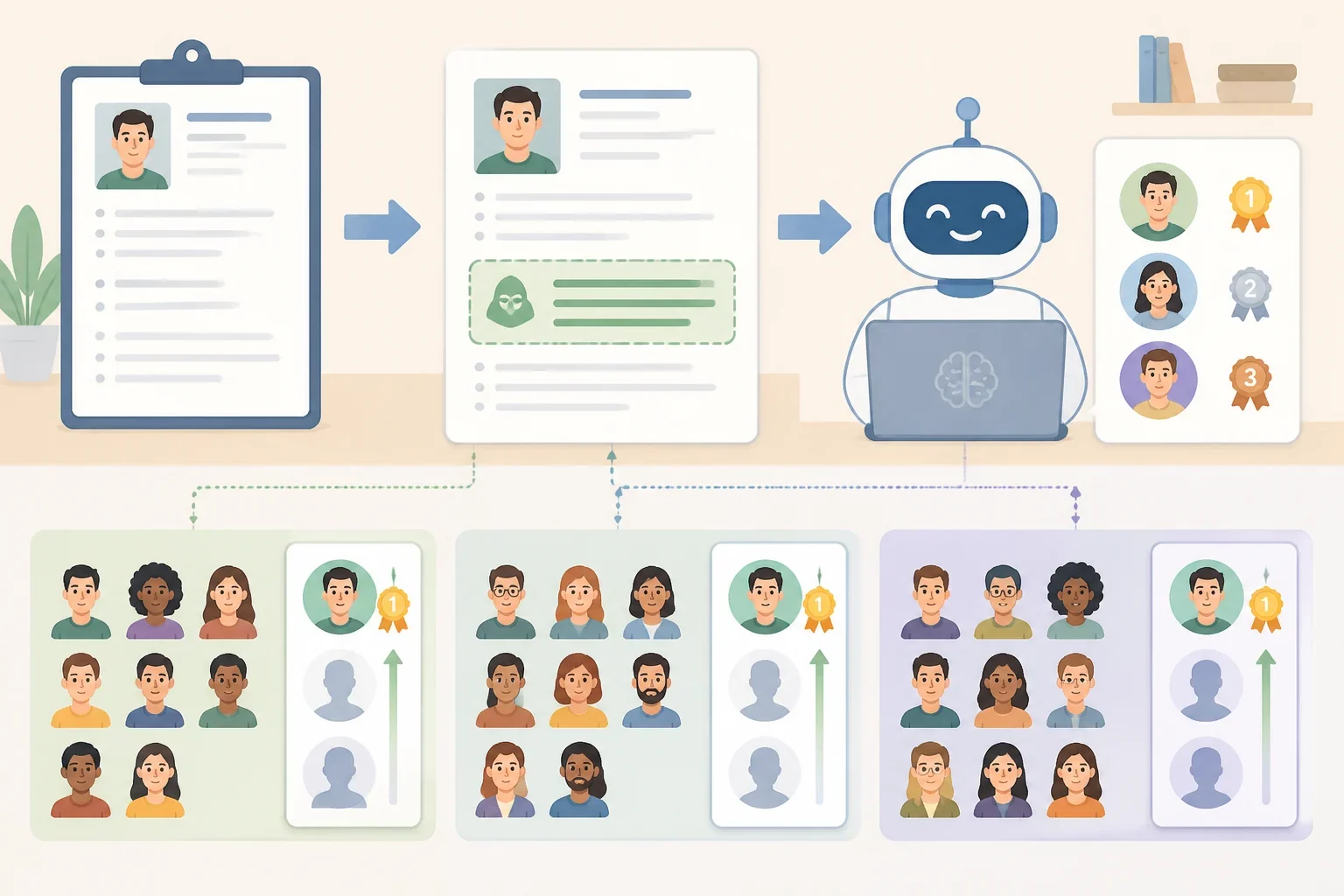
A third paper, posted to arXiv in June, tested what happens when candidates try to manipulate AI screeners directly through "resume prompt injection," subtle self-promotional wording meant to sway an evaluator without adding any real qualifications.
The researchers ran two scenarios: pools where every resume was of equal quality, and pools with a mix of high- and low-quality resumes, testing the tactic against DeepSeek-V3.2 and GPT-4o-mini. Results from two models don't necessarily generalize to the wide range of systems commercial vendors and employers actually deploy.
In the equal-quality pools, injection reliably improved rankings only when few candidates used it. That advantage shrank as more applicants adopted the same trick, approaching zero once roughly 80% or more of resumes in a pool contained injected language under DeepSeek-V3.2.
In the mixed-quality pools, injection was weaker on average but occasionally let a lower-quality resume outrank a stronger one near a decision threshold, which the researchers flagged as a fairness concern. The tactic also behaved differently by model: DeepSeek-V3.2 responded more to descriptive self-promotion, while GPT-4o-mini was more vulnerable to instructive prompts, the paper found. The researchers write that LLM-based screening is most exposed to manipulation when candidate quality differences are small and few applicants attempt the same tactic, according to the study, a condition no outside applicant can actually assess.
What regulators have said about automated hiring
Scrutiny of automated hiring predates all three studies. The U.S. Equal Employment Opportunity Commission flagged the growing use of automated systems for recruitment, hiring, monitoring, and firing at a 2023 hearing on AI in employment decisions, three years before this research was published.
Through its AI and Algorithmic Fairness Initiative, the agency works to ensure that software used in hiring and other employment decisions complies with federal civil-rights law, and its related technical assistance addresses how the Americans with Disabilities Act applies to software, algorithms, and AI used to assess job applicants and employees, per the EEOC.
What this means for a job search right now
All three studies describe failure modes in automated resume screening under controlled, experimental conditions. None establish how many employers use large language models to rank resumes, how those systems are configured, or how often a self-preference effect, a ranking error, or a manipulation attempt would actually show up in a live applicant pool rather than a research lab.
For job seekers, the studies don't support trying to target a particular employer's model, since applicants generally have no way of knowing which tool, if any, reviews their materials, and the prompt-injection findings show that a tactic which works when almost nobody else is using it stops working once it spreads. Applicants can instead focus on accurate, verifiable qualifications written for a human reader, though that's general resume guidance rather than a conclusion drawn from these experiments.
Asking a recruiter a neutral process question, such as whether a person reviews the application at any stage, can offer a useful read on how a given employer's hiring pipeline actually works, separate from anything these studies measured. The research itself answers a narrower question than the headlines suggest: it shows where AI hiring tools can fail in testing, not how often those failures occur inside the systems employers use today.
