
- AI increasing employee workload: what research reveals
- Why does AI create more work for employees?
- The GitHub Copilot study: more core work, less oversight
- What the productivity research does, and doesn't, establish
- Who this affects, and what varies by employer
- What's still unresolved
- What to do next if AI is expanding your workload
AI increasing employee workload: what research reveals
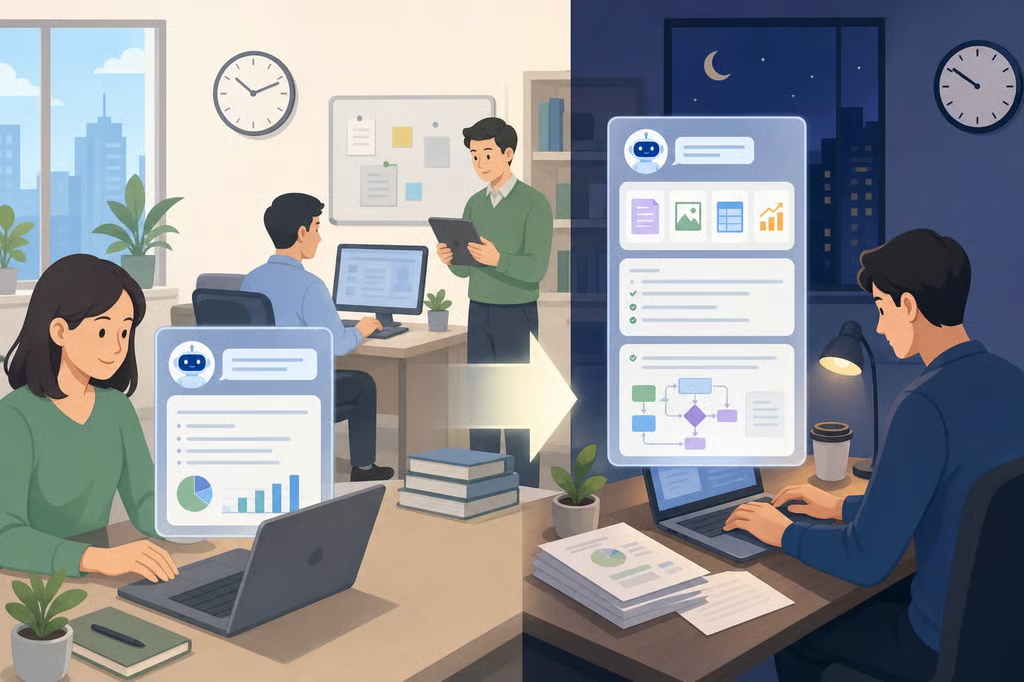
Employees given broad access to generative AI tools worked faster, took on more tasks, and let work spill into more hours of the day, often without anyone asking them to, according to an eight-month ethnography at one technology company published by UC Berkeley Haas earlier this year. That finding cuts against the standard pitch that AI buys workers back their time. A growing body of research backs it up: AI increasing employee workload shows up again and again, from software teams to corporate boardrooms, not as anecdote but as a measurable pattern.
The scale differs by setting. A study tracking more than 187,000 open-source developers using GitHub Copilot found their task mix shifting toward more core coding work and away from managerial overhead, according to MIT's Initiative on the Digital Economy. A survey of nearly 750 corporate executives found AI productivity gains are real but uneven across sectors, and that executives tend to perceive bigger wins than their companies can yet measure, per NBER.
Put these together and a pattern emerges: tools sold on efficiency are reshaping what a job actually involves, who benefits most, and how much extra effort gets absorbed quietly, without a raise, a new title, or even a conversation.
Why does AI create more work for employees?
The Berkeley findings come from an in-progress ethnographic study: eight months embedded at one technology company with broad generative-AI access, plus more than 40 interviews across functional teams, according to UC Berkeley Haas. Researchers Ye and Ranganathan say they didn't start with a hypothesis about whether AI would add work or subtract it. They wanted to watch how generative AI actually changed day-to-day practice.
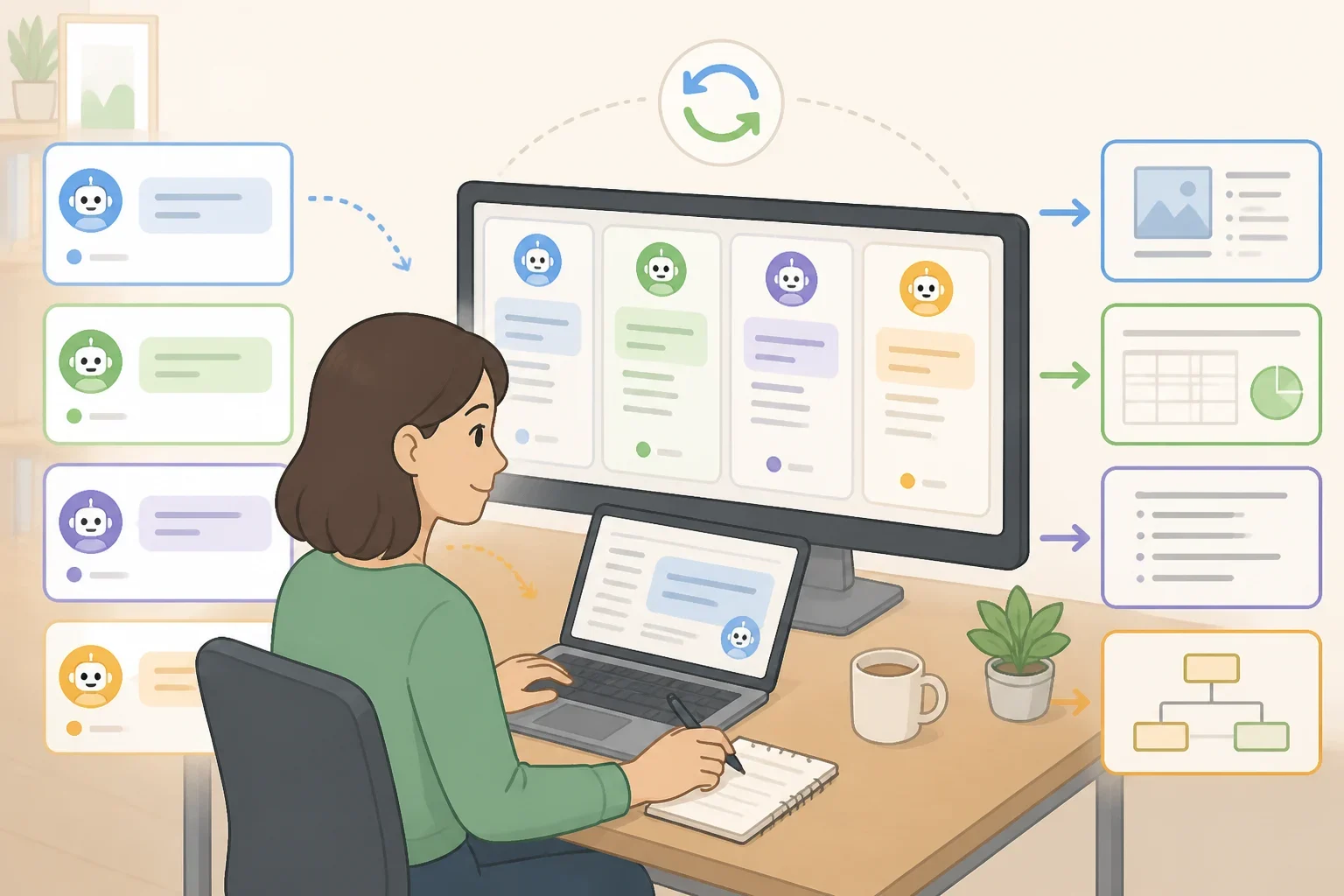
What they found was intensification along three lines. Employees started doing work that used to belong to someone else, or that might not have gotten done at all. AI-enabled tasks crept into what used to be downtime, lunch, evenings, the gaps between meetings, because starting and continuing a task got so easy. Workers also began running multiple AI-assisted threads at once, sometimes juggling several AI agents while reviewing code or drafting documents, per the researchers.
The scope of "my job" widened as a result, often by the employee's own initiative rather than a manager's directive. That distinction matters. The researchers describe a cycle where expanded capability leads to more output, which raises expectations, which then pressures further expansion. What started as a burst of enthusiasm can quietly reset as the new baseline. Employees interviewed for the study described feeling more capable moment to moment, but busier and less able to disconnect once they looked back on their week overall.
The Berkeley researchers propose what they call an "AI practice," a set of intentional habits rather than a policy mandate. It includes short pauses before major decisions so speed doesn't crowd out reflection, batching nonurgent AI output instead of reacting to it in real time, and protecting time for human check-ins so work doesn't become entirely solo and tool-mediated. The goal, as the researchers frame it, isn't slowing innovation down. It's keeping the gains sustainable.
For employees watching their own job widen, the useful question is whether that expansion happened by choice or by assignment. That distinction is worth remembering before raising the issue with a manager.
The GitHub Copilot study: more core work, less oversight
A second line of evidence comes from a study of developers using GitHub Copilot, led by MIT economist Frank Nagle alongside researchers from GitHub, Microsoft, the Linux Foundation, and UC Irvine. The study tracked more than 187,000 open-source developers between 2022 and 2024, according to MIT IDE.
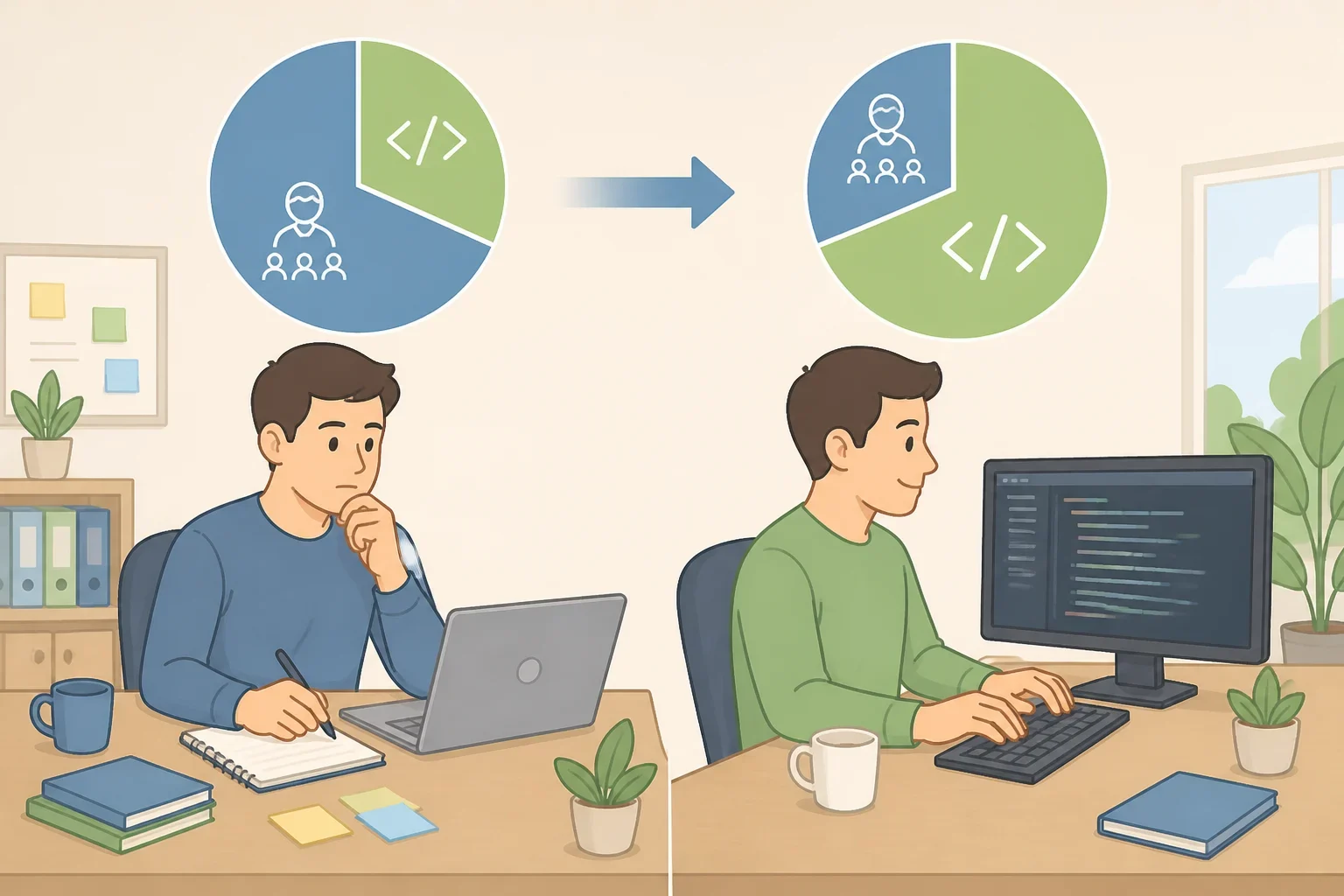
Developers who got free early access to Copilot shifted 12% more of their task share toward core coding work and 25% less toward managerial tasks outside of writing code, the research found. Time saved by the tool didn't convert into free time. It got reinvested into more hands-on work.
Nagle frames this as ordinary economics, not something unique to AI. "When it becomes cheaper to do core work, people are going to do more of it," he said, according to MIT IDE. Some commentary on generative AI assumed workers would end up with more free time as the technology absorbed their tasks. The data points the other direction: people do more work because it got cheaper to do, at least in this setting.
The shift toward core work was most pronounced among less experienced developers, helping close knowledge gaps and cutting down time spent asking senior colleagues for help, according to MIT IDE. The same research found a rough earning upside: developers who used Copilot to pick up new programming languages saw an estimated $1,683 increase in yearly earning potential. That's a back-of-envelope estimate specific to this group of open-source developers, not a promise for every early-career knowledge worker.
What the productivity research does, and doesn't, establish
Not every study frames AI's effect on work the same way. A preregistered field experiment with 791 professionals at Procter & Gamble found that individuals using AI on real product-innovation challenges matched the performance of two-person teams working without it, according to Organization Science. That's a genuine, measured gain, but it came from a controlled setting inside one company's innovation process, not a claim about productivity across industries.
The NBER executive survey paints a more cautious picture at the company level. Labor productivity gains tied to AI were positive but varied by sector, concentrated especially in high-skill services and finance, according to NBER. The same researchers describe a productivity paradox: executives' perceived gains run ahead of what shows up in measured company results, likely because revenue effects from AI adoption take time to materialize. That reflects survey responses and expectations, not audited productivity data.
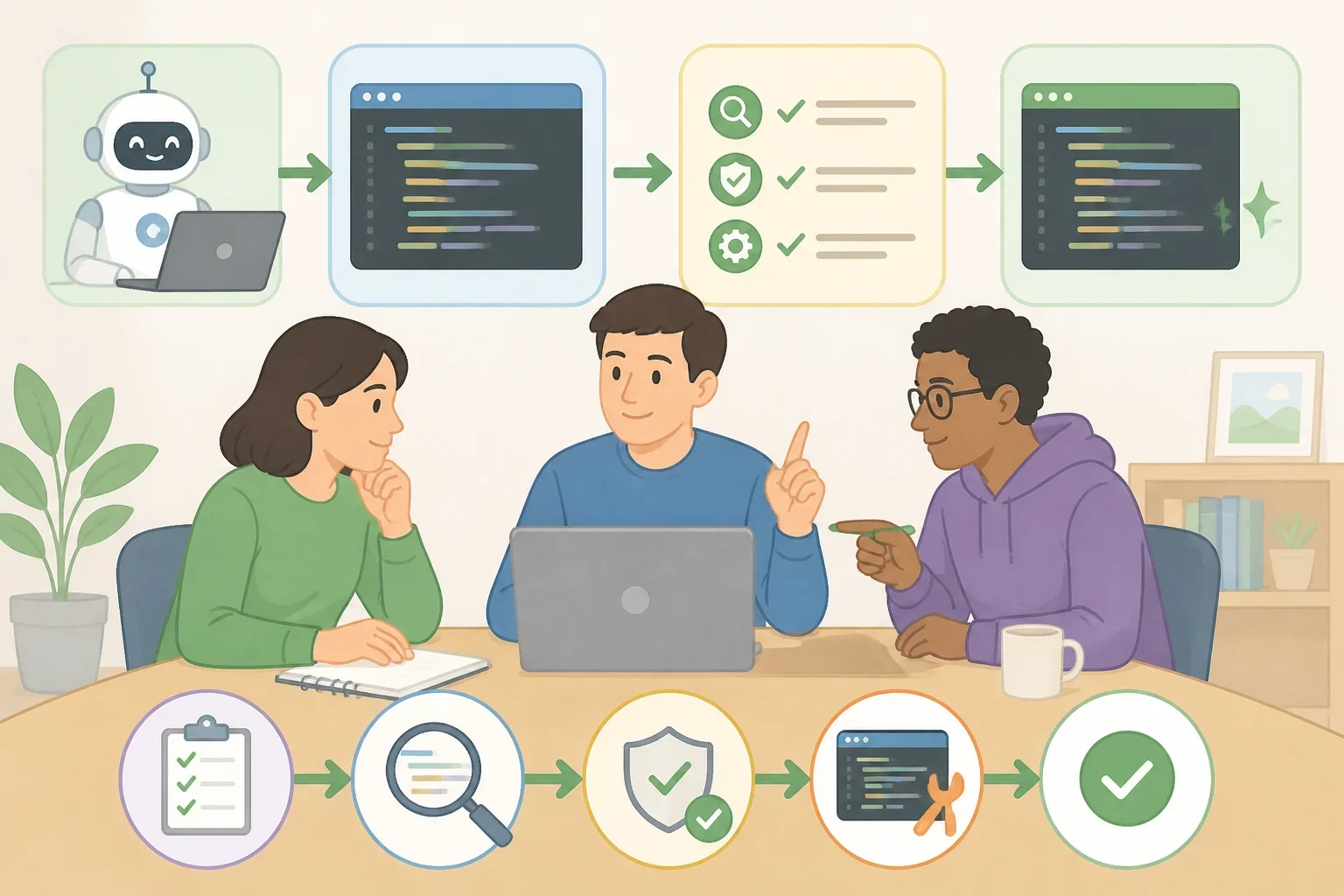
A broader evidence synthesis goes further, finding no strong aggregate relationship between AI adoption and productivity gains once results are pooled across studies, according to a review in California Management Review published about a year ago. On complex coding tasks specifically, the review found quality regressions and the rework they require can offset the time AI tools save. Senior engineers, in particular, ended up spending extra time fact-checking AI-generated code for subtle errors less experienced developers might miss entirely.
Before volunteering for more AI-assisted work, it helps to track how much time review and correction actually eat up. A task that looks faster on paper can even out, or reverse, once oversight gets counted.
Who this affects, and what varies by employer
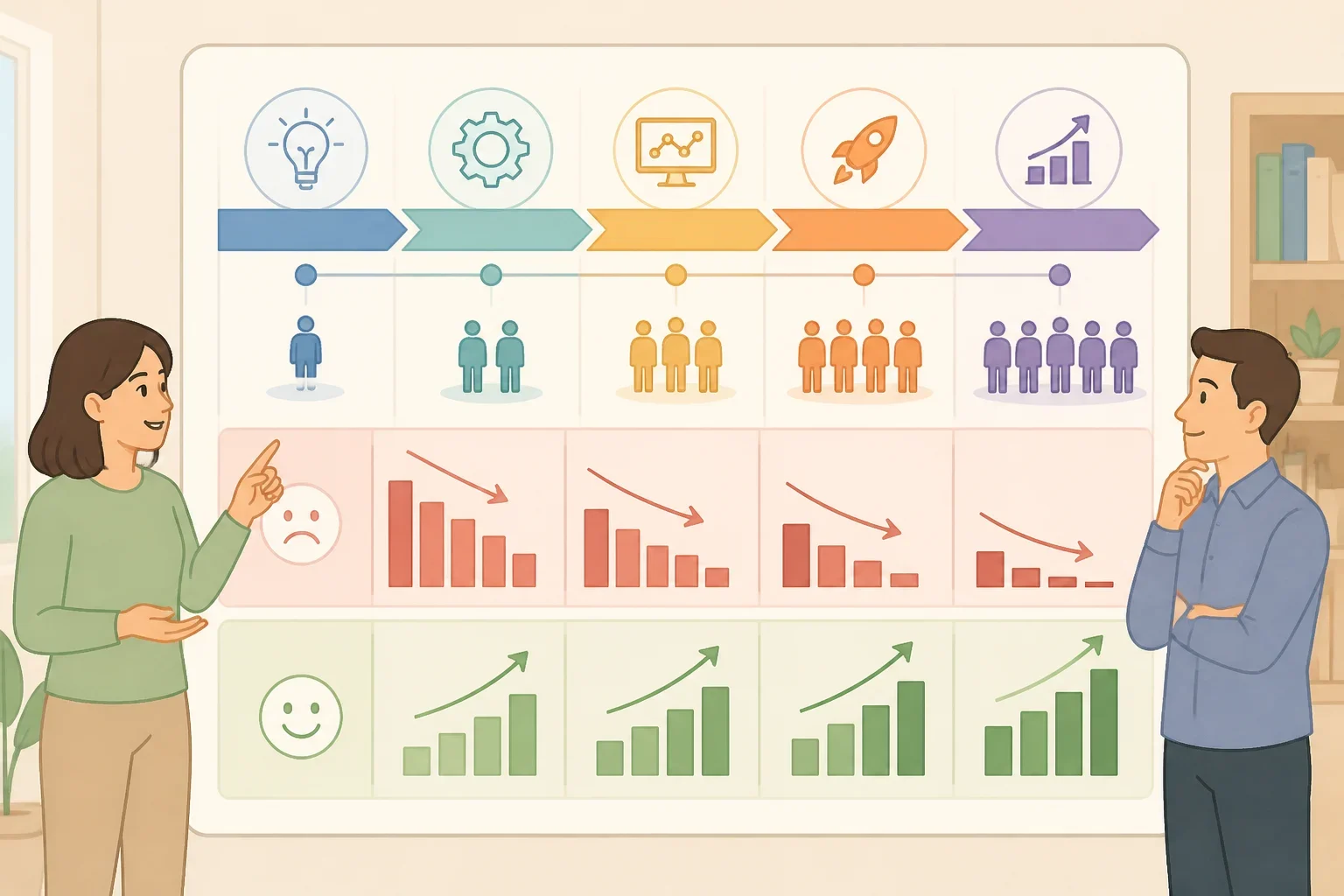
None of this research supports one universal story about AI and workload. The NBER survey found little evidence of near-term aggregate job loss tied to AI, but larger firms anticipate AI-driven workforce reductions while smaller firms expect modest growth instead, a split the researchers tie to differences in adoption stage and scale, according to NBER. The same survey found evidence of labor reallocation within and across companies, with demand for routine clerical roles declining as demand for skilled technical roles rises.
Sector matters too. Gains concentrated in high-skill services and finance in the NBER data don't necessarily extend to other industries, and the research doesn't support a broader claim about the technology sector overall. Role and experience level matter as well: the Copilot data showed outsized benefits for less experienced developers, while the California Management Review synthesis found senior engineers absorbing more oversight burden on complex work. Those are close to opposite experiences sitting inside the same technology rollout.
The Berkeley findings deserve the same caution. They come from one company's ethnography, still described by the researchers as in-progress work, not a representative sample of workplaces generally. The mechanisms they describe, task absorption, blurred downtime, parallel AI workflows, are well-documented in that setting. Whether they hold at the same intensity elsewhere is still an open question, and readers should weigh their own role, seniority, and industry against these findings rather than assume one outcome applies everywhere.
What's still unresolved
Across these studies, a consistent thread holds: generative AI is changing what a job involves faster than employers have found ways to measure the results or decide how expanded work gets recognized. Time saved on one task tends to get reinvested into more work rather than banked as free time, in both the Berkeley ethnography and the Copilot study. Whether that reinvestment reliably turns into durable productivity gains, raises, or promotions is not something the current research establishes.
The Berkeley researchers' proposed "AI practice," pauses before big decisions, batched updates, protected time for human check-ins, is one early attempt to manage that gap at the team level. Whether it catches on, or workload keeps expanding quietly ahead of any formal recognition, remains an open question.
What to do next if AI is expanding your workload
Start by noticing the difference between scope an employer assigned and scope you took on voluntarily. That distinction is worth raising directly with a manager, framed as a conversation about reprioritization or recognition rather than a complaint.
Track which AI-assisted tasks are strategic versus routine, and keep a rough record of how much review or correction each one actually requires before agreeing to take on more. For early-career workers, treating AI-enabled exploration as a documented skill, something concrete enough to reference in a performance review or a future job application, turns expanded scope into evidence of growth instead of invisible extra work.
