

How to Request a Job Interview Accommodation Under the ADA
Knowing how to request a job interview accommodation can mean the difference between skipping an interview that doesn't fit your needs and getting the adjustment that lets you compete for the job. Federal disability law lets applicants ask for an interview adjustment, such as a sign-language interpreter, without walking an employer through a full medical history. ADA.gov's A Guide for People with Disabilities Seeking Employment, published in April, confirms that applicants have a right to request a reasonable accommodation for the hiring process by describing the barrier and the fix needed.
This article summarizes general federal guidance. It isn't a determination of individual legal rights, and it doesn't cover filing deadlines or complaint procedures. Questions about coverage, documentation disputes, or anything beyond this overview call for the EEOC or a qualified employment law adviser.
The protection described here comes from Title I of the Americans with Disabilities Act, which covers private employers with 15 or more employees along with state and local government employers, according to the EEOC. Neither agency's guidance determines how every state, local, or small-employer situation will be handled, so confirm coverage with the EEOC or a state labor agency before assuming the same protections apply. The same general principle may apply to other parts of the application process that create a barrier, not just the interview itself.
An employer also doesn't have to grant a specific accommodation if doing so would create undue hardship, meaning significant difficulty or expense, per the same guidance. The sections that follow cover what a request needs to include, how employers tend to respond, and where the line sits on documentation.
Who this applies to

This guidance is built for job applicants weighing how much to disclose before or during an interview, not for employees requesting accommodations after they're already hired, though several of the same rules carry forward once someone is on the job. It covers what the EEOC describes as a qualified applicant with a disability, someone who may request an adjustment to have an equal opportunity to participate in and be considered for a job opening (EEOC).
That can include needing a sign-language interpreter, which EEOC guidance names specifically, or another adjustment tied to a specific interview barrier. It doesn't cover what happens after an accommodation is denied or a discrimination claim is under consideration. Those situations call for the EEOC directly, or a qualified employment law resource.
What you do and don't need to share

Federal guidance describes a request as telling the employer that an adjustment is needed because of a disability or impairment, nothing more formal than that. EEOC guidance on hearing disabilities gives a plain example: someone who needs a sign-language interpreter for an interview because of a hearing condition. That information may be enough to start the accommodation conversation, although the employer may follow up when the need isn't obvious.
ADA.gov illustrates the same underlying principle outside the interview context: telling a supervisor that a wheelchair doesn't fit under a desk counts as a request for a reasonable accommodation (ADA.gov). The same logic applies before a job offer. Naming the barrier starts the process.
There are no required forms and no legal phrasing to memorize, according to EEOC guidance on visual disabilities. Applicants generally aren't required to disclose that they have a disability at all unless that disclosure is necessary to participate in the hiring process, per the EEOC. If an interview format creates no barrier, there's no obligation to mention a disability at that stage.
Documentation is where this gets more specific. If the disability or the need for an accommodation isn't obvious, an employer may ask for documentation sufficient to establish the disability and explain why the accommodation is needed, according to ADA.gov. That's narrower than a complete medical file. EEOC guidance flags a request for an applicant's entire medical record as inappropriate, since it would likely pull in information about unrelated conditions and unnecessary detail, such as treatment received years earlier (EEOC guidance on visual disabilities). As a practical privacy measure, ask what documentation is needed before sending anything, and avoid including unrelated medical information.
How to request a job interview accommodation
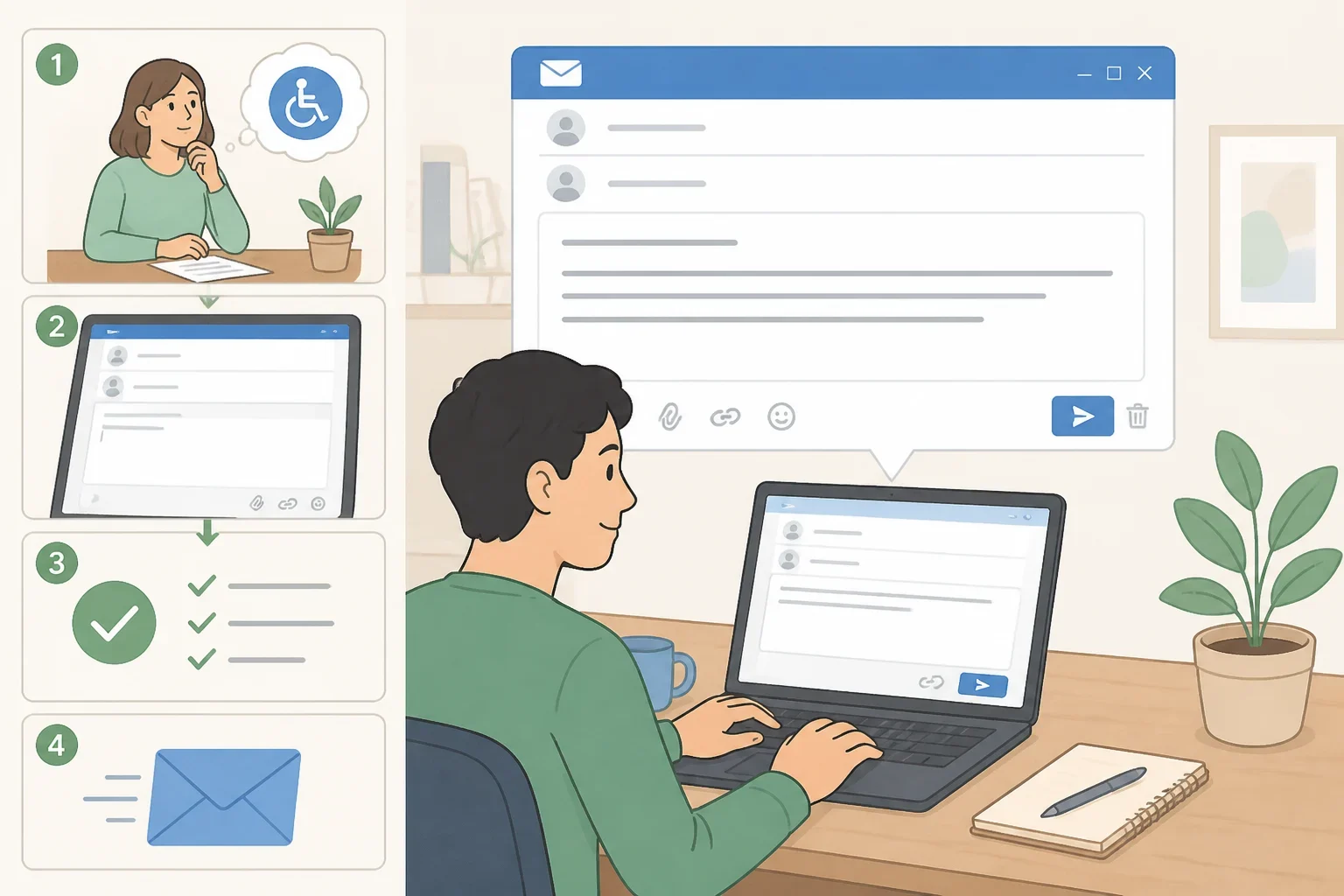
Applicants can make this request at any point during the application process, including after an interview has already been scheduled, according to ADA.gov. Under the ADA, an employer must provide a reasonable accommodation to a qualified applicant with a disability so that person has an equal opportunity to participate in and be considered for the job, unless the employer can show undue hardship, per the EEOC.
A request also doesn't have to come directly from the applicant. According to EEOC guidance on visual disabilities, a family member, friend, health professional, or other representative can make the request on an applicant's behalf.
Once a request reaches an employer, the expected next step is a conversation. ADA.gov describes this as the employer discussing available options with the applicant. The EEOC calls the broader version of this exchange the interactive process, meant to gather the information needed to handle a request appropriately (EEOC).
Beyond what federal guidance establishes, a few practical steps can make the request easier to act on:
- Identify the specific interview barrier: format, timing, location, or a communication need.
- Name the adjustment that would resolve it, such as an interpreter, extra time, or a different interview method.
- Send the request to whoever is listed on the posting, typically a recruiter, HR contact, or accessibility contact.
- Put the request in writing with enough lead time for arrangements like booking an interpreter.
- Keep a copy of the request and any response.
A short email covers most of this without wading into unnecessary detail: "Thank you for inviting me to interview for [role]. Because of [a brief functional description, not a diagnosis], I'd like to request [specific adjustment] for the interview. Please let me know if you need anything from me to arrange this."
If an employer asks for documentation, a reply that narrows the request rather than oversharing works well: "I'm glad to provide documentation confirming my accommodation need. Can you clarify what specifically would help, so I can send only the relevant information?"
What employers can and can't ask in response
Before extending a job offer, an employer generally cannot ask whether an applicant has a disability or require a medical exam, according to the EEOC's guidance on disability discrimination and employment decisions. What an employer can ask is whether an applicant can perform the job and how they would do so, with or without accommodation, per the same source.
Once an applicant makes an accommodation request and the disability or the need for it isn't obvious, an employer may request documentation sufficient to establish the disability and explain why the accommodation is needed, according to EEOC guidance on visual disabilities. The same guidance notes that a request for an applicant's complete medical record goes beyond what's appropriate.
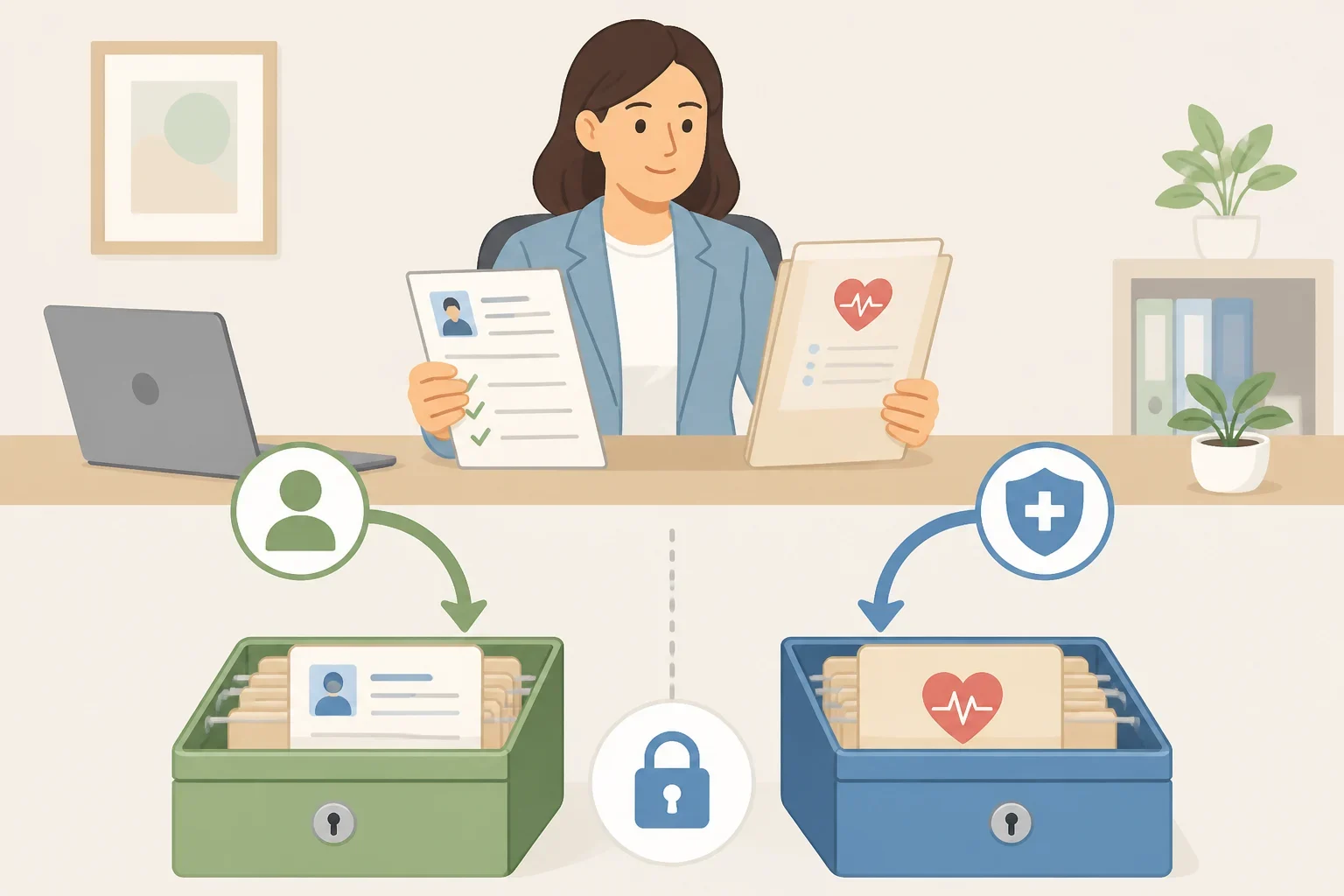
Any medical information shared during this process has to stay confidential, generally kept in files separate from the rest of an applicant's hiring record, according to the EEOC. After a job offer is made, the rules shift: an employer can condition the offer on medical questions or an exam, but only if every new hire in that same type of role faces the same requirement, according to the EEOC. An offer can only be withdrawn if the results show the applicant can't perform the job's essential functions, even with reasonable accommodation, or poses a direct threat to health or safety that accommodation can't reduce, according to EEOC guidance on hearing disabilities.
Before you send the request
A short checklist before hitting send can catch gaps that cause back-and-forth later:
- Pin down the specific interview barrier.
- Name the adjustment that would resolve it.
- State clearly whether the request concerns the interview itself or another part of the application process, such as a screening step.
- Ask where accessibility requests should go if the posting doesn't list a contact.
- Save a copy of the request and whatever response comes back.
What to do next
If an employer proposes a different accommodation than the one requested, that falls within the interactive process ADA.gov and the EEOC describe. Ask whether the proposed adjustment would actually remove the specific barrier identified in the request, since an alternative only works if it solves the same problem. An employer doesn't have to grant a specific accommodation if it would create undue hardship, but ADA.gov's guidance is clear that the employer should still discuss available options rather than issuing a flat denial.
If a documentation request feels broader than the accommodation itself, ask the employer to identify what information it considers sufficient before sending anything. If a request stalls, gets denied, or involves an employer with fewer than 15 employees, consult the EEOC or a qualified employment law adviser for guidance specific to that situation rather than assuming how this general overview applies.
