
- AI boot camps for career growth: how to pick the right one
- Match the program to one occupation, not to "AI skills" in general
- How AI boot camps for career growth compare to community college, apprenticeship, and self-study
- What a durable AI curriculum should actually teach
- Verify outcomes and financing before you enroll
AI boot camps for career growth: how to pick the right one
Ask five people what an "AI boot camp" actually is and expect five different answers. Some are multi-month coding programs that added a few AI modules to an existing curriculum. Others are dedicated data-science or machine-learning boot camps, cybersecurity-focused programs, or short generative-AI and prompt-engineering certificates that market themselves to complete beginners, often over just days or weeks. Lumping all of these into one category before evaluating them is the first mistake a career changer can make when weighing AI boot camps for career growth against a degree, an apprenticeship, or self-directed study.
The real decision isn't whether AI boot camps are worth it as a category. It's whether one specific program, with its own price, timeline, and curriculum, moves a reader closer to one specific job.
That decision carries real weight right now. Computer and mathematical occupations are projected to grow 10.1% from 2024 to 2034, more than three times the 3.1% growth rate projected for the economy overall (BLS, last year). Software developer employment alone is expected to add more than 267,700 jobs by 2034, the largest numerical gain among the AI- and IT-related occupations BLS tracks (BLS, last month). Career changers weighing AI skills training for jobs against a return to school are entering that market with more options, and more marketing noise, than ever.
What follows is a framework for evaluating whether a specific AI boot camp fits a specific target occupation, how it stacks up against community college, a registered apprenticeship, or self-directed learning, what a durable curriculum should cover, and what to verify about outcomes and financing before paying. None of the sources behind this piece, including BLS employment projections and Georgetown's Center for Security and Emerging Technology, track completion, placement, or wage outcomes specific to AI boot camps. That means the verification work falls on the reader, not on a ranking site or a school's own marketing page.
Match the program to one occupation, not to "AI skills" in general
Growth projections vary sharply by title, which is why naming one target job matters more than chasing a vague "AI skills" label. Data scientist employment is projected to grow 33.5% (82,500 jobs) and information security analyst employment 28.5% (52,100 jobs) through 2034, both well ahead of the 15.8% growth projected for software developers, even though software development still adds the most total jobs of the group (BLS, last month).
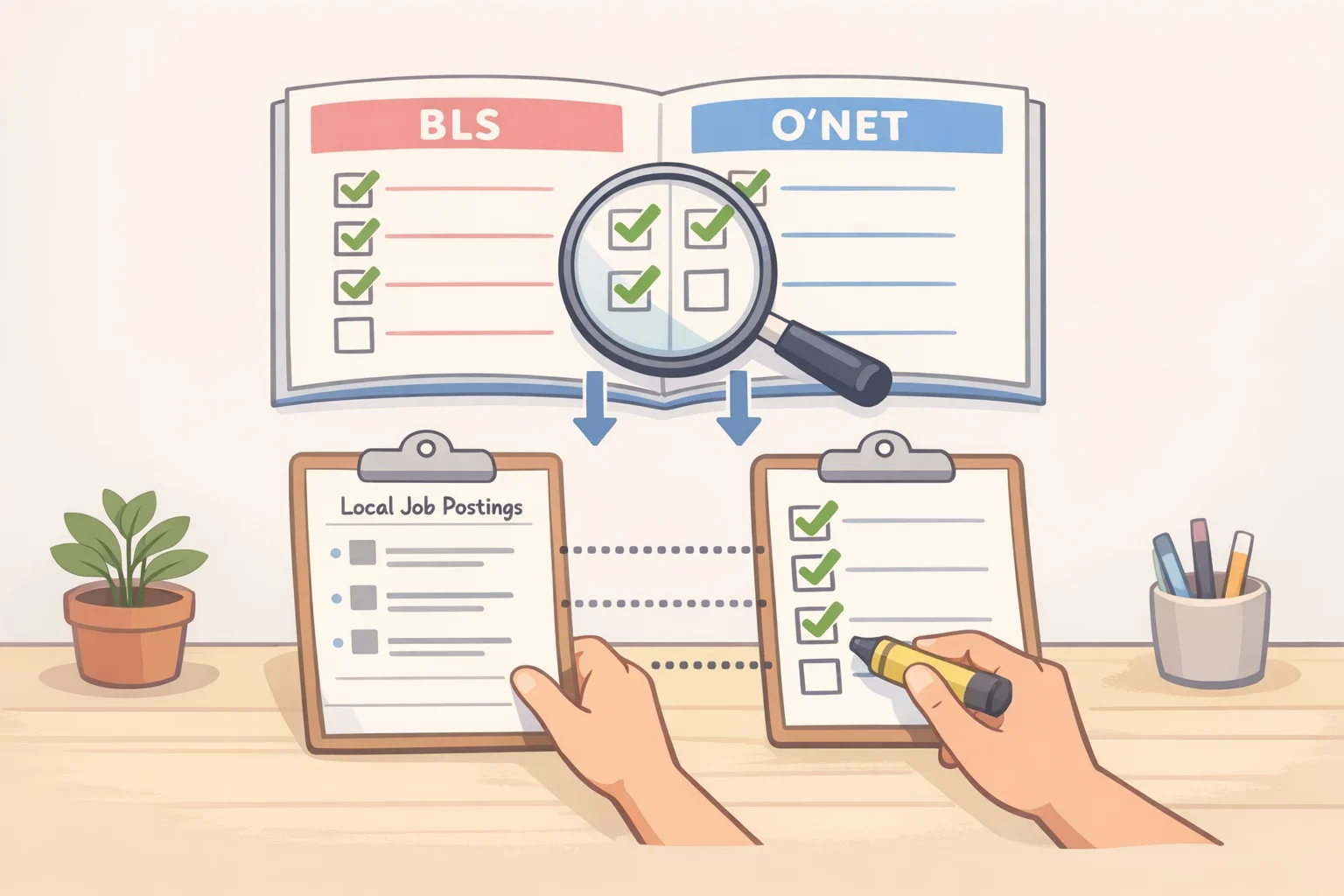
These occupations don't share the same entry requirements, and a boot camp built for one won't necessarily prepare someone for another. Before assuming any program closes that gap, pull the exact entry for the target title from the BLS Occupational Outlook Handbook and cross-check it against the matching O*NET profile. Typical education, common certifications, and expected experience vary by title, so a data scientist role and a software developer role can call for different combinations of degree level and credentials even though both fall under "computer and mathematical occupations."
Growth also isn't evenly distributed within tech-adjacent work, worth flagging for career changers coming from administrative or clerical roles. AI-driven productivity gains are expected to limit demand for procurement clerks; credit authorizers, checkers, and clerks; legal secretaries and administrative assistants; and customer service representatives (BLS, last month). Strong AI-driven growth in one occupation doesn't mean every role a career changer might be leaving is stable, and it doesn't guarantee the target role will grow at the same pace as the headline projections.
Pulling five to ten current postings for the exact target title is a reasonable way to see what employers in a specific region want right now. Treat that research as a snapshot of local employer preferences, not proof of an occupation-wide standard, and weigh recurring requirements against the OOH and ONET baseline rather than assuming every listed qualification is mandatory. Before comparing any training program, write down the exact job title, the education level BLS and ONET associate with it, and whether local postings confirm or diverge from that baseline. That one page of notes becomes the yardstick for judging whether a boot camp, a degree, or an apprenticeship actually closes the gap.
How AI boot camps for career growth compare to community college, apprenticeship, and self-study
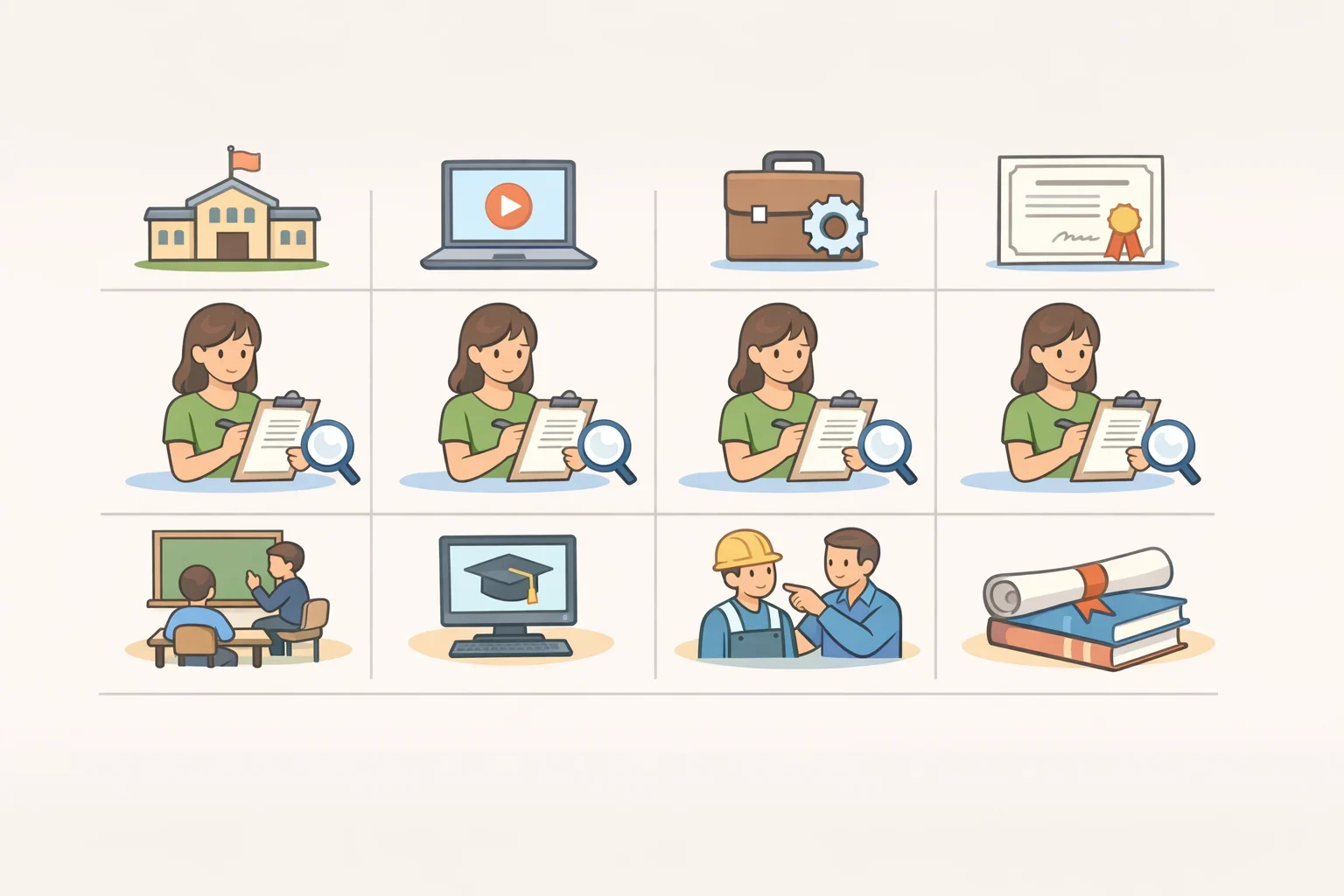
No single pathway is confirmed as the strongest option by the available research. Georgetown's Center for Security and Emerging Technology (CSET), which studies AI workforce training broadly, found that successful programs often combine classroom instruction with work-based learning, such as registered apprenticeships and career and technical education (CTE). That finding is narrower than "boot camps lose": it doesn't establish that this combined model has been measured head-to-head against private boot camps (CSET, in 2024).
With that limit in mind, the comparison depends less on which category sounds best and more on what a specific provider can document. Before paying for anything, request:
- Boot camp (private, standalone): total tuition and fees, instructional hours, prerequisites for enrollment, whether instruction is live or self-paced, and whether a portfolio or capstone project is built into the curriculum.
- Community college or CTE program: per-credit cost, whether credits transfer toward a degree, whether the program sits inside a state's AI-specific CTE track, and financial aid eligibility.
- Registered apprenticeship: paid wage during training, structured instruction hours, the employer partner involved, and job placement expectations at completion; search options through CareerOneStop's apprenticeship finder.
- Self-directed learning: total cost of materials or subscriptions, any external verification of skill such as a certificate exam or graded project, and what portfolio evidence will substitute for a credential when applying to jobs.
Community colleges have some federal backing behind workforce training generally: the Strengthening Community Colleges Training Grants program has put $265 million behind this kind of training since 2021, and several states have separately launched AI-specific CTE programs (CSET, in 2024). That funding supports community-college training broadly rather than AI training specifically, so it's worth asking any local program whether it participates in one of these tracks rather than assuming it does.
How much of a target job is actually changing matters more than the job title alone. Research cited by CSET suggests up to 80% of U.S. workers may have at least 10% of their work activities affected by large language models, while about 19% could see half or more of their tasks affected (CSET, in 2024). As a decision heuristic rather than a proven rule, someone whose current occupation is only lightly touched by AI may be able to layer a short boot camp or self-directed course onto existing credentials. Someone changing fields entirely has more reason to consider a longer, work-connected route like an apprenticeship.
None of these four paths is immune to quality problems. CSET also flags fragmented training systems, inconsistent public funding, and difficulty scaling programs that actually work, a reason to evaluate any specific program on its own documentation rather than assume its category guarantees results (CSET, in 2024). A community college label doesn't automatically mean better value, and a private boot camp label doesn't automatically mean worse. The checklist above is what separates strong programs from weak ones inside each category.
What a durable AI curriculum should actually teach
Technical AI-tool skills have a short shelf life. CSET's research puts the average time before technical skills become outdated at under five years, which matters for anyone weighing a multi-year degree against a shorter, more current boot camp curriculum (CSET, in 2024).
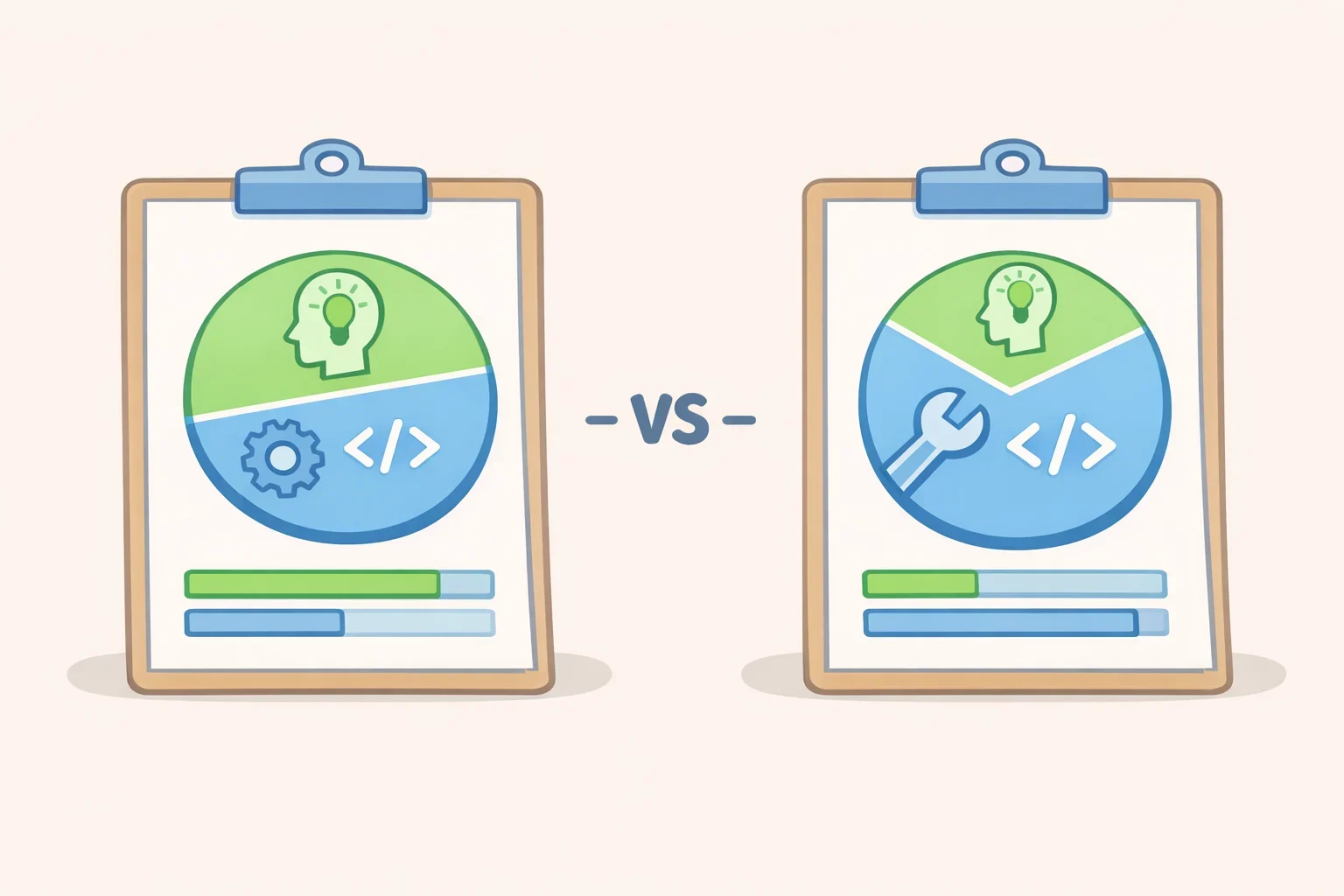
Technical skills also make up a minority of what growing occupations actually demand, about 27%, while foundational skills such as math and active learning, social skills such as negotiation and social perceptiveness, and thinking skills such as complex problem-solving and critical thinking together account for nearly 58% (CSET, in 2024). A syllabus built mainly around tool demonstrations and prompt-writing may leave little room for the broader skills that make up most of what these growing roles require. Reading a course outline with that split in mind is a fair test of whether a program teaches the durable slice or the fast-depreciating one.
The OECD's education directorate makes a related argument for training providers generally: as AI changes how tasks get done, programs need to actively reassess which competencies still matter, which are becoming obsolete, and how content is sequenced, rather than simply bolting an AI module onto material that hasn't otherwise changed (OECD, last year).
A useful gut check for any syllabus is whether it includes applied projects using real data, verification and error-checking practices, workflows specific to the target industry rather than generic AI-tool use, and a deliverable an employer would actually want to see, like a portfolio or capstone. A program weighted mostly toward software walkthroughs is worth asking harder questions about before enrolling.
Verify outcomes and financing before you enroll
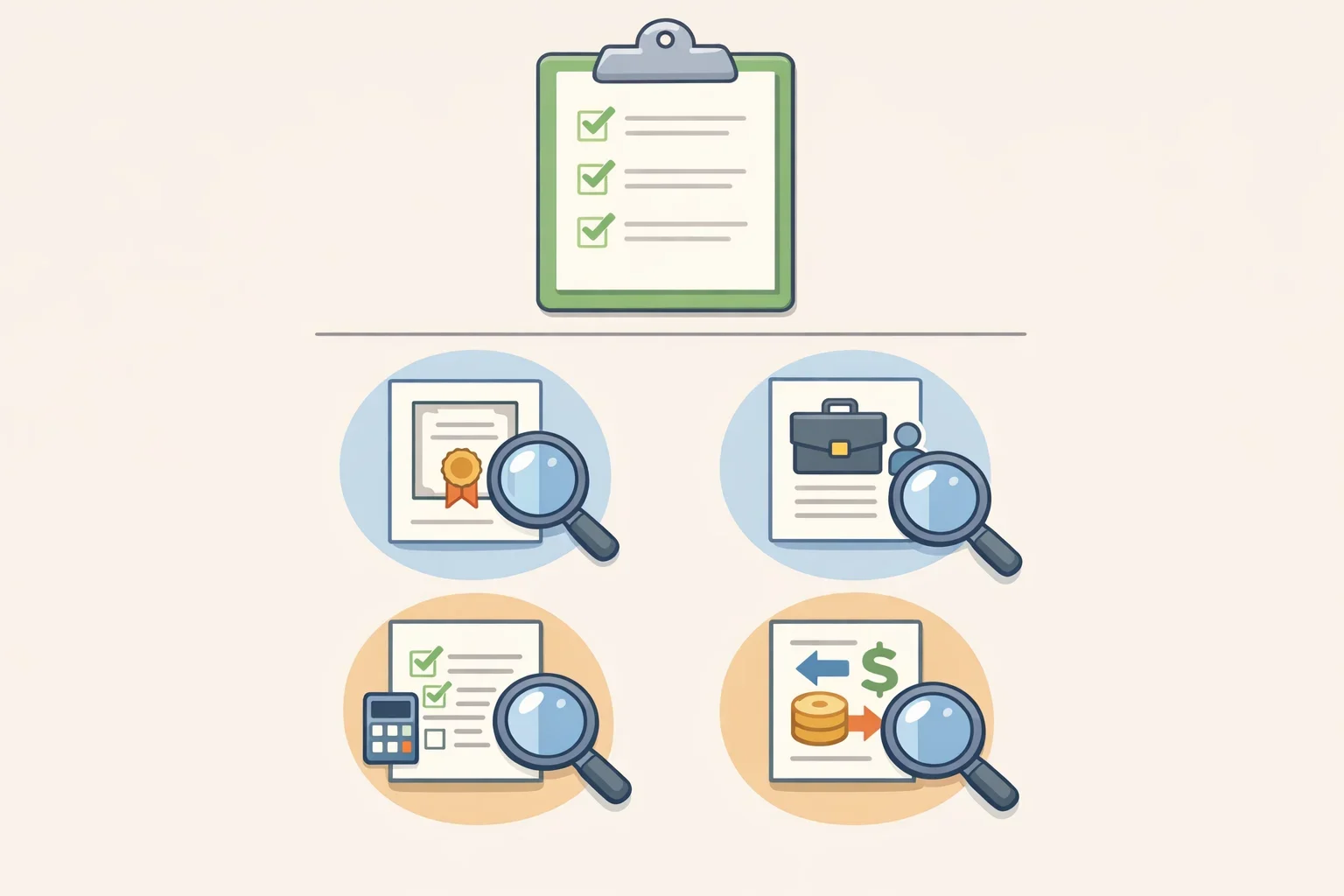
None of the sources reviewed here, not BLS, not O*NET, not CSET's workforce research, track completion rates, placement rates, or wages specific to AI boot camps. That means the burden of proof shifts to the individual program. Before enrolling, request the following in writing:
- The completion rate, including the reporting period it covers and how many enrollees it's based on.
- The placement-rate denominator (all enrollees or graduates only), the program's definitions of "placement" and "in-field placement," and the actual job titles recent graduates entered. A placement rate without job titles can describe work that has nothing to do with the target occupation.
- Median time to placement and whether any of this data has been independently audited.
- Full financing terms: total cost, any income-share agreement structure, loan terms, and the refund or withdrawal policy for leaving early.
- The specific credential behind any claim of state approval, accreditation, or industry certification, and whether that status is verifiable through the approving body rather than the school's own marketing page. State authorization, institutional accreditation, and a vendor or professional certification mean different things, and a program can hold one without the others.
Software development and data-focused roles remain among the fastest-growing occupation categories in these federal projections even as AI reshapes daily tasks inside those jobs. BLS notes that AI may actually support demand for computer occupations, since software developers may be needed to build AI-based business solutions and maintain AI systems (BLS, last year). That's evidence against abandoning coding skills, not evidence that any single AI boot camp is a verified shortcut into those roles.
Start with the target-title research from the first section: check the OOH and O*NET entries against a handful of current local postings, then use that baseline to judge whether a boot camp, a community college program, or a registered apprenticeship actually fills the gap. Once a specific program is on the table, run it through the outcomes-and-financing checklist above before comparing costs.
