
- Adaptability interview questions and answers: how to respond
- What interviewers are listening for in adaptability skills interview questions
- Adaptability interview question examples and what they test
- How to answer adaptability interview questions with a simple structure
- Sample adaptability interview answers (fictionalized for illustration)
- When the change wasn't a clean win
- Building credible examples without traditional work experience
- Mistakes that undercut adaptability answers
- Next steps before your interview
Adaptability interview questions and answers: how to respond
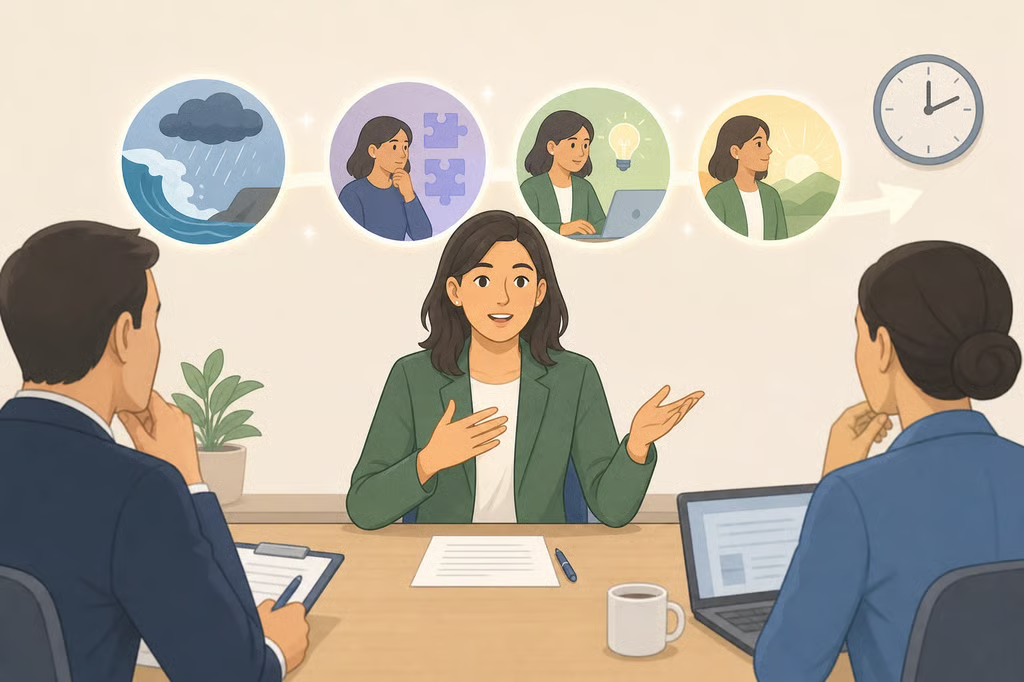
Preparing strong adaptability interview questions and answers starts with recognizing a pattern, not memorizing a script. One interviewer asks how a candidate handles stress. Another asks about a policy they disagreed with. A third wants a story about picking up a new tool under deadline pressure, essentially a version of "tell me about a time you had to adapt." However they're phrased, these questions tend to check for the same basic thing: a specific change, a response, and a result, not a personality trait summed up in one sentence.
The business case for adaptability is prominent in employer research published earlier this year. A survey of more than 9,000 business and HR leaders across 89 countries found that seven in ten named becoming fast and nimble enough to adapt to shifting business, customer, or market needs as their primary competitive strategy for the next three years (Deloitte, 2026). Some employers screen for it directly. VSP Global lists "nimble learning" as one of several hiring competencies it evaluates in candidates (SHRM, 2021).
This guide covers how to answer adaptability interview questions across common formats, a simple structure for building a response, two fictionalized sample answers, how to talk about a change that didn't go cleanly, and the mistakes that undercut otherwise strong material.
What interviewers are listening for in adaptability skills interview questions
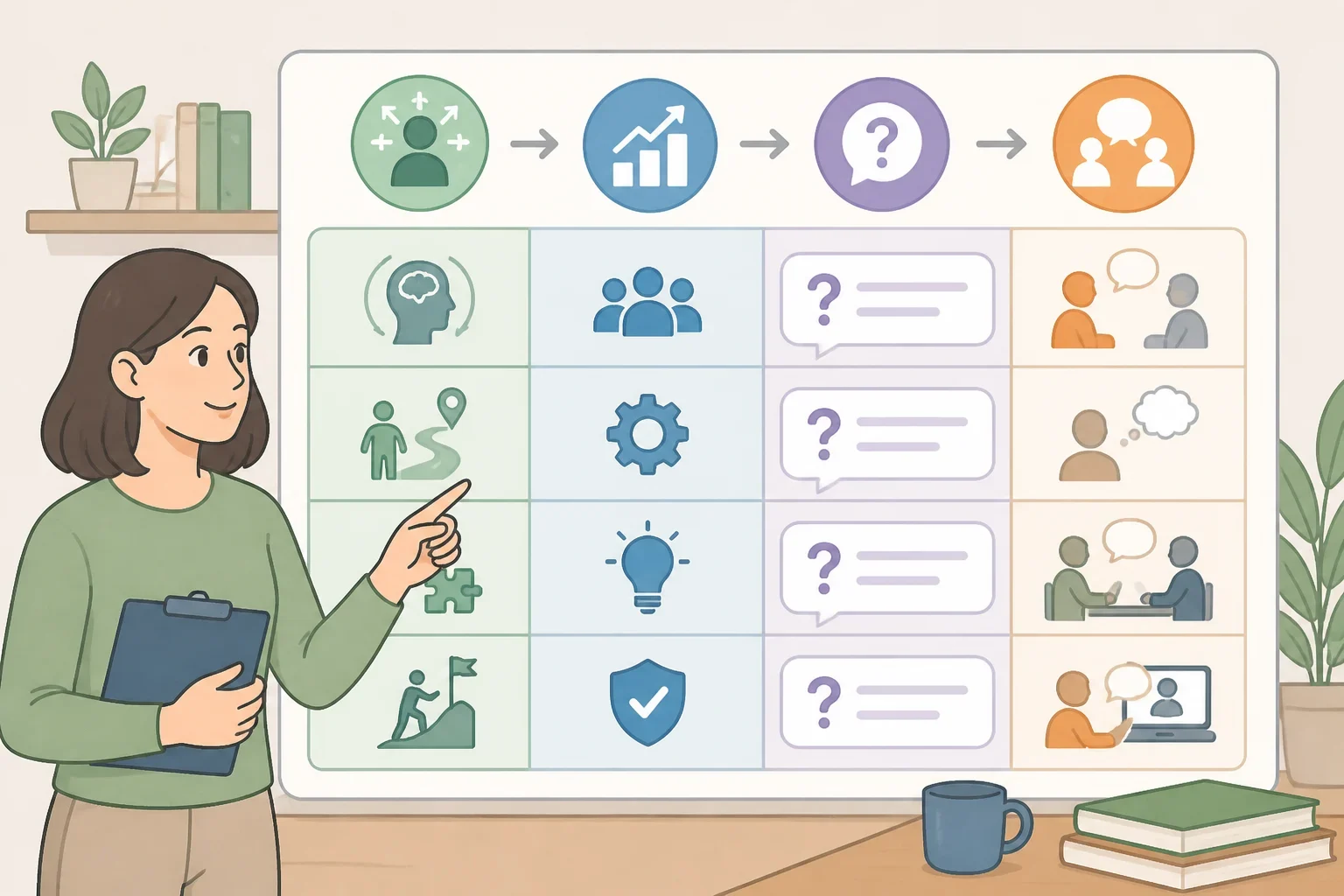
The same research names the ability to adapt to change and speed as one of the two drivers leaders rank most important for organizational success, alongside faster coordination of people and resources (Deloitte, 2026). That framing treats adaptability as a business requirement, which is part of why it shows up across so many interview formats.
Adaptability overlaps with, but isn't identical to, coachability. SHRM's research on coachability describes candidates who accept that their self-perception may not match how others see them as more coachable, and it notes that curiosity about unfamiliar approaches is a related marker (SHRM, 2022). That openness can support adaptability, but it's a mindset the source links to being developed on the job, not direct proof of a behavior change.
Some questions sound like adaptability prompts but test something adjacent. One executive's favorite question, "How will I know when you are stressed out?", is built to reveal how a candidate manages workload and flags problems before they escalate (SHRM, 2023). As a preparation guideline, treat an answer built only around coping habits, walks, blocked-off time, as a resilience story. It becomes an adaptability answer once it includes a change: a new habit adopted, a different way of communicating workload, or a process rebuilt after an earlier version failed.
To demonstrate adaptability in an interview, run every story through one filter before using it: does it show a real adjustment in behavior or process, or does it just show that someone stayed calm or busy?
Adaptability interview question examples and what they test
Some questions target shifting workloads directly. Lever has asked candidates "How do you organize your day?" and "How do you spend your time in your current role?" Lever's Metteer says these questions help the team see whether candidates describe their work in terms of outcomes rather than activity (SHRM, 2022).
Other prompts target a tool or process change. Recruiter Berkey has asked about the biggest challenge of working remotely, noting that responses "put a spotlight on practical problem-solving skills" (SHRM, 2022). That example centers on remote-work transitions specifically and reflects a moment several years back, but the pattern it illustrates still applies: name the tool or workflow that changed, then explain what got done differently.
A SHRM roundup of C-suite interview questions includes two more worth rehearsing for leadership-track roles: describing how to discuss a new company-wide policy a candidate personally disagreed with, and giving an example of helping co-workers learn a new skill set (SHRM, 2023). Both come from a list aimed at management hiring, so they're more likely in interviews for supervisory roles than entry-level ones.
Because formats vary this much, matching preparation to the role beats memorizing a script. Telemus's Michael Couck told SHRM that interview questions should stay consistent with the specific role being filled rather than generic across the board (SHRM, 2023). Reread the job posting for the type of change most likely to come up, new technology, shifting customers, policy, or team structure, and prepare a story for that category.
How to answer adaptability interview questions with a simple structure
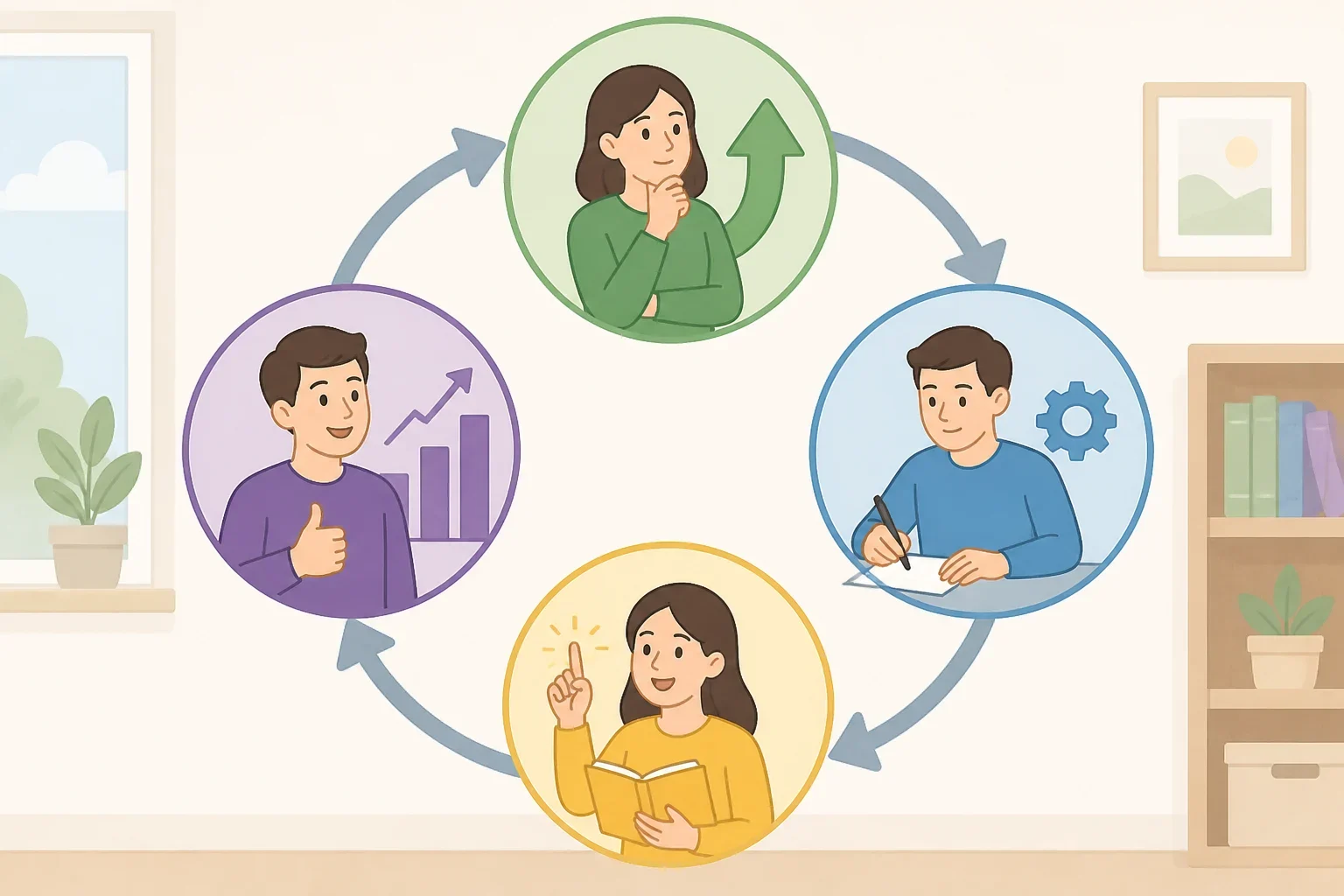
A workable structure has four parts: Change (what shifted or went wrong), Action (what the candidate personally did), Learning (what got adjusted after the first attempt), and Result (what happened, or what the candidate would carry forward without a clean metric). Call it CALR. It's a practical organizing tool, not a formally validated interview model.
Lever's stated preference for outcomes over activity supports building a real result into the answer (SHRM, 2022). The Action step benefits from different guidance. An Expedia Group interviewer named Daniela advises candidates never to defend their original approach once they receive feedback, but to open a dialogue instead, since the interview is specifically built to assess how feedback gets handled. That advice comes from a technical-interview context at one company; treating it as a general habit worth practicing, rather than a universal rule, is this article's extension of her point.
Sample adaptability interview answers (fictionalized for illustration)
The following are fictionalized examples built to show the CALR structure in action, not real candidate transcripts.
Example 1: tool or process change
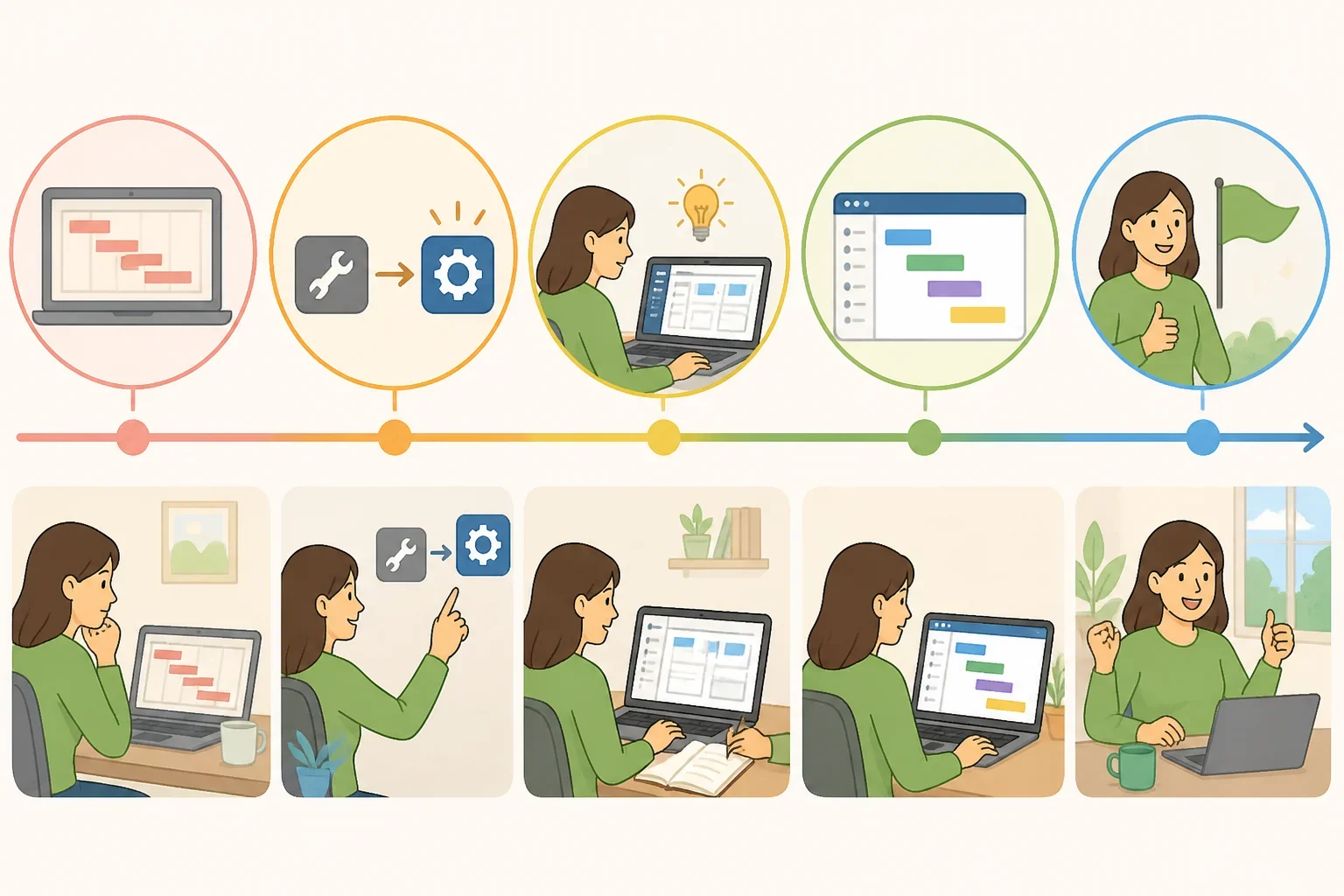
Vague version: "I'm very adaptable, I pick up new systems quickly." That gives an interviewer nothing to evaluate.
- Change: A professor switched a semester-long project team to an unfamiliar project management tool halfway through the term.
- Action: The candidate worked through the tutorials that weekend and built a shared timeline so the rest of the team could see the plan.
- Learning: When the first deadline slipped anyway, the candidate asked two teammates where it broke down, realized dependencies weren't set, and rebuilt the timeline to show what was blocking what.
- Result: The team met its remaining deadlines. A measurable result, fewer missed deadlines or faster turnaround, strengthens this kind of answer whenever it's available.
Example 2: shifting customer need
Vague version: "I handle shifting priorities well."
- Change: An account manager flagged that a client's top complaint had shifted from slow replies to confusing self-service instructions, three weeks before a related email sequence was set to launch.
- Action: The candidate cut two emails focused on response times and added one walking users through self-service, step by step.
- Learning: Before finalizing the draft, the candidate asked two support reps who talked to these customers daily for feedback; one flagged outdated screenshots, which got fixed before launch.
- Result: The revised sequence shipped on schedule with feedback already built in. A specific outcome, like a drop in related support tickets, strengthens this kind of story when it's available.
What separates example two from example one is timing: that candidate sought feedback before a mistake shipped, not after one happened.
When the change wasn't a clean win
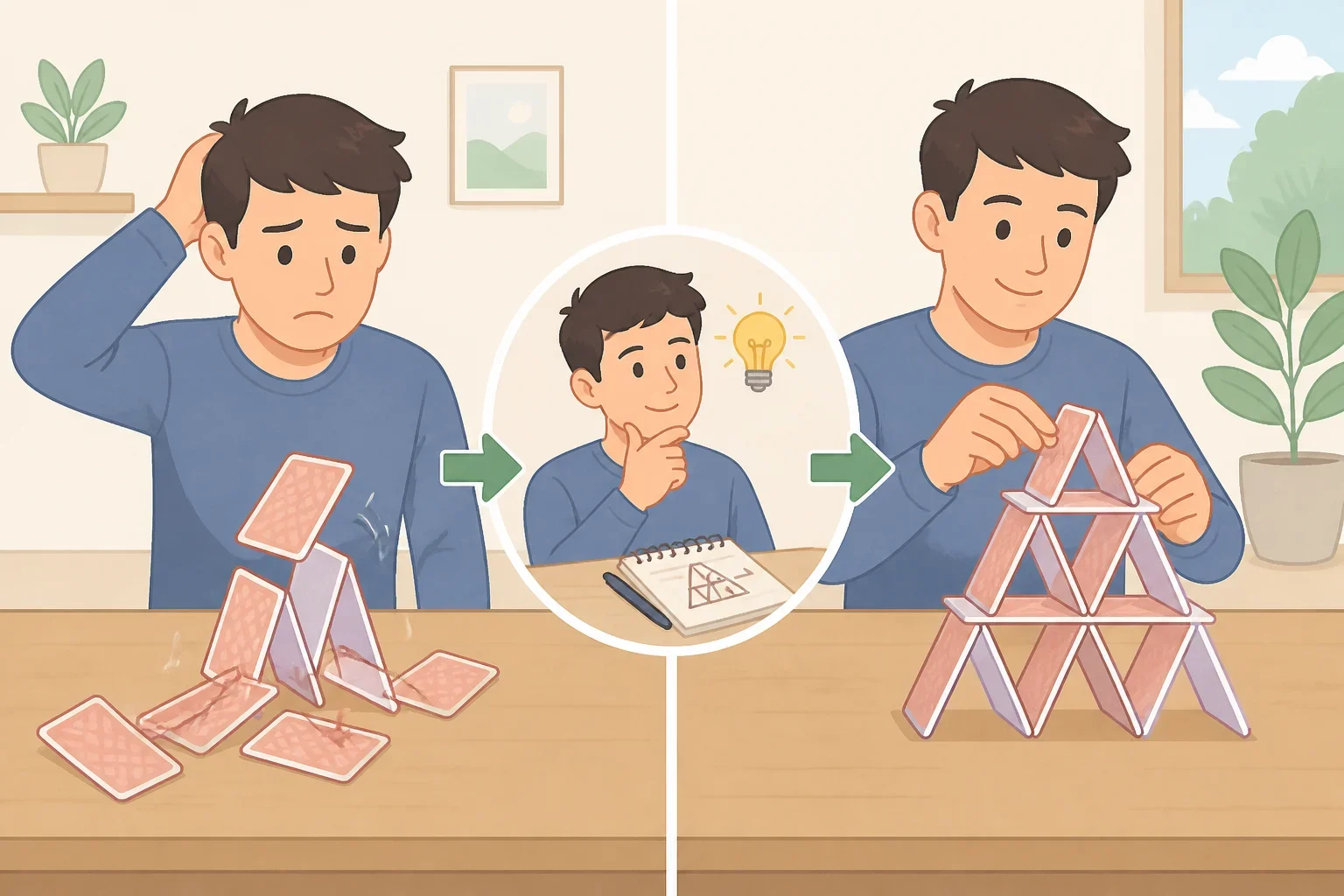
Not every adaptability story ends with a tidy result, and interviewers generally don't expect one. A few situations are worth preparing for specifically:
- If a first attempt failed because of a teammate's mistake, describe what was adjusted on the candidate's own end rather than assigning blame.
- If the change was a policy the candidate personally disagreed with, focus the answer on how it was communicated or implemented, not on relitigating the disagreement.
- If the result was mixed, say so plainly and name what was learned; a half-success explained honestly reads as more credible than a success story that sounds too clean.
- If the candidate had no formal authority over the change, the story can still work by showing influence, clear communication, or a flagged problem, rather than control.
Building credible examples without traditional work experience
Limited work history doesn't disqualify a candidate from these questions. Daniela, the Expedia interviewer quoted above, says the company doesn't expect students or recent graduates to walk in with extensive experience or a prior internship. VSP Global takes a similar stance, saying it considers experience from volunteering, training, or military service as long as a candidate can clearly explain the relevant skills and behaviors involved (SHRM, 2021).
VSP's talent-acquisition director, Ron Orr, asks early-career candidates to name three specific classes, projects, or volunteer efforts that prepared them for a role, and to be specific rather than general (SHRM, 2021). A vague reference to "group projects" gives an interviewer nothing to evaluate; naming the exact class, the exact shift, and the exact personal action does. The same principle applies to career changers moving between industries: a scheduling fix in retail management translates to logistics because the underlying skill, responding to a changed condition, transfers even when the field doesn't.
Group settings add one wrinkle: isolating an individual contribution. In a class project or team volunteer effort, separate what was personally done differently from what the group did collectively before writing the story down.
Mistakes that undercut adaptability answers
Stating "I'm adaptable" without a specific before-and-after scenario gives an interviewer nothing concrete to weigh, since there's no actual change for them to evaluate (SHRM, 2021).
Defensiveness is a related risk. Daniela's advice against defending an original approach exists because candidates who insist they were right all along, instead of engaging with new information, undercut exactly what that interview is testing. A similar pattern shows up in how candidates talk about self-perception: SHRM's coachability research describes people who insist their own read on a situation always matches how others experienced it as harder to develop (SHRM, 2022). As a writing check, flag absolute language in a practice answer, "I always," "I never struggle with", since it often signals the story is missing an honest account of what didn't work the first time.
Next steps before your interview
Reread the job posting for the category of change most relevant to the role, then draft one CALR story for that category using a real example from work, school, or volunteering. Practice saying it out loud, aiming to stay under two minutes.
Before the interview, check the draft against three questions: Does it name a real change and an individual action, rather than a group one? Does it include an honest adjustment, not just a smooth success? Does it end with a result or a lesson that can be clearly explained? Whichever answer feels weakest is the one worth rebuilding first.
