

Gen Z Workplace Expectations: Speak Up Requires Real Influence
Gen Z workplace expectations are often reduced to flexibility, mental-health support, and demands for purpose. That framing misses the more useful question: when employees speak up, does anyone with decision-making authority actually respond?
The gap is measurable. Only 37% of U.S. employees say they have “a lot” or “some” influence over which technologies their employer adopts, while 71% believe employees should have at least some influence, according to Gallup last year. The disconnect affects every generation, but Gen Z is entering work with especially clear expectations about control over time, workload, and values.
The argument is straightforward: employers do not have to approve every request. They do need to distinguish between inviting employee input and giving employees meaningful influence. A feedback form is input. Explaining who decides, showing how feedback shaped the decision, and allowing employees to challenge a rollout create influence.
What Gen Z wants from work
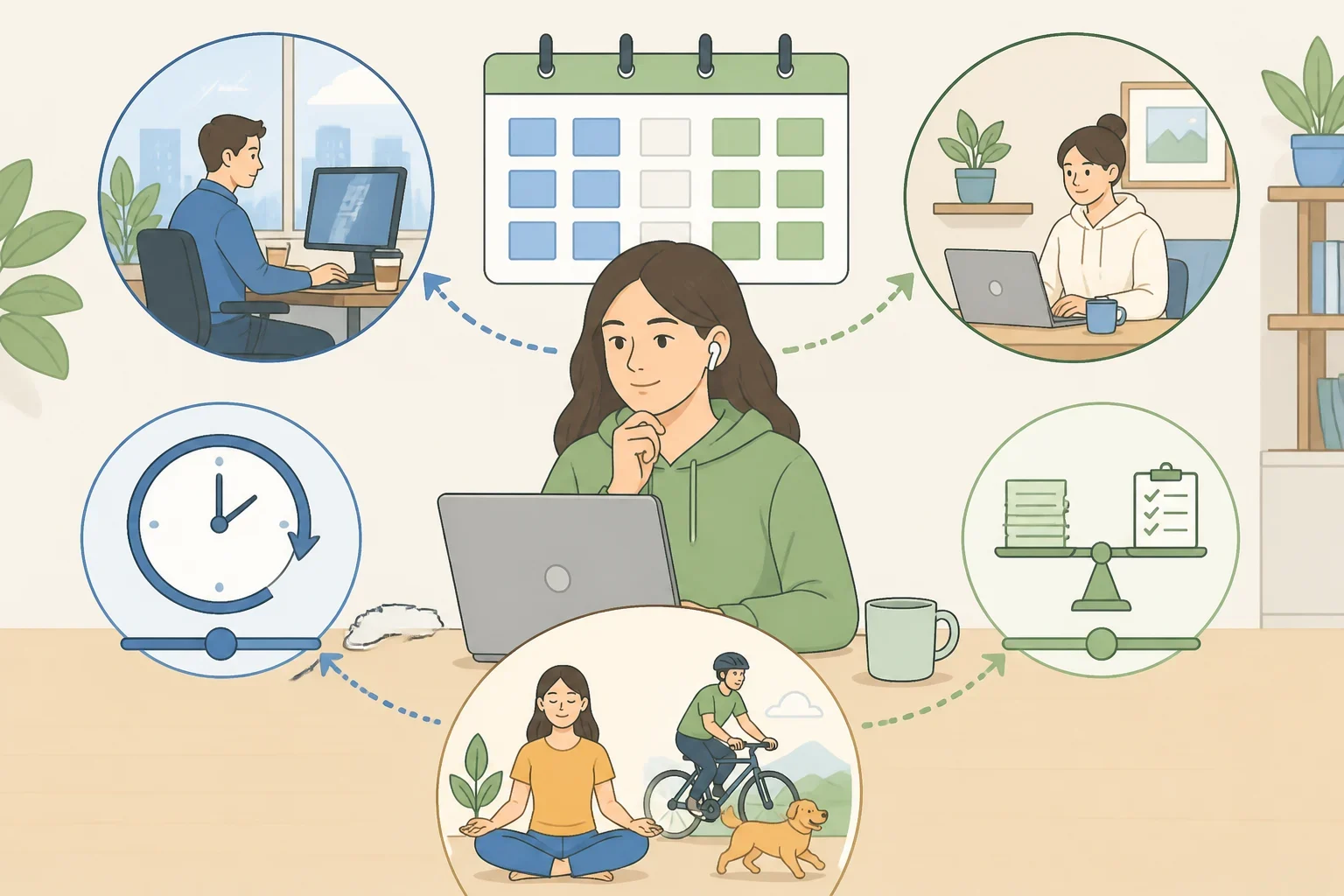
Workplace speaker Goetting described Gen Z as “very much a work-to-live generation” in SHRM five months ago. The point is not that younger workers reject effort. It is that they place a higher value on mental health and life outside work when judging whether a job is sustainable.
That perspective appears in Gen Z employee priorities around hybrid work, control over hours, and control over workload. Goetting also said Gen Z workers may turn down a promotion that brings a 50% to 100% increase in work for a 10% to 20% raise, a preference reported by SHRM five months ago.
Those choices can look unreasonable to managers who were taught to treat advancement as an automatic trade of more responsibility for more pay. They make more sense when viewed as a screening process. A job seeker is asking whether the added workload is defined, whether the schedule is manageable, and whether the employer’s promises match daily practice.
Gen Z workplace values also include mission fit, inclusion, environmental sustainability, and workers’ rights, according to Goetting’s comments reported by SHRM five months ago. Some workers also pursue side or freelance work to diversify income rather than rely entirely on one employer, the same report says.
For employers, these preferences are signals to clarify. A job posting can describe flexibility, but candidates need to know who controls schedules, how workload changes are handled, and whether employees have any say when new tools are introduced. For job seekers, those questions are part of evaluating an offer, not evidence of a poor work ethic.
Mental health support needs more than a benefits list
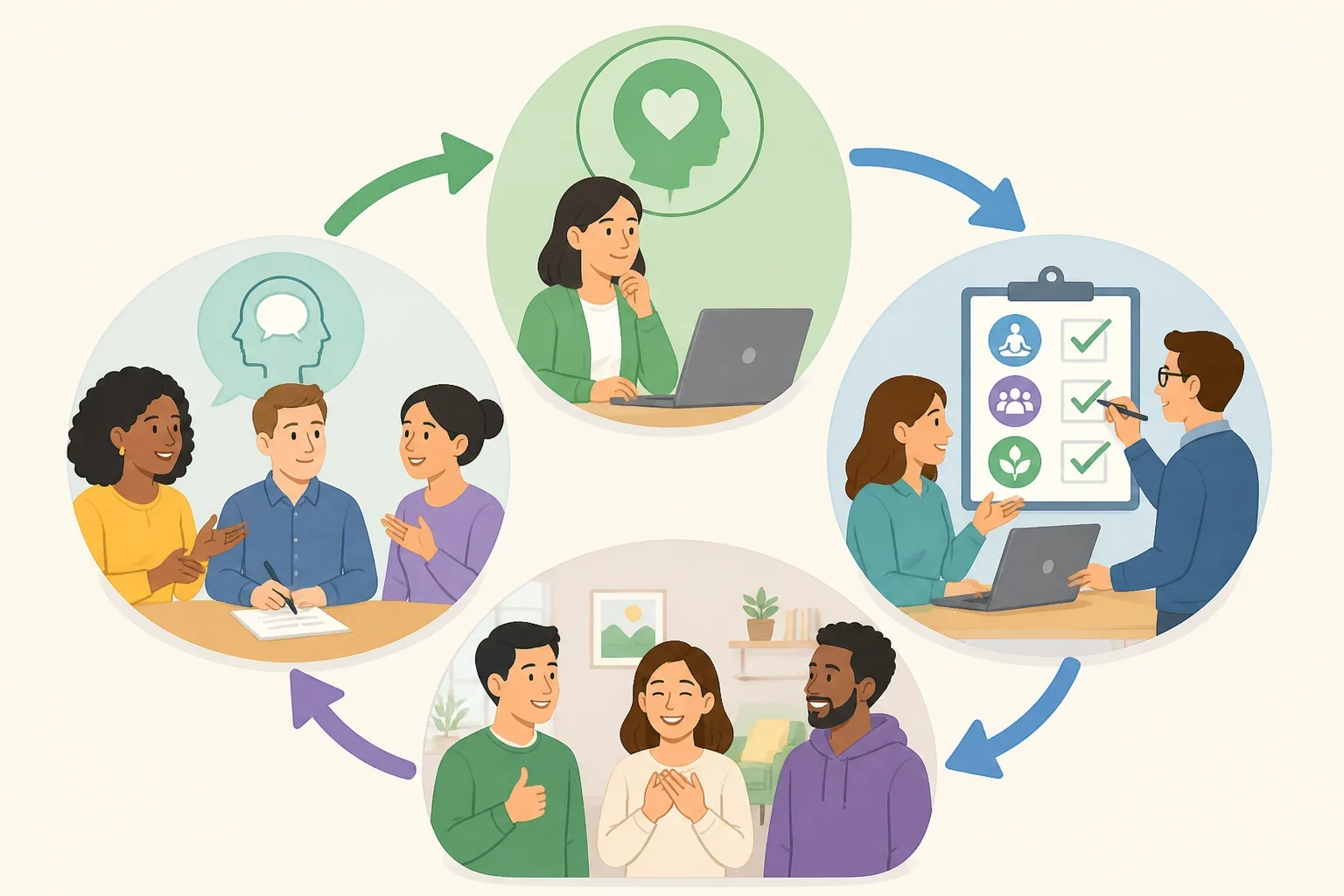
The strongest criticism of Gen Z’s expectations is that younger workers may ask employers to solve problems that belong outside the workplace. That concern has some basis. Employers are not therapists, and managers should not diagnose employees or promise individualized support they are not qualified to provide.
Still, the available evidence does not support treating mental-health concerns as a uniquely Gen Z issue. An American Psychiatric Association poll found that 43% of adults felt more anxious in 2024 than the previous year, compared with 37% in 2023 and 32% in 2022, according to SHRM 16 months ago. The figure describes adults generally. It does not establish that anxiety is rising across every age group.
The workplace cost is also substantial. Anxiety and depression account for approximately 12 billion lost working days globally and about $1 trillion in lost productivity each year, SHRM reported 16 months ago, citing the World Health Organization.
Employers are already investing in formal resources. Mental-health insurance is offered by 90% of employers and employee assistance programs by 82%, according to SHRM’s 2024 Employee Benefits Survey, reported by SHRM 16 months ago. The fair criticism, then, is not that companies have done nothing. It is that a benefit can exist without being trusted, understood, or suited to the people expected to use it.
Morrison, quoted by SHRM 16 months ago, said mental-wellness programs can become disconnected from employee needs when employees are excluded from designing the response. That is the same input-versus-influence problem in another form. Workers are invited to disclose what they need, but may not see how their experience changes the program.
Managers need boundaries as well as empathy. Colleen Marshall of Two Chairs advised managers not to pry or act as therapists, while Keren Maldonado of SHRM recommended open communication and coaching to distinguish personal challenges from performance issues, according to SHRM 16 months ago. Employees seeking individualized accommodations or help with applicable requirements should consult HR and appropriate qualified sources.
Employee input and employee influence are different
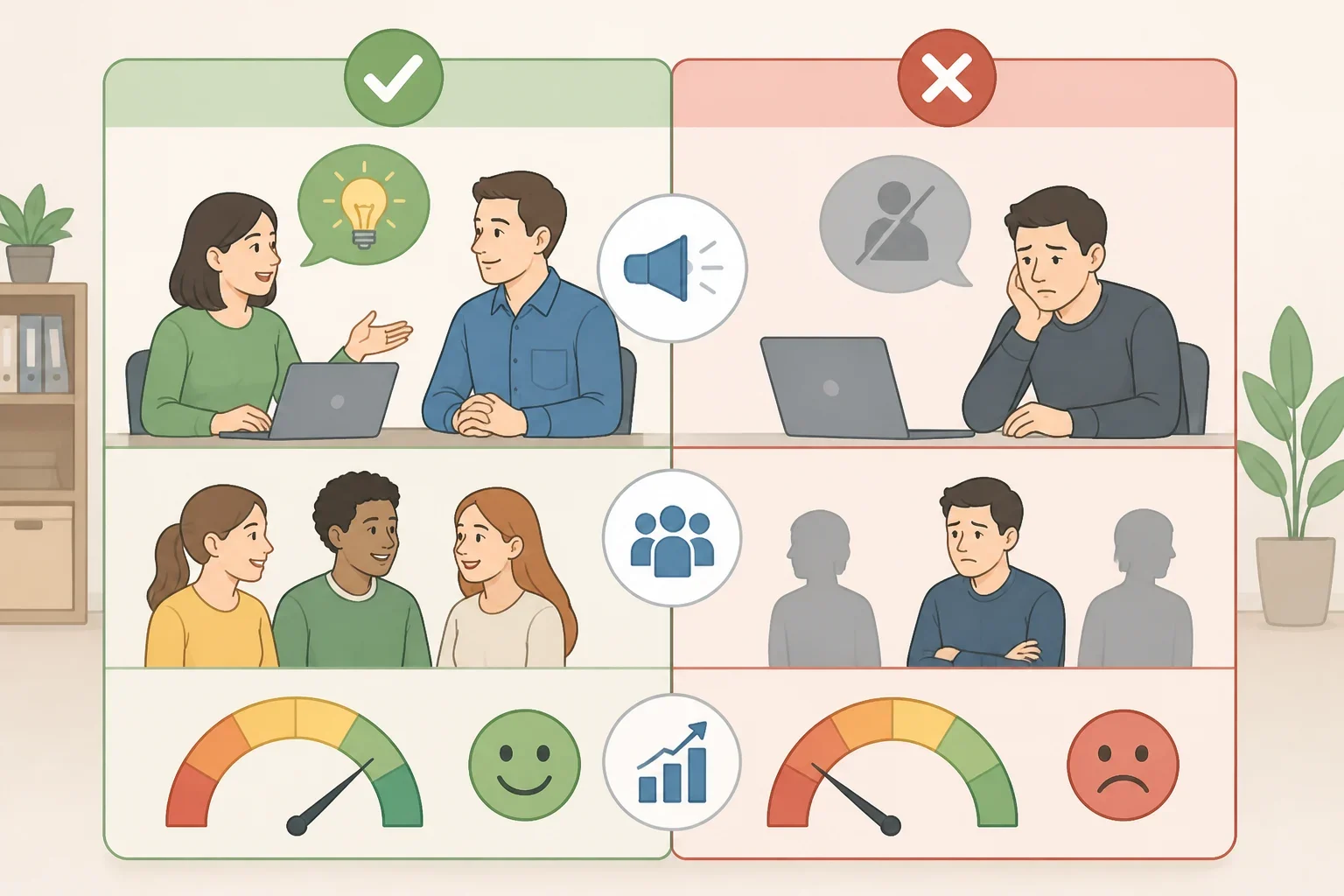
The Gallup findings provide the clearest evidence that this issue extends beyond Gen Z. The American Job Quality Study measures a “voice gap,” meaning the difference between the influence employees have and the influence they believe they should have over parts of their work, including technology adoption, according to Gallup last year.
On technology adoption, 55% of employees say they have less influence than they think they should. That pattern holds across age groups from 18 to 64, with between 52% and 56% of workers in the major age categories reporting the gap, according to Gallup last year. The available data does not show that younger workers are uniquely dissatisfied with workplace voice.
The relationship with satisfaction is notable, though it remains correlational. Among employees who say they have a lot of influence over technology adoption, 58% report high job satisfaction, compared with 24% of those who have none, Gallup found last year. Employees whose influence matches what they believe it should be report high satisfaction at a rate of 46%, compared with 28% among those with a voice gap.
The contradiction becomes sharper when technology monitors performance. Sixty-one percent of workers whose performance is monitored “a lot” want more influence over technology decisions, compared with 45% of employees who are not monitored, according to Gallup last year.
These findings do not prove that giving employees more influence directly causes satisfaction, or that it guarantees retention. They do show a consistent association between workplace agency and how employees evaluate their jobs. Employers that ask workers to accept new systems, share performance data, or adjust workflows have a practical reason to explain how those systems will work and where employees can affect the outcome.
How employers can create real influence
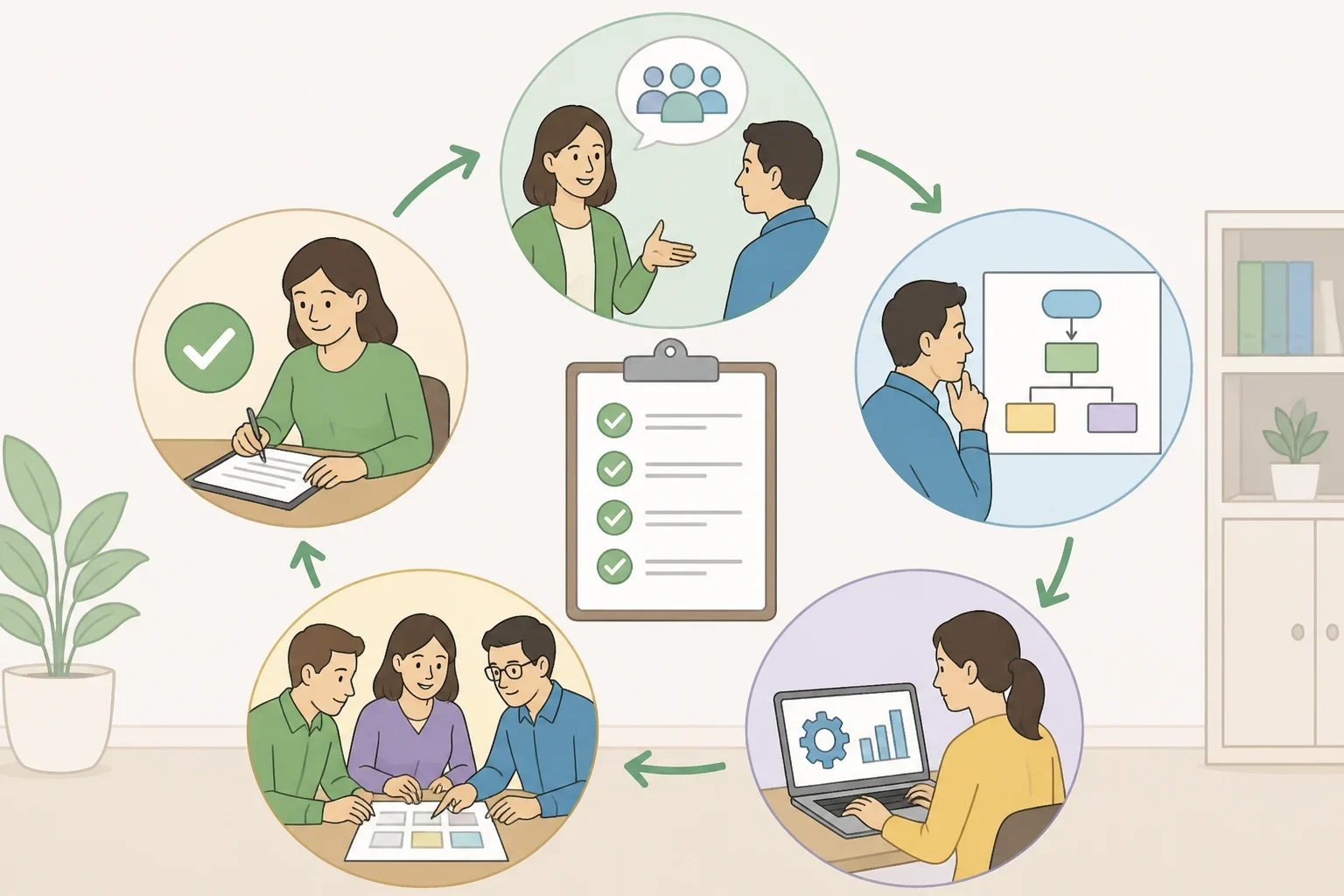
A stronger approach starts before a rollout. When evaluating new software, monitoring tools, or workload changes, employers can ask employees who will use the system to identify likely problems. That consultation should happen before the decision is final, when changes are still possible.
The process should answer four basic questions:
- What decision is open for employee input?
- Who has final authority?
- Which concerns will be evaluated, and how?
- When and how will the outcome be communicated?
This prevents consultation from being mistaken for shared authority. Employees may advise on a decision without owning it. The employer can still make the final call, but it should explain why a suggestion was accepted, modified, or rejected.
Documentation matters here. A short record showing that employees raised concerns about training, workload, monitoring, or accessibility, followed by the response, gives feedback a visible path into decision-making. It also gives managers something more useful than a general promise to “listen.”
The same principle applies to mental-health programs. Morrison told SHRM 16 months ago that involving employees can build trust and credibility. Employers can use listening sessions or structured reviews to learn whether existing resources are known, accessible, and relevant. Any individualized support should remain voluntary and should be handled through HR and qualified professionals, not improvised by a supervisor.
Managers also need training on communication, expectations, sensitivity, and workplace etiquette, recommendations attributed to Goetting by SHRM five months ago. Clear standards protect everyone. So does explaining those standards instead of assuming that employees from different generations share the same workplace norms.
A practical test for employers and job seekers
Employers reviewing retention or engagement concerns can conduct a small audit:
- Identify one decision employees are asked to comment on, such as a technology rollout or scheduling change.
- Record who has decision authority and whether employees know that.
- Track the feedback received and the response to each major concern.
- Explain which suggestions changed the decision and why others did not.
- Review whether employees can see the final outcome and understand what happens next.
That audit turns “employee voice” into something observable. It also reveals whether the company is asking employees to speak candidly without giving them any meaningful route to influence the result.
Job seekers can test the same issue during interviews by asking: “Can you describe one recent policy or workplace process that changed because of employee feedback?” A specific example tells more than a benefits page filled with broad promises.
Gen Z’s expectations are especially visible because younger workers are asking direct questions about workload, flexibility, values, and support. Gallup’s American Job Quality Study suggests the underlying concern is broader. Across generations, employees want a clearer relationship between what they say and what their workplace does. The employers that understand that distinction will make better decisions, even when the final answer is no.
