

- Gen Z worker migration trends: What the data says
- What the evidence actually shows about Gen Z geographic mobility
- Why the geographic unit changes the meaning of migration data
- What the available evidence cannot establish
- How to compare two labor markets before moving
- What to verify before accepting a job elsewhere
- A better decision rule for young workers considering relocation
Gen Z worker migration trends: What the data says
“Gen Z is redrawing the talent map, one state line at a time,” Brookings wrote last year. The line is memorable, but the evidence behind it is less specific. For recent graduates, job seekers, and early-career workers considering relocation, the key question is not simply where Gen Z workers are moving. It is whether the research being described as Gen Z migration actually measures that generation, and whether a broad mobility pattern says anything about a particular job offer.
The Census Bureau compared geographic mobility across birth cohorts using American Community Survey estimates covering 2005 through 2023. Millennials had the highest mobility across most of the years studied, rather than Gen Z, according to the Census Bureau last year. The same report defines Generation Z as people born from 1997 through 2012. That means the oldest members of the cohort turn 29 in 2026, while many Gen Z workers are still in their late teens or early 20s.
That distinction matters when evaluating Gen Z interstate migration claims. A headline about young workers moving for jobs may identify a useful trend, but it does not tell you whether relocating will improve your income, career options, or daily life. Those questions require a closer look at the labor market, pay, expenses, and work-location rules connected to the specific role.
What the evidence actually shows about Gen Z geographic mobility

The strongest evidence supports a narrower conclusion than the popular framing: younger workers have generally been more geographically mobile than older workers in the available research, but the research does not establish that Gen Z is uniquely responsible for that pattern.
The Census comparison is organized by birth cohort, which makes it useful for examining how generations differ over time. It also creates an interpretive challenge. Mobility can reflect age and life stage as much as generational identity. Someone in their 20s may be weighing a first full-time job, a new industry, a different housing arrangement, or a move connected to a partner. The Census Bureau shows how mobility varies by cohort, but the report does not establish why each individual moved.
That is why “Gen Z workforce relocation” should not be treated as a single, uniform behavior. A 20-year-old finishing school, a 27-year-old changing industries, and a 29-year-old accepting a promotion may all be counted within discussions about the generation, but their financial obligations and reasons for moving can be very different.
Birth-cohort data also cannot answer every question a job seeker has. It can show how mobility rates compare across groups, but it does not determine whether a particular metro area has enough openings in your occupation, whether the pay will cover local expenses, or whether an employer truly requires you to move.
For readers researching where Gen Z workers are moving, the first step is to inspect the study's definitions:
- Which birth years are included?
- What ages were participants when the data was collected?
- Does the research measure moves across state lines, between local labor markets, or both?
- Does it examine work-related moves specifically, or geographic mobility more broadly?
- How current is the data?
Those questions help separate evidence about Gen Z from evidence about young workers generally. They also prevent a common mistake: applying a broad generational label to a finding that includes several age groups or reflects an earlier stage of the labor market.
Why the geographic unit changes the meaning of migration data
A state-to-state move is easy to describe, but it may be too broad to explain a job decision. Someone can cross a state line without entering a dramatically different labor market. Another person can move within the same broad region and gain access to substantially different employers.
The Census Bureau and Harvard released an interactive young-adult migration tool four years ago. It uses deidentified census, survey, and tax data for people born between 1984 and 1992, tracking migration between childhood and young adulthood, according to the Census Bureau. Those birth years describe older Millennials, not Gen Z, so the tool should not be used as direct evidence of current Gen Z behavior.
Its geographic measure is still useful. The tool tracks movement between commuting zones, which are collections of counties used as measures of local labor markets. It also provides migration rates across the country and breaks them down by race and parental income, according to the Census Bureau.
That approach offers a better lens for evaluating job-related moves than state rankings alone. The research examines how migration patterns respond to local labor-market opportunities and how the benefits of local labor-market growth are distributed across places where people grew up. It does not tell readers where Gen Z is moving today, but it demonstrates why a destination should be evaluated as a labor market rather than as a state label.
For a job seeker, that means comparing the specific metro area or commuting zone where the job is located with the labor market where you currently live. A state may attract workers overall while offering limited openings in your field. A smaller metro area may have fewer total jobs but a stronger match for your skills.
What the available evidence cannot establish
The sources reviewed here do not provide a current, Gen Z-specific destination ranking for 2024 through 2026. They also do not establish that housing prices, remote work, salary differences, or any other single factor explains where Gen Z workers move.
That limitation is not a reason to dismiss migration research. It is a reason to use it carefully. The Census cohort report can help readers understand how mobility has differed across generations. The older young-adult research can show why local labor-market opportunity and geographic definitions matter. Neither source can substitute for checking current conditions in a particular occupation.
The distinction between “the data shows” and “the data suggests” is important here. The data shows that mobility varies among birth cohorts and that older Millennials in the 2022 research were tracked across commuting zones. It suggests that labor-market opportunity is relevant to migration patterns because the research examines movement in relation to local labor-market growth. It does not prove that a worker will benefit from moving to a market described as attractive in a general ranking.
The same caution applies to housing. Lower housing costs may make a destination look appealing, but housing is only one part of a relocation decision. A move can also change commuting needs, taxes, transportation costs, access to employers, and the availability of work that matches a person's experience. The sources reviewed here do not provide an individualized cost-of-living calculation, so those comparisons have to be made separately.
How to compare two labor markets before moving

Start with the occupation, not the destination's reputation. If a city appears frequently in stories about young workers moving for jobs, search for current openings in your field before assuming the trend applies to you.
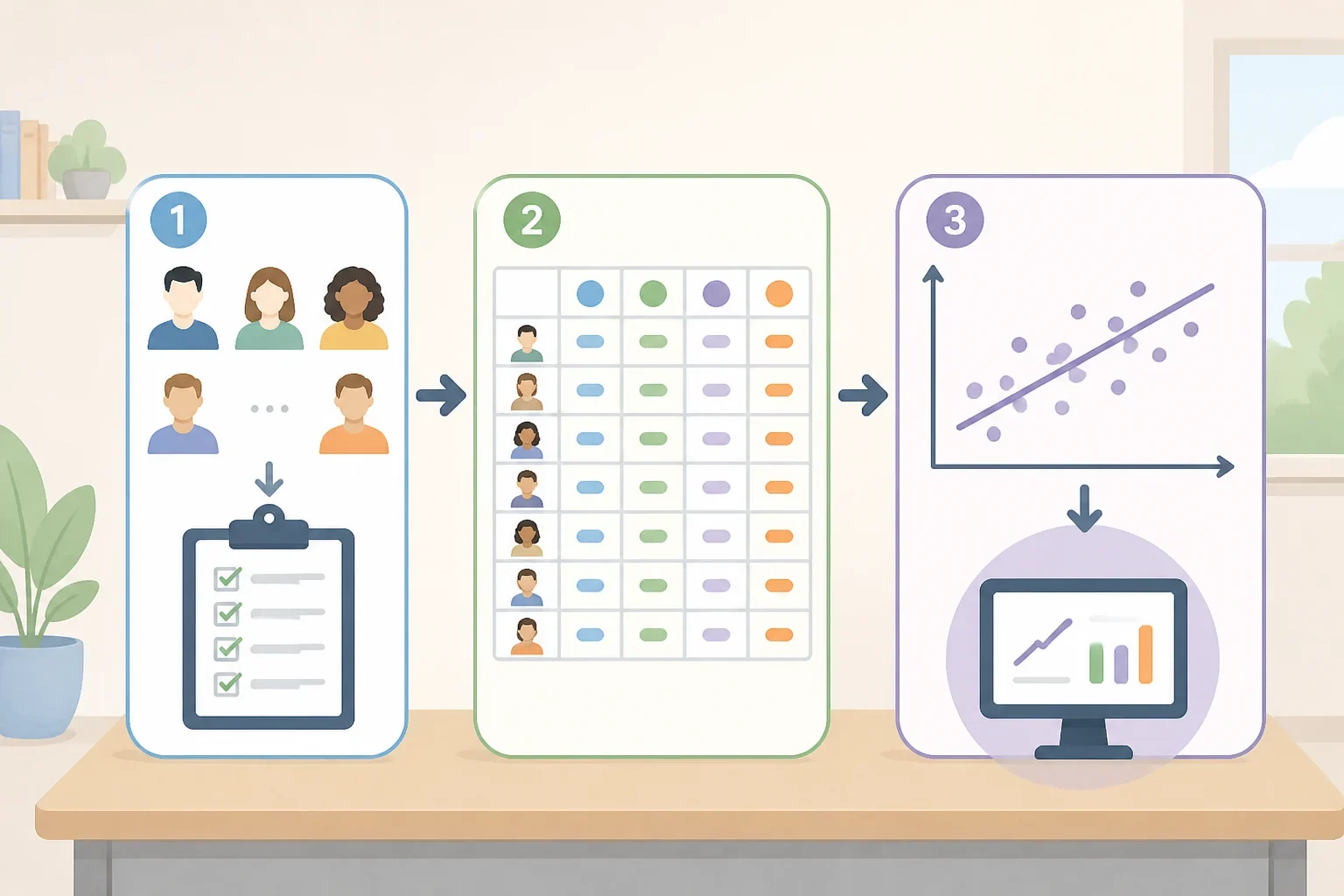
Create a side-by-side comparison of the current and target markets. Include:
- the number of roles that match your experience
- required education, skills, or certifications
- listed pay ranges
- full-time, temporary, hybrid, or remote status
- required work location and office schedule
- commute distance and transportation costs
- housing payment or rent
- estimated taxes and payroll deductions
- moving and setup expenses
- recurring costs that would change after relocation
This is a decision tool, not a prediction of what every worker should do. A higher salary may not produce more usable income after housing and commuting costs. A lower salary may be workable if the role offers a strong match and the overall budget remains realistic. Neither conclusion can be drawn from a generational migration headline alone.
Pay also needs context. A posting's maximum salary may depend on experience or qualifications you do not yet have. A typical salary figure may combine workers at several career stages rather than reflect the entry-level offer available to you. Compare similar roles, ask how the employer applies the salary range, and avoid treating the highest listed figure as guaranteed income.
The local labor market deserves equal attention. Review openings near the actual worksite rather than relying only on statewide employment stories. If the role is remote or hybrid, check whether the arrangement is available to workers in your location and whether office attendance can change after hiring.
What to verify before accepting a job elsewhere
Relocation decisions become more concrete once an employer's requirements are clear. A listing that uses the word “hybrid” may still require regular office attendance. A remote arrangement may also be limited to approved work locations. Do not assume that a position can be performed from another state simply because the posting mentions flexibility.
Ask the recruiter or hiring manager:
- How often must employees work from the listed office?
- Is relocation required before the start date?
- Does the employer provide relocation assistance?
- Can the work location change after hiring?
- Which pay range applies to the location where the work will be performed?
- Which transition costs will the employee be expected to cover?
These questions are practical safeguards. They do not come from the migration datasets, and they do not predict whether the employer will make an offer. They help clarify the opportunity before a worker commits to a move.
The source record also has a time limit. The Census cohort comparison uses data through 2023, and the young-adult migration research released four years ago examines people born from 1984 through 1992. That makes both sources useful for context, but neither should be presented as a direct measurement of Gen Z worker movement in 2026.
A better decision rule for young workers considering relocation
Gen Z worker migration trends can help frame a question, but they cannot answer it for an individual job seeker. The available Census evidence shows that Millennials had the highest geographic mobility across most years in the cohort comparison, while the older Census and Harvard tool focuses on a different generation and a different stage of life. Neither source confirms that Gen Z is uniquely redrawing the labor map.
Before moving, compare actual openings and pay in the target labor market with comparable opportunities where you live. Estimate the budget using realistic housing, transportation, tax, and setup costs. Then confirm the employer's location requirements directly.
That process may lead to relocation, a remote arrangement, a local search, or a decision to wait. The useful conclusion is not that Gen Z should move more or stay put. It is that a generational headline is a starting point for research, not a substitute for evaluating the job in front of you.
