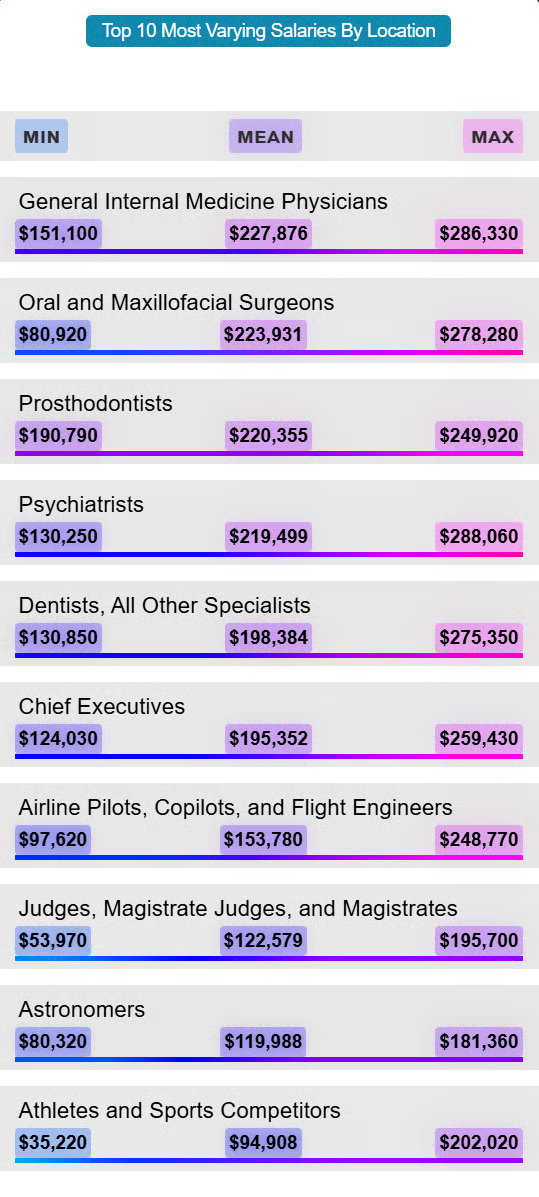
The US Bureau of Labor Statistics published an extensive dataset about the state of the US job market in 2020.
While data was not always available, our team was able to consolidate an analysis and observe salary disparities across geographic areas as well as by occupations.
Federal minimum wage
Over the past 20 years, the Federal minimum wage has been stagnant, averaging around $7.00 in contrast to an overall growing US economy.
While federal minimum standards are nationwide, states can choose to increase their own minimum wage.
In recent years, differences in the minimum wage between states seem to be on the rise.
When it comes to higher wages, we observed that discrepancies can occur and vary according to gender, race, location, and especially by occupation.
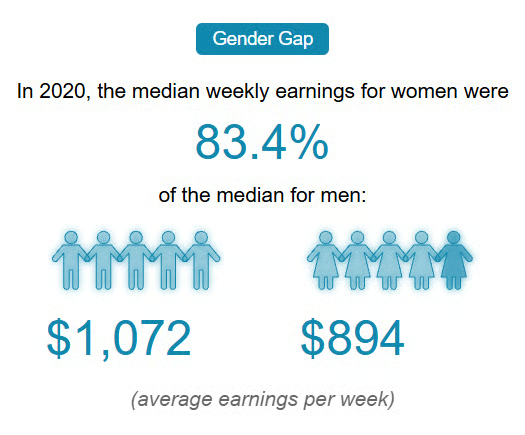
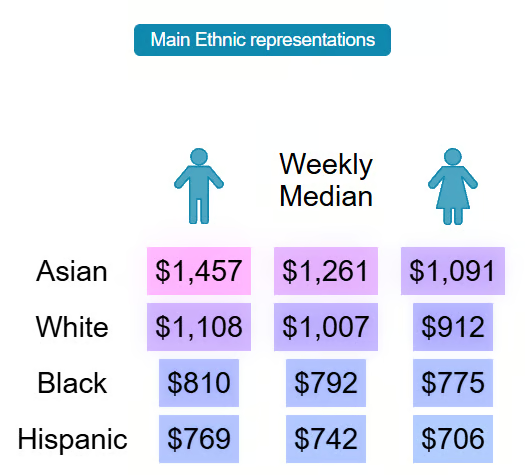
Whether one looks at it by race or gender, inequalities are glaring. In the next section, we look at another factor for salary discrepancies: location. As it appears, salaries tend to vary from one location to another. But there are a few exceptions.
While looking at the dataset from the Bureau of Labor Statistics , our team noticed one group that stood out.
Workers at US Postal Services, whether a Mail Carrier, Sorter, Processor, Clerk or Processing Machine Operator reportedly make about the same salary, no matter the location.
But that's not the case for every job. Next we take a look at the most volatile jobs from a salary perspective.