
- What to Wear to a Career Fair: A Step-by-Step Guide
- What to wear to a career fair: check the dress code first
- Building a business casual career fair outfit
- Assembling career fair attire on a budget
- Career fair outfit ideas for comfort and practicality
- Common career fair outfit mistakes to avoid
- A day-before checklist
- Career fair attire for college students: using campus resources
- Pair the outfit with real preparation
- Next step: verify the dress code before you shop
What to Wear to a Career Fair: A Step-by-Step Guide
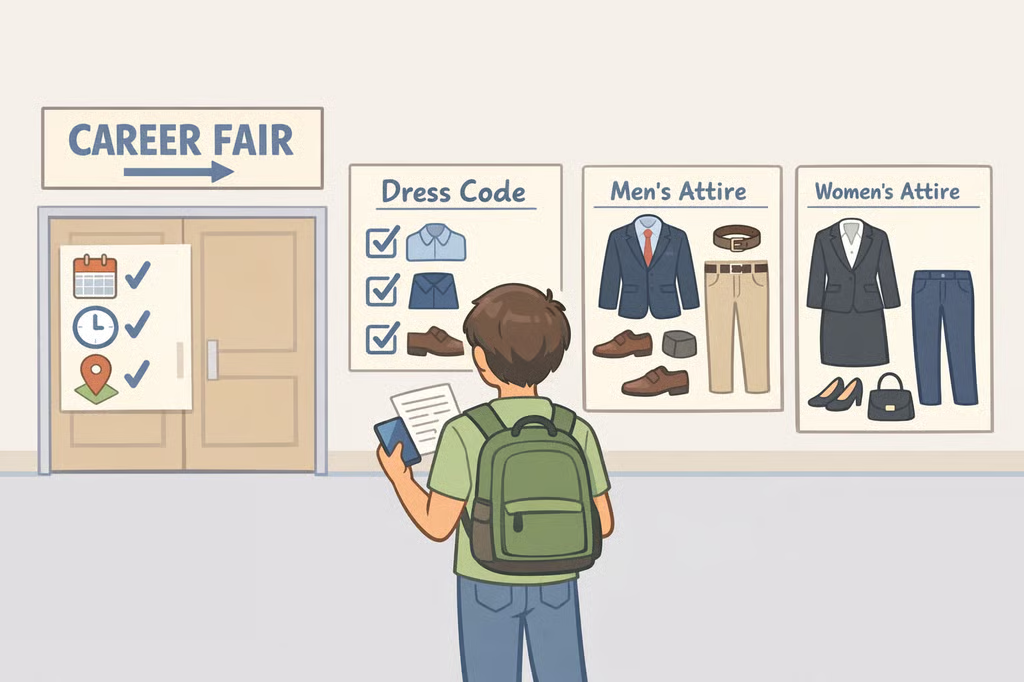
Figuring out what to wear to a career fair has less to do with finding one universal outfit and more to do with reading the specific event correctly. Career centers don't all agree on a dress code. University of Cincinnati's career prep guidance calls for business professional attire, such as a suit, dress pants, blazer, or dress, at its in-person fairs. USC Career Center guidance, published more than two years ago, goes further for its own events, describing conservative business attire as required, with a matching suit as the baseline. Neither rule applies everywhere. The event's own dress code, not a one-size-fits-all formula, should determine the outfit.
This guide walks through how to check that dress code, build an outfit around it, handle a tight budget, avoid mistakes that undercut a strong résumé, and use campus resources if attire access is the real obstacle.
What to wear to a career fair: check the dress code first
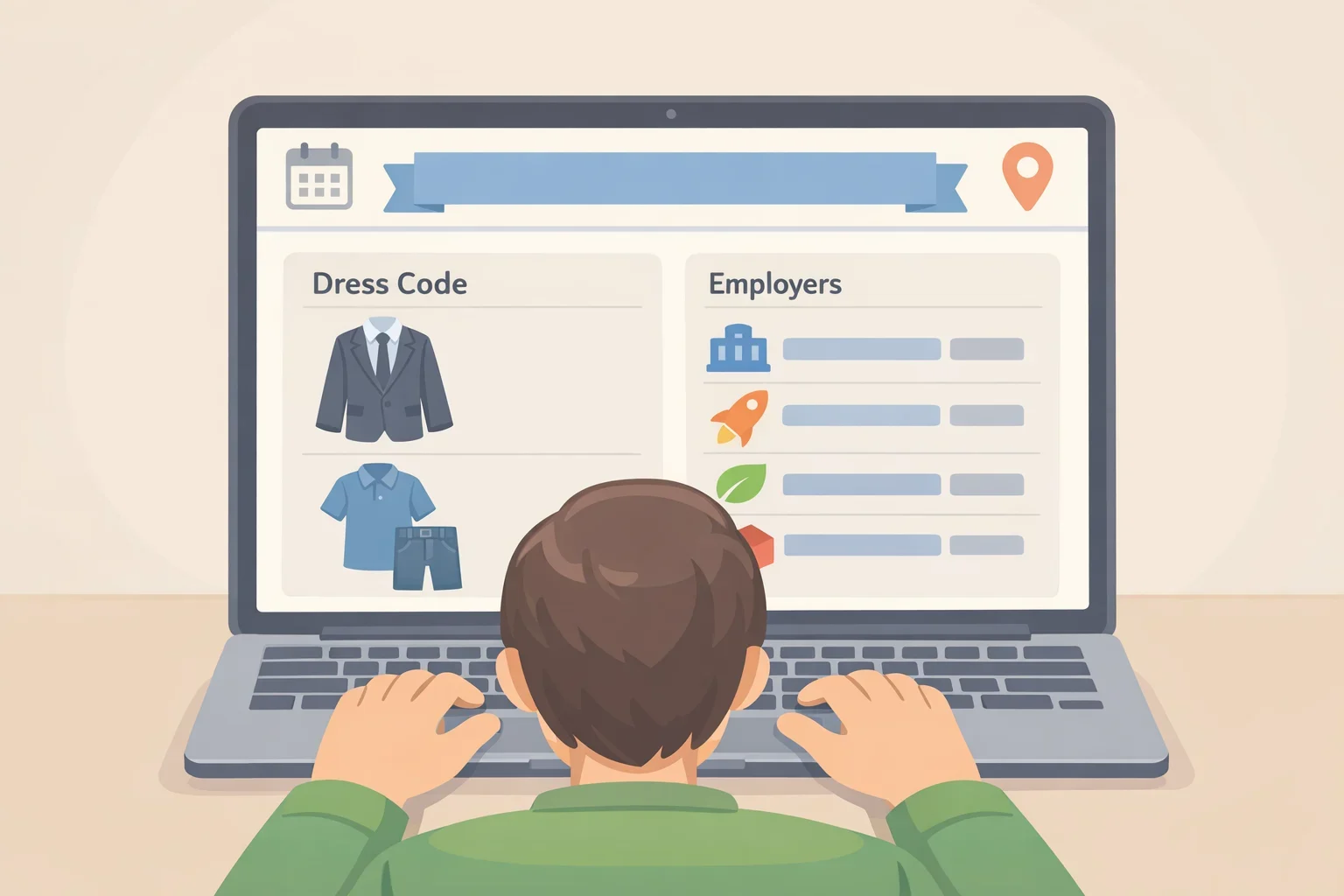
Before shopping or digging through a closet, check whether the fair is in-person or virtual. UC hosts both formats and confirms platform or venue details through Handshake (University of Cincinnati).
Next, look up which employers are attending. UC's Handshake listing lets students search, filter, and "favorite" specific employers ahead of the event (University of Cincinnati). USC students can do something similar by logging into Handshake, clicking the Events tab, and RSVPing to see the full employer list (USC Career Center).
Once the format and employer list are confirmed, use the fair's stated dress code, or the lack of one, to pick a lane:
- If the fair specifies business professional: wear a pressed, dark or neutral matching suit with polished dress shoes. That's the baseline USC's career center requires at its own fairs (USC Career Center).
- If the fair specifies business casual, or doesn't state a code at all: start with tailored pants or a skirt, or a professional dress, paired with a collared shirt or blouse. Add a blazer if the event feels more formal or if certain employers on the list lean traditional (University of Cincinnati).
- If nothing is stated anywhere: lean more formal rather than less. That doesn't mean a matching suit is required. A blazer over tailored pants or a professional dress reads formal enough for most unspecified dress codes, and it can come off if the room turns out to be casual (University of Cincinnati).
- If the fair is virtual: confirm the platform through Handshake ahead of time (University of Cincinnati). Recruiters will still see the top half on camera, so a collared shirt or blouse, a plain background, and a lighting check beforehand help the interaction come across as prepared.
Building a business casual career fair outfit
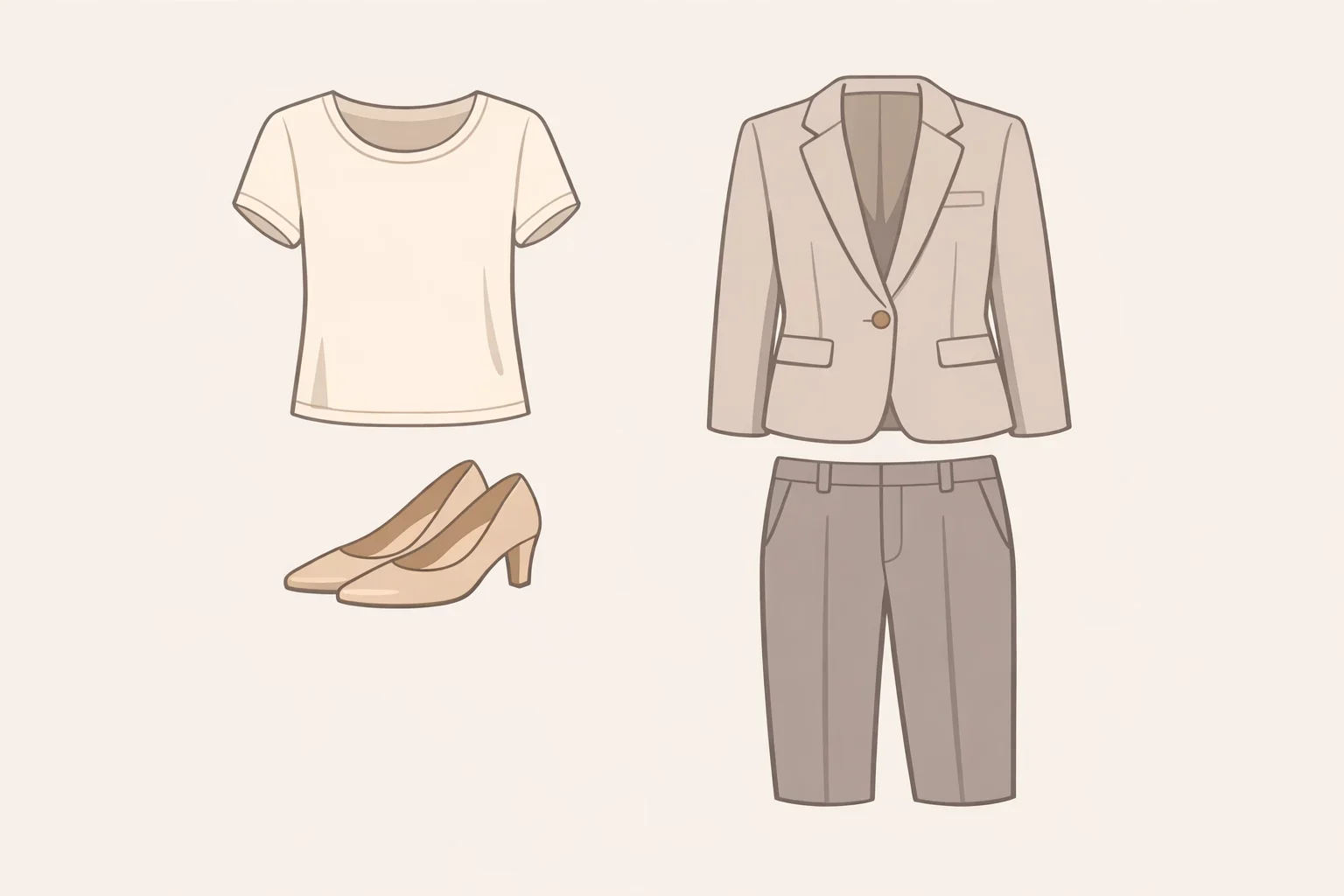
Most workable outfits come down to a few interchangeable pieces rather than a single formula tied to gender. Dress slacks, chinos, or tailored pants form a reliable base on the bottom. On top, a collared shirt, a blouse, or a professional dress does the same job, with a blazer layered on for a more formal fair (University of Cincinnati).
UC's guidance offers a professional dress or a blouse with tailored pants or a pencil skirt as a versatile combination that a blazer pulls together (University of Cincinnati). Mix and match those pieces based on comfort, budget, and what's already in the closet rather than forcing an outfit into a "for men" or "for women" template.
Stick to neutral colors, black, navy, gray, or white, and let personality come through in smaller details: a subtle patterned tie, patterned socks, or simple jewelry like a favorite watch (University of Cincinnati). Keep accessories simple enough that they don't compete for attention.
USC's guidance runs stricter than UC's for its own events, recommending a neatly pressed, dark or neutral matching suit with polished dress shoes as the expectation, not just an option (USC Career Center).
Assembling career fair attire on a budget
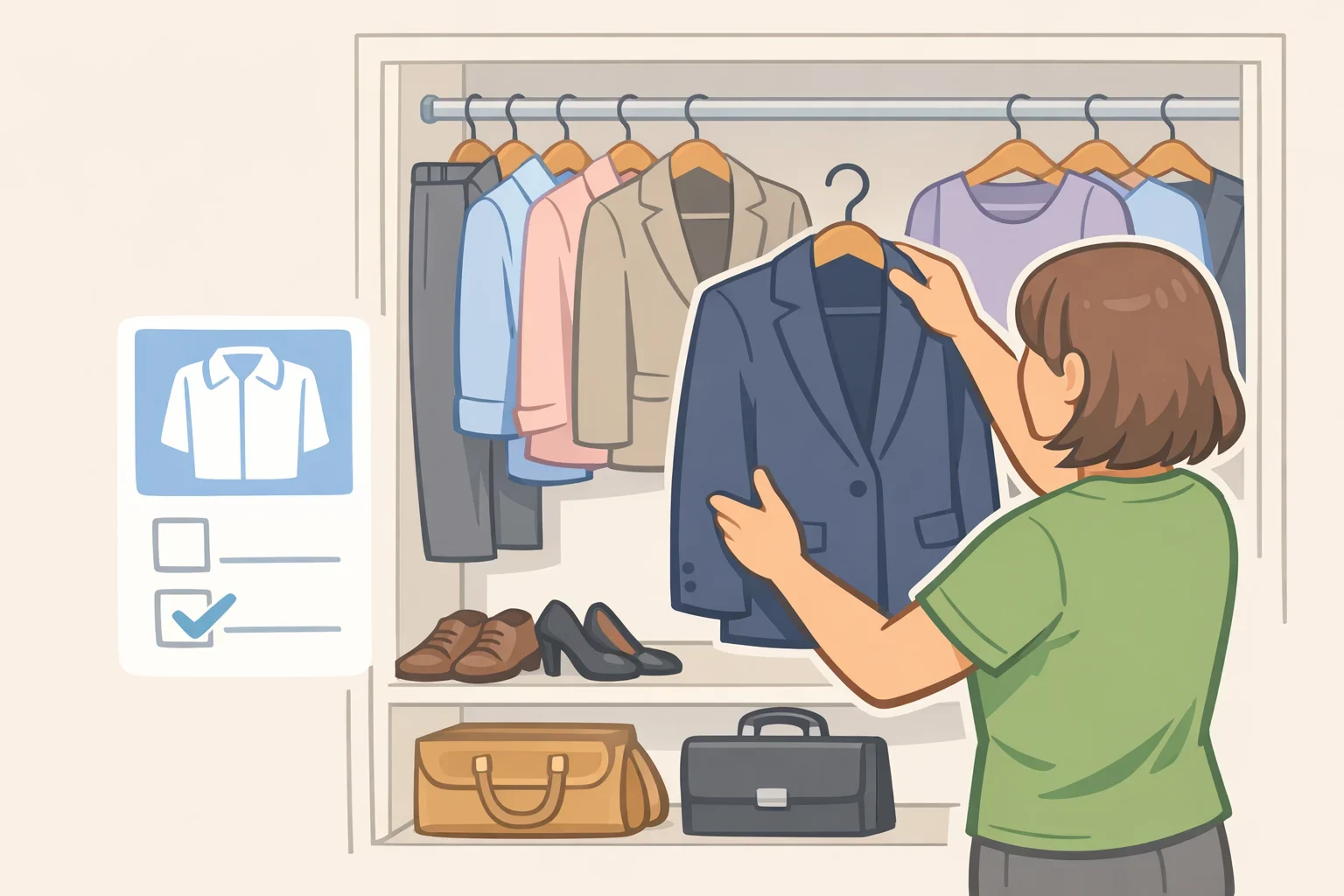
Buying a full new outfit isn't automatically necessary. A student may not need to buy anything if the required pieces already exist somewhere close by, whether that's a home closet, a roommate's closet, or a secondhand store.
Work through the pieces in order:
- Check the event's required level of formality using the steps above.
- Take stock of what's already available: a blazer, tailored pants, a dress, a collared shirt, or professional shoes.
- Borrow or buy only the piece that's missing, rather than replacing the whole outfit.
- Ask the career center whether it offers a clothing closet, loan program, or similar support.
UC's Professional Closet, housed in the Bearcat Promise Career Studio, offers free professional clothing to students who need it (University of Cincinnati). Career centers at other schools may run comparable programs, so a quick ask before assuming a purchase is required can save money.
Career fair outfit ideas for comfort and practicality
Venues can vary in temperature, so a removable layer is practical. A lightweight blazer or cardigan that comes off easily works no matter which base outfit gets chosen (University of Cincinnati).
Because career fairs involve standing and walking between tables, choose professional shoes that stay comfortable over several hours (University of Cincinnati). Uncomfortable shoes can distract during conversations, so test them before the event rather than breaking them in at the fair itself.
A sleek tote or portfolio bag serves double duty: it carries résumés, business cards, and notes, and it finishes the overall look (University of Cincinnati). For in-person fairs, bring 10 to 15 printed résumé copies on professional paper, since the résumé functions as a first impression right alongside the outfit (University of Cincinnati).
Common career fair outfit mistakes to avoid
Some slip-ups are easy to fix once they're named. Skip hoodies, ripped jeans, and T-shirts, which read as too casual for an event built around a business function (University of Cincinnati). Avoid flashy or revealing pieces, and skip anything wrinkled, stained, or otherwise unkempt (University of Cincinnati).
Recruiters take note of the full interaction, appearance included, while forming an overall impression of a candidate (USC Career Center).
Grooming counts as part of the outfit, not a separate category. UC advises ironing clothes, wearing deodorant, and minimizing heavy fragrance (University of Cincinnati). USC separately emphasizes freshly pressed clothing, polished dress shoes, and neat hair and nails (USC Career Center).
A day-before checklist
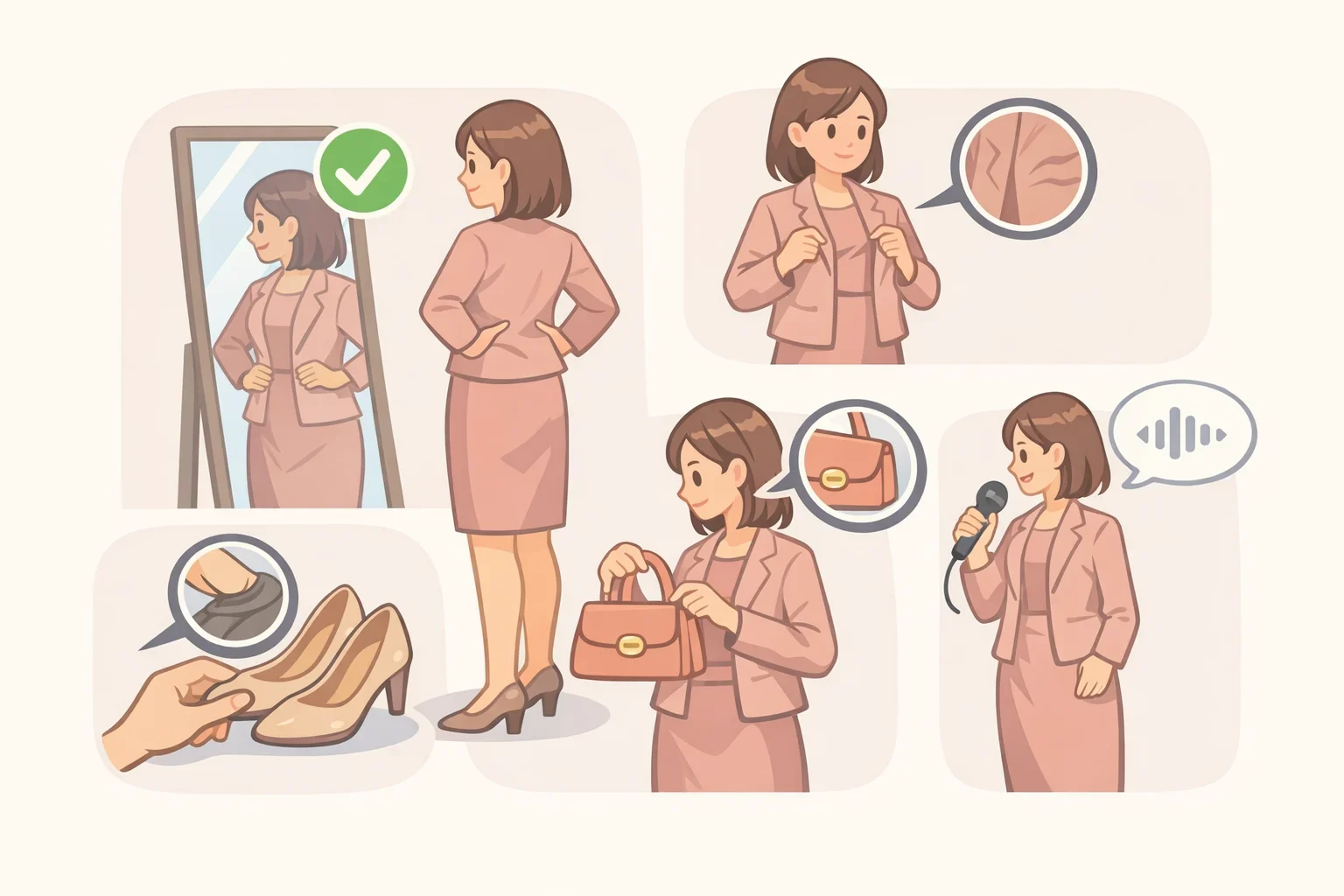
Try on the full outfit a few days before the fair rather than the night before, to catch fit issues while there's still time to fix them (University of Cincinnati). Before the day of the event, run through:
- Fit check: does the blazer button comfortably, do pants or a skirt sit right, is anything too tight or too loose?
- Wrinkle check: iron or steam anything that needs it, including items pulled from the back of a closet.
- Shoe check: closed-toe and walkable, broken in enough not to cause blisters after standing and walking for a while.
- Bag check: portfolio or tote packed with 10 to 15 résumé copies on professional paper.
- Pitch check: practice a handshake and elevator pitch while wearing the actual outfit, since untested clothing feels different once someone is standing in front of a recruiter table in it (University of Cincinnati).
Career fair attire for college students: using campus resources
Beyond clothing itself, career coaches at UC's Bearcat Promise Career Studio give direct feedback on an outfit, alongside help refining a self-introduction or elevator pitch (University of Cincinnati).
This kind of support matters most for students early in their college years. A NACE article published last year notes that first-year students may not walk away with an internship offer, but attending a career fair still gives them a setting to learn about industries and start building networking skills (NACE). That makes the fair a chance to practice professional interactions before applying for an internship.
Pair the outfit with real preparation
Clothing gets someone through the door looking ready. What happens after that depends on preparation the outfit can't substitute for. UC's guidance recommends identifying 5 to 10 employers of interest ahead of time and preparing specific questions for each one (University of Cincinnati).
USC's career center recommends preparing and practicing a 30-second introduction, or elevator pitch, before walking in (USC Career Center). UC frames the day itself around connecting meaningfully with 5 to 7 employers rather than rushing every table, followed by a personalized thank-you email within 24 hours and any required online applications within 48 hours (University of Cincinnati).
Although their dress codes differ, both centers emphasize preparing beyond simply attending the fair. Use the employer list, the pitch, and a follow-up plan to turn brief table conversations into actual next steps, rather than treating the outfit as the finish line.
Next step: verify the dress code before you shop
- Log into Handshake or the career center's fair page and look for a stated dress code and employer list before buying anything new.
- If the language echoes USC's "conservative business attire required," plan around a matching suit.
- If it's closer to UC's more flexible guidance, or says nothing at all, a blazer over tailored pants or a professional dress will likely work.
- If attire access, not uncertainty, is the real barrier, ask whether the school runs a career closet or drop-in coaching before assuming a new purchase is required.
