
- What is an internal talent marketplace? AI reshapes mobility
- What is an internal talent marketplace, exactly?
- How AI-powered internal talent marketplace matching works now
- What the fairness research does and doesn't show
- Why manager behavior still blocks internal mobility
- What to verify before relying on one
What is an internal talent marketplace? AI reshapes mobility
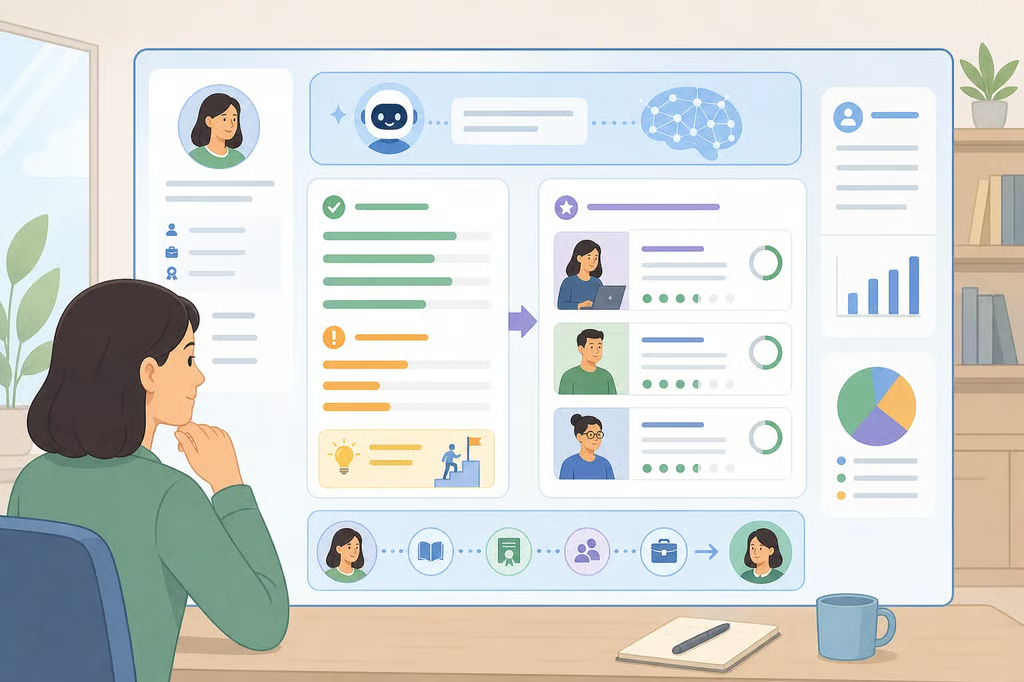
Agentic AI is being positioned to turn internal talent marketplace platforms from tools employees have to remember to check into systems that flag skill gaps and surface career moves before anyone asks, according to Heather Yurko, vice president of agentic HR innovation at Gloat, in an interview with SHRM last month. Companies including Walmart and the U.S. Army already run internal talent markets that let employees browse and apply for roles, projects, and assignments without leaving the organization, Harvard Business Review reported earlier this year.
That appeal isn't just about efficiency. Letting employees pick their own next assignment is one of the main reasons companies build these platforms in the first place, aimed squarely at engagement and retention, according to HBR. It's also why so many employers are now racing to layer AI-powered employee skills matching onto what used to be a simple internal job board. What follows is what these systems actually do, what's changing, and what the evidence does and doesn't support so far.
What is an internal talent marketplace, exactly?
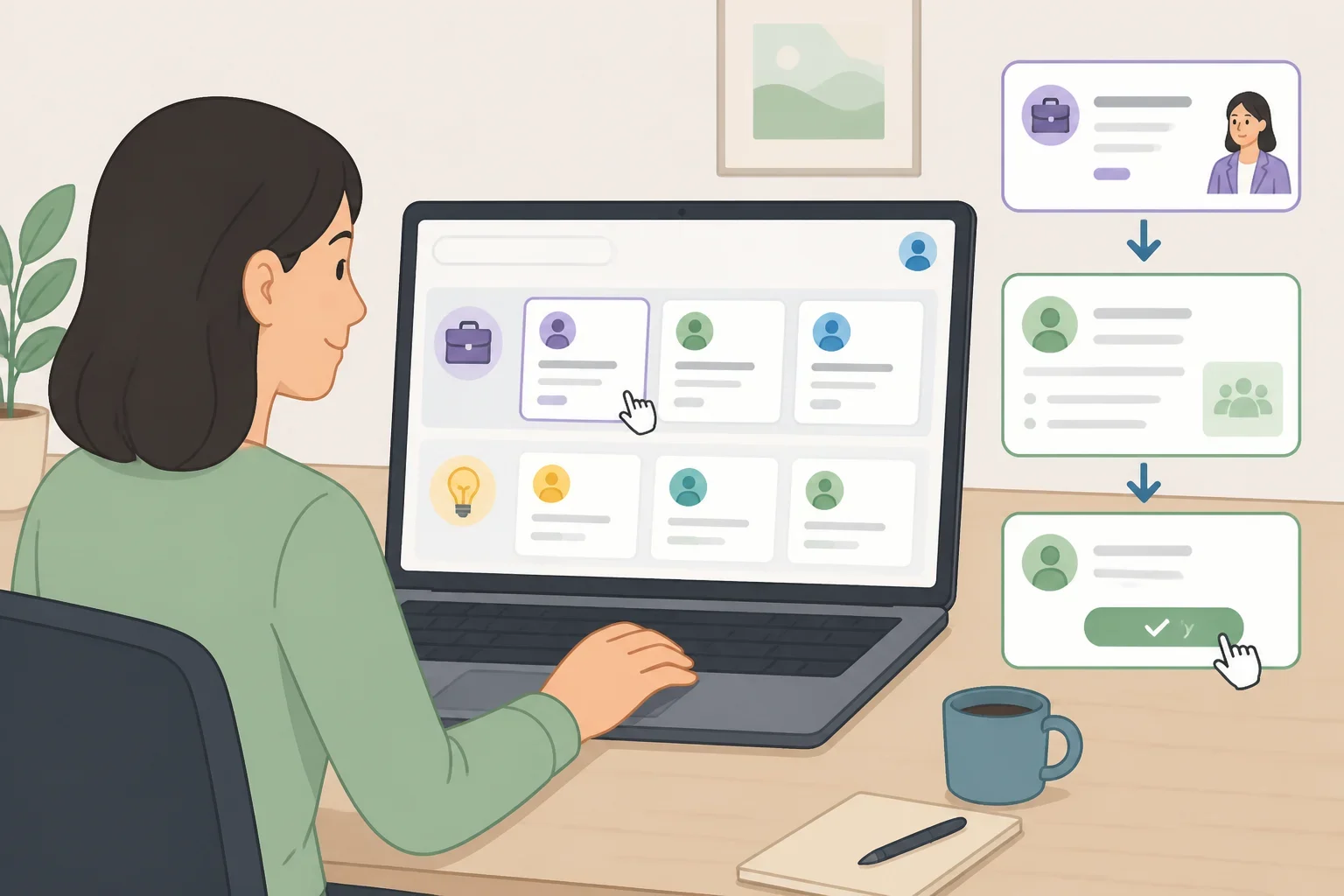
An internal talent marketplace is a platform that lets employees explore and apply for open roles, short-term projects, and stretch assignments inside their own company, rather than relying solely on a formal job posting process, according to HBR. The idea is to make opportunities that used to travel through word of mouth or manager favoritism visible to everyone with the right skills.
Gloat built one of the earliest versions of this model in 2019, using machine learning to match employee profiles against development opportunities and to surface candidates to hiring managers who needed specific skillsets, SHRM reported. Employees filled out a profile, the system recommended projects or roles, and managers received a shortlist of workers who fit an opening. It functioned, in effect, as an internal resume database with a recommendation engine attached.
By early 2023, Gloat said its marketplace had adopted large language models and "workforce graphs" that place employee and opportunity data in context with each other, allowing for more nuanced matching and a more personalized experience, according to SHRM. The platform could also capture development work completed inside the tool and update an employee's profile automatically as new skills were acquired.
That detail matters for anyone whose company uses one of these systems: matching quality depends on the data behind it. Yurko told SHRM that matching is "only as good as the data and signal underneath it," pointing to employee skills, project history, manager input, and performance data as the inputs that determine whether recommendations are useful.
How AI-powered internal talent marketplace matching works now
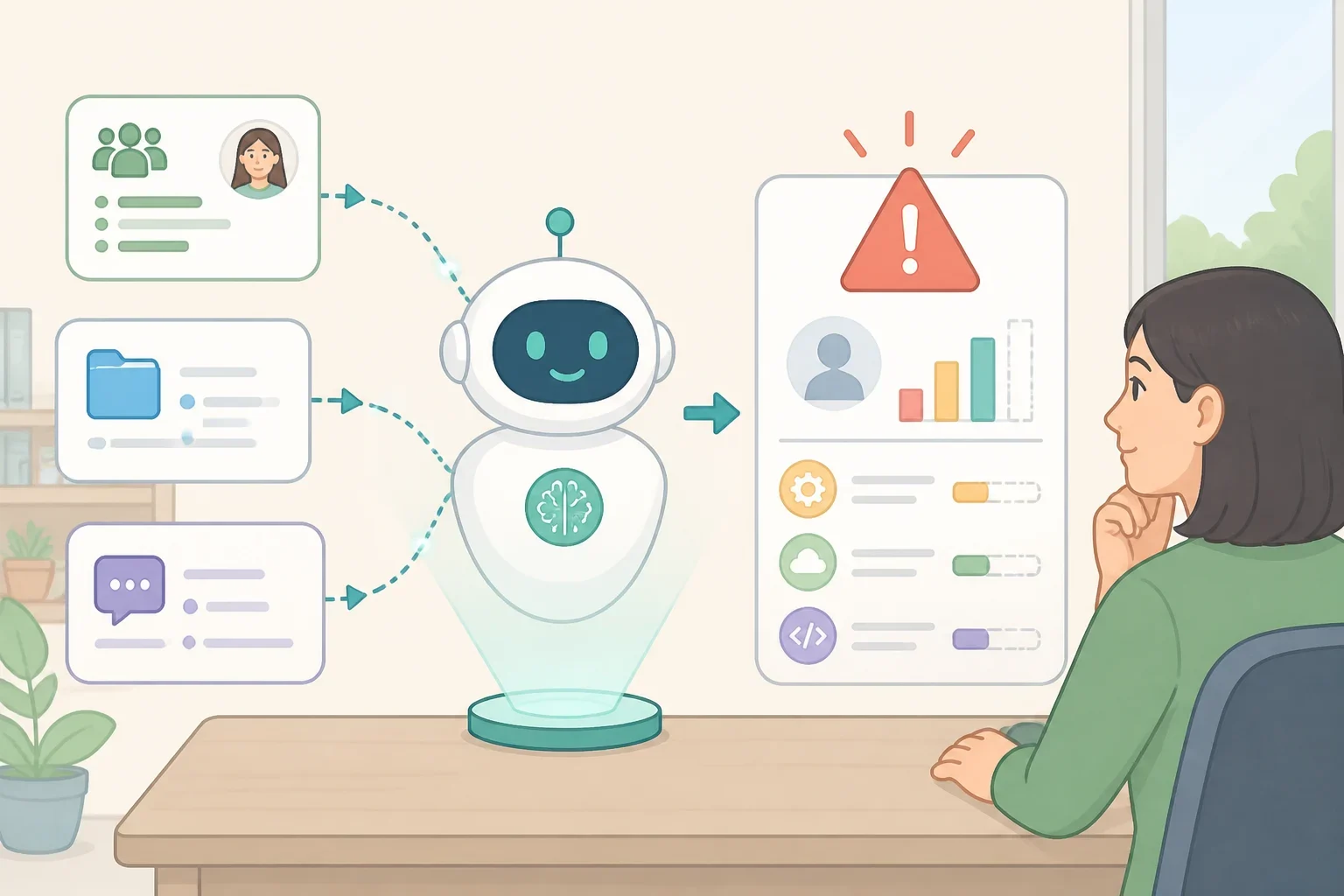
The newer pitch from vendors goes further than better matching. Gloat describes an "agentic" model in which AI continuously scans systems like the applicant tracking system, HRIS, learning management system, SharePoint, and even meeting transcripts to flag a team about to hit a skills gap, an employee whose project history suggests readiness for a stretch role, or a retention risk "months before it shows up in an exit interview," Yurko told SHRM.
In this version, the marketplace stops being a destination employees have to log into and instead shows up inside tools people already use, such as Teams, Slack, or Copilot, according to SHRM. Yurko frames this as a shift from reactive matching to a "proactive digital worker" that reasons across an organization's systems continuously rather than waiting to be asked.
Yurko pointed to three benefits she said rise above the rest: faster redeployment of talent, better retention through visible internal mobility, and workforce intelligence that gives leaders a real-time picture of what skills the organization has and where it's about to run short, per SHRM. She said organizations using agents to proactively surface internal candidates, rather than waiting for job requisitions to post, could redeploy talent in days instead of the months a traditional external hire or post-merger integration typically takes. That figure is Yurko's own projection as a Gloat executive describing her company's approach; it hasn't been independently verified against deployed outcomes.
Yurko also cautioned employers rolling these systems out to build trust through transparency, so that employees and managers understand why an agent recommended a person or opportunity rather than just receiving the recommendation, and to invest in the quality of workforce data before adding features, SHRM reported.
What the fairness research does and doesn't show
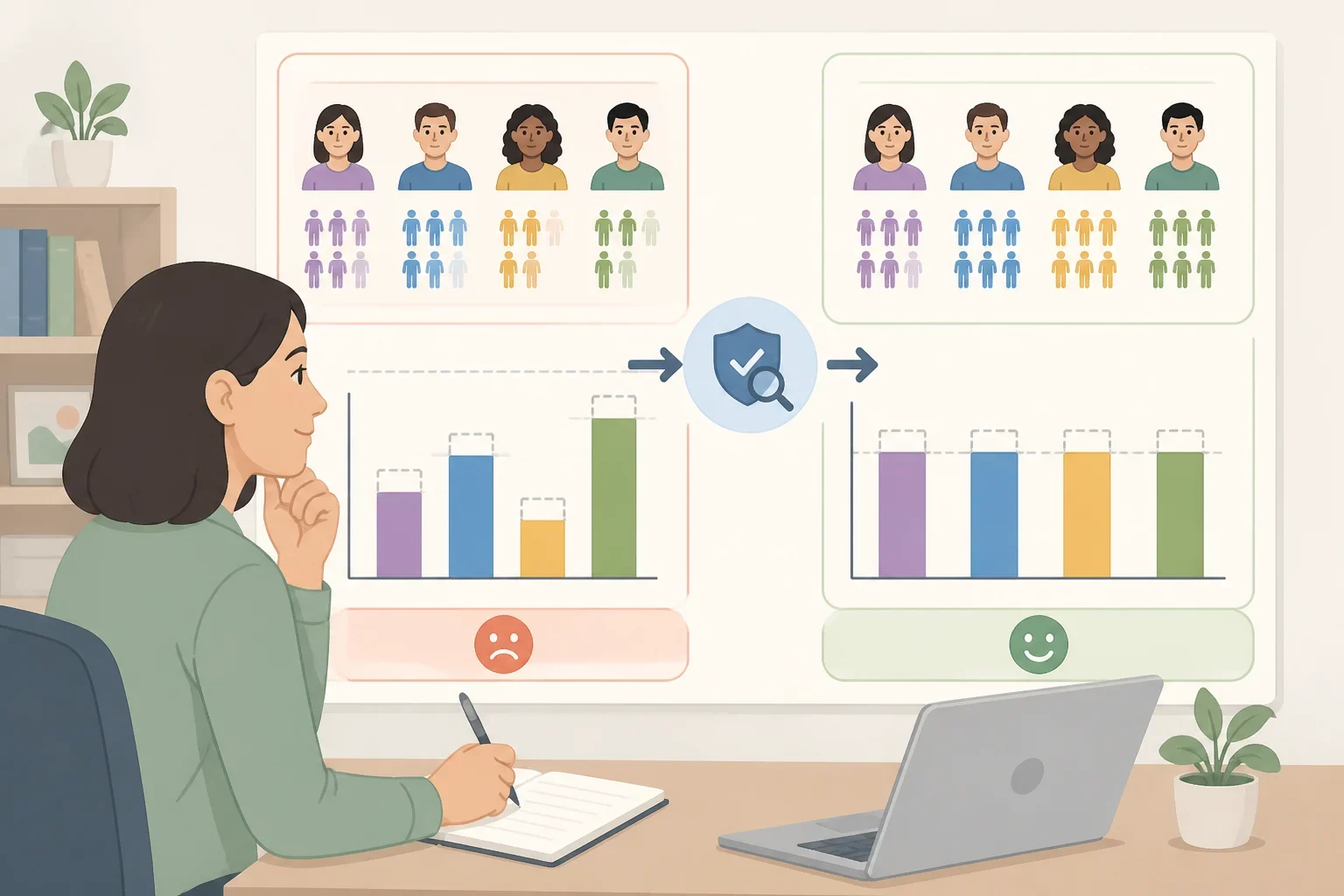
Feeding meeting transcripts and workplace communications into a matching system raises an obvious question: does the AI treat everyone fairly? A separate line of research offers a partial, and limited, answer.
A peer-reviewed framework published in PLOS One earlier this year proposed a system for detecting and reducing bias in algorithmic hiring, reporting sizable reductions in demographic disparities across multiple fairness metrics while maintaining predictive accuracy. That's a meaningful finding for the broader debate about AI in HR decisions. But the researchers tested the framework on synthetic hiring data built for the study, not on outcomes from a deployed internal talent marketplace, and the paper addresses recruitment systems generally rather than internal mobility tools specifically. Whether similar bias reductions would hold in a live internal marketplace, drawing on real employee data across an actual organization, hasn't been established.
Why manager behavior still blocks internal mobility

Even a well-built internal talent marketplace runs into a human problem: managers who don't want to lose good workers. A working paper drawing on personnel records and manager surveys at one large firm found that 75% of managers said they sometimes need to discourage a team member from exploring another role because of immediate team needs, according to the study.
The same research found 55% of managers acknowledged that supporting an employee's development creates a conflict of interest, since more-developed workers are more likely to leave the team, and 68% said they'd support development more readily if replacing departed staff were easier. The researchers call this pattern "talent hoarding," and they found it's detectable in the data, not just self-reported: when managers rotated out of a team, internal applications from that team rose 78%.
Workers who applied for a new role only because their manager had rotated out, a group the paper defines statistically as "marginal applicants" under its model assumptions, had a 49.1% chance of landing a new position, compared with a 27.6% average hiring likelihood across all applicants, the paper found. That's a striking gap, but it comes from one firm's data and a specific statistical definition of who counts as a marginal applicant, not a claim that nearly half of all workers blocked by a manager would otherwise get hired.
The same friction shows up beyond this one firm, too. A separate industry survey cited in the paper found that workers at one-third of U.S. companies felt they needed to keep an internal job application secret from their manager, worried about retaliation if it surfaced too soon, according to the research. Among top publicly listed companies in Germany, 83% named managerial talent hoarding a significant friction in their own organization, the same paper notes.
None of that makes a marketplace platform pointless. It just means the technology solves for visibility, not for the incentive problem underneath it; a manager can see an application come in and still find a reason to slow it down.
What to verify before relying on one
Taken together, the research suggests an internal talent marketplace platform can only do so much if manager incentives and data quality don't change alongside it. A marketplace can surface an opening, but if a manager still has reason to discourage an application, the technology doesn't resolve that on its own.
Workers whose companies are rolling out an AI-powered internal talent marketplace can look at a few concrete things: whether internal applications stay confidential from a current manager until a candidate is under consideration, how the platform sources its skills data and whether employees can review or correct what it infers about them, and whether HR tracks actual internal moves rather than just platform usage. Those are the same transparency and data-quality questions Yurko raised as prerequisites for building trust in an agentic system, and they're a reasonable starting point for anyone deciding how much weight to put on a company's internal marketplace when planning a next career move.
