
- Career Fair Follow-Up Email Examples for 5 Situations
- What happened at the fair decides your message
- When to follow up after a career fair
- Career fair follow-up email examples for 5 situations
- Which example fits your contact
- Email mechanics that apply to every template
- Your next step after the career fair
Career Fair Follow-Up Email Examples for 5 Situations
The 24 to 48 hours after a career fair carry real weight, according to the University of Missouri Career Center, which says that window is just as important, if not more, than the first impression you made on the floor. A timely, well-matched message can put your name back in front of a recruiter while your conversation is still fresh. This guide walks through five career fair follow-up email examples, built around what actually happened with each contact, so you're not guessing which template, channel, or subject line fits.
The examples below work whether you were discussing a full-time role or an internship. Swap in "internship" wherever "role" appears.
What happened at the fair decides your message
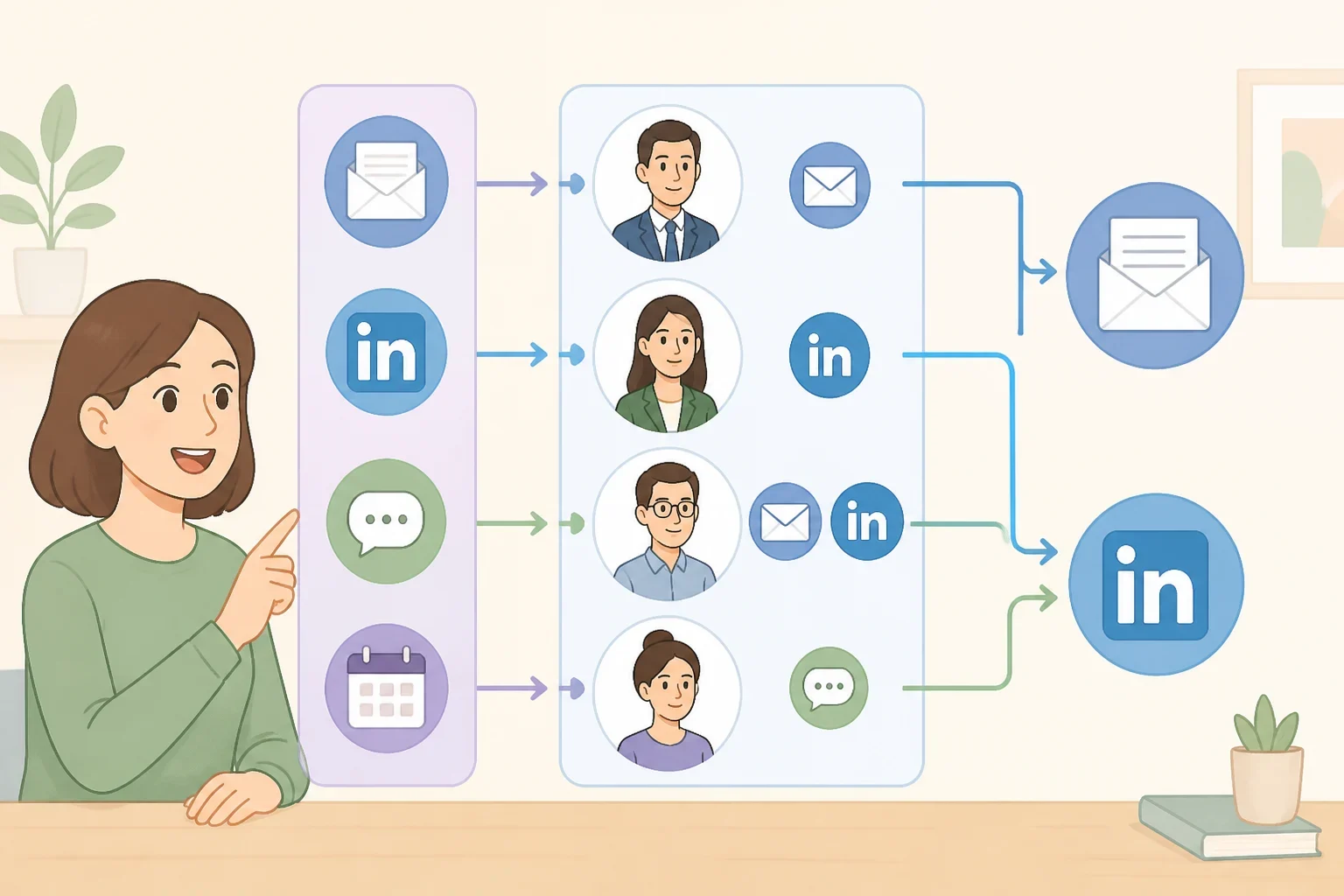
Not every business card deserves the same email. The University of Vermont Career Center advises against sending a note to everyone you met; instead, prioritize employers you're genuinely interested in, and write an individualized message rather than a mass one.
Channel matters too. If a recruiter gave you their direct email and contact information, Missouri's career center recommends sending a short thank-you email (Missouri, earlier this month). If you never got a card or can't recall a name, Harvard's Mignone Center for Career Success treats LinkedIn as a go-to connection tool, and suggests checking the school's career platform, Crimson Careers, for contact details when you're missing them (Harvard FAS Mignone Center, earlier this year).
Amherst College's Loeb Center lists a LinkedIn connection request, sent within 24 to 48 hours with a short personalized note referencing the fair, as part of its follow-up guidance alongside email (Amherst, last year). Treat the two as options tied to what contact information you actually have, not as a required one-two combination.
Before you draft anything, answer three questions. Did a specific role come up? Did the recruiter hand you an email, point you to a website, or mention Handshake? And did you actually speak with them, or just intend to? Those answers point you to the right example below.
When to follow up after a career fair
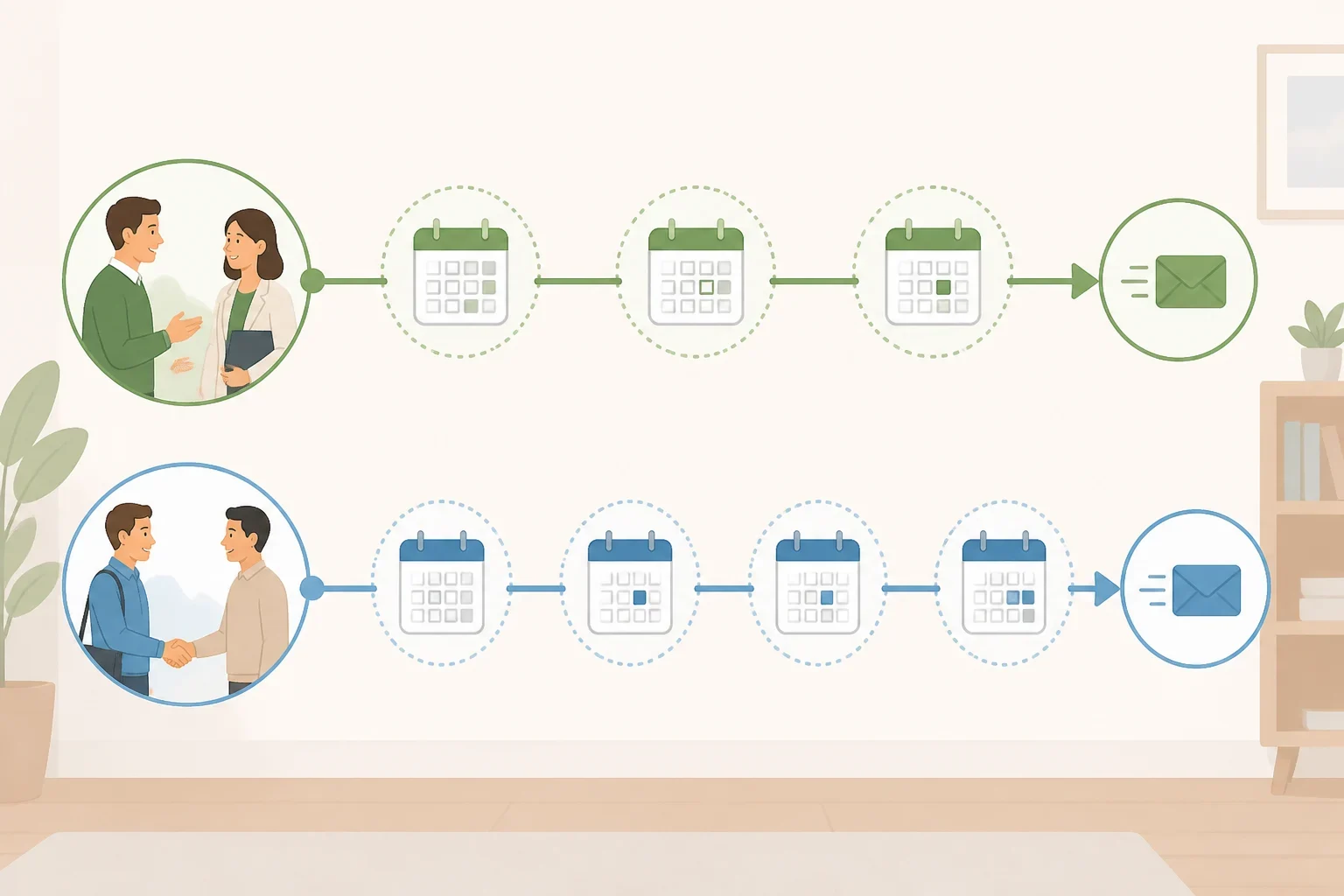
Missouri and Amherst both point to a 24-to-48-hour window for most follow-ups (Missouri, earlier this month; Amherst, last year), while UVM suggests sending a thank-you note within 24 hours when possible (UVM, last year).
The University of Utah's career center ties timing to purpose: same- or next-day if a specific opening came up, up to a week out if the goal is broader networking rather than a particular job (University of Utah Career Success, last year). That distinction is why the examples below don't all run on the same clock.
Career fair follow-up email examples for 5 situations
Each example includes when to use it, the right channel, send-by timing, a career fair follow-up email subject line, and a short template you can adapt. Fill in the bracketed details with specifics from your actual conversation.
1. You had a strong conversation about an open role, but haven't applied yet.
Use this when a recruiter described a specific position and you want to act on it directly. Send by email, same day or next day.
Subject line: [Position Title] Follow Up (Utah, last year)
Dear [Mr./Ms./Mx. Last Name],
Thank you for taking the time to talk with me about the [Position Title] role at [Company] during [Career Fair Name]. I enjoyed hearing about [specific detail from your conversation], and it confirmed how interested I am in the position.
My background in [relevant skill or experience] lines up closely with what you described needing on the team. I'd welcome the chance to talk further.
Thank you again for your time.
Sincerely, [Your Name]
Personalize: the role title, the specific detail you discussed, and the one skill or experience most relevant to what the recruiter said they needed. If you're emailing a recruiter directly and haven't already shared a resume, attach one for convenience.
2. You applied, or you're applying right away.
Use this when a recruiter told you to apply online, and you're acting on it. Send within 24 to 48 hours, confirming action already taken rather than asking permission (Missouri, earlier this month; Amherst, last year).
Subject line: [Position Title] Application: Great Meeting You at [Career Fair Name]
Dear [Mr./Ms./Mx. Last Name],
It was great speaking with you about the [Position Title] opening at [Company] during [Career Fair Name]. Following our conversation about [specific detail discussed], I've submitted my application online.
I wanted to flag it directly so you'd have context for my application given our conversation.
I appreciate your time and look forward to hearing from you.
Sincerely, [Your Name]
Personalize: the role title, the detail from your conversation, and confirmation that the application is already in. Since the application already includes your resume, there's no need to attach a second copy here.
3. There's no open role right now, but you're genuinely interested in the organization.
Use this to thank the employer and stay connected without a specific ask. UVM notes a message like this can simply express thanks and interest when there's no concrete next step to report (UVM, last year). Utah's allowance of up to a week for networking-focused contacts applies here (Utah, last year).
Subject line: Great Connecting at [Career Fair Name]
Dear [Mr./Ms./Mx. Last Name],
Thank you for speaking with me at [Career Fair Name]. I enjoyed learning about [Company] and especially appreciated hearing about [specific detail from the conversation].
While there isn't an open role that fits right now, I wanted to stay connected in case something opens up down the road. I've also sent a connection request on LinkedIn.
Thanks again for your time.
Sincerely, [Your Name]
Personalize: the specific detail you remember, and whether you mention LinkedIn depends on whether you've already connected.
4. You never actually spoke, or missed the chance to connect.
Use this when you want to reach out to an employer after the fair without implying a conversation that didn't happen. Amherst recommends visiting the company's website or Handshake profile and following whatever contact method they list, rather than defaulting to a general inbox (Amherst, last year).
Subject line: Introduction Following [Career Fair Name]
Dear [Hiring Team/Mr./Ms. Last Name],
My name is [Your Name], and I attended [Career Fair Name] with interest in opportunities at [Company]. I wasn't able to connect with a recruiter during the event, but I wanted to reach out directly.
I'm particularly interested in [role, department, or field], and my background includes [relevant skill or experience]. I've applied through your [website/Handshake] posting and have attached my resume as well.
Thank you for your consideration.
Sincerely, [Your Name]
Personalize: the role or department you're targeting, your relevant background, and the posted channel you used to apply. If you haven't found a posting that fits yet, drop the application line and ask instead whether the company is currently hiring for roles in your field.
5. You already sent a message and haven't heard anything back.
Use this only after an earlier email or application, and only once several days to a week have passed without a response. Missouri's career center says a polite check-in is appropriate at that point (Missouri, earlier this month). Send one concise check-in, and if there's still no response after that, shift your attention to other opportunities rather than sending a third message.
Subject line: Following Up: [Position Title]
Dear [Mr./Ms./Mx. Last Name],
I wanted to follow up on my note from [date or "last week"] regarding the [Position Title] role at [Company]. I remain very interested in the opportunity and wanted to check in on the status of my application.
Please let me know if you need any additional information from me.
Thank you for your time.
Sincerely, [Your Name]
Personalize: the rough date of your first message and the role title.
Which example fits your contact
Run through this once you know what actually happened at the fair:
- Discussed a specific open role, haven't applied yet? Use Example 1.
- Were told to apply, or already applied? Use Example 2.
- No open role, but genuinely interested in staying connected? Use Example 3.
- Never actually spoke, or missed the chance? Use Example 4, through the company's posted channel.
- Already sent a message and heard nothing after several days to a week? Use Example 5.
Email mechanics that apply to every template
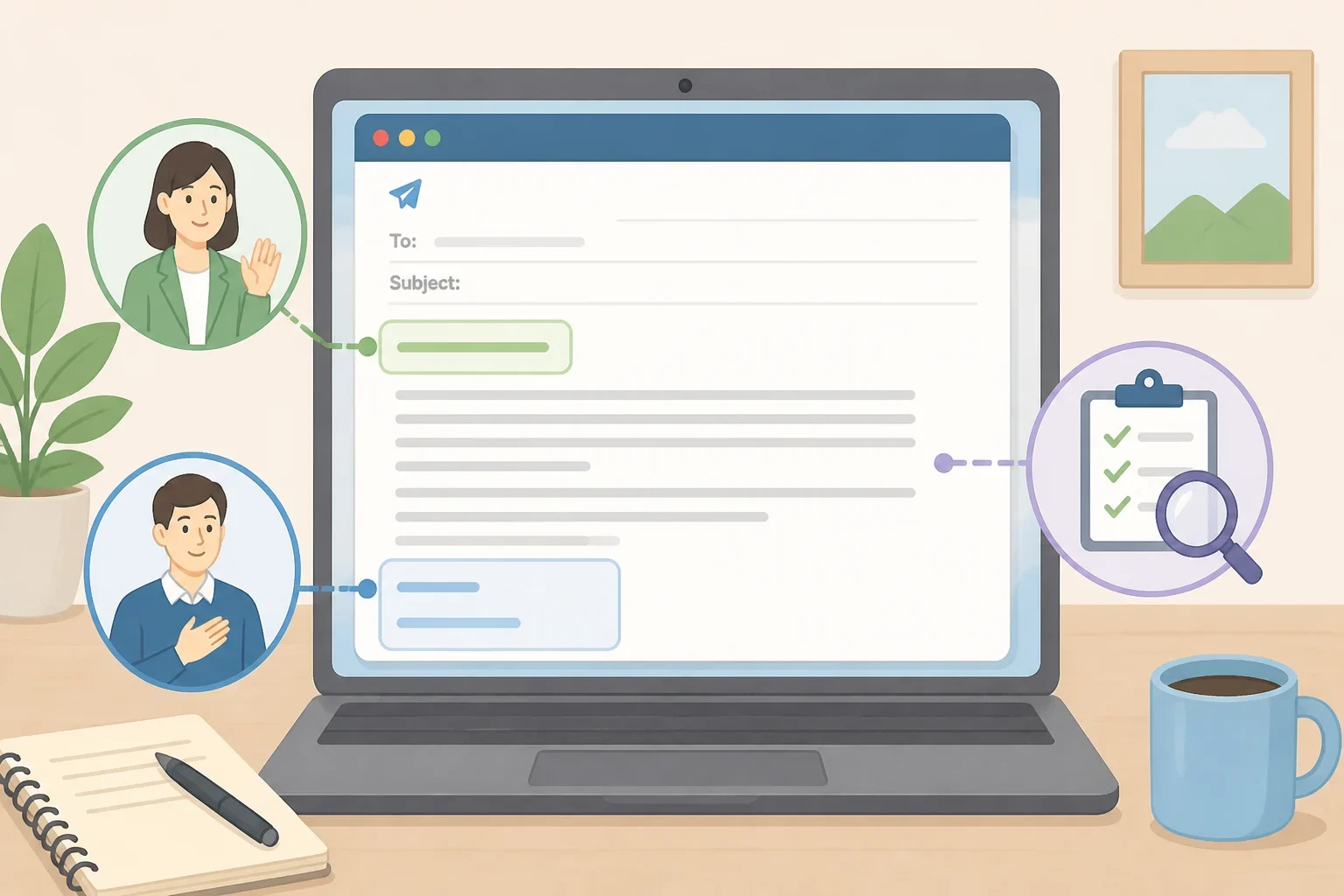
A few formatting habits carry across all five situations, regardless of which one fits your contact.
Address the recruiter formally. UVM recommends openings like "Dear Ms. [Last Name]" over casual greetings, and closing with "Sincerely" instead of an informal sign-off (UVM, last year). Utah adds that when a recruiter's title or preferred pronouns are unknown, using their full name is the recommended approach (Utah, last year).
Proofread before sending. UVM recommends giving the note the same scrutiny you'd give a resume or cover letter, and attaching your resume when the recruiter hasn't already received one, so they can quickly place who you are (UVM, last year).
Keep it short. Amherst's guidance is that professional but warm notes, short and genuine, work best across these situations (Amherst, last year). If you don't have more to add beyond a thank-you, that's fine; padding a note with filler doesn't strengthen it.
Your next step after the career fair
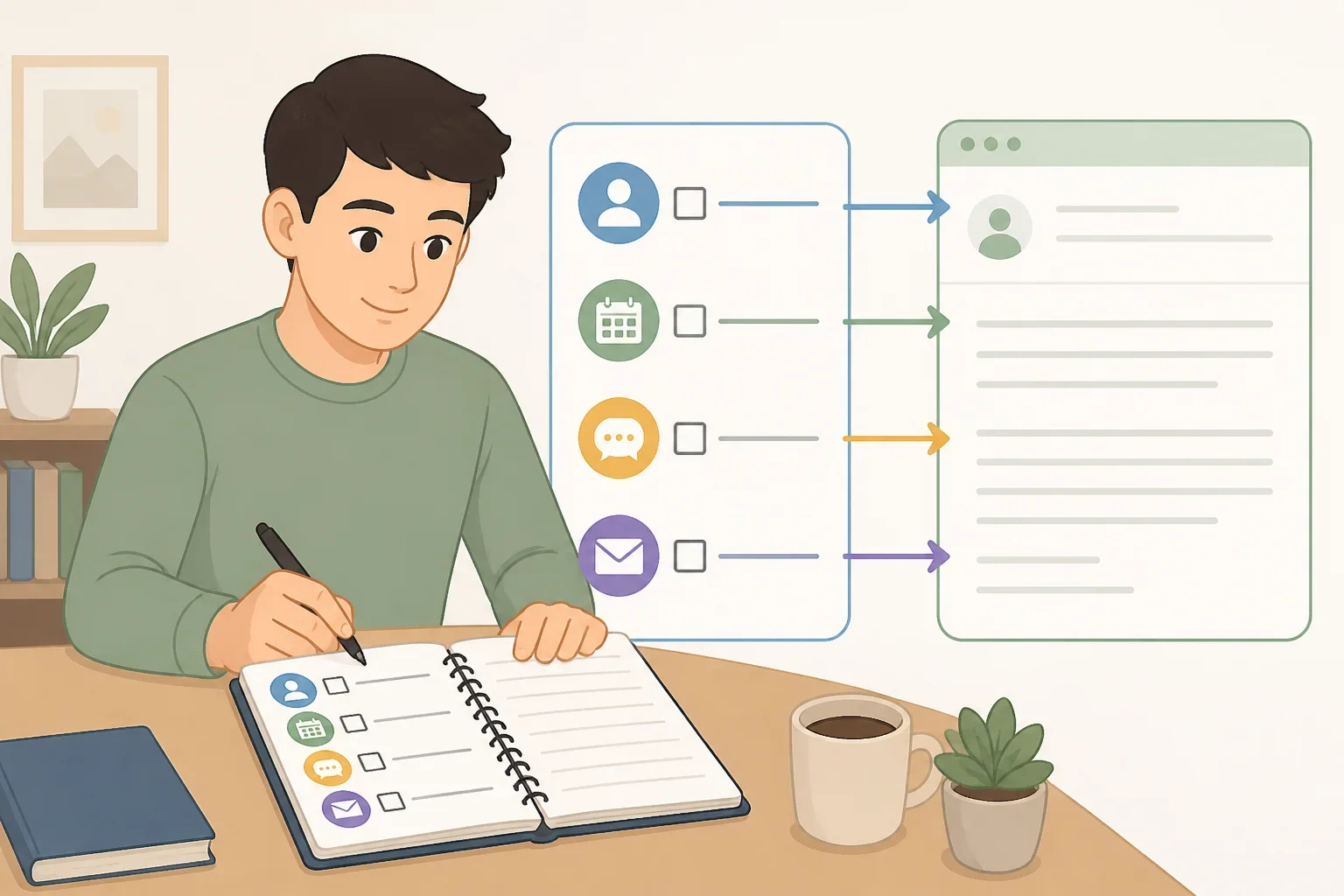
Before you leave a career fair, jot down who you spoke with and what each person asked you to do next, whether that's applying online, checking a website, or simply staying in touch. That list, not a generic rule, is what tells you which example above to use.
Once you're back at your laptop, work through four steps for each contact worth following up with: confirm the channel they actually gave you (email, LinkedIn, or a posted application route), submit any application they mentioned if you haven't already, personalize the message with one real detail from your conversation, and send it within the window that matches the purpose. If the first message goes unanswered, schedule a single check-in for several days to a week later and leave it there.
