

- What Is Reverse Mentoring? Why Junior Staff Coach Leaders
- What is reverse mentoring in the workplace?
- How junior employees coach senior leaders, and what makes it work
- Benefits of a reverse mentoring program, and what the evidence actually shows
- How a reverse mentoring program works for senior leaders and employees
- What a reverse mentoring program should clarify
What Is Reverse Mentoring? Why Junior Staff Coach Leaders
Reverse mentoring flips the traditional pairing: junior employees coach senior leaders on technology, generational perspective, and everyday workplace realities, while leaders share back organizational context and career experience (Frontiers in Communication, 2026). It isn't a new idea, but two studies published in 2026 add new evidence on how reverse mentoring is defined, experienced, and sustained.
A systematic review of 36 academic papers on reverse mentoring, published this summer, frames it as a mechanism worth studying on its own terms for how it moves knowledge upward inside organizations (systematic review, 2026). A separate study describes reverse mentoring as "a critical initiative for activating bottom-up knowledge flow in the digital and intelligent era." It examines why employees choose to share knowledge upward, rather than assuming they always will (Leader Trust and Reverse Mentoring Giving study, 2026).
The findings matter for two groups: early-career employees increasingly asked to mentor upward, and managers or executives weighing whether to launch a formal program. Practitioner coverage has described reverse mentoring as a way for companies to address digital, cultural, and generational gaps; SHRM's Middle East and North Africa network framed the practice, in coverage published last year, as a way for leaders to stay connected to employee experience and evolving ways of working (SHRM MENA, 2025).
This piece breaks down what reverse mentoring actually involves, what the research says makes it work, where the evidence runs into limits, and what a program should clarify before anyone joins one.
What is reverse mentoring in the workplace?

Reverse mentoring is a two-way exchange, not a one-directional tutorial. Junior employees guide senior leaders on technological competencies, contemporary insights, and generational perspectives, while senior leaders contribute organizational and experiential knowledge back (Frontiers in Communication, 2026). Some practitioner sources describe this more plainly as junior employees mentoring senior leaders, rather than the other direction most people expect from the word "mentoring."
SHRM MENA frames reverse mentoring as more than tech support: it's a channel for leaders to stay in touch with workplace culture and how work actually gets done day to day (SHRM MENA, 2025). A junior mentor might walk a senior leader through how employees actually use a company's internal systems or where digital-first customers run into friction, while the senior leader might explain how a proposed change would land with the board or fit into longer-term strategy. That's an illustration of the reciprocity involved, not a finding from either study, but it's roughly what separates reverse mentoring from a one-off software tutorial.
The systematic review published this summer positions reverse mentoring as a mechanism for upward knowledge flow that deserves its own research attention, rather than treating it as a footnote to standard, top-down mentoring (systematic review, 2026). Employees considering a mentor role should expect to talk through generational viewpoints and workplace observations, not just answer tech questions.
How junior employees coach senior leaders, and what makes it work
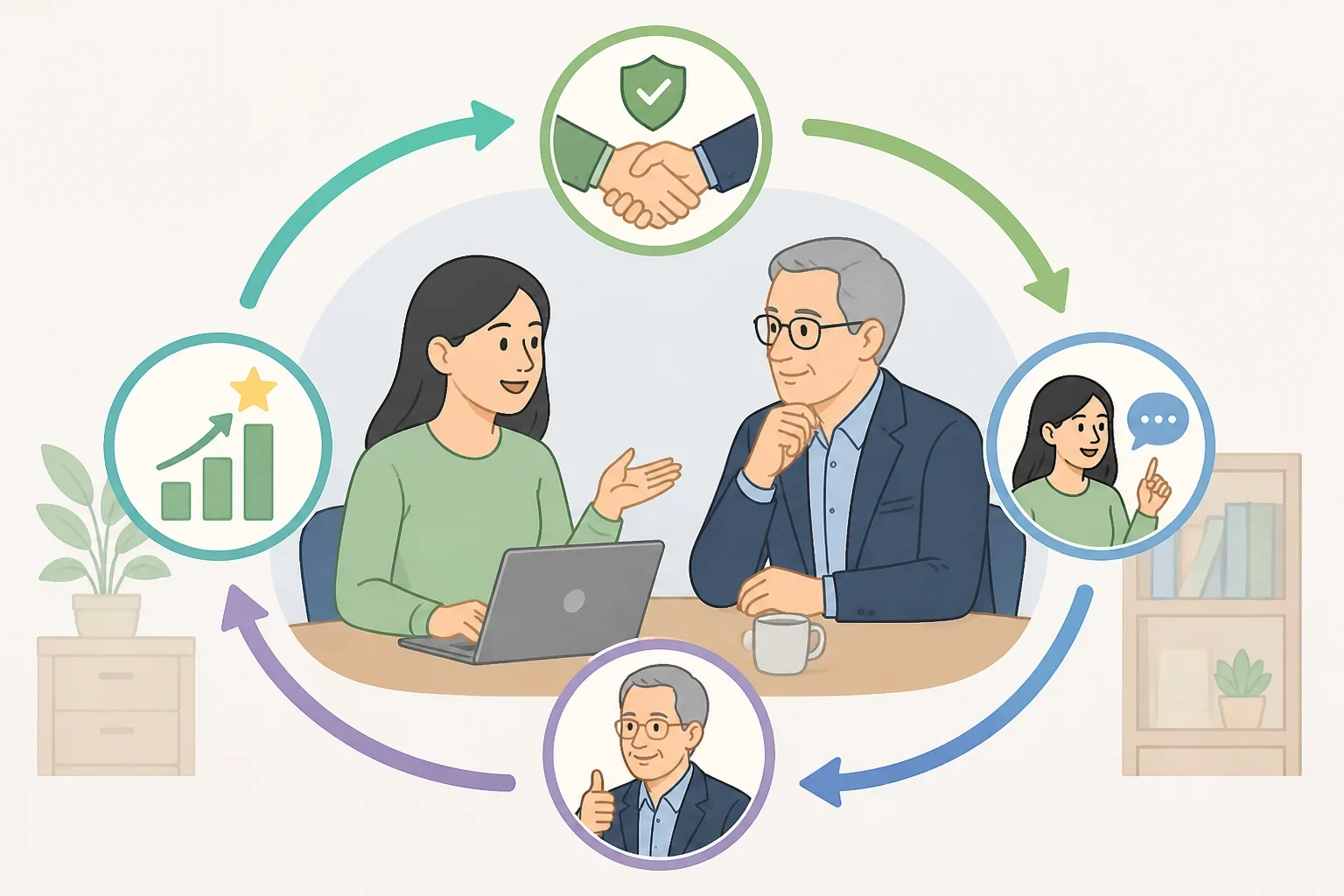
Reverse mentoring runs into a two-sided problem before it can succeed. Junior employees often hold back input out of fear of authority, and leaders can be reluctant to admit what they don't know (leader trust study, 2026). Researchers documented this dynamic through a three-wave survey of 405 employees, followed by a scenario-based experiment involving 292 more people.
The study traced a specific mechanism behind who actually offers input: employees who feel trusted by their leader are more likely to engage in reverse mentoring giving, largely because that trust increases their sense of obligation and lowers their psychological entitlement to withhold knowledge (leader trust study, 2026). The same research found that an employee's attitude toward hierarchy and power distance changes how strongly each path operates, with the obligation path stronger and the entitlement path weaker among employees who hold high power-distance beliefs.
Executive-side evidence points in a similar direction. A qualitative study published earlier this year analyzed in-depth interviews with 16 senior executives from four Turkish companies and 12 international companies. Those interviews took place between late 2023 and mid-2024, well before the findings appeared in print (Frontiers in Communication, 2026). Leaders in those interviews described reverse mentoring as more effective when mutual trust, psychological safety, and open communication were already present, and one executive told researchers that examining an organization's existing culture has to come before launching a program, since that culture directly shapes how well the relationship works.
Taken together, the two studies suggest that willingness to offer reverse mentoring depends heavily on trust that already exists in the relationship, not on a program mandate alone.
Benefits of a reverse mentoring program, and what the evidence actually shows
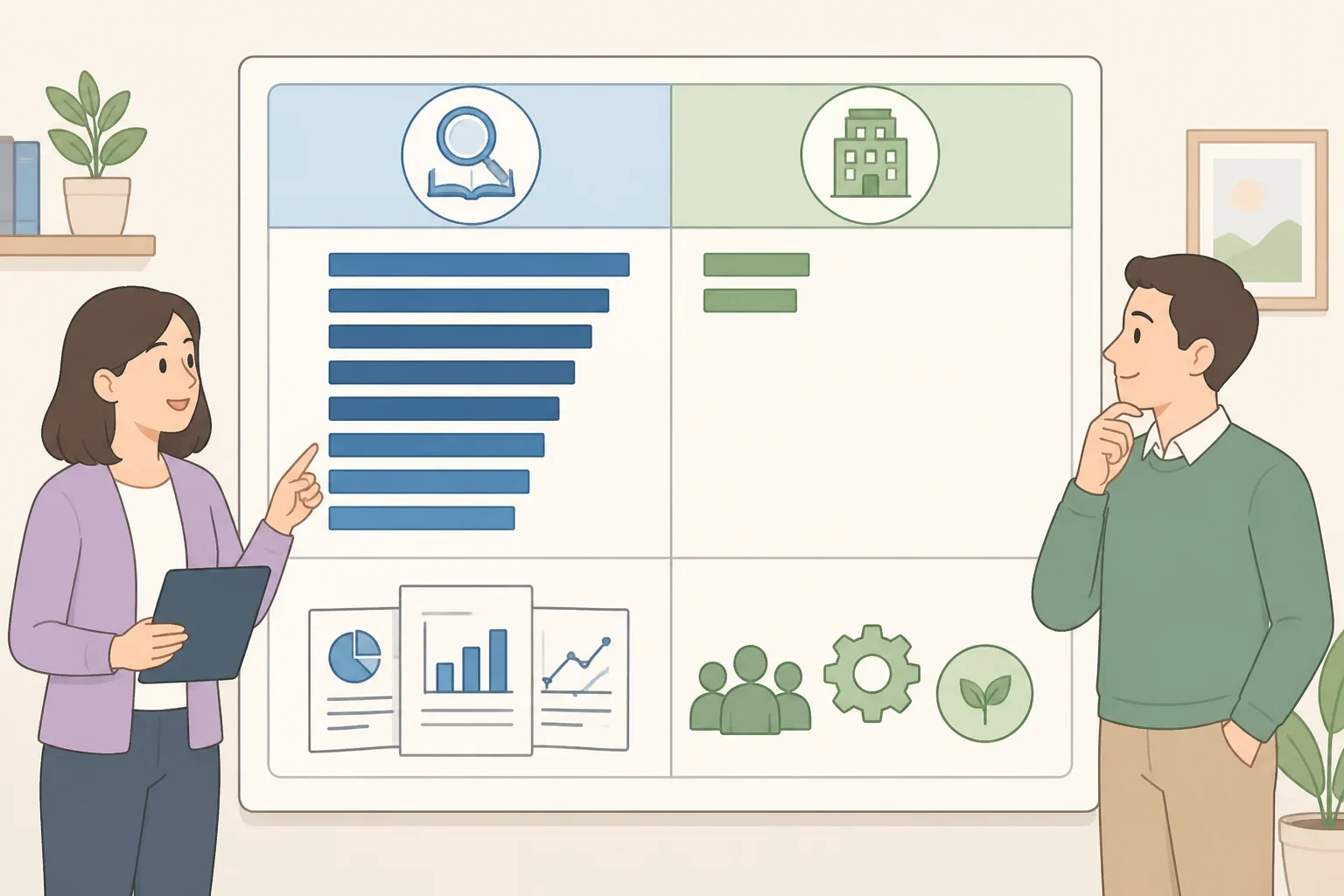
The systematic review found that research on this topic skews heavily toward India and other parts of Asia, and toward the technology and IT sector, with few cross-country or cross-industry comparisons (systematic review, 2026). The same review found that outcomes research concentrates on knowledge transfer, engagement, and retention within individual mentoring pairs, while organizational performance and well-being effects remain largely unstudied.
The executive study offers a narrower view: it records which topics came up most often in interviews with 16 leaders. Technology adaptation was the most frequently cited focus area, at 30%, followed by marketing and sales themes and leadership development, each at 20%, with cultural transformation and engagement or retention each cited by 15% (Frontiers in Communication, 2026). Those percentages describe how often 16 executives raised each theme in interviews. They aren't a measure of how common or effective reverse mentoring is across workplaces generally.
The same executives associated the practice with stronger intergenerational communication and a greater sense of organizational belonging, and connected it to decision-making, strategic thinking, and organizational learning beyond digital skills. The study measured perceptions the executives reported, not objective performance outcomes (Frontiers in Communication, 2026).
One frequently cited practitioner example shows both the appeal and the limits of company-reported results. In a 2022 article for the American Association of Physician Leaders publication, BNY Mellon/Pershing reported a 96% retention rate for its first cohort of millennial mentors (AAPL/Physician Leaders, 2022). That figure comes from the company itself, without an independent comparison group, so it reads as one organization's reported result rather than proof that reverse mentoring drives retention broadly.
The executive interviews and prior literature associate reverse mentoring with leadership development and self-confidence, but they do not establish that every participant gains those benefits (Frontiers in Communication, 2026). The same 2022 practitioner account frames the exchange as delivering transparency and recognition from management (AAPL/Physician Leaders, 2022). Nothing in the research base ties participation to a guaranteed promotion or pay increase, which is a program detail worth confirming with HR before committing time to the role.
How a reverse mentoring program works for senior leaders and employees
Organizations weighing whether to formalize a reverse mentoring program are working with less guidance than they might expect. The systematic review found no established consensus on whether reverse mentoring works better as a formal or informal arrangement, what ideal matching looks like, or who should enable sessions (systematic review, 2026).
Practitioner sources fill some of that gap with concrete recommendations, though these reflect experience rather than controlled research. SHRM MENA recommends matching participants by personality and perspective rather than job title alone, defining scope and confidentiality expectations upfront, and holding regular, structured check-ins (SHRM MENA, 2025). A 2022 article in the American Association of Physician Leaders publication adds that programs work better when executive mentees are consulted before a pairing is finalized, and when matches cross department or regional lines rather than staying within the same team (AAPL/Physician Leaders, 2022).
That same article identifies the most common reason programs stall: executives who stop prioritizing sessions after an early cancellation or two, which drains momentum from the relationship (AAPL/Physician Leaders, 2022). It's a practitioner observation from one organization's experience running these programs, not a finding from controlled research, but it lines up with what the executive-interview study found about leadership commitment shaping perceived effectiveness.
What a reverse mentoring program should clarify

Across the research base, reverse mentoring holds up as a structured channel for upward influence on culture, technology adoption, and leadership thinking, not a simple tutoring arrangement (Frontiers in Communication; systematic review, both 2026). What the research doesn't settle is just as important: program design, geographic applicability, and organization-wide outcomes are all underexplored, and existing studies are concentrated in specific sectors and regions.
Before joining or proposing a reverse mentoring relationship, a few questions are worth raising with HR or leadership directly:
- How will matches be made, and is there room to weigh in on personality fit rather than accepting an assignment based on title alone (AAPL/Physician Leaders, 2022; SHRM MENA, 2025)?
- What confidentiality expectations apply, and how will scope be defined before the first session (SHRM MENA, 2025)?
- Who owns rescheduling if a leader cancels, given that stalled sessions are the most commonly cited reason programs lose steam (AAPL/Physician Leaders, 2022)?
- Do junior mentors have input into running or improving the program, rather than just participating in it (AAPL/Physician Leaders, 2022)?
Any single company's success story, including BNY Mellon/Pershing's retention figure, is a data point about that organization, not evidence that a similar program will produce the same result elsewhere.
