

- How to Evaluate an Employer Training Program Before Applying
- How to assess a company's employee training program before applying
- Questions to ask about employee training before accepting a job
- Testing real-world access in the hiring manager interview
- How to evaluate employee training outcomes and job placement rates
- How to compare workplace training programs
- What to do before accepting an offer built on a training promise
How to Evaluate an Employer Training Program Before Applying
A job posting promising "career development" or "paid training" often does not show whether the program actually works. Knowing how to evaluate an employer training program before applying means asking questions the posting itself won't answer, starting with whether completing it leads to new pay, a new title, or steadier work. Attendance records, completion certificates, and glowing satisfaction scores describe how a program runs, not whether it changes anyone's career, and none of those measures alone confirms that participants found or kept better work, according to Sopact's training evaluation guide.
Access to training can hinge on individual managers as much as on company policy. A 2025 NBER working paper examined three firms (a car manufacturer, a quick-service restaurant chain, and a retailer) and found that training participation was closely associated with managers' day-to-day behavior rather than uniform HR policy, according to NBER research. That's evidence from three employers, not a universal rule, but it suggests the same advertised benefit may play out very differently depending on who a candidate would actually report to.
One caution applies specifically when a training benefit routes through an outside school or certification provider: marketing claims about job placement and hiring partnerships deserve scrutiny. In July 2024, the FTC announced a proposed settlement requiring online training provider Career Step to cancel $27.8 million in student debt and provide $15.7 million in cash redress, after alleging the company inflated its employment outcomes and job-placement claims; the agreement needed approval from a federal judge before taking effect, according to the FTC. The agency began distributing those refunds last year, sending more than 42,794 payments totaling over $15.5 million to people who paid for Career Step programs, according to FTC refund records. This guide follows the actual hiring timeline, from what to check before applying to what to review before accepting an offer, so a candidate can weigh whether an advertised training benefit is real enough to factor into a decision.
How to assess a company's employee training program before applying
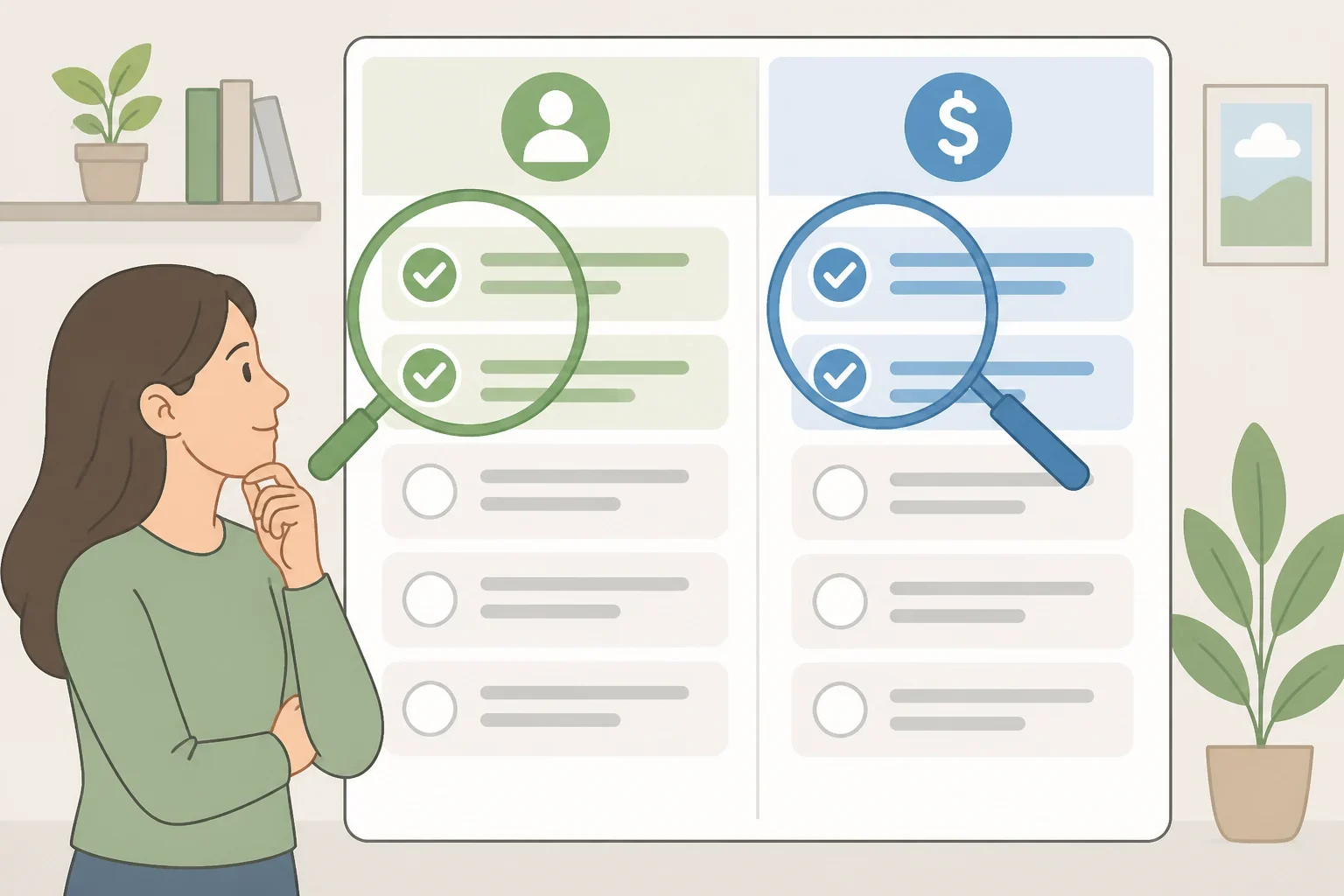
A posting can point to a benefit's existence but rarely discloses eligibility, cost, or how it gets measured, and that gap is a starting checklist rather than proof of bad faith. Sopact's evaluation guidance recommends judging a program by who it's actually designed to reach and what it requires of participants, not by whether it shows up in a bullet list of perks.
Most U.S. states run workforce-training grant programs that help employers fund training for their own workers, and firms that use them tend to see prolonged employment growth afterward relative to similar firms that don't, according to NBER research. That's one reason some companies may offer training at all, but it says nothing about the eligibility rules, cost, or terms attached to any single posting.
Check the posting or careers page for whether eligibility starts immediately or only after a tenure period, whether the benefit applies to the specific role being advertised, and whether any completion credential is named specifically, a licensed certification when licensing applies rather than an internal-only certificate. Vague phrases like "career growth opportunities" or "training provided" belong on a list of questions for the recruiter screen, not a confirmed benefit weighed into a decision yet.
Questions to ask about employee training before accepting a job

Ask the recruiter for written answers to specific policy questions about a training benefit. Vague or deflected answers about cost and time are useful information on their own for comparing offers, even when a recruiter simply doesn't have the details on hand yet. Find out whether training happens on paid work hours or personal time, whether a tenure requirement applies before eligibility kicks in, and whether reimbursement caps, an approved-provider list, or a repayment clause apply if someone leaves within a set period after finishing.
Read any repayment or "clawback" clause carefully, and ask a qualified professional about consequences specific to your situation before signing on the dotted line. For internally run programs, cost isn't only tuition. Verify whether coursework happens outside scheduled hours without pay, whether travel is required, and whether switching teams or roles later forfeits eligibility already earned.
When a benefit routes through an outside school, certification body, or named "hiring partner," extra scrutiny is warranted. The FTC's complaint against Career Step alleged the company featured "Hiring Partner" logos from companies including CVS and Walgreens, even though those arrangements had nothing to do with post-graduation job placement, and that fewer than 10% of students in externship-required programs were ever placed in one, according to the FTC. Ask a recruiter to define any "partner" or "placement" claim in concrete terms, a named role, an actual placement count, before weighing it in a job comparison. This check matters mainly for external-provider arrangements, not for a program operated directly by the employer.
Testing real-world access in the hiring manager interview

Training access may depend heavily on the practices of a candidate's actual manager, since written policy and day-to-day reality can diverge sharply. In the same three-firm study, researchers found that teams led by managers who actively engaged employees and emphasized their development were associated with significantly higher training participation than teams led by managers who didn't, according to NBER research.
The same researchers linked those managerial differences to broader effects on the team, including performance and absenteeism, with the pattern showing up more sharply during periods of organizational change. That suggests a manager's general approach to a team extends well beyond training specifically. Researchers describe middle managers as the bridge between centrally designed HR policy and what employees actually experience day to day, so a benefits summary from HR can describe something very different from what happens under a specific team lead. Worth remembering: this evidence comes from three employers, not a universal survey of workplace training access.
Ask whether training happens on paid time, what happens when workload conflicts with coursework, and whether the hiring manager can point to someone in the broader department, not just the immediate team, who has used the program. A manager who can't name a current participant isn't necessarily a red flag; a new manager, a small team, or a confidential promotion process could explain that answer just as easily. Look for a pattern across several signals, protected time, a defined pathway, examples from the wider department, and consistent answers from HR and the hiring manager, instead of treating any single response as a dealbreaker.
How to evaluate employee training outcomes and job placement rates

For evaluating career value, also ask whether participants actually gained better roles, pay, or stability, and whether the employer's numbers are defined transparently. Ask what population and time period a stated success rate covers, and whether unknown outcomes get counted or quietly dropped from the total.
A "70% success" figure calculated only from people who finished a program and responded to a follow-up survey can look very different once non-completers and non-respondents are counted back in. In one illustrative cohort described by Sopact's evaluation guide, 42% of everyone enrolled were confirmed employed, compared with 70% of completers, with another 20% of the group left in unknown follow-up status. The figures come from different populations; reporting only the completer rate would hide both the non-completion and the missing follow-up data.
The follow-up window matters just as much. Strong training outcomes often show up months after completion, so a figure measured right after a program ends can look very different from one checked, for example, at 90, 180, or 365 days out, according to Sopact. And "promoted after training" isn't the same claim as "promoted because of training." Normal tenure-based advancement could produce the same result, so ask whether the employer compares participants against a similar group of non-participants, if the employer has enough people to make that comparison, rather than relying on a simple before-and-after count.
Outcomes also vary by who is being trained and by which program funds it. Federally funded job training found moderate positive effects on employment and earnings for adult participants but no such effect for dislocated workers within the federally funded system studied, with results also differing across the two states examined, according to a 2024 study in the Journal of Human Resources. That study concerns a public program rather than private employer training, but it still shows how a general claim of "training works here" can mask who it actually works for. In a similar vein, firms that received workforce-training grants saw prolonged employment growth after investing in training, according to NBER research, but that's a signal about the firm's overall growth, not evidence that any specific trainee got promoted or paid more.
How to compare workplace training programs
Once answers start coming in from the posting, the recruiter, and the hiring manager, write them down against the same factors for every offer under consideration.
- Paid access: Does training happen on paid work hours, or does it eat into personal time?
- Eligibility: Does it start immediately, or only after a tenure period?
- Credential: Is it a recognized, licensed credential (when licensing applies) or an internal-only certificate?
- Manager support: Can the hiring manager name a real participant from the wider department?
- Repayment terms: Are there reimbursement caps or a clawback clause tied to leaving early?
- Outcome definition: What specific change does the employer claim, promotion, pay, retention, mobility?
- Denominator: Is the success rate based on everyone enrolled, or only on completers who responded to a survey?
- Follow-up period: Was the outcome measured right after training or checked again weeks or months later?
Treat each item as something to verify, not a box every legitimate program must check. A newer or smaller employer may simply have less outcome data to share yet, and that alone isn't disqualifying.
What to do before accepting an offer built on a training promise
Not every employer will have complete answers to every item on that list, and that's fine as long as the gaps are honest ones. Give a training benefit more weight in an offer comparison when it comes with documented paid access, a real example from the department, and a defined outcome measured over a stated time window. Give it less weight when training time is unpaid, no one in the department can be named as an example, or the employer can't connect the program to any concrete outcome.
Compare those notes side by side with salary, schedule, and manager quality across every offer under consideration, rather than relying on how the benefit reads in the job posting.
