

What is quiet cracking at work? Signs, causes, and fixes
If you're searching for what is quiet cracking at work, the short answer is that it describes something plenty of employees already recognize: showing up, doing the job, and slowly losing motivation and belief in where any of it is headed. Just over half of surveyed U.S. workers, 54%, said they experience some level of quiet cracking, according to a TalentLMS report cited by CNBC last year, based on 1,000 employees polled across industries in March 2025. That figure is self-reported and comes from the firm that coined the term, so it shows how many people recognized the feeling rather than proving a validated psychological condition.
The label itself is new, and researchers haven't settled on one definition yet. A study in the International Journal of Organizational Analysis, which examined 895 organizations across 45 countries, describes quiet cracking as a "subtle and involuntary form of psychological erosion" in which employees sustain outward performance while losing motivation, emotional resilience, and future orientation. That definition comes from the first of two planned research phases built on organizational-level data. A second phase, still pending validation, is designed to test whether the same pattern holds up when measured in individual employees rather than whole companies.
The quiet cracking workplace trend has spread fast since researchers coined it, but the academic definition is more precise than most of the media shorthand that followed. That distinction matters for anyone trying to work out whether the term actually fits their job, or their team's.
What the term is trying to capture
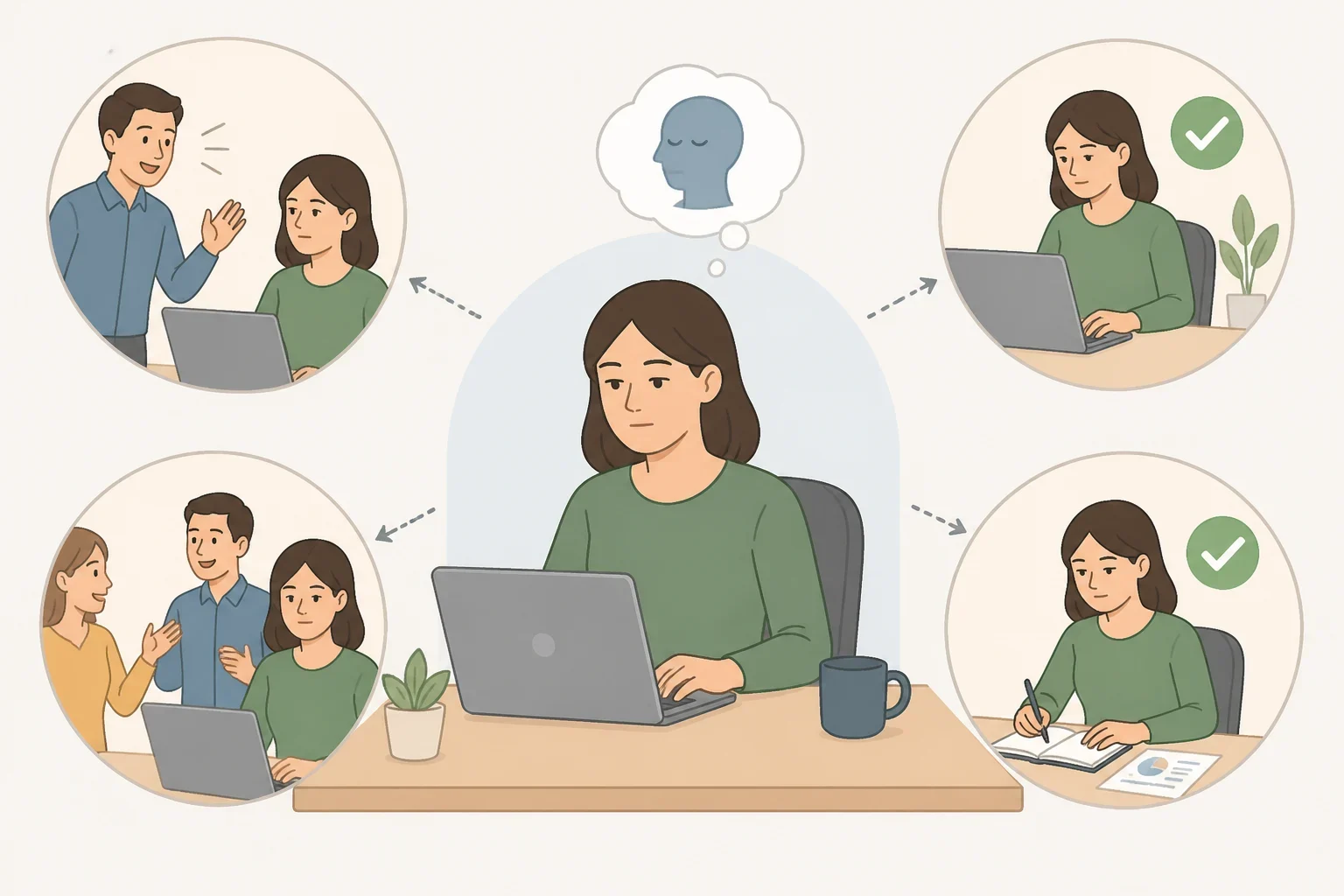
Great Place to Work content creator Alex Thomson describes the pattern as reduced enthusiasm, weaker collaboration, and employees emotionally withdrawing while still meeting the minimum expectations of their role, according to The Irish Times earlier this year.
Other coverage tells a slightly different story. Kiplinger reported last year that quiet cracking involves workers reverting to the bare minimum, which reads closer to declining output than the sustained performance the academic definition describes. Sources don't fully agree on whether output itself slips, and that's a real tension worth naming rather than smoothing over.
TalentLMS draws its own distinction: unlike burnout, the pattern doesn't always show up as exhaustion, and unlike quiet quitting, it doesn't register in performance metrics right away, according to CNBC's coverage of the report last year. That gap is part of why the experience is hard to spot, in a coworker or in yourself.
Quiet cracking vs. quiet quitting

A UConn management professor writing in UConn Today last year offers one commonly cited way to separate the two terms. It's the professor's own framework, not an established research consensus, and it breaks down like this:
Quiet quitting Quiet cracking Intent Deliberate boundary-setting Involuntary erosion Performance Consciously limits effort Wants to perform but struggles to Root cause Often work-life balance priorities Falls somewhere between burnout and quiet quitting
Other sources frame the relationship differently. EY Americas chief well-being officer Frank Giampietro calls the two "two sides of the same coin." Both can be responses to burnout, he told CNBC last year, and quiet cracking can develop into quiet quitting over time. The Irish Times draws a related but separate distinction: quiet quitting tended to mean people checking out while doing the bare minimum, while those experiencing quiet cracking are more likely to stick around and voice their concerns.
A further difference shows up in timing rather than psychology. Kiplinger described quiet quitting last year as typically a "finite" phase that resolved once a dissatisfied worker found a position elsewhere. Commentators pointed to slower wage growth and fewer job postings keeping workers in place regardless of which label fit, since switching jobs had largely stopped paying off. CNBC reported a similar shift last year, citing Federal Reserve data showing wages for workers who stayed in their jobs began outpacing wages for job switchers starting in February 2025.
Employee disengagement and workplace burnout: what's linked to it
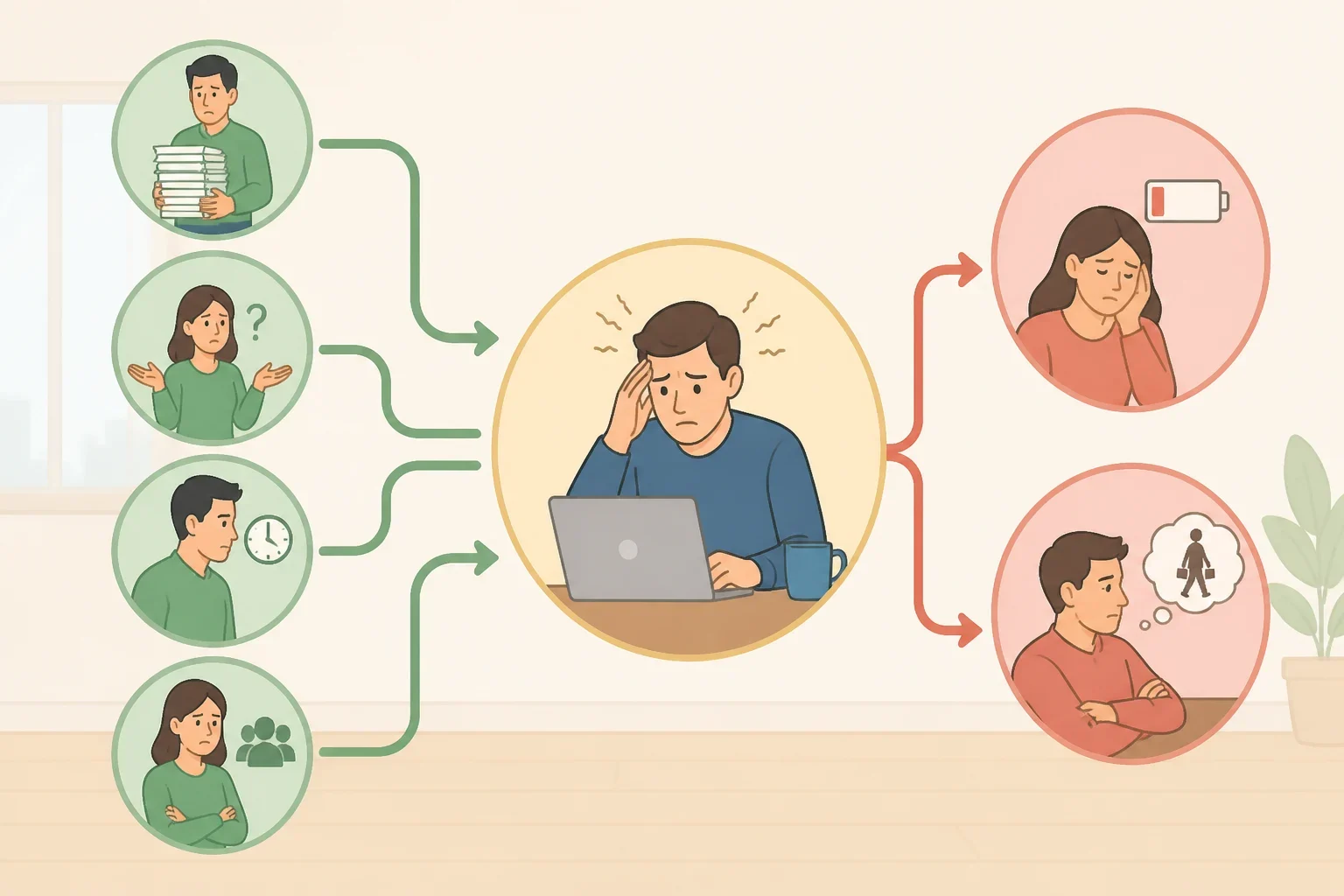
Experts cited in the reporting point to a handful of conditions that keep showing up across sources, specific enough that readers can check them against their own job instead of treating quiet cracking as one vague mood.
- Workload versus resources. When job demands outpace the resources available to a worker, that "job strain" is associated with lower wellbeing, engagement, and motivation, according to Eurofound's Barbara Gerstenberger, cited in The Irish Times earlier this year.
- Manager and team support. Better management quality, stronger social support, and the absence of bullying correlate with higher wellbeing, while more positive perceptions of a line manager correlate with lower intention to quit, according to CIPD's Alison Hodgson in the same report.
- Career clarity. Employees who don't see a promising path forward, or who feel undervalued, are described by the UConn professor as more vulnerable to this kind of gradual disengagement.
- Limited mobility. Slower wage growth and a cooler job market reduced the payoff of switching employers last year, which Kiplinger and CNBC both tied to workers staying put while dissatisfied.
The Emerald study takes a different angle, looking at organizations rather than individuals. Company size, organizational age, and industry pressure statistically explained 95% of the variance in organizational-level quiet cracking risk profiles across the 895 organizations examined, according to the study published earlier this year. That figure describes structural risk at the company level, not what causes disengagement in any one person's job, and the authors say it still needs employee-level validation before it can support claims about individual causes.
Signs of quiet cracking and what to do about it

The UConn professor lists several recurring indicators, drawn from the same UConn Today piece published last year:
- Persistent workplace unhappiness
- Feeling undervalued by a boss or organization
- Loss of confidence in one's future with the company
- Emotional detachment despite meeting basic job requirements
- A sense of being stuck without a promising career path
The same source recommends specific responses rather than general dissatisfaction. Requesting one-on-one conversations with managers to raise concerns about workload and growth opportunities directly is one suggested step. Pursuing training or upskilling, whether employer-provided or independent, is tied specifically to feeling underprepared or insecure in a role. Addressing unclear expectations with a manager is another recommendation, since the professor links the term to unclear paths forward for many employees experiencing it.
When the disconnect seems to reflect a mismatch between personal values and the organization, rather than a fixable workload or communication problem, the professor suggests a change may be appropriate.
Quiet cracking is a career and workplace pattern, not a clinical diagnosis. Readers concerned about their own health or wellbeing should consult a qualified professional or use their employer's available support resources alongside, not instead of, these career-focused steps.
What to do next
The UConn professor's suggested starting point is a direct conversation: name which condition is driving the disengagement, whether that's workload, a stalled growth path, unclear expectations, or a values mismatch, and bring a specific example when raising it with a manager. That's one suggested next step from a single source, not a tested intervention backed by broader research. It still gives an employee a concrete way to test whether a role is fixable before deciding whether it's time to look elsewhere.
