

What is job crafting? What employees can change at work
What is job crafting? It describes self-initiated changes employees make to their own tasks, work relationships, or sense of purpose, changes that stay inside a job's existing structure instead of waiting on a manager to redesign the role (Quality Improvement Center for Workforce Development, 2023 evidence summary).
Psychologists Amy Wrzesniewski and Jane Dutton coined the term in 2001 to describe exactly that kind of adjustment: something an employee starts on their own, without negotiating new terms with an employer. That distinction matters because it separates job crafting from an "i-deal," the individualized arrangement a worker explicitly negotiates with a manager (Wikipedia, last year).
Self-initiated doesn't mean solo, though. A change that helps the person making it can create friction for a colleague or a manager who never signed off on it, and unrestrained crafting can end up working against the organization's own goals (Wikipedia, last year). The practical question for most employees isn't whether to try job crafting. It's sorting what's safe to test alone from what deserves a quick conversation first.
What job crafting includes
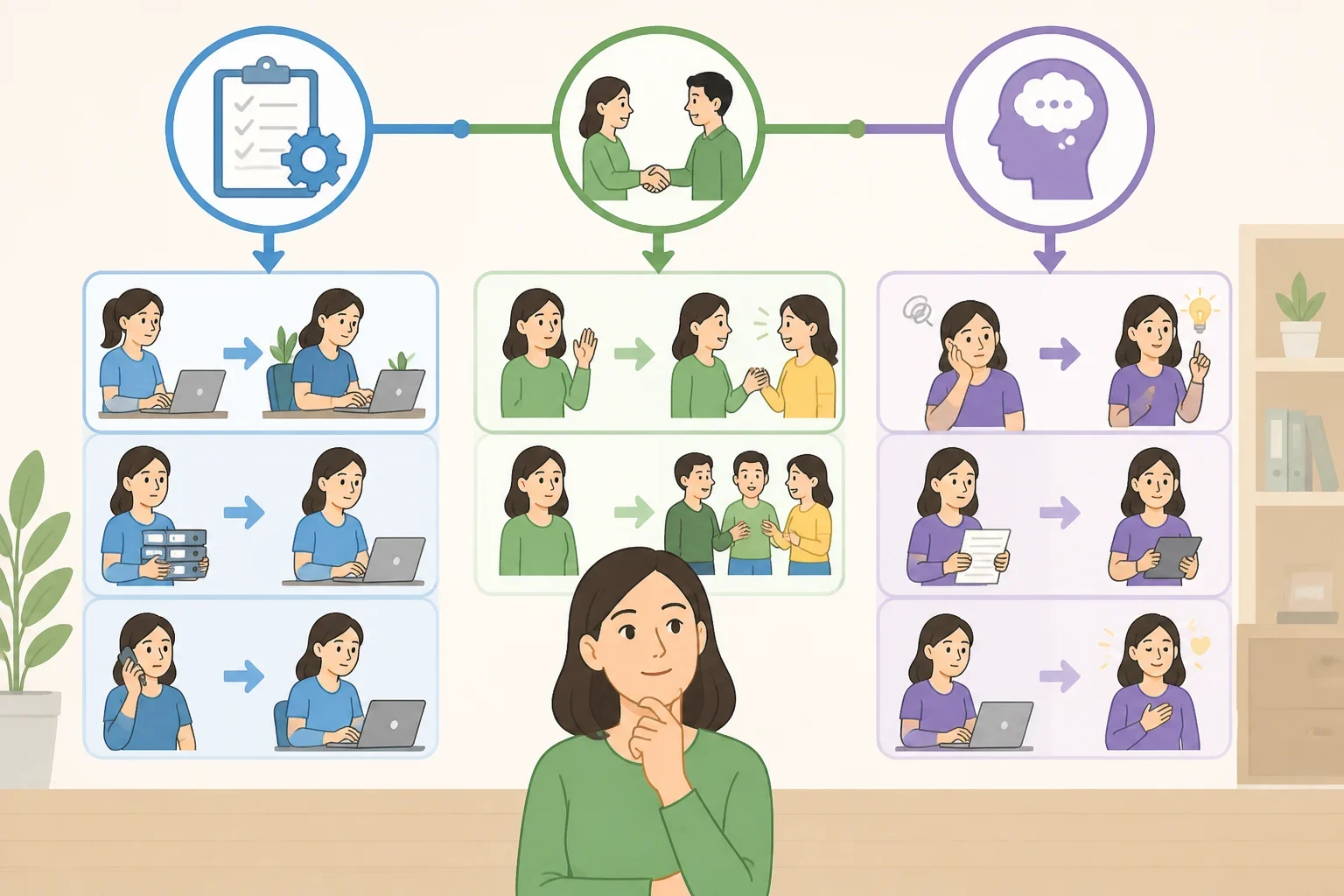
Employee job crafting research organizes these changes into two overlapping vocabularies, and knowing both makes it easier to name what to change and how.
The original framework from Wrzesniewski and Dutton sorts changes into three targets. Task crafting means adjusting the type, scope, or number of tasks a person handles. Relational crafting means changing who someone interacts with at work and how. Cognitive crafting means shifting how someone interprets the purpose of the work itself (Wikipedia, last year).
A second, more behavior-specific vocabulary comes from the Job Demands-Resources (JD-R) model: increasing structural resources such as autonomy or skill-building, increasing social resources such as feedback or coaching, seeking challenges through stretch tasks, and decreasing hindering demands by removing avoidable friction. Some researchers group the first two under a broader "seeking resources" label, so terminology shifts from study to study (Frontiers in Psychology, last year; Quality Improvement Center for Workforce Development, in a 2023 evidence summary).
For a project coordinator, the job crafting examples get concrete quickly.

Enrolling in a project-management course is a structural resource. Asking a manager for regular feedback is a social resource. Volunteering to own a new reporting process is a challenge. Consolidating two duplicate status reports into one is a reduced hindering demand.
What the evidence shows: benefits and risks

The four JD-R behaviors don't pay off equally, and the difference is worth knowing before picking one to test.
Increasing structural resources, like the coordinator's course, is moderately linked to better job performance and satisfaction and strongly linked to more organizational citizenship behavior, the extra, unassigned helpfulness that shows up in performance reviews, along with a modest dip in turnover intentions. Increasing social resources, like asking for feedback, shows a smaller version of that pattern: a modest link to performance, a moderate one to organizational citizenship behavior and satisfaction, and no meaningful relationship to whether someone plans to quit. Seeking challenges tracks with moderately higher performance, satisfaction, and organizational citizenship behavior, plus a modest drop in turnover intentions (Quality Improvement Center for Workforce Development, in a 2023 evidence summary).
Cutting hindering demands looks different. It isn't significantly related to performance or organizational citizenship behavior, and it's tied to modestly lower satisfaction and moderately higher turnover intentions. Zoomed out, adding to a job, sometimes grouped as promotion-focused crafting, is modestly linked to less burnout, while trimming a job down, or prevention-focused crafting, is moderately linked to more burnout (Quality Improvement Center for Workforce Development, in a 2023 evidence summary).
That's worth sitting with for anyone weighing job crafting for career growth. Consolidating the coordinator's two status reports might feel like the lowest-effort fix, but the demand-reduction research suggests it buys less satisfaction and engagement than adding a resource or a challenge would. And none of these figures track through to a raise, a promotion, or an internal move. The outcomes researchers measure are performance ratings, satisfaction, organizational citizenship behavior, and turnover intent, not compensation or title changes.
What shapes how easy job crafting strategies are to pull off
None of this happens in a vacuum. Personality and workplace conditions both shape who crafts a job by adding to it and who crafts it by cutting from it.
Employees who score higher in agreeableness, extraversion, openness, and proactive personality traits are more likely to use promotion-focused crafting, the adding kind. Employees lower in those traits lean more toward prevention-focused crafting, trimming demands down instead (Quality Improvement Center for Workforce Development, in a 2023 evidence summary).
Workplace conditions matter just as much. Promotion-focused crafting is more common where coworker support and positive leadership styles, like a strong working relationship with a direct manager or a transformational leadership approach, are already present. Prevention-focused crafting isn't tied to those social factors in the same way. Employees with more autonomy day to day are also more likely to already be adding resources or challenges to their job (Quality Improvement Center for Workforce Development, in a 2023 evidence summary).
For the coordinator, that means the ease of her experiment depends on her workplace as much as her plan. If her manager already gives her room to make decisions and coworkers back her up, volunteering for the new reporting process is a low-friction move. If autonomy and support are thinner on the ground, the same idea probably needs more groundwork, and possibly a manager's buy-in, before she starts.
How to craft your job without changing its core responsibilities
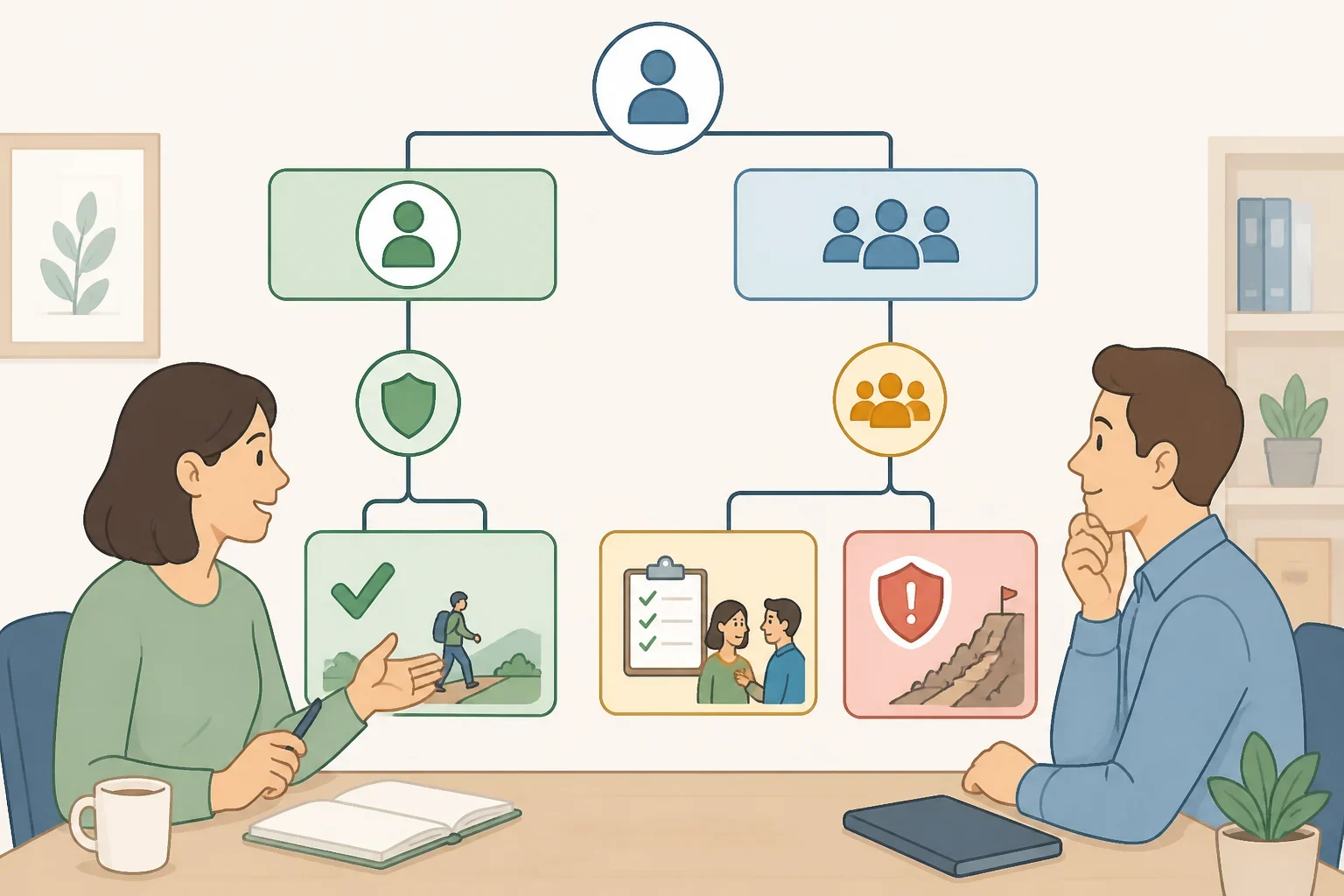
None of the cited research tells an individual employee exactly which changes are safe to try without a conversation. As a general rule of thumb, subject to employer policy, role requirements, and compliance obligations, a change that stays inside a person's own tasks, learning, or effort, without shifting a deadline, coverage, or a colleague's workload, carries less risk than one that reaches into shared responsibilities. Asking a manager for feedback tends to fall into that lower-risk category too, since it requests input rather than reassigning work.
Changes touching shared deadlines, customer-facing coverage, approval authority, compliance steps, or a colleague's recurring responsibilities sit in different territory. Raising those in conversation first lines up with a pattern in the research: a change that helps the person making it can still work against the team or the organization if nobody else knows it's happening (Wikipedia, last year). A manager agreeing to a change doesn't automatically make it a negotiated i-deal, but approval does move an action beyond purely autonomous crafting, a distinction worth keeping straight before assuming one label covers every conversation.
Before raising a shared-responsibility change with a manager, it helps to walk in with the framing already worked out: what outcome the change should improve, what constraints can't move, and how both of you will know it helped the team, not just personal workload. That framing turns a vague request into a proposal a manager can actually evaluate.
What to do next
Taken together, the research supports job crafting as a documented way employees can shape engagement, satisfaction, and how manageable their job feels, inside a role that already exists. It doesn't support treating it as a guaranteed route to promotion, or as a fix for chronic understaffing, unsafe conditions, or workload problems that sit with management.
The coordinator's next move is the same one available to most employees: pick one target from the task, relational, cognitive, or JD-R vocabulary, test it for a few weeks, and keep a simple record of what actually changed, not a vague sense of doing more. If the pattern that surfaces looks like chronic overload or unsafe conditions rather than a fixable task, that's a conversation for a manager or HR, not something an individual experiment is built to solve.
