

- Job Shadowing vs Informational Interview: Key Differences
- What is the difference between job shadowing and an informational interview?
- What is an informational interview and when does it make sense?
- What is a job shadow and how does it work?
- What each format can and cannot tell you
- How to choose between job shadowing and an informational interview for career exploration
- What to do next
Job Shadowing vs Informational Interview: Key Differences
For anyone comparing job shadowing and informational interviews, the choice usually comes down to one question: talk to someone, or watch them work? An informational interview is a short, scheduled conversation often guided by prepared questions. Job shadowing means spending part or all of a workday following a professional to observe the job firsthand, depending on the program and host, according to Virginia Tech Career and Professional Development and Oregon State University's Career Development Center.
Virginia Tech is specific that an informational interview "is not the same as a job interview" (Virginia Tech). Job shadows carry a looser boundary. Oregon State notes that observing someone's actual workday can help students build professional skills and strengthen future internship or job applications, which means a shadow can sit closer to a hiring pipeline than a pure information-gathering conversation does (Oregon State University). What separates the two formats most reliably is time commitment and the kind of question each one is built to answer.
What is the difference between job shadowing and an informational interview?
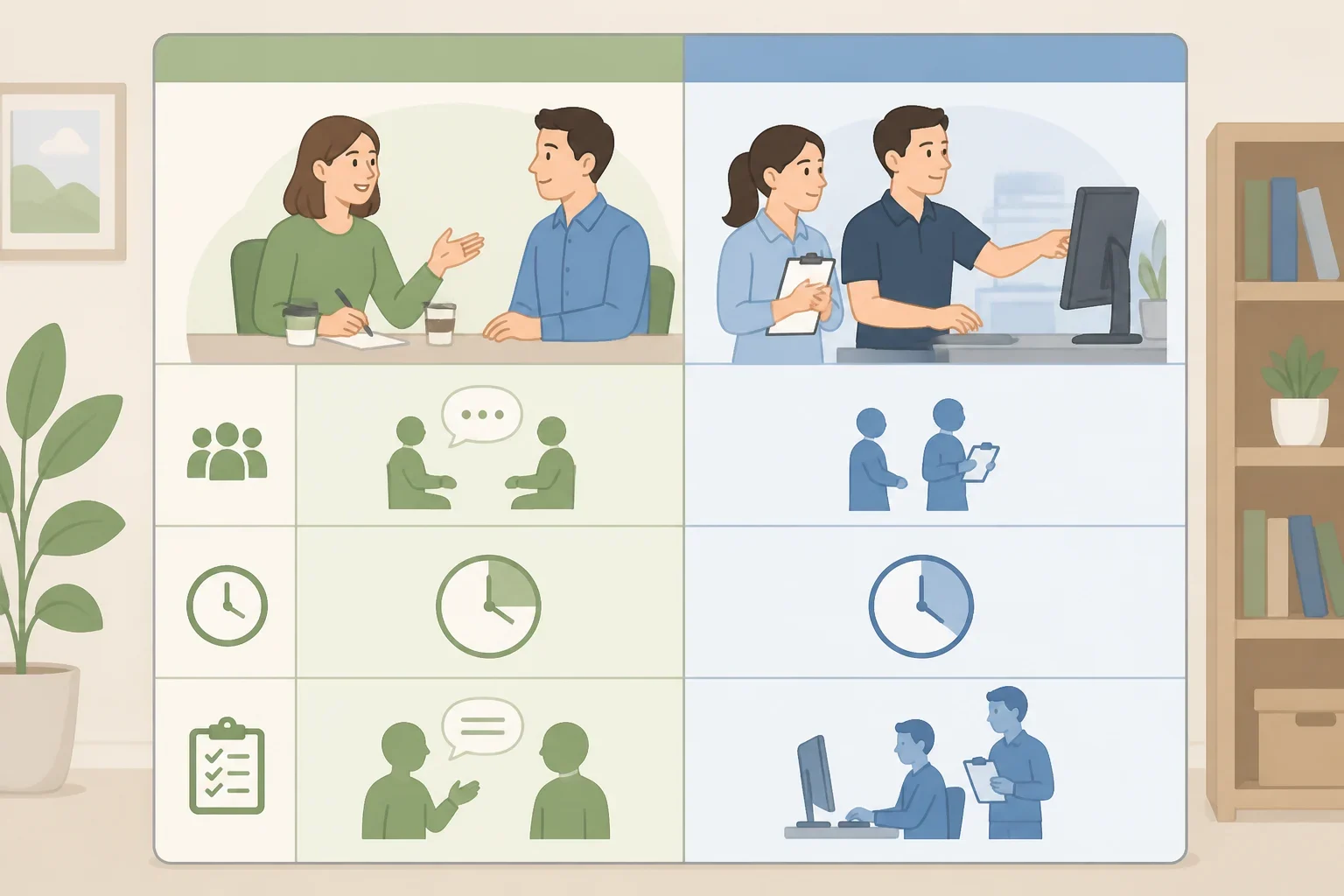
Informational interview Job shadow Format Scheduled conversation, by phone, video, or in person (Virginia Tech) Following a host through work activities; may include meetings, tours, or hands-on tasks (Oregon State) Typical time 20 to 30 minutes (Virginia Tech) Often half-day or full-day; length varies by role and host availability, from about an hour to several days (Oregon State; Oregon State) What typically happens Question-and-answer, guided by the requester's prepared questions Observing daily work, with activities set by the host and schedule (Oregon State)
That time gap is a reasonable starting point for deciding which one to request, since it shapes how much a professional has to give up to say yes.
What is an informational interview and when does it make sense?
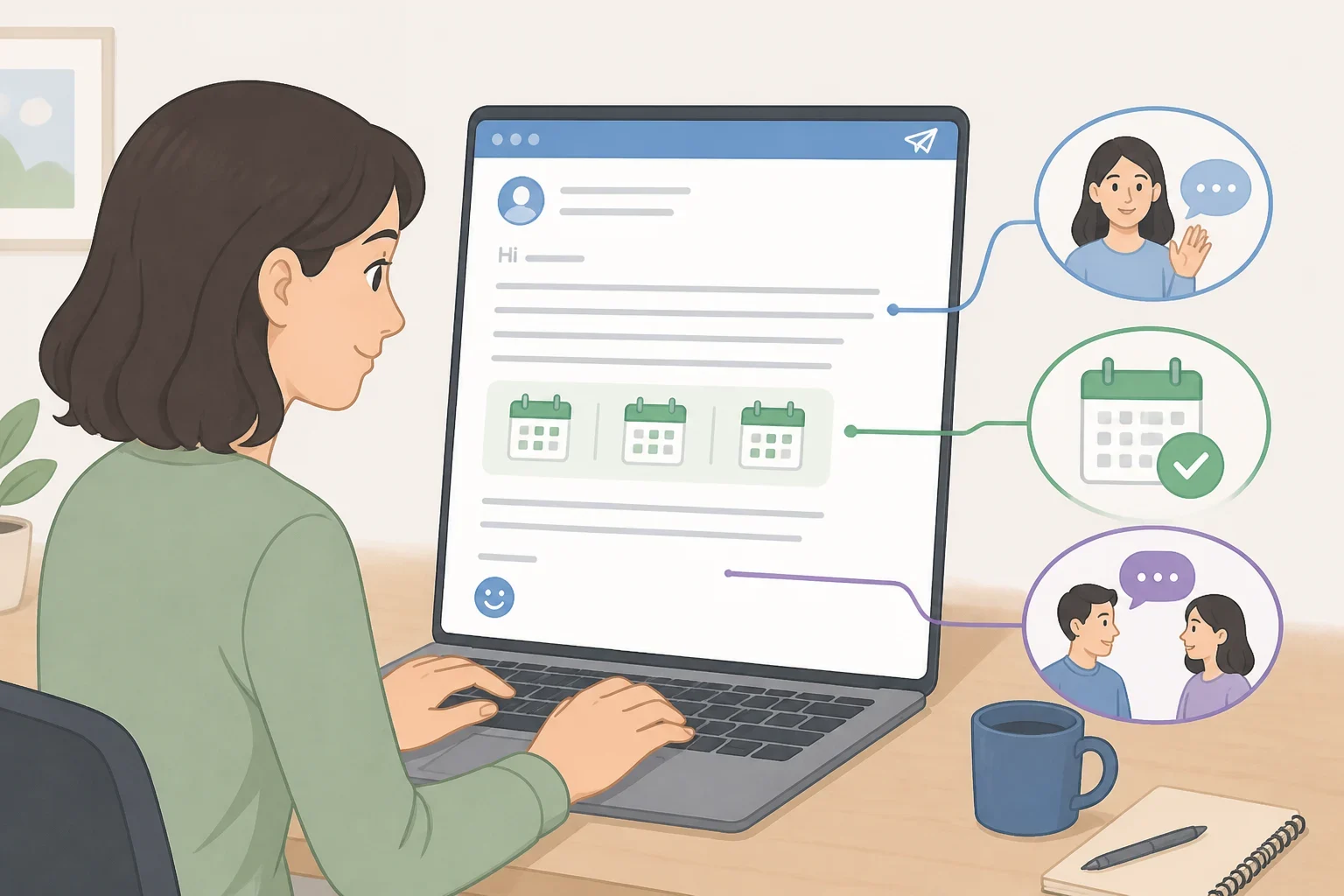
An informational interview is a meeting set up specifically to learn from someone already working in a role or industry. Virginia Tech compares the requester's role to a journalist gathering information rather than a candidate selling themselves (Virginia Tech).
Virginia Tech frames the purpose broadly: exploring career options, weighing whether graduate school fits, gathering leads on experience, and preparing for a future job search (Virginia Tech). That makes it a fit for someone who has a field or role in mind but still has open questions about coursework, entry points, or day-to-day fit.
Etiquette carries weight here. Virginia Tech advises explaining how the contact's name was found, proposing specific availability rather than asking the other person to name a time, and building in real lead time, since scheduling commonly takes two to four weeks (Virginia Tech). Asking on short notice, the guidance notes, tends to signal that the requester doesn't understand how busy working professionals actually are.
Penn State Behrend's tip sheet recommends grounding the conversation in specific questions: what academic background helped the person land the role, what a typical workday looks like, what they enjoy most, and what challenges come with it (Penn State Behrend). Use specific questions to make the conversation useful, rather than opening with something broad like "tell me about the industry."
Not every career coach treats a formally labeled informational interview request as the strongest option, either. Career coaching resource Happen To Your Career describes traditional informational interviews as aimed at "learning information about a role to get a job," and argues that framing can be misread as a disguised job ask, sometimes prompting a redirect to HR or a flat "we're not hiring anytime soon" (Happen To Your Career). That characterization describes how this particular coaching source frames the traditional request; it isn't a universal definition, and it sits alongside Virginia Tech's broader description of exploration, graduate-school decisions, and networking leads.
The source's suggested alternative is a shorter "test drive conversation," built around 15 minutes and a specific hypothesis about a role rather than an open-ended request (Happen To Your Career). The source reports that its own conversations produced response rates of roughly 30% to 70% for the shorter format, compared with roughly 10% to 40% for traditionally framed informational interview requests, but it doesn't provide enough methodology to generalize those figures across industries or contexts (Happen To Your Career). Treat the numbers as one coaching practice's internal observation, not a benchmark to plan around.
What is a job shadow and how does it work?
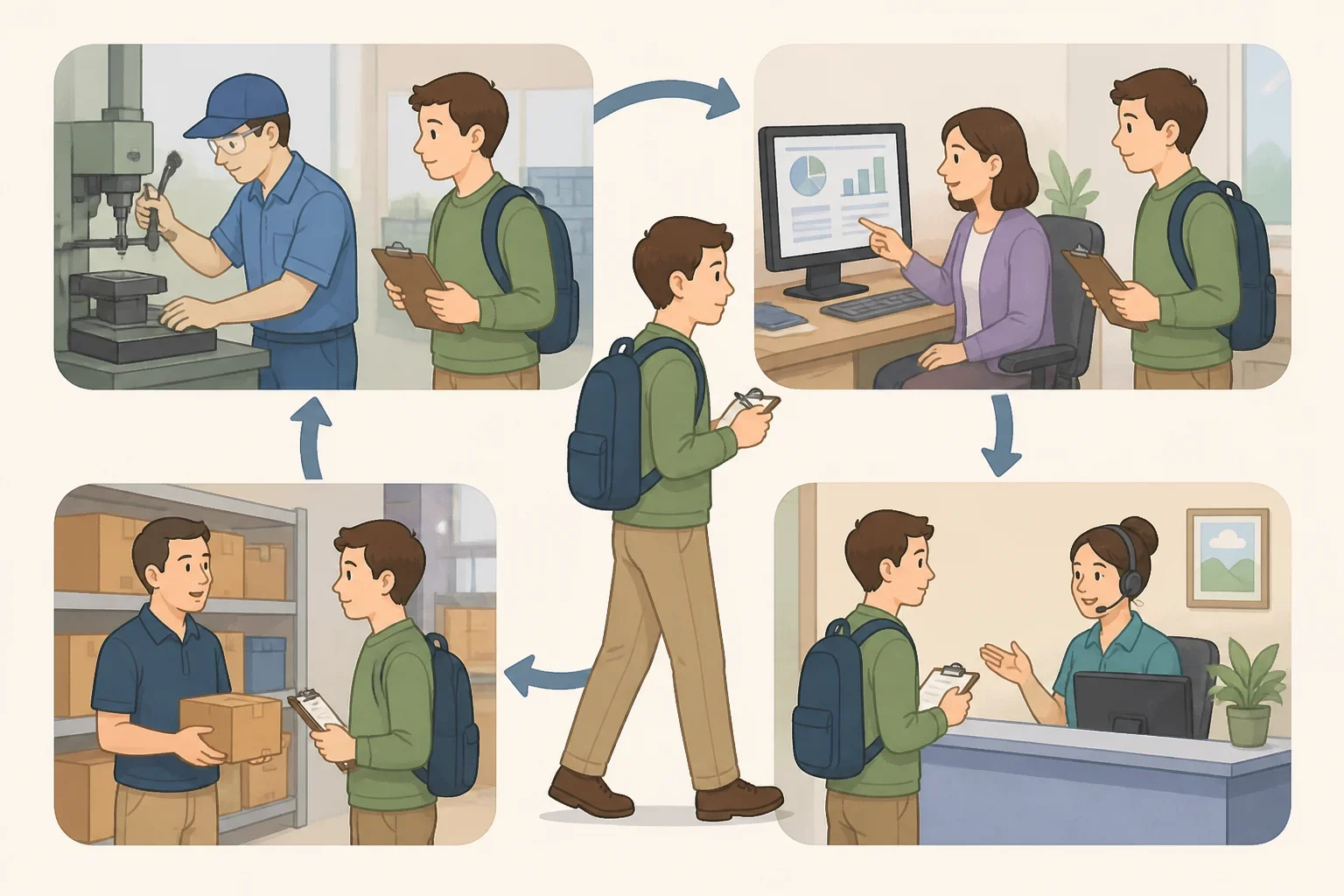
A job shadow means following a host through actual work activities rather than sitting down for a planned conversation. Oregon State describes the experience as potentially including observation of daily tasks, a workplace tour, occasional hands-on work, meet-and-greets with other staff, and even an informational interview folded into the day, depending on the host and schedule (Oregon State University). That last detail matters: a shadow and a conversation aren't always separate experiences. One can happen inside the other.
Structured university programs show how much coordination an organized shadow can involve. Oregon State's own program runs through a student application, staff-managed host matching, an orientation session, and a defined summer window, drawing from a list of more than 100 host-site options across in-person and virtual formats (Oregon State University). The 2026 application cycle has already closed, and Oregon State directs prospective applicants to check back in winter 2027 for details on the next round (Oregon State University). That's a useful reference point for what a formal program looks like, not a description of job shadowing in general.
Shadows arranged through this kind of program are unpaid, and students cover any related expenses themselves (Oregon State University). Readers without access to a formal program are working with a different set of logistics. An independent shadow arranged directly with an employer depends on that organization's own willingness to host one, so it's worth asking upfront about visitor access, confidentiality expectations, and safety policies before assuming a shadow is possible.
What each format can and cannot tell you
An informational interview can reveal how someone entered a field, what education or experience mattered, and what the work feels like day to day, but it depends entirely on what that one person chooses to share. A single conversation cannot independently verify the day-to-day conditions described.
A job shadow can reveal workflow, pacing, and workplace culture that a conversation can't fully convey. Still, a single shadow may not represent every role, team, or employer in a field, since one day with one host is a limited sample.
How to choose between job shadowing and an informational interview for career exploration
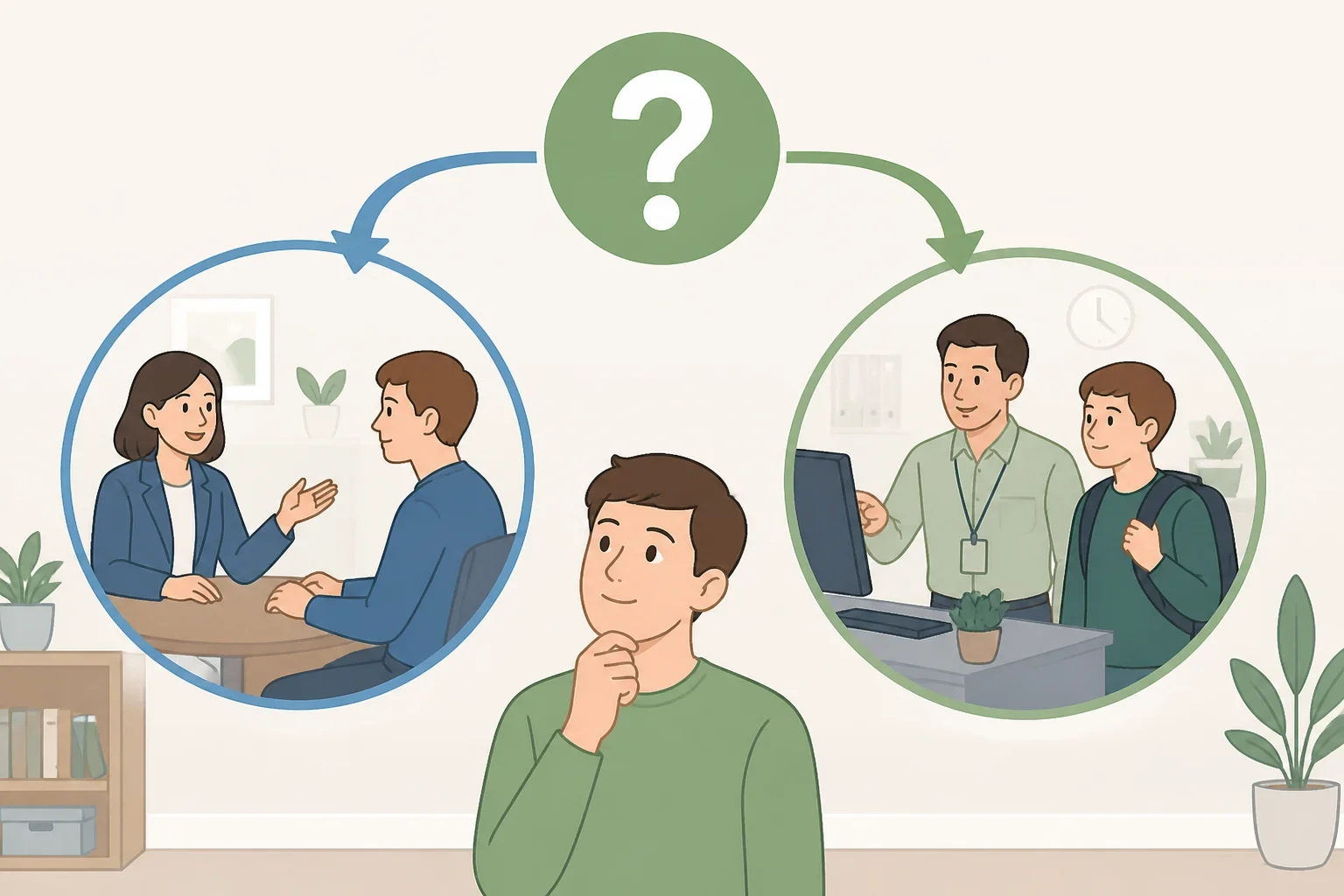
Informational interview Job shadow Best for Testing whether a field or role fits your interests (Virginia Tech) Seeing what a workday and workplace actually look like (Oregon State) What you can realistically learn Coursework advice, entry points, and how the person's background led to the role (Virginia Tech) What the workday involves, including tasks, meetings, and office culture (Oregon State)
Oregon State ties observing a workday to a practical payoff: exposure to career paths and stronger internship or job applications, though that's a benefit tied to its own program rather than a guarantee for every shadow (Oregon State University). For readers still narrowing down a field, starting with a lower-commitment conversation and requesting a shadow once a specific role or employer stands out is a reasonable sequence, though not the only workable order.
Follow-up is worth building into either format. Virginia Tech recommends writing a thank-you by the end of the next day if possible, naming something specific that was learned and mentioning any next step planned (Virginia Tech). Penn State Behrend's guidance recommends the same courtesy after a shadow, plus a debrief with a career counselor about what the experience changes for the next step in a job search (Penn State Behrend).
What to do next
Before reaching out to anyone, decide which specific question is driving the request. "What does this job actually involve day to day" points toward a shadow. "Should I be pursuing this field at all" points toward a conversation. That distinction helps clarify the request before it's sent.
From there, match the channel to the format. Penn State Behrend points students toward CandidCareer, LionLink, and LinkedIn for finding networking and job-shadowing contacts, alongside direct outreach to professionals by phone or email (Penn State Behrend). A school or university career center is worth checking for a structured shadow program with built-in host matching. If no formal program exists, confirm the employer's own visitor, confidentiality, and safety policies directly with that organization before sending a first shadow request, since access to that kind of experience varies by employer.
