

- How to Ask for More Time to Consider a Job Offer: Scripts & Tips
- Before you ask for more time to consider a job offer
- How long should you ask to consider a job offer?
- How to request more time to accept a job offer
- If the employer can't extend the deadline
- If the deadline is unusually short
- What to do next
How to Ask for More Time to Consider a Job Offer: Scripts & Tips
You can ask for time to evaluate a job offer, although the employer may not always agree to grant it. Career services offices generally encourage candidates to request an extension when the original timeline feels too tight, according to JMU Career Services, which tells students that most employers view this kind of request favorably. Employers themselves typically expect candidates to need a few days up to a week before responding, according to USF Career Services.
Knowing you're allowed to ask is the easy part. The harder part is learning how to ask for more time to consider a job offer without sounding hesitant, and figuring out how many days is a fair number to request. This guide covers how to request more time to accept a job offer on a call or by email, how long a reasonable window looks like, and what to do when an employer sets an unusually tight or "exploding" deadline. It's built for job seekers at any stage, whether comparing a first offer as a student, weighing an offer as a recent grad, or juggling two competing roles as a working professional.
Before you ask for more time to consider a job offer

Start by confirming the actual deadline in writing rather than going off a verbal impression from the interview. If the offer didn't come with benefits details, request them before the decision date arrives, according to UC Berkeley Career Engagement, since a full compensation picture is hard to evaluate without them.
It also helps to name, at least to yourself, the specific thing the extra days are for. Berkeley suggests candidates be ready to explain both why they need more time and how much they need, whether that's a scheduled interview elsewhere, a second offer expected on a certain date, or a contract that needs a closer read (UC Berkeley). MIT Career Advising & Professional Development lists similar reasons, including upcoming interviews, site visits, or another offer still in play.
How long should you ask to consider a job offer?
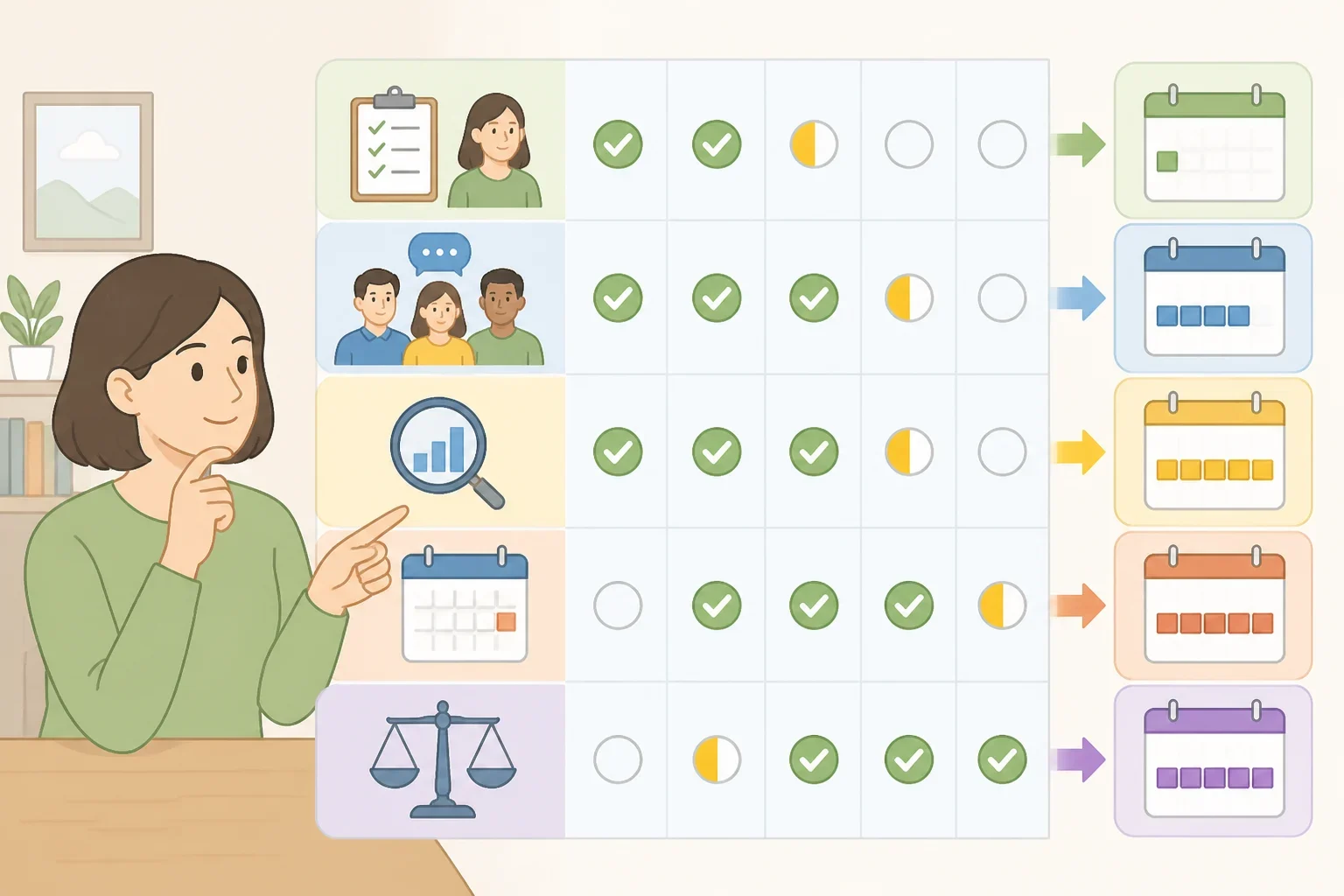
There's no single right answer to how long to ask for to consider a job offer, but most employers anticipate candidates needing somewhere between a few days and a week, and a request stretching past that risks reading as low interest, according to USF.
USF's general guidelines, drawn partly from Julia Yurchak, a senior recruitment consultant at Keller Executive Search, break the ask down by situation rather than treating every offer the same. Yurchak suggests 24 to 48 hours is usually enough to carefully evaluate an offer, with another 24 to 48 hours added on when a move or a complicated contract needs review (USF). USF's broader guidelines describe three to five days as standard when comparing competing offers or weighing several factors, and a week or more as defensible mainly when another offer is still pending or relocation and family circumstances are part of the calculation (USF).
These are general guidelines rather than a fixed rule, so match the window to what's actually unresolved instead of defaulting to the longest option on the list.
How to request more time to accept a job offer

The mechanics stay the same whether the conversation happens on a call or in writing: thank the employer, express genuine enthusiasm, and give a specific date rather than an open-ended request, drawing on guidance from MIT, Berkeley, and USF (MIT; UC Berkeley; USF).
On a call, Berkeley's sample script works well as a starting point: "I am excited about the opportunity to work at [Company] and with your offer. However, this is an important decision for me and I need time to consider it. May I get back to you by [date]?" (UC Berkeley). Ask before the original deadline passes, not after it, which Berkeley recommends directly.
An email asking for more time to consider a job offer follows a similar three-part structure: appreciation, a brief reason, and a proposed date, a combination USF says shows gratitude and professionalism while stating plainly what's needed. A version to adapt:
Subject: Thank you for the offer, [Job Title]
Dear [Hiring Manager Name],
Thank you so much for offering me the [job title] position. I'm genuinely excited about the opportunity to join [Company].
This is an important decision, and I'd like to take some time to carefully evaluate the offer and consider all aspects to make an informed decision. Would it be possible to get back to you by [specific date]?
I appreciate your patience, and I look forward to speaking with you again soon.
Best regards, [Your name]
Once the extra days are granted, base salary is only one piece of what to weigh. There are several other aspects of compensation worth evaluating before deciding if the total package is acceptable, according to Harvard FAS Mignone Center for Career Success. If salary itself isn't negotiable, JMU notes that additional vacation time, a flexible schedule, moving expenses, or other benefits may still be possible alternatives to discuss (JMU).
If the employer can't extend the deadline
Employers aren't always able to move a decision deadline, so it's worth being ready to respond either way, according to JMU, Berkeley, and MIT. MIT's guidance adds a useful note here: schools ask employers to give candidates adequate time, but when an employer can't meet the exact date requested, some compromise agreeable to both sides is often still possible.
If there's genuinely no room to move, a short reply along these lines keeps the relationship intact: "I understand the deadline cannot be extended. I'll review the information provided and confirm my decision by [date/time]." Then actually decide by that date.
What shouldn't happen next is accepting the offer as a placeholder while continuing to pursue a different one. That approach is considered a breach of ethics that can seriously harm a professional reputation, and some employers have rescinded offers after learning a candidate had already accepted a role elsewhere, according to Harvard FAS.
If the deadline is unusually short

An "exploding offer" is a job offer with a strategically tight deadline, sometimes used by employers to speed up hiring and avoid becoming a fallback while a candidate weighs other options, according to Harvard Program on Negotiation. Not every short deadline is a tactic. Some employers set them because they're genuinely under pressure to fill a role, while others use them to lock in strong candidates and cut down competition from rival firms (Harvard PON).
One letter to Harvard's negotiation coach, published earlier this year, shows how real the pressure can get. A candidate was given two days to answer one offer while expecting to hear back on a second, more preferred opportunity in about five days. The candidate turned down the first offer to wait, and ultimately wasn't offered the second job either (Harvard PON).
Harvard's coaching advice for that kind of squeeze starts the same way as any other request: affirm what's appealing about the offer, then ask to extend the decision timeline without signaling disinterest. If a recruiter keeps pushing, it's reasonable to explain that serious career decisions get made carefully because the goal is staying with the next employer for a long time (Harvard PON). That's effectively requesting a job offer decision deadline extension without admitting to a lack of interest. It is reasonable to tell other employers that you have a job offer with a short decision deadline, without disclosing every detail of the offer itself (Harvard PON).
There's research behind the caution here, too. When exploding offers become common across an entire hiring market, they can create widespread inefficiencies by matching employers with the wrong candidates, according to research by University of Utah professor Harris Sondak and Harvard Business School professor Max H. Bazerman, cited by Harvard PON. An earlier laboratory study found something more specific: in a bargaining exercise, participants who received exploding offers and later divided money with the person who'd made the offer kept more for themselves than participants who'd received extended offers, a pattern researchers described as "negative reciprocation" (Harvard PON). That's a finding from a bargaining game, not a measurement of how real employees behave on the job, but it points to how a rushed decision may affect how someone responds in a later interaction.
Sometimes an exploding offer really is a warning sign that the job would be a bad fit, though genuine hiring urgency is also a real possibility worth keeping in mind (Harvard PON). If an employer won't budge at all after a reasonable ask, that inflexibility is one data point about how the company operates, worth weighing alongside everything else known about the role.
What to do next
Before the next offer call comes in, a few things are worth having ready:
- A realistic time window in mind, generally somewhere between a day and a week, based on what's actually unresolved.
- A short version of the request written out in advance, so it isn't improvised live.
- The two or three specific offer details still unclear, whether that's benefits, salary negotiability, schedule flexibility, or relocation support, so the days requested get spent checking something that could actually change the decision.
Asking for more time works best when it's prompt, specific, and paired with real enthusiasm rather than left open-ended, an approach both JMU and USF point toward.
