

How to Ask for Feedback at Work: 5 Specific Questions
"Do you have feedback?" usually gets back exactly what went into it: nothing specific. Phrases like "be more strategic" or "push for innovation" tell an employee that something needs to change without telling them what, according to HBR. Learning how to ask for feedback at work in a way that actually produces something usable is a skill separate from hoping a manager happens to be good at giving it.
The problem shows up in survey data. Only 26% of employees strongly agree that the feedback they receive helps them do better work, according to Gallup research cited by HBS Online earlier this year.
A sharper question will not fix a manager who is rushed, unskilled, or unwilling to be candid. It can give the other person a more concrete basis for responding, especially when the question points to one specific, recent piece of work instead of performance in general. Harvard Business School professor Joseph Fuller, who teaches the online course Management Essentials, says feedback works "because each step is grounded in specific examples, not general impressions," according to HBS Online. That logic holds for the person asking the question, not only the one answering it.
There's a reason this is worth the effort. Four in five employees who say they received meaningful feedback in the past week report being fully engaged, according to Gartner research cited by SHRM last year. That's a correlation, not proof that a better question alone moves the number, but it's a sign that getting more out of these conversations has a real payoff.
What follows is a four-part approach: choosing the right moment and goal before asking, a set of questions built around common work situations, follow-ups for when the first answer is thin, and a way to sort through what comes back once the conversation ends.
Choose the moment and the goal before you ask
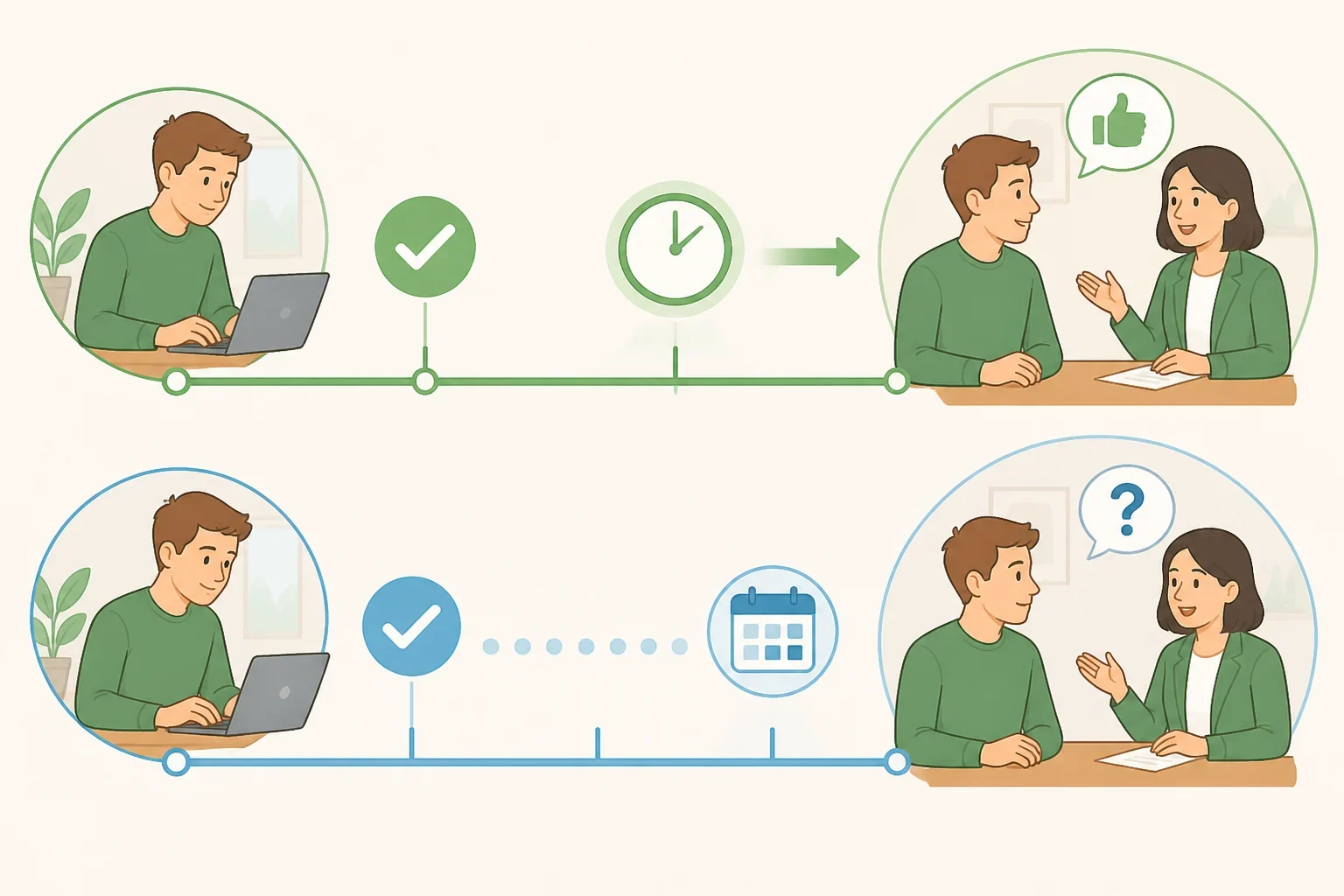
Fuller recommends giving feedback "as soon as possible after the actual event," while the details are still fresh, according to HBS Online. The same logic works in reverse: bringing up a presentation, meeting, or draft while it's still recent gives the other person something concrete to reference, instead of asking them to reconstruct impressions from weeks earlier.
A request about overall performance can invite an equally general answer, while a request tied to one defined piece of work gives the other person something specific to respond to, per HBR. Useful feedback, as SHRM puts it, should be specific, behavior-based, and tied to outcomes.
Before asking, decide what's actually wanted: confirmation about something already finished, or guidance for something that hasn't happened yet. Research discussed on an HBR podcast last year, featuring Harvard Business School professor Alison Wood Brooks, suggests it's easier for people to offer constructive ideas when asked for advice about a future decision rather than feedback on finished work, since looking backward can feel like a verdict after the fact.
Naming one specific deliverable or meeting, asking soon rather than waiting for the next scheduled review, and deciding upfront whether the question is about what already happened or what's coming next settles which script below actually fits.
How to ask for feedback at work in five common situations

Good questions to ask for feedback from your manager, or anyone else who saw the work, share one trait: they point to something specific that already happened. SHRM recommends pairing a specific strength with a specific area to improve, citing an example where "Your summary helped the team clarify next steps and stay on schedule" replaces a generic "Great job." Borrowing that same pairing for a question, rather than waiting for someone to volunteer it, gives the other person a model to follow in their answer.
Fuller's three-step structure for giving feedback, state what was observed, ask for the other person's perspective, agree on next steps, is built for managers, but it adapts for the person requesting input too. Opening with your own observation gives the other person a starting point: "I noticed the client asked several pricing questions. What landed well, and what should I adjust next time?"
A few situation-specific versions worth keeping on hand:
- After a presentation: "For the client presentation, what's one thing that built confidence, and one thing I could sharpen next time?"
- After a meeting: "I noticed we spent most of the time on budget. Was that the right call, and what would you have handled differently?"
- On a draft or document: "Before I send the final version, what's one section that's working well and one that needs more detail?"
- On performance expectations: "What would 'strong' look like in this role three months from now?"
- Before an upcoming assignment: "What should I keep in mind going into the Q3 proposal?" This frames the question as advice rather than feedback, since the work hasn't happened yet, which lines up with the distinction discussed on the HBR podcast.
Writing the question out ahead of time, rather than improvising mid-conversation, is a simple way to avoid a reflexive "looks good." It won't guarantee a detailed answer, but it gives the other person something more specific to respond to than an open-ended prompt, which is part of what it takes to get specific feedback at work instead of a vague gesture of approval.
Turn a vague answer into something you can act on

A thin first answer is a starting point, not the end of the conversation. Alison Wood Brooks points to simple, low-effort prompts that tend to open people up: "What's on your mind?" "Can you tell me more?" "Tell me your perspective," according to the HBR podcast.
She also describes a classroom exercise called never-ending follow-ups, where students have to ask another question every time the other person finishes speaking. It's a drill built to train the habit of pushing past a first answer, not a measured study of how much detail follow-ups surface. The discipline behind it, keep going past the first response, applies directly to a conversation that stalled at "looks good."
Fuller offers one more angle: asking "What assumptions are we making here?" He argues untested assumptions are "the single greatest source of major failures," according to HBS Online. If a quick, approving answer leaves doubt about how closely the work was actually reviewed, asking for a concrete example is a reasonable way to check.
Turning a vague comment into something usable often takes one more step. Take "be more strategic": a reasonable follow-up is "Which decision or moment made you want more strategic thinking?" If that narrows things down, the next step is translating the answer into something observable, like "Before the next proposal, compare two longer-term risks and explain the tradeoff." That version can be checked later, which "be more strategic" never could.
Three follow-ups worth keeping ready for this exact moment: "What specifically made it work?" "Where was the clearest opportunity to improve it?" "What would you want me to repeat or change next time?" Using one of them before ending the conversation turns a vague reaction into something closer to actual feedback.
How much weight to give the answer

Not every piece of feedback carries the same weight. One practical way to sort through it is matching the question to the person most likely to have observed that part of the work, rather than asking everyone the same broad question. A manager is generally positioned to speak to priorities and whether the work met role expectations. A peer who worked alongside the project may have a clearer view of collaboration and handoffs. Asking for feedback from coworkers who sat in on a client call can fill in details a manager only heard about secondhand, and the exact wording of the question may need to shift depending on what that person actually saw.
Before deciding how much weight to give any single answer, SHRM frames the first job as evaluating the feedback itself: is it specific, behavior-based, and tied to outcomes, or closer to a vague impression. The same source separates performance feedback from character judgment: it concerns results, expectations, and impact, not effort or personality. Two rounds of critical feedback in a year, per SHRM, are "a signal, not a sentence," a pattern worth examining rather than a verdict to internalize.
When feedback from different people doesn't line up, or the same comment keeps resurfacing, running it through a short check is more useful than counting votes. Compare the comment against what the role actually requires. Name the specific, observable behavior behind it rather than the general impression. Look at how the related outcome actually played out, and if anything is still unclear, go back to whoever raised it and ask for one concrete example. A comment that holds up against all three carries more weight than one that simply got repeated most often.
If a manager's answers stay thin after repeated attempts, SHRM suggests seeking perspective outside the formal review process. Whether that means a peer, a project collaborator, or someone else depends on the workplace, and the situation-specific questions from earlier in this piece still apply, though they may need adjusting to fit what that person actually observed.
Once an answer is specific enough to act on, SHRM recommends turning it into a plan: identify what needs to improve, how that will be measured, and by when. Checking in regularly on how feedback gets applied is listed among SHRM's recommended practices for making it stick.
What to do next
Before the next one-on-one, name one recent piece of work and write out the matching question from above, plus a follow-up. Decide in advance whether the conversation is about something finished or something still ahead, since that changes the wording more than anything else.
If the answers from different people end up pointing in different directions, run them through the same check: what the role requires, what observable behavior is actually being described, how the outcome played out, and whether the source can offer an example. That's a more reliable basis for judging feedback than how convincing any single comment sounded in the room.
Put a short check-in on the calendar afterward, and bring a similar piece of work back for review once the change has had time to show up. That gives a better basis for judging whether the adjustment helped, rather than guessing from how the conversation felt in the moment.
