
- EY Career Residency Program vs Internship: What's Announced
- How the EY Career Residency program differs from an internship
- Who qualifies for the EY 8-to-12-month residency, and when
- What EY hasn't disclosed about pay and conversion criteria
- What research says about paid work-based learning
- Verifying eligibility before applying this fall
EY Career Residency Program vs Internship: What's Announced
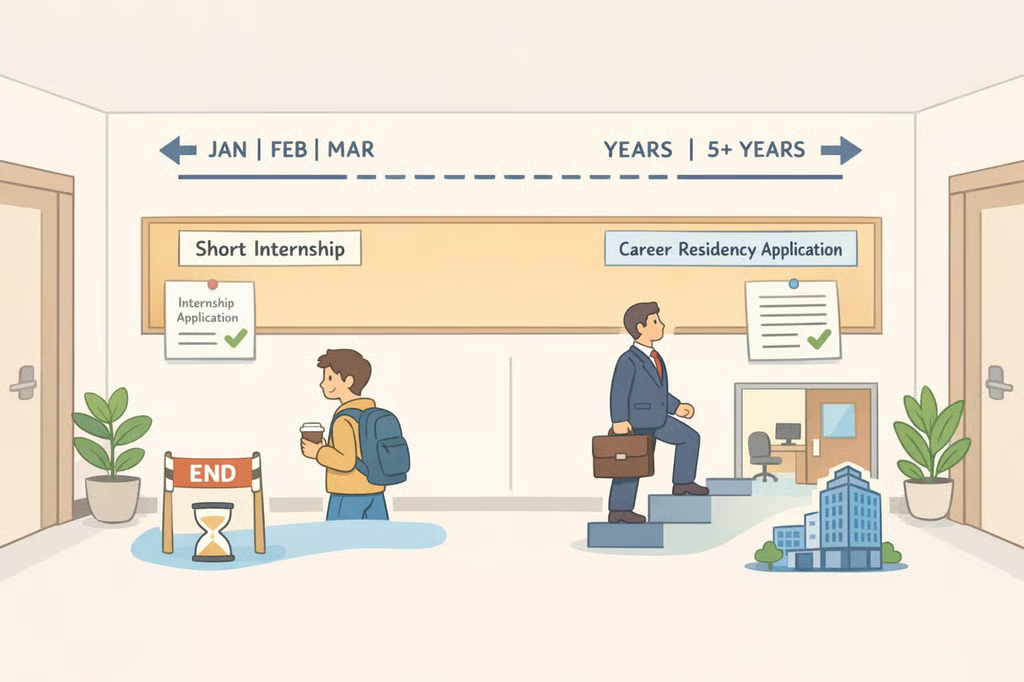
EY US introduced the EY Career Residency program on Aug. 17, a paid opportunity that extends beyond a traditional eight-week internship into eight to 12 months of work experience, according to EY's announcement. Applications for the first cohort open this fall, though the program itself won't launch until January 2028.
The announcement lands as EY frames the shift around AI's effect on entry-level accounting work, and Business Insider reports the initial version is built specifically for assurance interns, who would continue part-time and remotely after finishing their standard internship. That detail matters for students weighing this against another internship or co-op offer, because EY's own materials describe the residency in broader "early career" terms without naming a service-line limit.
Here's what's confirmed, what's still missing, and what outside research suggests about whether longer paid experience actually translates into a stronger start.
How the EY Career Residency program differs from an internship
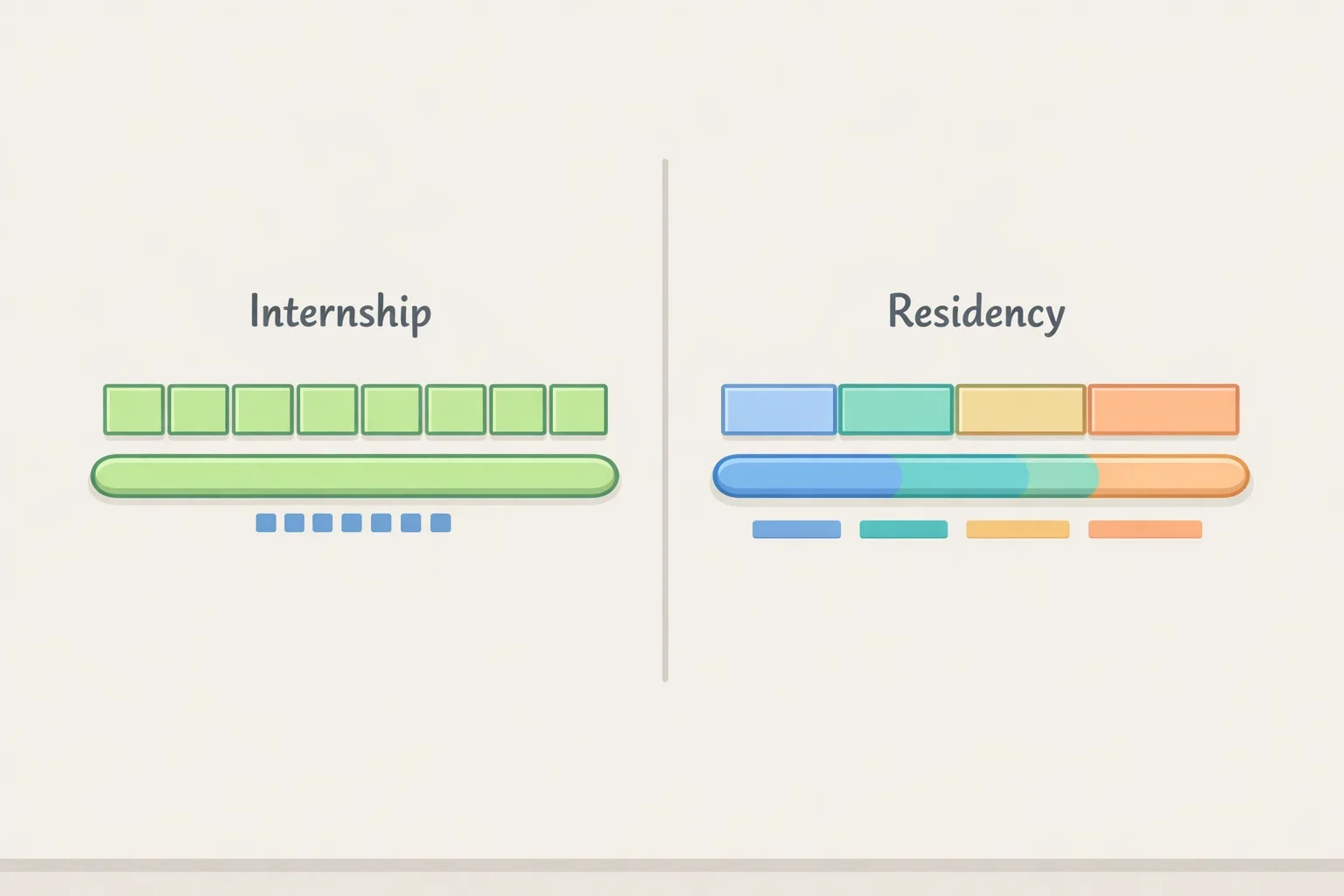
Duration is the most concrete change. EY's standard internship runs eight weeks; the residency extends that into a paid learning arrangement spanning eight to 12 months, according to EY.
Business Insider reported that participants would remain employed part-time and work remotely on EY projects while continuing their coursework, a hybrid setup rather than a single full-time summer stint, according to Business Insider.
The program also builds in structured coaching. EY's announcement describes an optional "Skills Arcade" using gamified workplace scenarios, plus a personalized "Skills Card" that identifies each resident's strengths and working style, with EY-led sessions to translate those insights into workplace skills, according to EY.
Some residents will join "360 Careers," a structured experience tied to EY's previously announced $1 billion investment in talent and technology. It offers exposure across audit, tax and technology risk work, along with the chance to progress toward the CPA credential, according to EY and Accounting Today.
The analyst-track language is worth reading carefully. Accounting Today reported that participants join EY US in an elevated analyst role during the residency itself, reflecting the skills and experience they're building. Separately, after completing the residency, participants have the potential, not a guarantee, to join the firm full-time as analysts, according to Accounting Today. Those are two different milestones, and applicants should treat "elevated analyst" status during the residency as distinct from a confirmed full-time offer at the end of it.
Who qualifies for the EY 8-to-12-month residency, and when
Reporting diverges on scope. Business Insider described the residency as continuing for eight to 12 months after a student completes the traditional eight-week internship, and tied the initial rollout specifically to assurance interns. EY's own announcement uses broader "early career" language and doesn't name a specific service line, according to EY and Business Insider.
That's not conflicting reporting so much as a gap. EY's silence on eligibility doesn't confirm the program is open beyond assurance, and Business Insider's reporting doesn't confirm it's closed to other tracks either. Students in tax, technology risk or consulting internship pipelines should ask directly rather than assume either description applies to them.
The timeline raises a separate question. Applications open this fall, months before the first cohort launches in January 2028, and neither source lays out what happens between application and start date, or whether a prior internship is a prerequisite for every applicant. EY's announcement doesn't confirm that sequence, so students should treat it as an open question rather than an assumed requirement.
What EY hasn't disclosed about pay and conversion criteria
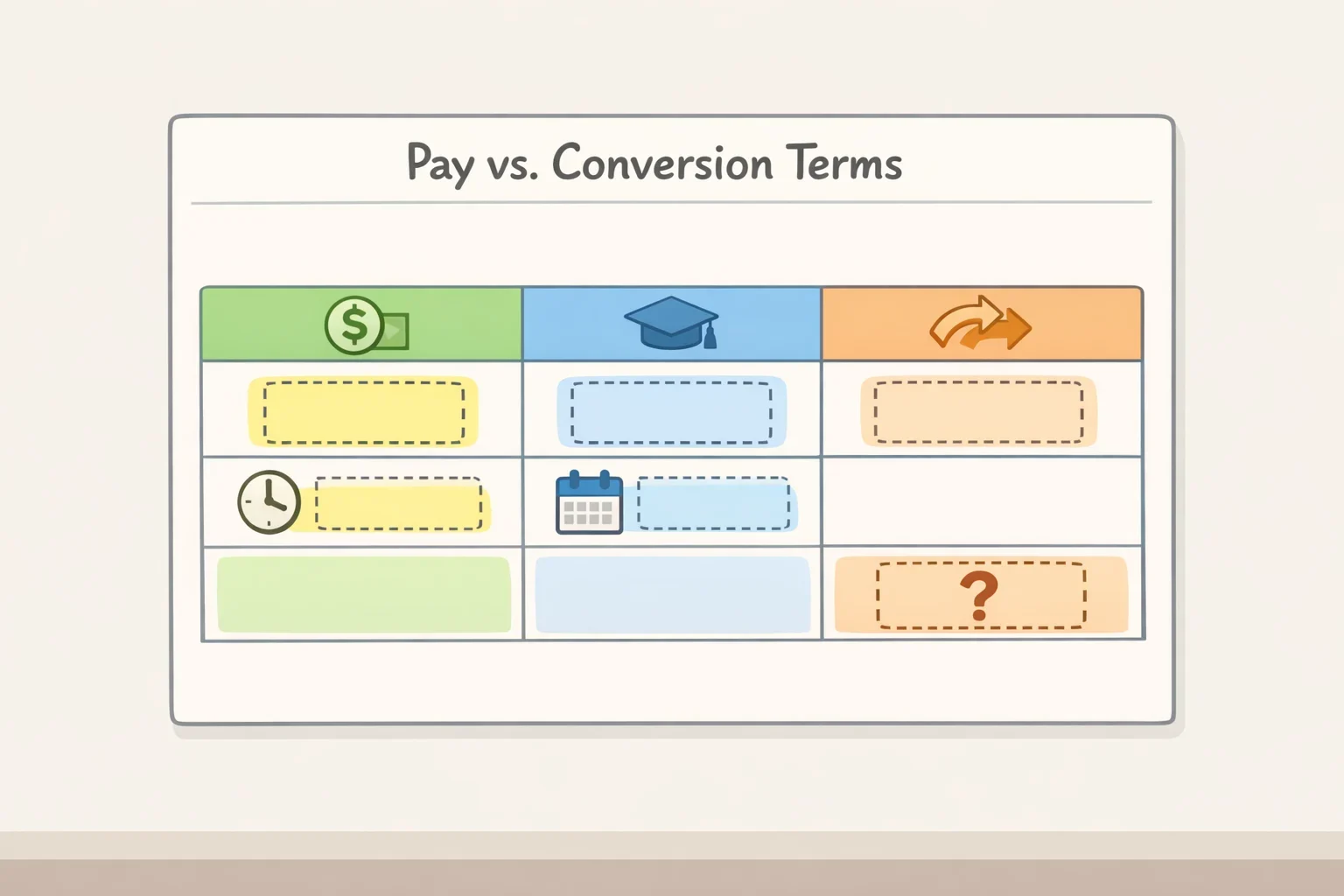
Applicants comparing offers won't find published information yet on hourly pay, academic-year hours, or benefits eligibility. Neither EY's announcement nor Accounting Today's coverage states a pay rate, expected weekly hours during the school year, or whether compensation differs from the standard internship, according to EY and Accounting Today.
EY leadership frames the program around preparing residents to "lead in an AI-driven world," with AI and technology fluency listed as a core skill area, but the announcement doesn't name specific tools, software or training content residents will actually use, according to EY.
The materials reviewed also don't specify eligible majors, class years, participating schools, or the criteria EY will use to decide which residents receive full-time analyst offers. Anyone weighing this against another internship or co-op should get those specifics in writing before committing, since none of it appears in the public announcement.
What research says about paid work-based learning
A study published earlier this year using longitudinal U.S. Department of Education data found paid internships were associated with a $5,564 earnings increase one year after graduation, about 15% of the average annual salary, and a $9,089 increase four years out, about 16%, according to Research in Higher Education. The researchers matched students on academic and demographic factors to approximate experimental conditions, so the results describe an association rather than proof that an internship alone causes higher pay.
The study tested three possible explanations for that boost: skill-building, professional networking, and resume signaling to employers. It found support for all three but the strongest case for resume signaling, according to Research in Higher Education. Graduates who landed their first job through their internship saw an added $3,452 in first-year earnings on top of the internship's own effect, suggesting the hiring pathway itself carries separate value. EY hasn't published conversion criteria for the residency, so it's not possible to say whether that pathway effect would apply here.
None of these findings are specific to programs lasting eight to 12 months, and they cover paid internships broadly rather than extended or hybrid formats like EY's model.
A separate analysis from Canada found that co-op programs were associated with greater income gains and lower unemployment than shorter work placements, but the benefits varied significantly by gender, field of study and institution type, according to the C.D. Howe Institute. That data comes from Canadian university and college graduates and doesn't evaluate a corporate residency model like EY's, so it's useful context for how extended placements can perform, not a direct read on this program.
Verifying eligibility before applying this fall

Students considering the EY Career Residency as an internship alternative should contact EY campus recruiting before applications open this fall. Worthwhile questions include which majors and class years qualify, whether the residency requires completing a prior summer internship, which service lines are included beyond assurance, and what specific criteria and timeline EY uses to decide on full-time analyst conversion. Getting pay, weekly-hour expectations, and conversion terms in writing gives a clearer basis for comparing this path against another paid internship or co-op offer.
