
- How to Nail a Job Interview: What to Prepare First
- What employers may be looking for
- 1. Start with the role, not a list of interview questions
- 2. Prepare evidence for the main requirements
- 3. Practice explaining the connection
- 4. Write questions that help you understand the role
- 5. Confirm the interview format and expectations
- 6. Complete a brief video and background check
- What you can stop overthinking
- Build your prep sheet today
How to Nail a Job Interview: What to Prepare First
Learning how to nail a job interview does not require memorizing perfect answers or turning a bedroom into a television studio. It requires a focused plan. This guide helps first-time job seekers, early-career professionals, and anyone preparing for an upcoming interview decide what to practice, what to ask, and what to stop overthinking.
Start with the role itself. Then prepare specific evidence, write thoughtful questions, confirm the logistics, and complete a brief technology and environment check if the interview is remote. Expectations can vary by employer, industry, seniority, and interview format, so use the recruiter as the authority on meeting-specific details.
What employers may be looking for
Harvard’s career-services guidance identifies three useful preparation targets: showing focus and maturity, understanding the company’s work and the position’s requirements, and explaining how your skills can meet those requirements (Harvard FAS).
That guidance is a practical framework, not a hiring-outcome study or a universal formula. An employer may also use assessments, multiple interviewers, or other steps in its process. Still, the framework gives you a sensible place to put your preparation time.
The sequence below turns those targets into actions.
1. Start with the role, not a list of interview questions
Before practicing answers, read the job posting closely. Mark the responsibilities, skills, tools, and qualifications that appear most important. Pay attention to repeated themes. If the posting mentions client communication in several sections, for example, prepare to discuss how you have handled clients, customers, classmates, patients, or other people who relied on you.
Then research the company’s work and consider how the open position connects to it. The goal is not to memorize every product or announcement. The goal is to understand what the organization does and why this role exists within that work.
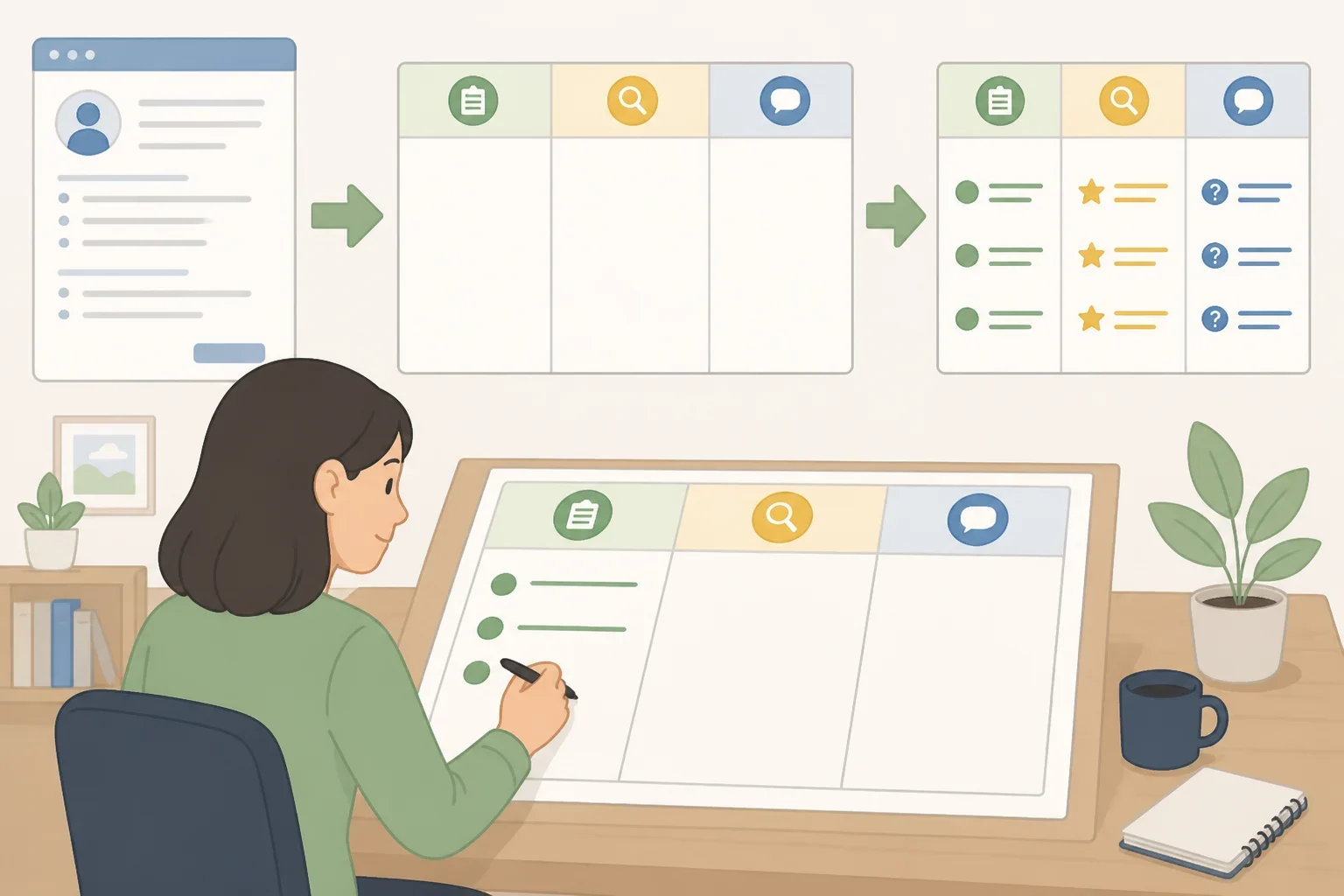
Create a short role map with three columns:
- What the role requires
- Evidence from your background
- What you want to clarify
A hypothetical entry-level marketing posting might include:
- Requirement: Write and edit customer-facing content
- Evidence: Edited a student organization newsletter and improved its consistency across several issues
- Question: Which channels and audiences would receive the most attention in this role?
This exercise prevents a common preparation mistake: learning general facts about a company without connecting them to the job. Company research becomes useful when it changes the examples you choose and the questions you ask.
If the posting uses unfamiliar terminology, look it up before the interview. If the employer describes a responsibility vaguely, save it for your question list rather than pretending to understand it.
2. Prepare evidence for the main requirements
A job interview answer is stronger when it shows what you did instead of simply naming a skill. “I’m organized” gives the interviewer a claim to evaluate. A short example shows how that organization appeared in practice.
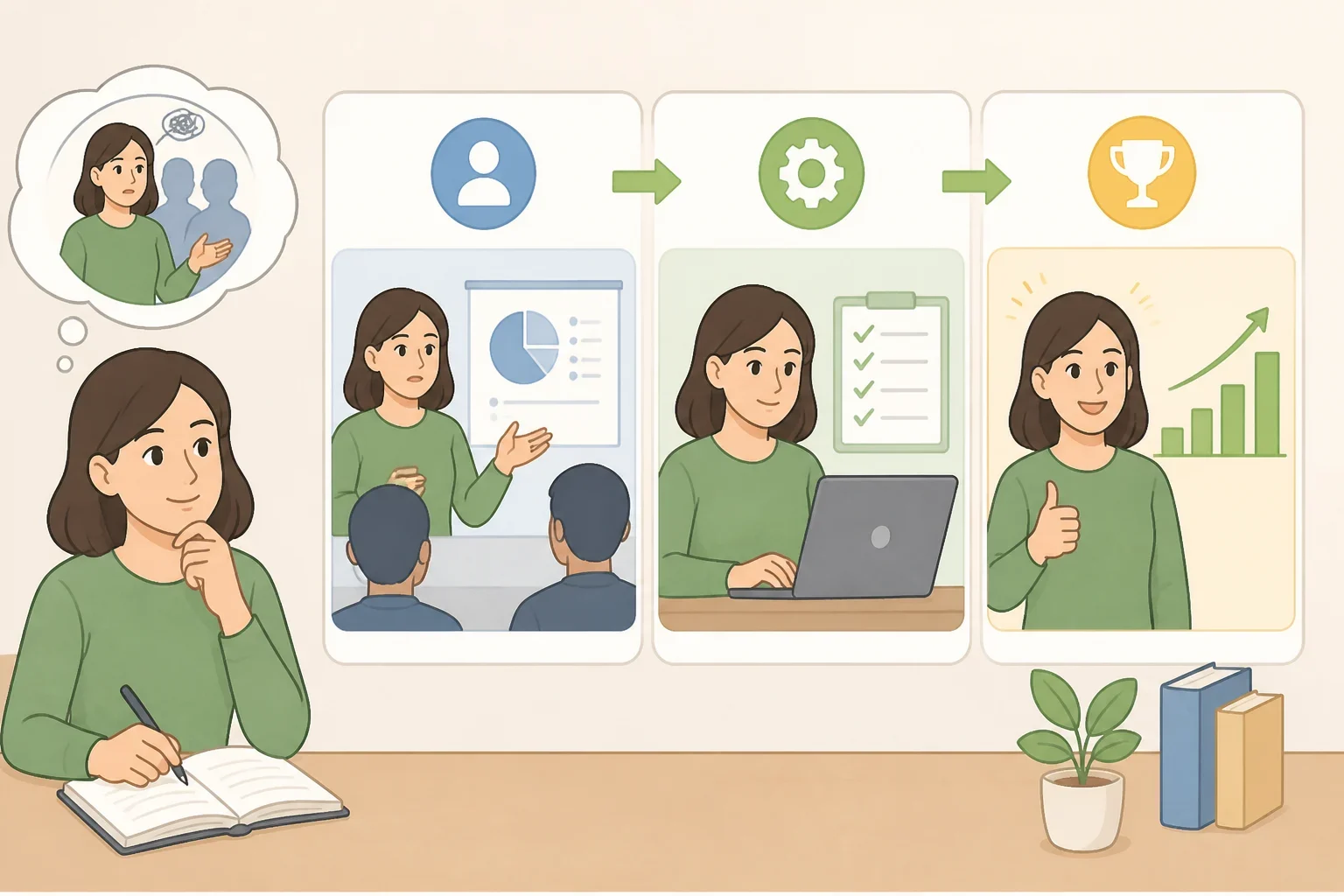
A useful method is:
- Describe the situation or task.
- Explain the action you took.
- Connect the result to the requirement.
This situation, action, and result structure is a preparation method recommended here, not a rule established by the Harvard guide. Use it to keep answers specific and easy to follow.
Suppose a job posting asks for someone who can manage competing deadlines. A vague answer might be:
“I’m good at prioritizing and always get my work done.”
A more useful answer could sound like this:
“During my final semester, I was completing a group presentation while working part time and helping coordinate a campus event. I listed each deadline, identified which tasks depended on other people, and set earlier internal deadlines for the group presentation. The presentation was submitted on time, and the event materials were ready before the event.”
The example does three things. It names a real situation, explains the applicant’s actions, and gives the interviewer something concrete to connect to the role.
Prepare examples from more than paid employment. Coursework, volunteer work, internships, campus activities, freelance projects, and personal responsibilities may all provide relevant evidence, especially for an early-career candidate. The example still needs to show what you handled and how it relates to the job.
Do not write a complete speech for every possible question. That can make answers sound memorized and leaves little room to respond naturally. Instead, prepare a small set of examples that can be adapted to related questions.
For each major responsibility in the posting, ask:
- What situation shows experience with this responsibility?
- What action did I personally take?
- What changed, improved, or was completed afterward?
- Which part of the example is most relevant to this employer?
If an example did not produce a dramatic result, do not invent one. Completing a project, resolving confusion, meeting a deadline, or learning a new process can still demonstrate useful behavior. Keep the connection to the job clear.
3. Practice explaining the connection
Knowing your examples is different from explaining why they matter. During practice, add a final sentence that links the example to the position.
For example:
“That experience would help me manage the scheduling and follow-up responsibilities described in this role.”
The sentence does not need to sound impressive. It needs to make the relevance obvious.
This is especially useful when changing careers. A previous role may not share the same title or industry, but its responsibilities may overlap. A retail worker applying for an office coordinator position could discuss scheduling, handling competing requests, maintaining accurate records, and communicating with customers. The connection should be explained rather than left for the interviewer to infer.
Practice aloud, but do not aim for flawless wording. Listen for answers that wander, rely on general statements, or bury the action under too much background. Then shorten them.
A simple practice routine:
- Choose three important requirements from the posting.
- Draft one example for each.
- Say each answer aloud.
- Remove details that do not help explain your action.
- Add one sentence connecting the example to the role.
This gives you a workable foundation for how to do well in a job interview without trying to predict every question.
4. Write questions that help you understand the role
Prepare questions about the work, team, priorities, or next steps. The purpose is not to perform curiosity. It is to learn what the position involves and identify details the job posting does not explain.
Useful questions include:
- What would be the most important priority for the person in this role during the first few months?
- Which responsibilities take up most of the team’s time?
- How does this position work with the other teams involved in the project?
- What does the rest of the interview process involve?
- Is there anything about the role or schedule that would be helpful to clarify?
Choose questions that fit the conversation. If the interviewer already explained the first few months of the role, ask about another area rather than repeating the answer.
Avoid questions that could be answered by reading the employer’s website or the posting. You can still ask about basic information if it was unclear, but preparation should make the conversation more specific, not less.
Two questions are enough to begin. Keep additional options available in case one is answered during the interview. The recruiter or hiring contact can also clarify whether there will be time for questions, although candidates should be prepared for the possibility that the schedule changes.
5. Confirm the interview format and expectations
The preparation above travels across formats. Research, role-specific examples, and questions are useful for a phone screen, video call, panel, or in-person conversation.
The logistics do not always travel as neatly. Dress expectations, the number of interviewers, the length of the conversation, and the level of technical setup can vary. A coffee-shop meeting may have different practical details from a formal office interview, but there is no single rule that resolves every casual-interview question.
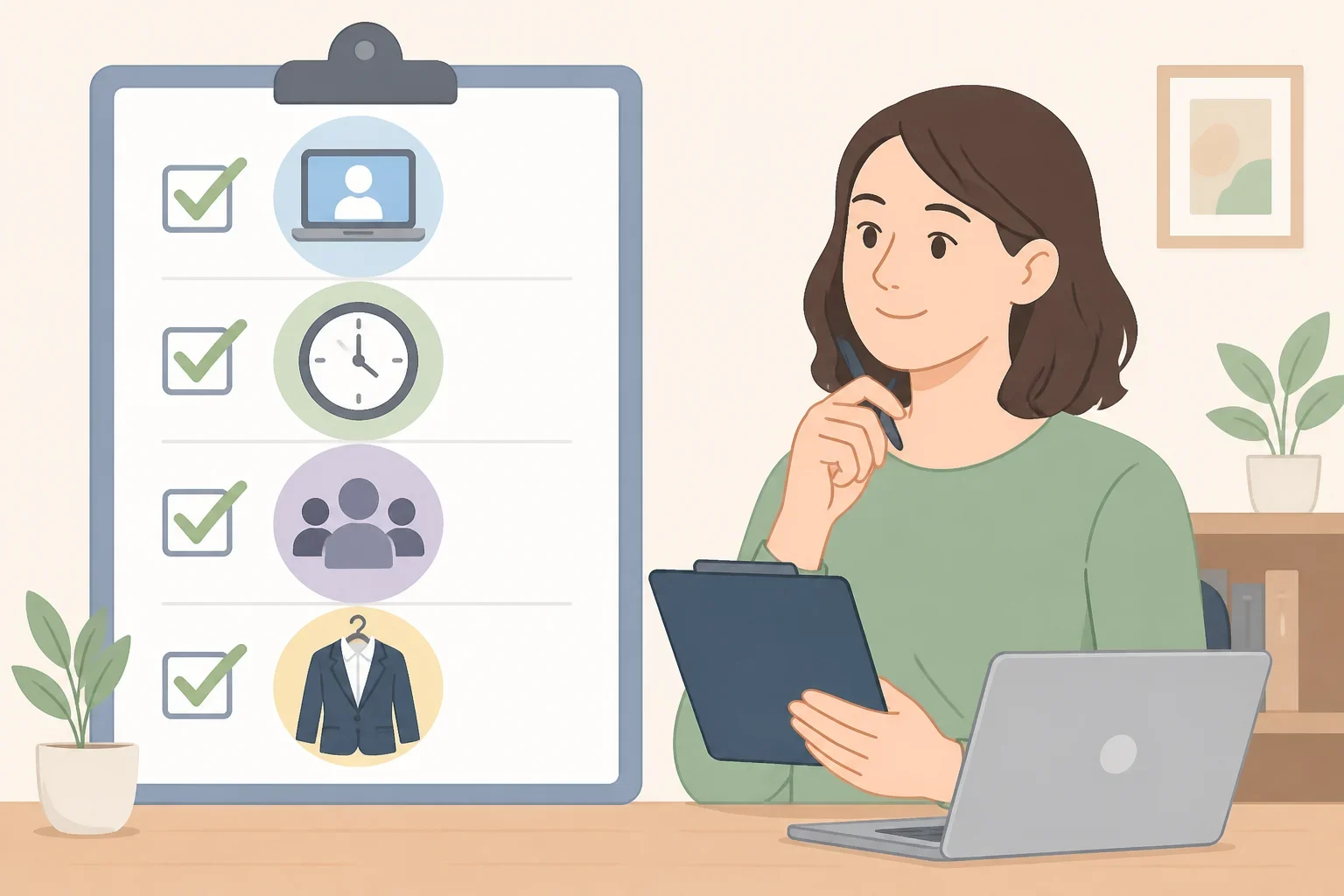
Ask the recruiter or hiring contact before the interview:
- Will the meeting be by phone, video, or in person?
- Approximately how long should it last?
- Who will participate?
- Is there anything to prepare in advance?
- Are there dress or location expectations?
- If it is a video interview, which platform will be used?
These questions are practical, not a sign that you are unprepared. They replace guesses with information specific to that employer.
For a panel interview, ask who will attend if that information is available. For a technical or skills-based interview, ask whether there is an assignment, demonstration, or material to review. Do not assume that a friendly email means the interview will be informal, and do not assume that a formal job title tells you how the meeting will be structured.
6. Complete a brief video and background check
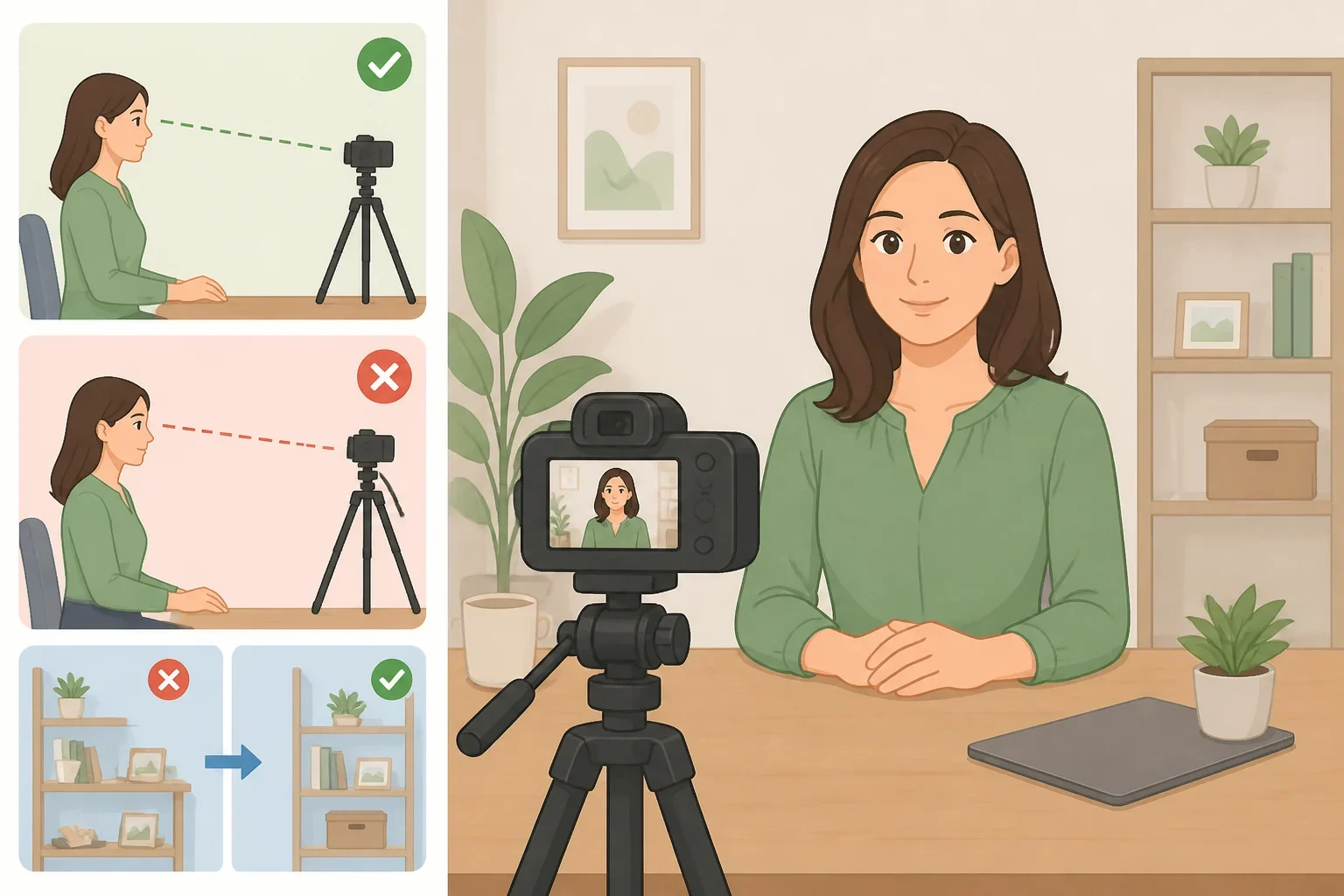
Video job interview tips often focus on equipment and appearance, but the aim is basic functionality. Confirm that the camera, microphone, internet connection, and interview link work before the meeting. Keep your notes where you can refer to them without repeatedly looking away from the camera.
Then check what the camera shows. Alison Green’s guidance on Ask a Manager treats an ordinary home setting as generally acceptable. Green notes that interviewers are now pretty used to seeing people interview from home and understand that video backgrounds reflect that.
A bedroom can also be a reasonable interview location if you are not taking the call from the bed, according to Green’s guidance. The room should be neat and uncluttered, with nothing in view that you would not want to appear during a professional conversation. Family photos or a shelf of novels are examples of ordinary background details that can remain visible.
The goal is not to create a staged office. Check the frame, move anything overly personal or distracting, make sure rumpled bedding is not visible, and stop adjusting the room. A neutral wall, bookshelf, or lived-in room can all be workable settings when the visible area is orderly.
If the home environment cannot provide privacy, ask the recruiter whether another location or arrangement is acceptable. Avoid waiting until the interview begins to discover that other people, pets, notifications, or background noise will interrupt the conversation.
What you can stop overthinking
Small details still deserve attention when they affect comfort, clarity, or the employer’s stated expectations. They do not deserve more preparation than the role itself.
There is no source here establishing a universal rule for what to order at a coffee-shop interview, the exact wording of every response, or the “correct” level of formality for every employer. Ask the recruiter when the format is unclear. Otherwise, make a reasonable choice and return to the preparation that helps you explain your fit.
For an in-person meeting, focus on arriving at the correct location, knowing who you are meeting, and bringing anything the employer requested. For a video meeting, focus on joining the correct link, using a workable camera and microphone, and creating a clean enough frame. Presentation should support the conversation, not become the entire preparation plan.
Build your prep sheet today
Use one page, digital or printed, and include:
- Three important requirements from the job posting
- One situation, action, and result example for each
- One sentence connecting each example to the role
- Two questions about the work or team
- The interview format, time, platform, and participants
- Any instructions from the recruiter
- A short reminder to check the camera, microphone, link, and visible background
That sheet gives you a practical way to prepare without scripting the entire conversation. Review it before the interview, then answer the questions in your own words.
The most useful job interview tips are the ones that make the role easier to discuss. Understand what the employer needs, bring evidence of how you have handled similar work, ask for the details you cannot know, and complete only the technology and setting checks the format requires. That is a sound starting point for how to ace an interview without treating every small choice as a test.
