

- How to Interview While Still Employed: Expert Tips
- Checking contract terms before job hunting while employed
- Keeping a confidential job search separate from work systems
- How to interview while still employed during the workday
- References and explaining why you're leaving
- Disclosure and resignation timing
- What to verify before scheduling a first interview
How to Interview While Still Employed: Expert Tips
Many professionals interview for new roles while holding down a current job. Learning how to interview while still employed comes down to controlling exposure: what gets shared, who finds out, and when a resignation actually happens. What tends to create risk with a current employer isn't the search itself but how it's conducted, according to Griffith University senior lecturer Ryan Gould, cited by ABC News last month.
The report, published last month, interviewed Gould along with Melbourne workplace-relations lawyer Roxanne Hart and Melbourne HR consultant Karen Gately about navigating a job search without drawing attention at work. Gould told ABC News that job hunting "is not illegal, it's not a breach of confidence and it is a good thing to be doing." He added that Australian courts have made a number of decisions finding that looking for other work does not, by itself, harm an employer, though "the way you go about it can be construed as harm."
That legal grounding reflects Australian court findings and workplace law specifically. Notice obligations, confidentiality rules, and job-security risk still vary by contract, employer, and jurisdiction, so readers outside Australia need to check their own local rules rather than assume the same protections apply.
The rest of this guide walks through what the Australian experts recommend, where general recruiting guidance fills in practical detail, and what employed job seekers elsewhere should verify before scheduling an interview.
Checking contract terms before job hunting while employed
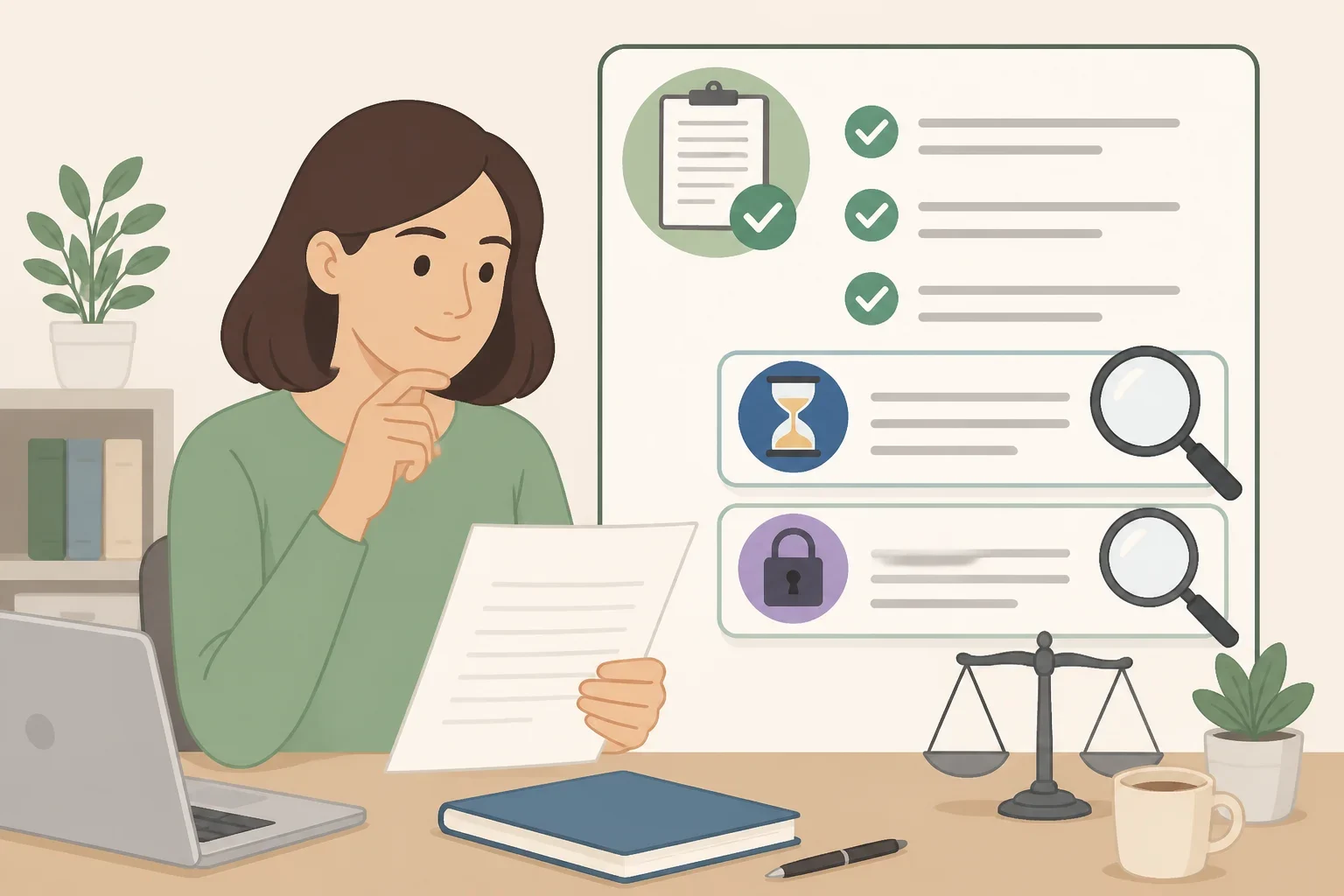
Gould told ABC News that reviewing an employment contract should come before any applications go out. Hart told the outlet that Australian notice periods are typically tied to length of service, often one week for a short tenure and stretching to two to four weeks under many industry awards for longer-serving staff. Those figures reflect Australian award conditions, so readers elsewhere need to check their own contract instead of assuming similar ranges apply.
Hart also flagged non-compete, client non-solicitation, and co-worker non-solicitation clauses as terms worth confirming before a search begins, per ABC News. She said Australia's Corporations Act can prohibit employees from improperly using information gained through their role to benefit themselves, a new employer, or to harm the current company. That statute is Australian; readers elsewhere should check their own employer's confidentiality policy or consult a qualified professional rather than interpret contract language on their own.
Company monitoring policies matter for a different reason. An HR contributor writing for SHRM argued that once a company clearly communicates its acceptable-use policy, employees generally have little reasonable basis to expect privacy on employer-owned devices. That's one HR perspective, not a settled legal standard, so confirming what a specific employee handbook says, and raising any privacy questions with a qualified professional, matters more than assuming a general rule applies everywhere.
Those checks serve different purposes. The notice period affects when a resignation conversation should happen, and the restrictive clauses affect which employers or clients a candidate can safely approach. The monitoring policy is a separate question, since it determines which devices are actually safe to use for the search.
Keeping a confidential job search separate from work systems

Gould's advice, echoed by Boutique Recruiting in guidance for employed candidates, is to run every part of a search on personal time using a personal device and email rather than company equipment. My Personal Recruiter, a recruiting service, points to specific habits that can expose a search: taking recruiter calls from an office desk, printing a résumé on a work printer, or browsing job postings on a device synced to a work account.
The same recruiter guidance notes that LinkedIn's "Open to Work" setting can be limited to recruiters, but that visibility isn't guaranteed to exclude recruiters at a candidate's own company. Turning off profile-update broadcasts reduces exposure without eliminating it. Since platform features change, checking current settings directly through LinkedIn's own account menu is worth doing rather than relying on a third party's description.
My Personal Recruiter also suggests raising confidentiality expectations directly with a recruiter early on, along the lines of getting written confirmation that no one will share a résumé or contact a current employer without explicit permission. The source notes that a written agreement offers more assurance than a verbal one.
How to interview while still employed during the workday

Interviews during paid work hours create their own exposure. Hart's suggestion, per ABC News, is to use annual leave or ask directly: "I've got an appointment, I'll be away for an hour, do you mind if I make up that time later in the day?"
Early-stage phone screenings can often fit into a lunch break, and candidates can ask for a phone or video call instead of an in-person meeting when leaving work is difficult, particularly early in a process, according to Boutique Recruiting. For longer or final-round interviews, Boutique Recruiting says PTO or personal time is often the best option.
Virtual interviews deserve the same treatment as an in-person meeting: a quiet, well-lit, private setting (a parked car works if nothing else is available), tested audio and video beforehand, and no taking the call while driving or rushing between other obligations, per Boutique Recruiting. The same source adds that telling a recruiter early which windows work, mornings, lunch, or evenings, gives them a clearer basis for scheduling around a full-time job.
References and explaining why you're leaving
Securing a referee's permission before listing them is "rule number one," Gately told ABC News. That reference doesn't need to be a direct manager; another internal stakeholder in a position to speak to a candidate's experience and potential can also serve, per her comments to the outlet.
Gould added, per ABC News, that candidates worried about being found out can ask prospective employers not to contact references until they've become the preferred candidate.
Gately told ABC News that prospective employers will likely ask why a candidate wants the job, but candidates should also be ready to explain why they want to leave the current one. Her advice is to avoid criticizing the current employer and instead frame the move around growth and how it connects to relevant strengths, a step SimpleApply, a job-search platform, also lists among common questions to prepare for in advance.
Disclosure and resignation timing
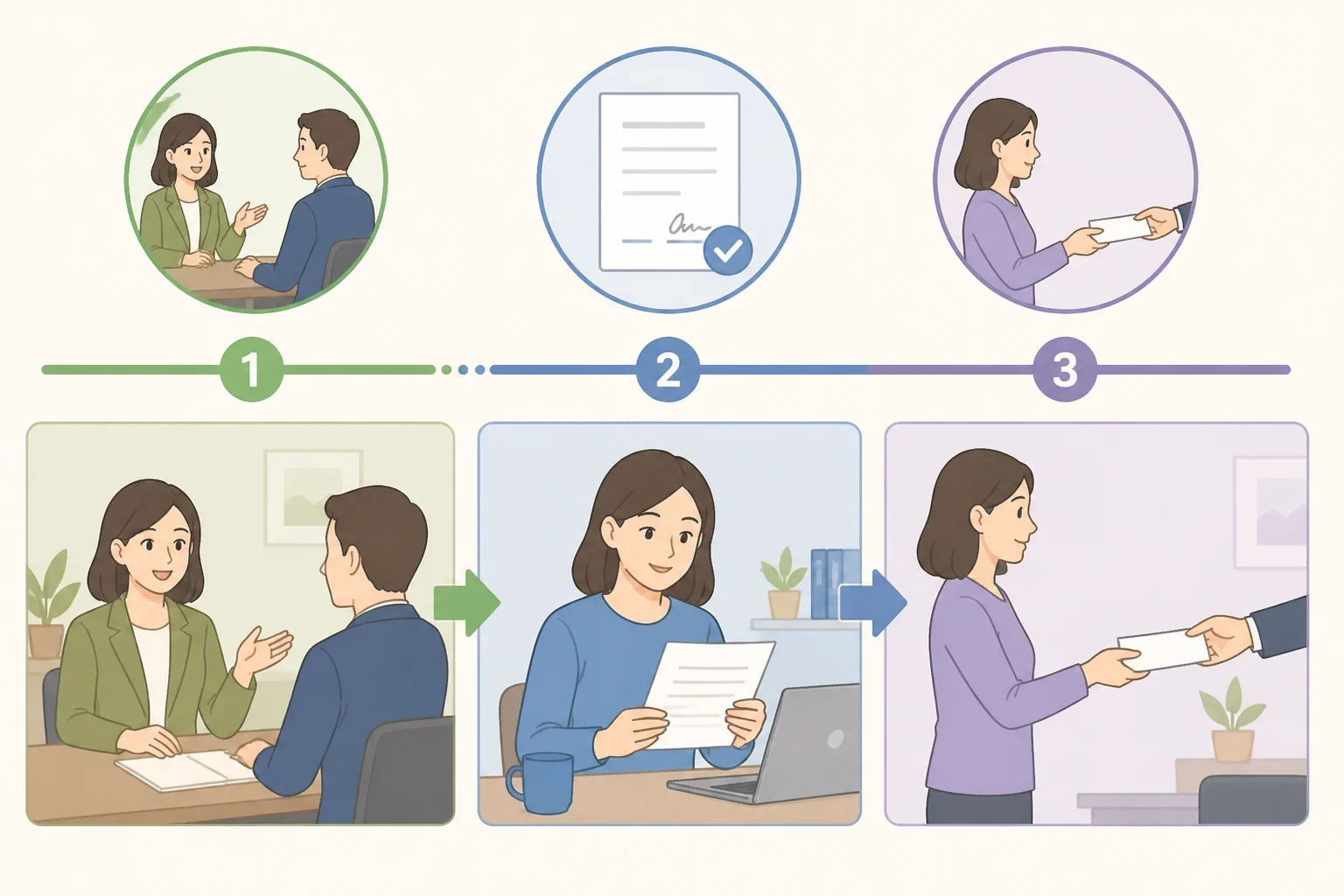
Whether to tell a current employer about a search is a judgment call, according to SHRM, which ties the decision to company culture and the strength of a manager relationship. In trust-based, growth-oriented workplaces, being open about a search may be well received; elsewhere, it's better kept private.
Hart's default advice runs the other way. "The number one thing that I would suggest is tell nobody," she told ABC News, since a colleague who learns of a search may feel obligated to inform the employer, sometimes changing how the employee is treated afterward.
On resigning, Hart recommends waiting until a contract with the new employer is signed, since a verbal offer may be pulled due to budget changes or a change of mind. My Personal Recruiter separately recommends confirming both a signed offer letter and a start date before giving notice, noting that even after a verbal acceptance, "we're putting together the paperwork" can still take weeks.
Hart told ABC News that resignations should go in writing, and that it's often best practice to have an initial conversation with an employer first. SHRM separately advises honoring a company's notice and exit policies when leaving.
What to verify before scheduling a first interview
Gould said Australian court decisions have found that looking for other work, by itself, does not harm the company, per ABC News. That finding is specific to the cases he described. Readers outside Australia should check how their own employment law and contract terms treat job searching rather than assume the same protection applies.
Gately also urged candidates to preserve professional relationships because they may cross paths with former colleagues later, she told ABC News.
Before scheduling a first interview, pulling the employment contract and the company's monitoring or acceptable-use policy, then setting up a personal email address and confirming LinkedIn privacy settings, gives the rest of a confidential search a foundation to build on.
