

- September 2017 US jobs report explained: payroll vs. unemployment
- What the September 2017 US jobs report showed
- Why payrolls and unemployment diverged
- Why hurricane effects on jobs data are not automatic
- How the report shaped December 2017 Fed rate hike expectations
- What readers should check in a disaster-affected report
September 2017 US jobs report explained: payroll vs. unemployment
The September 2017 US jobs report showed how a storm can disrupt one measure of employment without producing the same movement in another. Hurricane-related disruption reduced the estimated nonfarm payroll count, while the national unemployment rate showed no discernible effect, according to an economist’s analysis of the Bureau of Labor Statistics release. The Fed, Markets and Economy blog
The report also helped support expectations of a December 2017 Federal Reserve rate increase, but that was an outside interpretation, not an official Fed conclusion. Nearly nine years later, the episode remains useful as a historical case study in reading disaster-affected employment data without treating one monthly headline as a complete picture.
The available source has a dating anomaly: its URL points to an October 2017 article, while the supplied source record lists a publication date in June this year. That inconsistency is worth keeping in mind. The analysis is used here for the claims it makes about the 2017 report, not as current policy guidance. The Fed, Markets and Economy blog
What the September 2017 US jobs report showed

The September nonfarm payrolls report drew on two separate surveys. The establishment, or payroll, survey collected information from employers, while the household survey asked people about their employment status. Because the surveys measure different things, they can produce different results in the same month. The Fed, Markets and Economy blog
The available analysis said the net effect of the hurricanes was to reduce the estimate of total nonfarm payroll employment for September. It also said the storms had no discernible effect on the national unemployment rate. The Fed, Markets and Economy blog
That distinction is the central lesson. A weaker payroll estimate did not, by itself, prove that the broader labor market had reversed direction. It showed that the month’s employment count was affected by unusual conditions, while the household measure did not register a comparable national change. The Fed, Markets and Economy blog
The source characterizes the payroll decline as temporary and connects it to hurricane disruption. That interpretation belongs to the economist’s commentary, though. It should not be presented as an official Federal Reserve forecast or as proof that every underlying hiring trend remained unchanged. The Fed, Markets and Economy blog
For readers reviewing any disaster-affected jobs report, the practical question is whether the agency’s explanation identifies an unusual event and whether later revisions change the initial picture. A single weak payroll figure deserves context before it becomes a conclusion about hiring conditions in a particular occupation or industry.
Why payrolls and unemployment diverged
The surveys answered different employment questions. The payroll survey counted jobs reported by employers. The household survey counted people and classified their work status under its own rules. The Fed, Markets and Economy blog
That difference mattered during the hurricanes. A person who missed work for the entire household-survey reference period could still be counted as employed. At the same time, storm-related closures and interruptions could reduce the employment estimate produced by the payroll survey. The Fed, Markets and Economy blog
The analysis also reported that BLS did not change its survey procedures to account for the storms. Both surveys continued under their standard methods, leaving the monthly results to be interpreted alongside the disruption rather than through a special storm-adjusted process. The Fed, Markets and Economy blog
That is why the headline numbers should not be treated as interchangeable. Payroll employment is a job count based on employer information. The unemployment rate is a measure of people’s reported labor-market status. A storm can affect the path from a worker to a job site, a business’s ability to operate, or an employer’s reporting without moving both measures in the same way.
The surveys also did not include Puerto Rico or the U.S. Virgin Islands, according to the same analysis. The national figures therefore did not describe every place affected by the hurricanes. The Fed, Markets and Economy blog
For someone assessing local employment damage, the national unemployment rate is only a starting point. State and local data, along with information about the industries concentrated in the affected area, is more useful for understanding whether a particular community or line of work experienced a sharper disruption.
Why hurricane effects on jobs data are not automatic
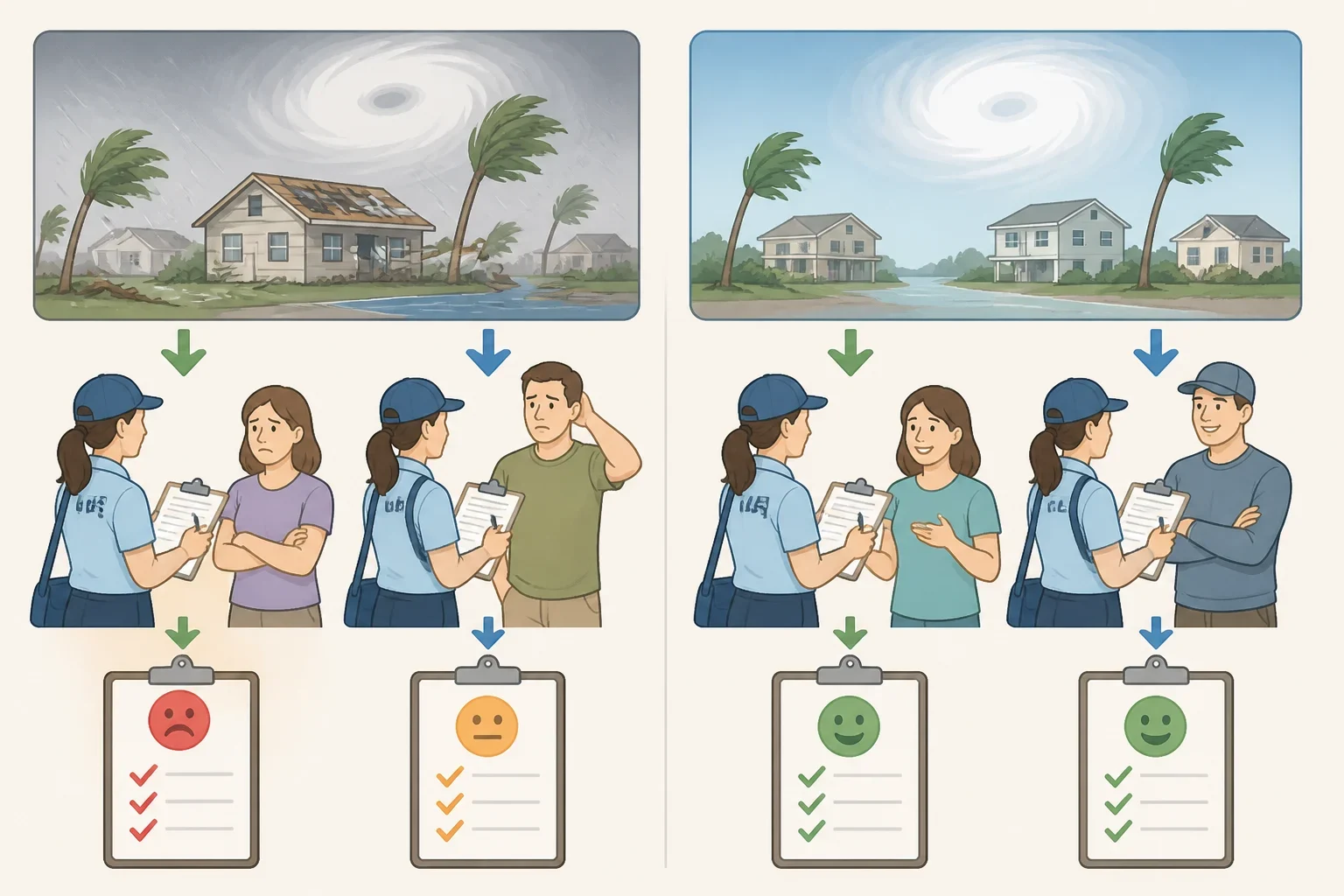
The 2017 episode does not establish a fixed rule for how hurricanes affect employment statistics. The effect depends on the circumstances captured by the surveys and on how those circumstances interact with the survey reference periods.
The available analysis supports a limited conclusion: hurricanes temporarily reduced the September 2017 payroll estimate, while the national unemployment rate showed no discernible effect. The Fed, Markets and Economy blog
It does not support a broader claim that every major storm will distort a jobs report in the same way. Storm timing, business closures, survey responses, and the geographic areas represented in the data can all affect what appears in a national measure. Those factors should be checked in the agency’s notes for the specific report rather than inferred from the 2017 example.
The distinction is especially important for workers and job seekers. A national report may show limited movement even when employers and employees in one location are dealing with serious interruptions. Conversely, a national payroll change tied to an unusual event does not automatically describe the long-term direction of hiring in every occupation.
How the report shaped December 2017 Fed rate hike expectations
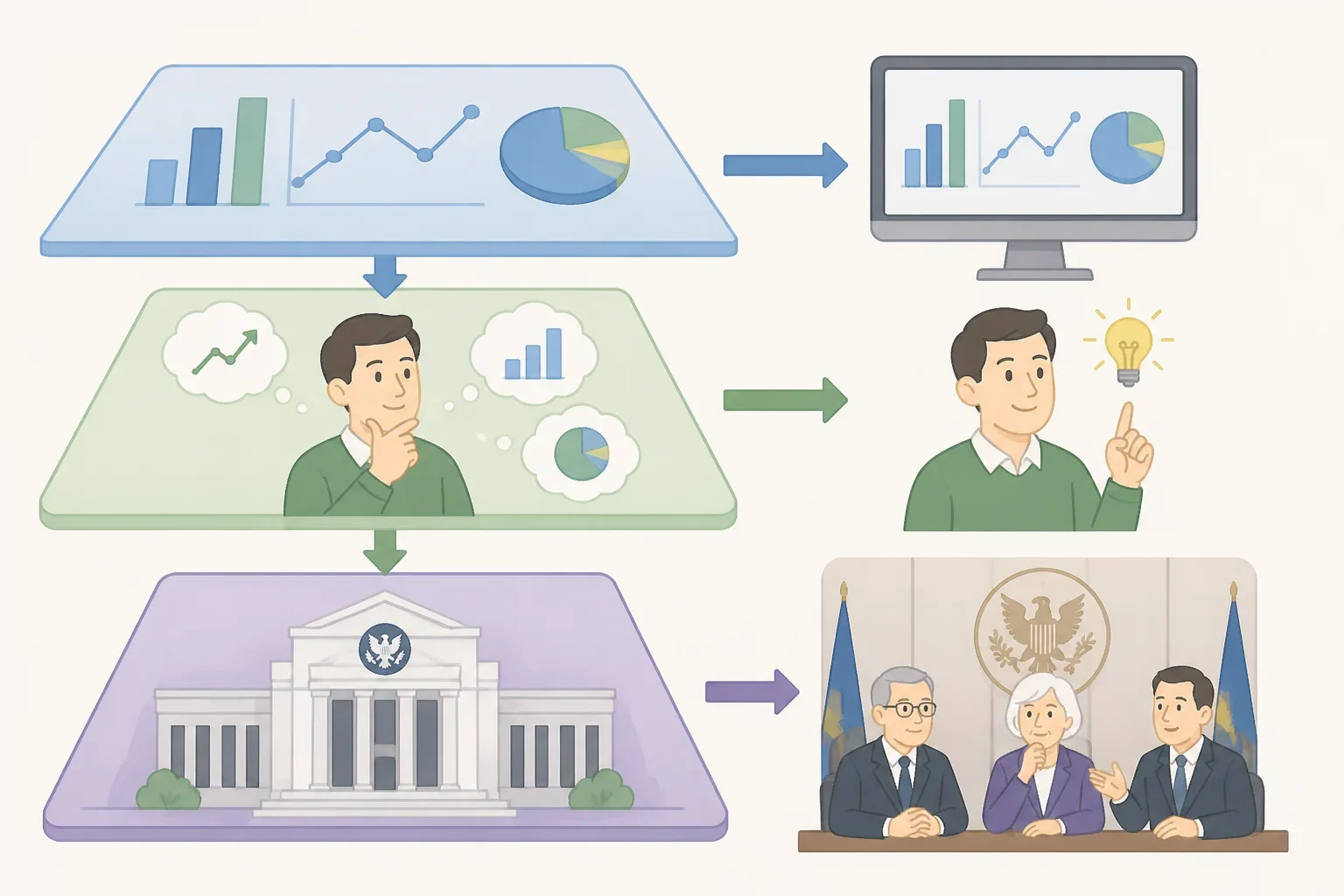
The payroll decline created an obvious weak signal. The lack of a discernible effect on the national unemployment rate offered a different reading. The economist’s analysis treated the combination as evidence that the September report increased the perceived odds of a December Fed rate hike. The Fed, Markets and Economy blog
That conclusion came from the blog’s interpretation of the policy outlook. It was not an FOMC statement, and the available source does not establish that Federal Reserve officials reached a decision because of this report alone. The Fed, Markets and Economy blog
The report therefore contained three separate layers:
- The payroll survey recorded a hurricane-related reduction in the estimated employment count.
- The household survey was described as largely unaffected by the storms.
- An outside economist read the combined results as supportive of higher December rate-hike expectations.
Those layers should not be collapsed into one headline. The first two describe what the surveys recorded. The third describes what an analyst believed those results meant for monetary policy. A policy expectation is not the same thing as a policy decision.
For workers and job seekers, the rate-hike discussion provides economic context, not an individual employment forecast. A monthly national report cannot determine whether a particular employer will hire, increase pay, or reduce staff. Its practical value is in showing how analysts separate a raw data point from the conditions that produced it and from the policy conclusions drawn afterward.
What readers should check in a disaster-affected report
The September 2017 case is best remembered as a measurement lesson, not as a simple verdict on US job growth. Hurricane disruption reduced the payroll estimate, while the national unemployment rate was described as unaffected by the storms in the available analysis. The Fed, Markets and Economy blog
Before drawing conclusions from any jobs report, readers should:
- compare payroll employment with the unemployment rate and labor force participation rate;
- read the agency’s note about unusual events or survey conditions;
- check whether prior-month payroll figures were revised;
- review state or local data when a specific region is the concern;
- look at industry-level information when evaluating a particular occupation;
- treat an economist’s Fed-policy prediction as one interpretation, then compare it with official Federal Reserve communications.
That process will not remove uncertainty from a monthly report. It does prevent a storm-distorted figure, or a single analyst’s reaction to it, from being mistaken for the whole labor market.
