
How women can get AI jobs: understanding the 26% hiring gap
Women filled just 26% of U.S. hires into jobs requiring AI skills last year, even though they accounted for half of all hires into non-AI roles, according to an analysis published last month by LinkedIn and reported by Fortune. The same analysis found that AI job postings in the U.S. have doubled since 2023. For anyone trying to figure out how women can get AI jobs in a market expanding this fast, that 26% figure is the number worth understanding first.
The pay difference raises the stakes. The report compares an average advertised salary of about $177,000 for AI-related postings with roughly $80,000 for non-AI postings, based on the LinkedIn data reported by Fortune. That's not a promised salary for any individual applicant, a distinction worth keeping in mind later when comparing it to a specific job offer.
Forbes columnist Caroline Fairchild offered a sharper read of the numbers in a column published about three weeks ago. She called the 26% hiring share "a design flaw, not a shortage," pointing to declining corporate diversity metrics tied to executive pay even as evidence of the gap has grown, according to Forbes. That's her interpretation of the data, not a conclusion the hiring figures alone prove, but it's a useful frame for the guidance below, which separates nontechnical, AI-adjacent work from technical AI engineering and research roles, since the two call for different preparation.
Women in artificial intelligence jobs face a 'triple penalty'
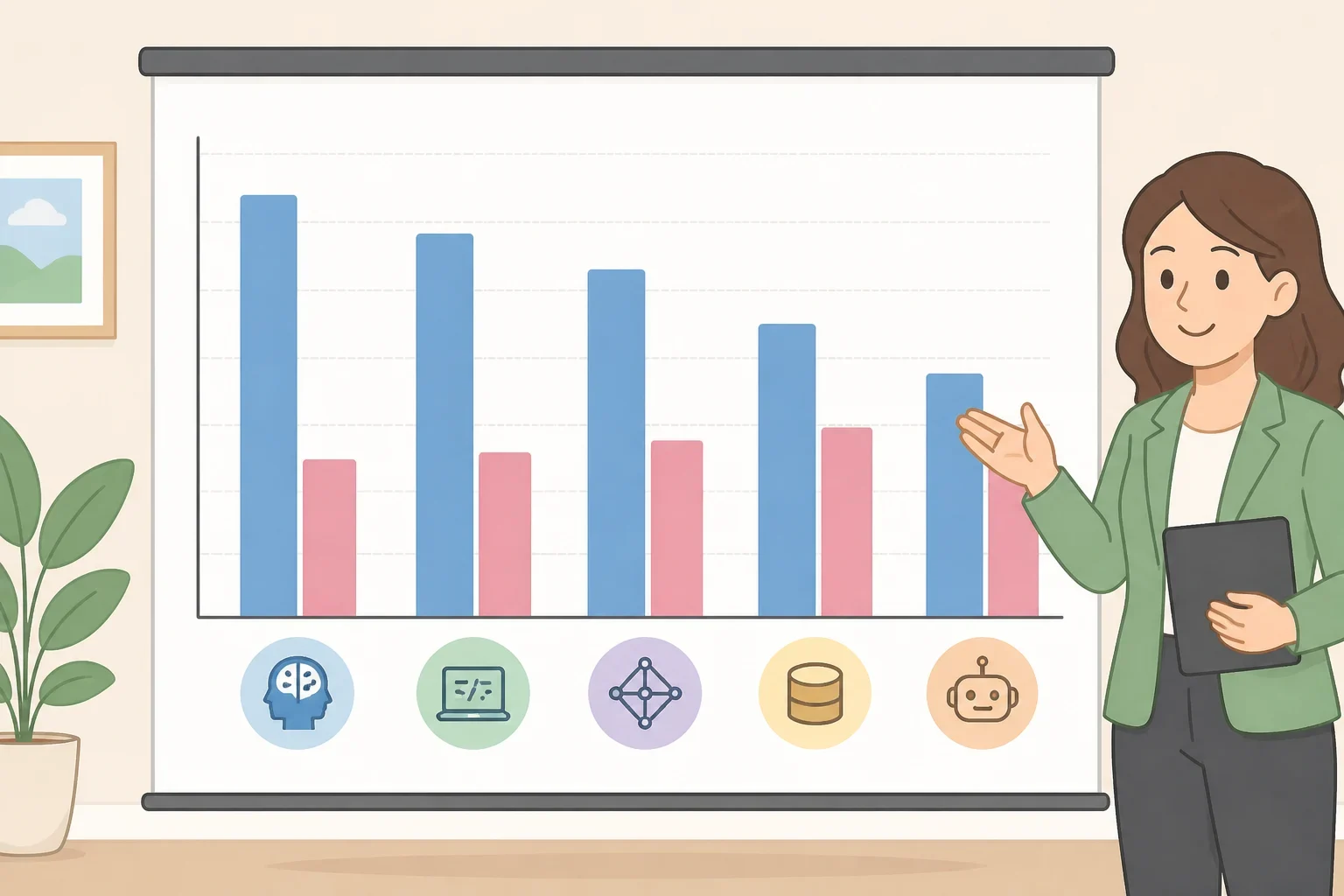
LinkedIn's analysis describes a "triple penalty": women are underrepresented in AI jobs, AI companies, and AI leadership at the same time. Women hold just 20% of head-of-AI roles, which pay an average of about $236,000, and 18% of member-of-technical-staff roles, which pay roughly $245,000, according to the LinkedIn data reported by Fortune.
Application data helps explain why the pipeline looks this way before a hiring decision even happens. IMD researchers found women submitted only 16% of applications to technical positions requiring emerging-technology skills, compared with nearly 20% for positions built on more established technology, in research published about six months ago (IMD). Women were also significantly less likely than men to apply to jobs in a different city, particularly emerging-technology roles, and that same-city application gap nearly disappeared when relocation wasn't required.
IMD's researchers recommend that employers ensure equitable access to projects involving new technology, arguing that career mobility shouldn't depend on switching employers just to get exposure to that kind of work. For someone already employed, that finding points to a specific question worth asking: whether AI-related projects at the company get assigned openly, or informally, to whoever's already in the room.
A report published about five months ago found that women make up 83% of workers in occupations classified as AI-vulnerable, even though women hold slightly less than half of all jobs overall (National Partnership for Women & Families). The same report estimated that about 6 million workers hold jobs that are AI-exposed and lack adaptive capacity, meaning they may have fewer tools or opportunities to move into other work if displaced; more than 8 in 10 of those workers are women, concentrated in administrative, clerical, and customer-service roles (National Partnership for Women & Families).
Both figures describe occupational risk and limited mobility, not a forecast that these jobs disappear on any set timeline.
Three possible entry points, depending on your background
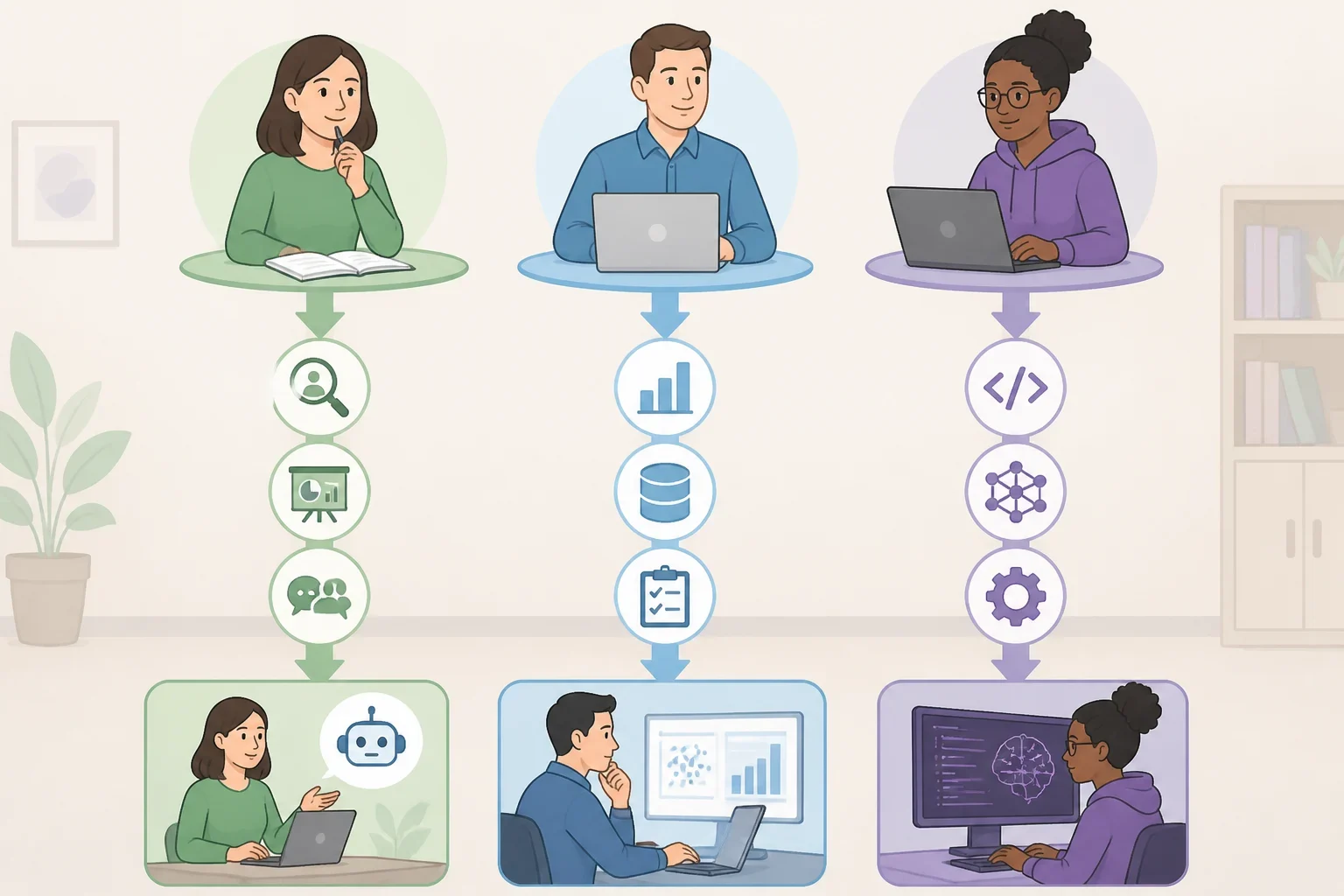
There's no official classification for entry paths into AI work, but sorting the options by current experience and background makes the decision easier to act on.
The first applies to anyone currently employed, including in AI-exposed roles like administrative, clerical, or customer-service work: build a visible AI-related contribution inside a current job before searching externally. The second applies to professionals in fields like marketing, HR, healthcare, or finance who want to move toward AI-adjacent work, such as implementation, evaluation, or process documentation, using existing subject-matter expertise plus applied AI-tool familiarity. The specific skills and credentials employers expect for this kind of role vary by industry and are worth checking against real job postings rather than assumed in advance.
The third applies to people with, or actively pursuing, a technical background aiming at AI engineering or research roles. Technical AI roles generally follow a different preparation path than the first two, but requirements vary substantially by employer, so reviewing current postings and a primary source like the Bureau of Labor Statistics Occupational Outlook Handbook is worth doing before deciding whether additional training is necessary. Treating this path as an easier version of AI-adjacent work is a mistake, since the two solve different problems for an employer.
Company size is one more factor worth researching, though not a rule to follow blindly. An analysis published about two years ago by Women in AI Ethics found women in AI roles tended to stay longer at smaller companies with a higher share of women peers, particularly in health and consulting, while the Big Five (Amazon, Apple, Google, Meta, and Microsoft) saw close to 60% of new hires leave within two years. That data is a couple of years old now, so team composition, turnover, and flexibility policy at a specific employer are worth confirming directly rather than assumed to match a dated snapshot.
How to break into AI: building proof of relevant skill
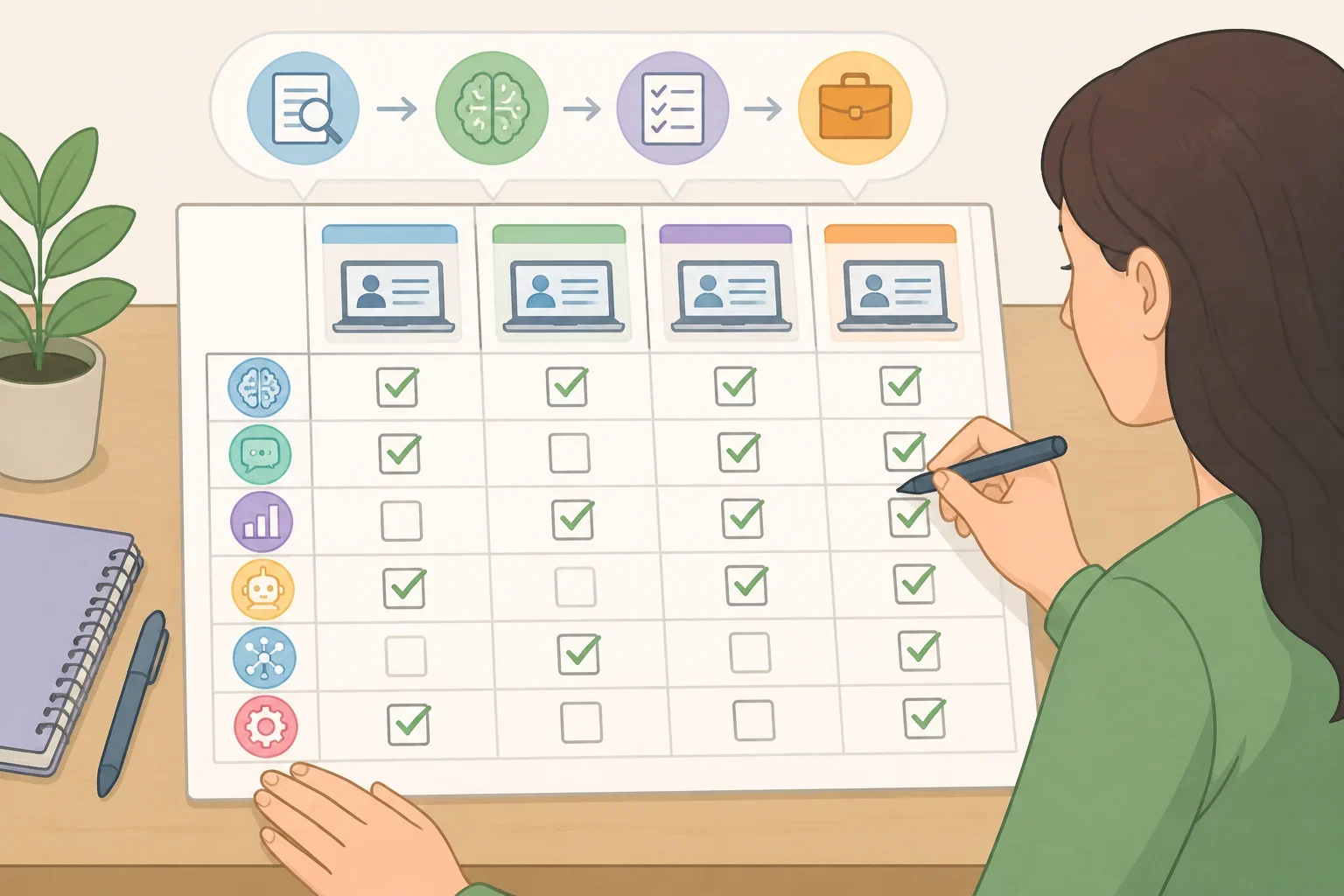
One practical way to apply the application-gap findings above is to check what's actually in demand before choosing a certificate or course. Comparing eight to ten current postings in a target field can show which AI skills employers list as required versus merely preferred, whether that's tool fluency, data literacy, workflow implementation, or governance knowledge.
Building a work sample tied to that target role is one way to make a resume more concrete than a general claim of "AI skills." Depending on what the postings ask for, that might mean documenting a workflow rollout, drafting a risk-review checklist, or writing up a human-reviewed AI-assisted process with quality controls built in.
IMD's finding that the same-city application gap nearly disappears when relocation isn't required points to one option worth raising for anyone already employed: asking a manager about contributing to an internal AI pilot, evaluation project, or workflow redesign, rather than competing only for external postings. Framing a resume or interview narrative around the tool used, the task, the business outcome, and the human oversight involved gives an interviewer something concrete to evaluate, though it doesn't guarantee an outcome any more than a single credential does.
What to verify before you apply
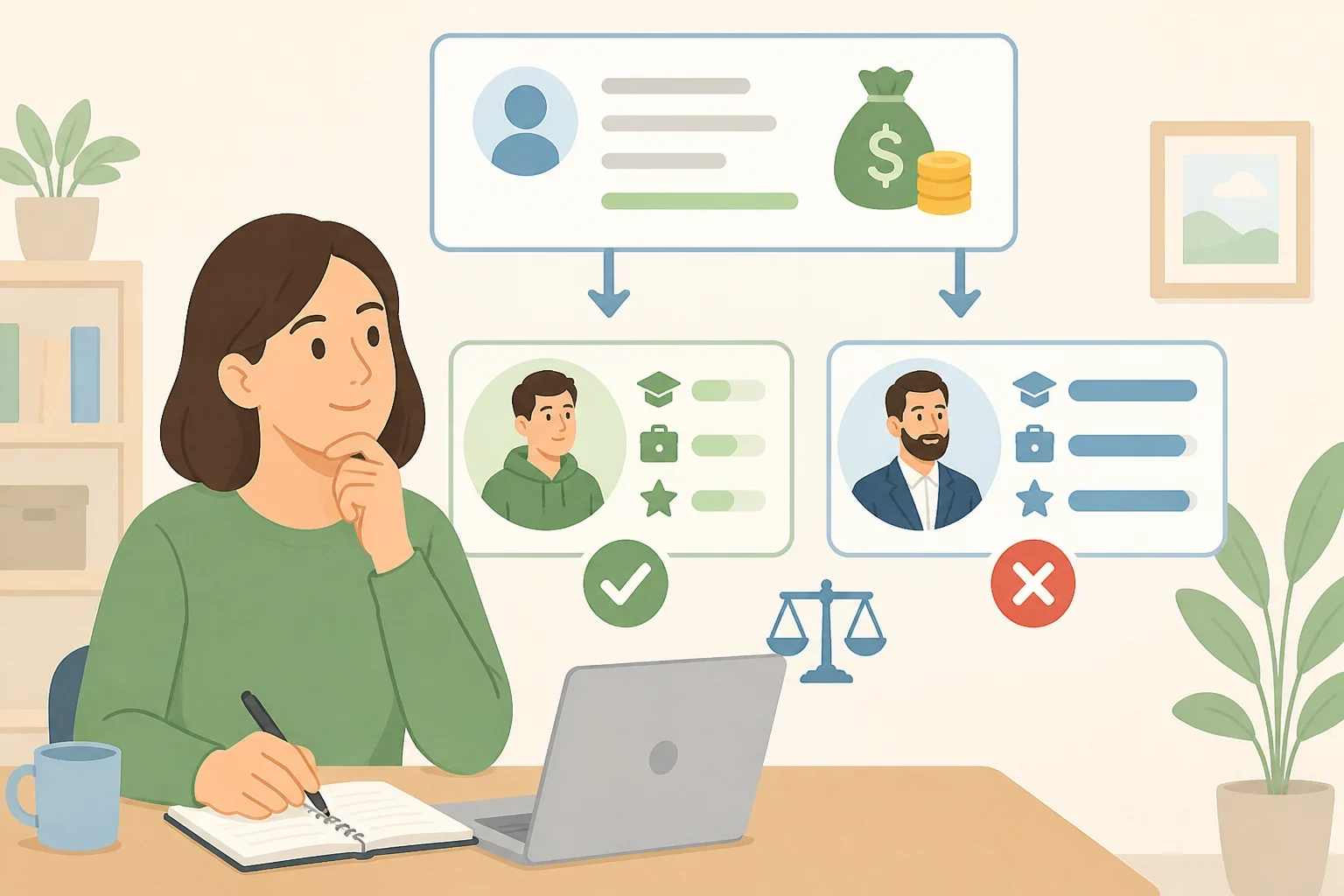
IMD's wage research puts the AI premium in more modest terms than the headline salary comparison suggests. Emerging-technology skills correlated with about a 6% salary boost, and people with in-demand skills were able to command roughly 2% higher salary offers, according to IMD research published about six months ago. Both figures sit well below the gap implied by the $177,000-versus-$80,000 comparison.
That $177,000-versus-$80,000 comparison reflects averages across all AI-related postings tracked in the LinkedIn analysis. The reporting behind it doesn't break out how much of the gap comes from seniority, industry, or role type, a limitation worth remembering before treating it as a personal benchmark. Checking whether a specific posting's advertised salary reflects entry-level or senior scope is a reasonable step before comparing it to your own prospects.
Current occupational and salary data is worth checking through primary sources like the Bureau of Labor Statistics Occupational Outlook Handbook, rather than relying only on aggregated news summaries. Employer-specific practices, including team makeup, turnover, and how technical projects get assigned, are best confirmed directly with the employer or current employees, since they don't reliably track industry-wide averages.
What to do next
Fairchild's "design flaw" framing is one read of the hiring numbers, not the only one. Either way, the practical questions worth answering this month don't change much.
Start by picking one target role from the three paths above based on current job and industry. Pull eight to ten current postings for that role and note which AI skills show up as required, not just preferred. Before enrolling in a course or paying for a certificate, check whether the employers on that list actually treat it as a required credential, a preferred one, or something they don't mention at all, and use a short conversation with someone already doing the role to confirm which skills mattered most in their own hiring.
