

- Federal jobs that do not require a degree: 2027 hiring rules
- Federal job qualifications: degree versus experience
- OPM federal job education requirements: what the numbers show
- Which channels applicants can search versus what agencies control internally
- How to screen a federal job listing before applying
- Why thin listings don't necessarily mean thin hiring
- What to verify before applying
Federal jobs that do not require a degree: 2027 hiring rules
The Office of Personnel Management wants at least 33% of fiscal 2027 federal hires to be early-career workers, with at least 60% pulled from shared certificates, pre-vetted applicant pools multiple agencies can draw from, according to Federal News Network reporting from last month. Agencies were also told to build at least one validated technical assessment into every hiring evaluation. OPM workforce data cited in that report shows the share of federal employees under 30 slipped from 9% in 2024 to 8% in 2025, according to Federal News Network.
For anyone researching federal jobs that do not require a degree, or weighing federal jobs without a college degree against listings that demand years of specialized experience, those targets don't mean USAJobs is about to fill up with entry-level postings. A separate review of active listings points to something narrower: whether a listing skips the degree requirement, whether it belongs to an early-career hiring push, and whether it's actually entry-level for a given applicant are three different questions. A single posting can answer one without answering the others.
That distinction matters most to current students, recent graduates still inside their eligibility window, applicants with apprenticeship or Job Corps time, and career changers without a federal-specific credential.
Federal job qualifications: degree versus experience

A Federal Hiring Data analysis published two weeks ago crosswalked 13,613 active USAJobs postings with usable qualification or education text against OPM's own qualification standards. It found 2,158 postings, or 15.9%, mapped to a standard with a clear completed-degree mandate, according to Federal Hiring Data. That figure measures how many postings demanded a finished degree. It says nothing about what share of federal jobs are open to someone without one.
Specialized experience works as a second, separate filter. Of the same 13,613 postings, 47.2% contained specialized-experience language, and 1,919 explicitly said education couldn't substitute for that experience at the advertised grade, Federal Hiring Data found. A listing with no degree line can still be closed to someone without matching work history.
The 15.9% figure also reflects one query run on a single day, not a full year of postings or an outcome dataset. Complete calendar-year data from 2018 through 2024 put the clear completed-degree group between 5.8% and 7.9% of announcements. That's worth noting, but it's not a like-for-like comparison, since it covers full-year totals rather than one day's snapshot of active listings, the analysis notes.
OPM federal job education requirements: what the numbers show

The degree mandates weren't spread evenly by field. Medical Officer postings alone accounted for 1,210 of the 2,158 listings with a clear degree requirement, or 56.1% of that entire group, Federal Hiring Data reported. Social Work postings followed with 281, and Psychology with 234, according to the same analysis.
Outside licensed clinical fields, researchers identified 1,300 postings using precise education-for-experience substitution language, plus another 2,016 describing some combination of education and experience, Federal Hiring Data found. Those numbers are the closest available data point on government jobs that accept experience instead of a degree. Even so, each posting needs to be read on its own terms rather than assumed to represent a wider category.
Which channels applicants can search versus what agencies control internally
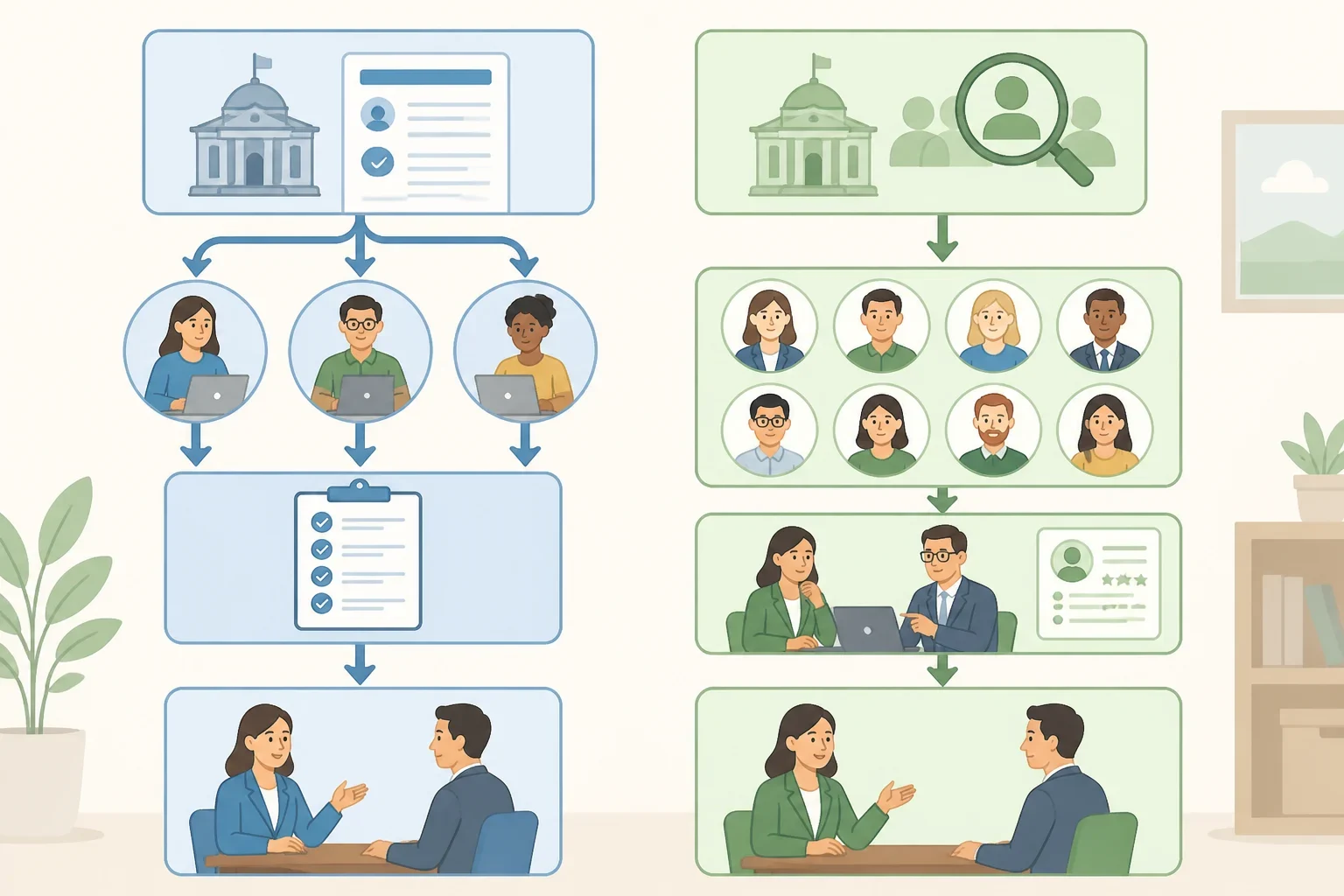
The reporting names shared certificates as the mechanism behind OPM's 60% goal, but it doesn't explain how agencies will use them or whether the target will shrink the number of public listings, according to Federal News Network. Applicants should check whether a specific opening is a Pathways Internship or Recent Graduate posting directly on USAJobs, since eligibility, hiring path, and enrollment terms vary by announcement and need to be confirmed there, not assumed from a job title.
The Pathways Recent Graduate Talent Program works differently. It's a tool that lets agencies search for and connect with already-vetted candidates to fill open permanent and temporary positions, according to USAJobs guidance on the program. Its pool consists specifically of people who already completed the two-year Recent Graduate Program but weren't converted to a permanent role by their original agency. That makes it a channel agencies use to source hires, not a listing job seekers can apply into on their own.
The 33% and 60% targets appear to measure different things. One tracks the career stage of new hires; the other tracks the hiring mechanism agencies use to fill a role, based on how Federal News Network describes the two goals. That reading is an interpretation of how the targets are structured, not a definition OPM has spelled out on its own.
How to screen a federal job listing before applying
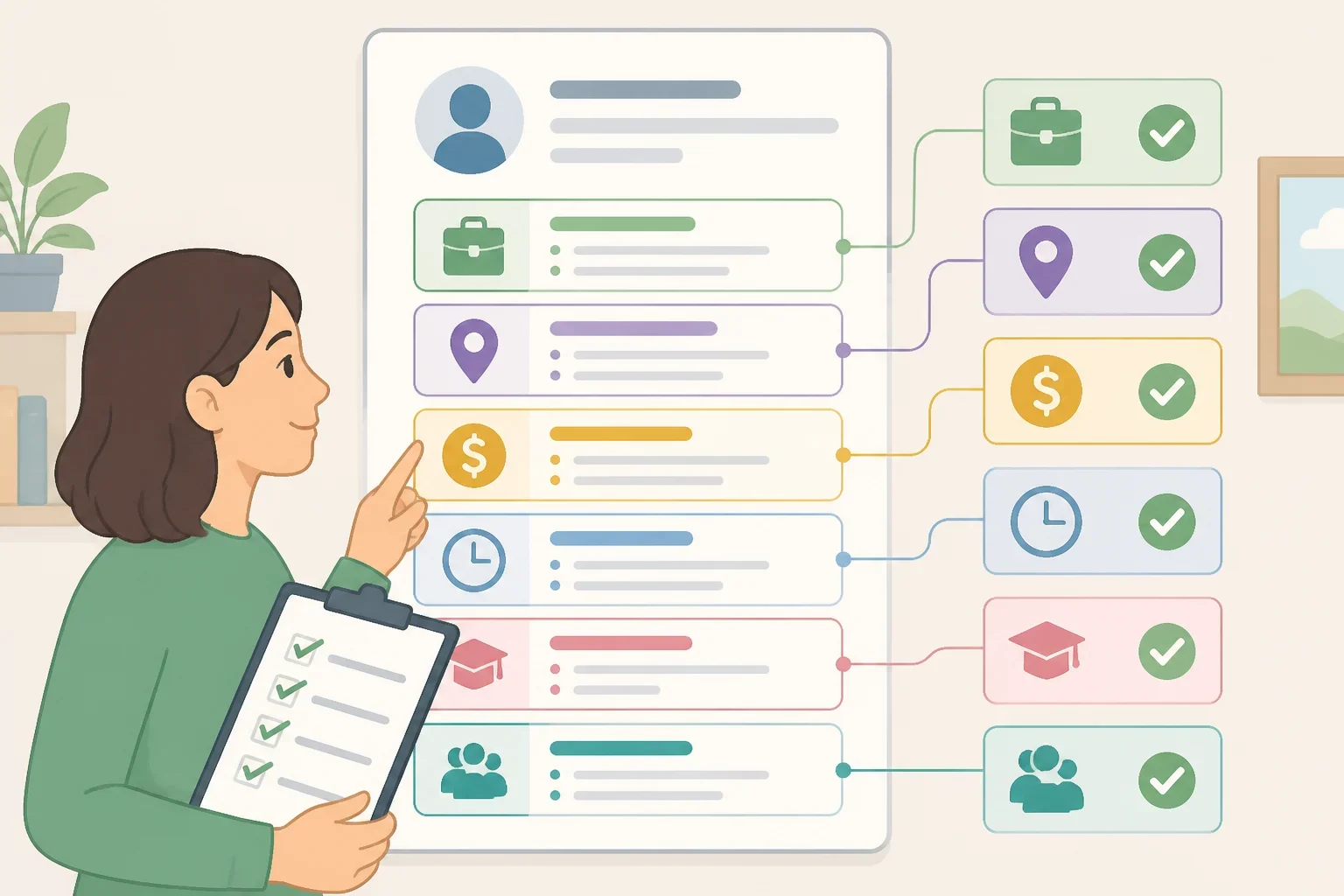
Vacancy announcements typically list the occupational series and grade, a "who may apply" field, and a grade-specific specialized-experience definition where one applies. Neither the job title nor the presence or absence of a degree line settles eligibility on its own.
One current USAJobs posting shows the scale of hiring underway: it's looking to fill roughly 250 project management jobs across multiple agencies, Federal News Network reported. The report doesn't say which occupational series that posting falls under. Separately, the 0343 series, which covers management and program analysis, has lost more than 20,000 employees since January 2025, according to the same report. Neither figure confirms that the 250-position announcement is open to applicants without a degree or with limited experience; they show demand, not eligibility.
The requirement that agencies use validated assessments in all their hiring evaluations means applicants, including those without a degree, should prepare for a skills-based exercise rather than a resume review alone. What that assessment looks like will still vary by announcement, Federal News Network reported.
Why thin listings don't necessarily mean thin hiring
At the time of the report, USAJobs listed 12,805 open positions, and nearly three-quarters sat within the Departments of Defense and Veterans Affairs, Federal News Network found. USAJobs postings overall fell 42.8% between 2024 and 2025, the same report said. That concentration can make other agencies' hiring look inactive even when it isn't.
Staffing on the hiring side has thinned out too. More than 11,100 federal HR employees have left their jobs since the start of 2025, a net governmentwide loss of more than 9,000 HR professionals, Federal News Network reported. The reporting doesn't quantify how that loss affects processing times for shared certificates or Pathways placements, but fewer HR staff generally means slower movement through any hiring channel.
Federal hiring activity was still soft in the period the report covered, despite the announced 2027 goals: federal hires fell by about 6,000 in June, per Bureau of Labor Statistics data cited by Federal News Network. OPM's Tech Force initiative, aimed largely at early-career talent for temporary two-year positions, has onboarded about 300 recruits toward its 1,000-person target so far, the same report said.
What to verify before applying
OPM's 2024 Pathways rule changed several terms entry-level applicants should know about: the intern-conversion threshold dropped from 640 hours to 480, the agency conversion window extended from 120 days to 180, and agencies can now start Recent Graduates as high as GS-11 instead of GS-09. That rule also lets time spent in a completed Registered Apprenticeship Program or Job Corps count toward those conversion hours.
What none of this data supplies is a count of how many entry-level workers agencies have actually hired through shared certificates or the Talent Program under the new targets. That's a documented mechanism, not a confirmed number of jobs, and applicants should treat it that way until agencies report actual hiring numbers.
Before applying to any listing, check:
- The occupational series and grade, not just the job title
- The "who may apply" field and hiring path, where listed on the announcement
- The grade-specific specialized-experience definition, including whether education can substitute
- Whether a Recent Graduate or Internship posting's stated eligibility window and enrollment requirement match your situation
- Whether apprenticeship or Job Corps time counts toward conversion hours, confirmed directly with agency HR
- Whether the announcement lists a technical assessment as part of the evaluation
None of those fields depend on whether a job title includes the word "entry-level." Whether a federal listing that skips the degree requirement is realistic for a given applicant comes down to meeting that announcement's actual requirements, not the absence of a degree line.
