

Technical skills required for AI jobs: what BLS data shows
Job seekers researching the technical skills required for AI jobs won't find that exact phrase anywhere in federal labor statistics. The U.S. Bureau of Labor Statistics organizes employment by established occupations, not a separate AI-jobs category. Even so, the agency's newest projections show unusually fast growth concentrated in a handful of titles it explicitly ties to AI adoption.
Computer and mathematical occupations are projected to grow 10.1% from 2024 to 2034, more than three times the 3.1% growth rate projected for the entire U.S. economy, according to BLS projections released last year. Data scientists are projected to grow even faster: 33.5% over the same period, the fourth-fastest rate of any occupation nationwide, according to BLS analysis.
That analysis names three occupations tied to rising AI-linked employment: data scientists, computer and information research scientists, and software developers, per BLS. A separate BLS review of AI's effects on the 2023-33 projection cycle discusses database administrators and database architects in that same conversation, without specifying how much of their growth traces to AI itself, according to BLS.
Those projections identify which occupations are expanding quickly. They don't say which programming languages, tools, or platforms employers expect candidates to know, a gap that matters for anyone deciding what to study before applying to one of these titles.
AI job requirements: why occupation titles matter more than the label
BLS ties projected growth in the professional, scientific, and technical services sector (up 7.5%) and the information sector (up 6.5%) partly to expected demand for AI-based systems, data processing, software development, and related consulting through 2034, according to BLS. Five of the 15 fastest-growing occupations in the entire economy fall inside the computer and mathematical group, per BLS 2024-34 projections.
Zoom out further and the wage gap is wide. The entire computer and information technology occupational group reported a median annual wage of $105,990 in May 2024, more than double the $49,500 median across all occupations, with about 317,700 openings projected each year from growth and turnover combined, according to BLS data.
That figure describes the whole occupational group, not any single title, so it shouldn't be compared directly to the individual counts further down. Some numbers in this article come from a 2023-33 analysis, others from the newer 2024-34 cycle; each is labeled by cycle so readers don't mistake one for the other.
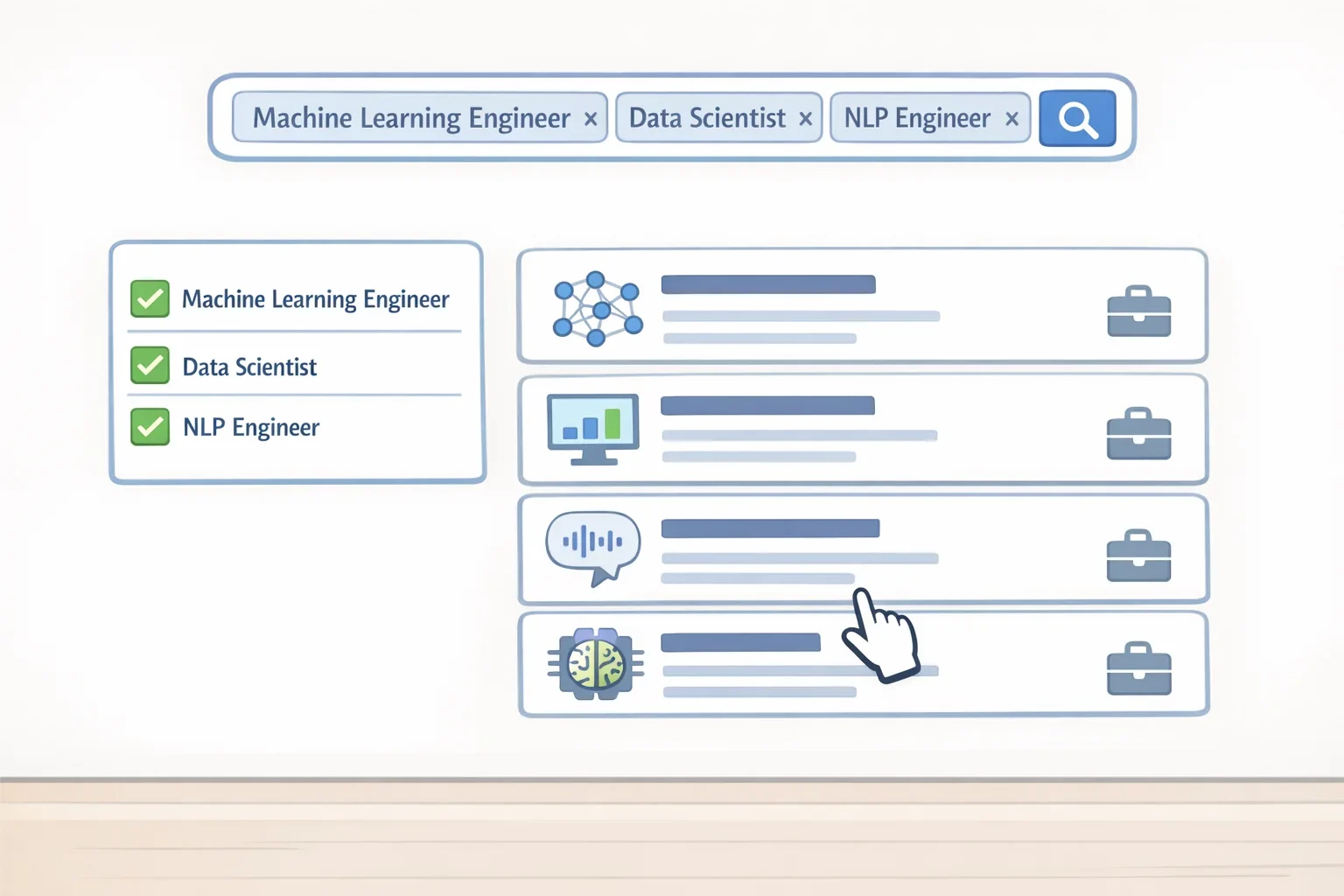
For job seekers, that distinction matters in practice. Search job boards by occupation title, not by the phrase "AI job." Software developer, data scientist, database administrator, database architect, and computer and information research scientist are the titles the data can actually speak to.
Four occupation areas tied to AI-linked employment growth
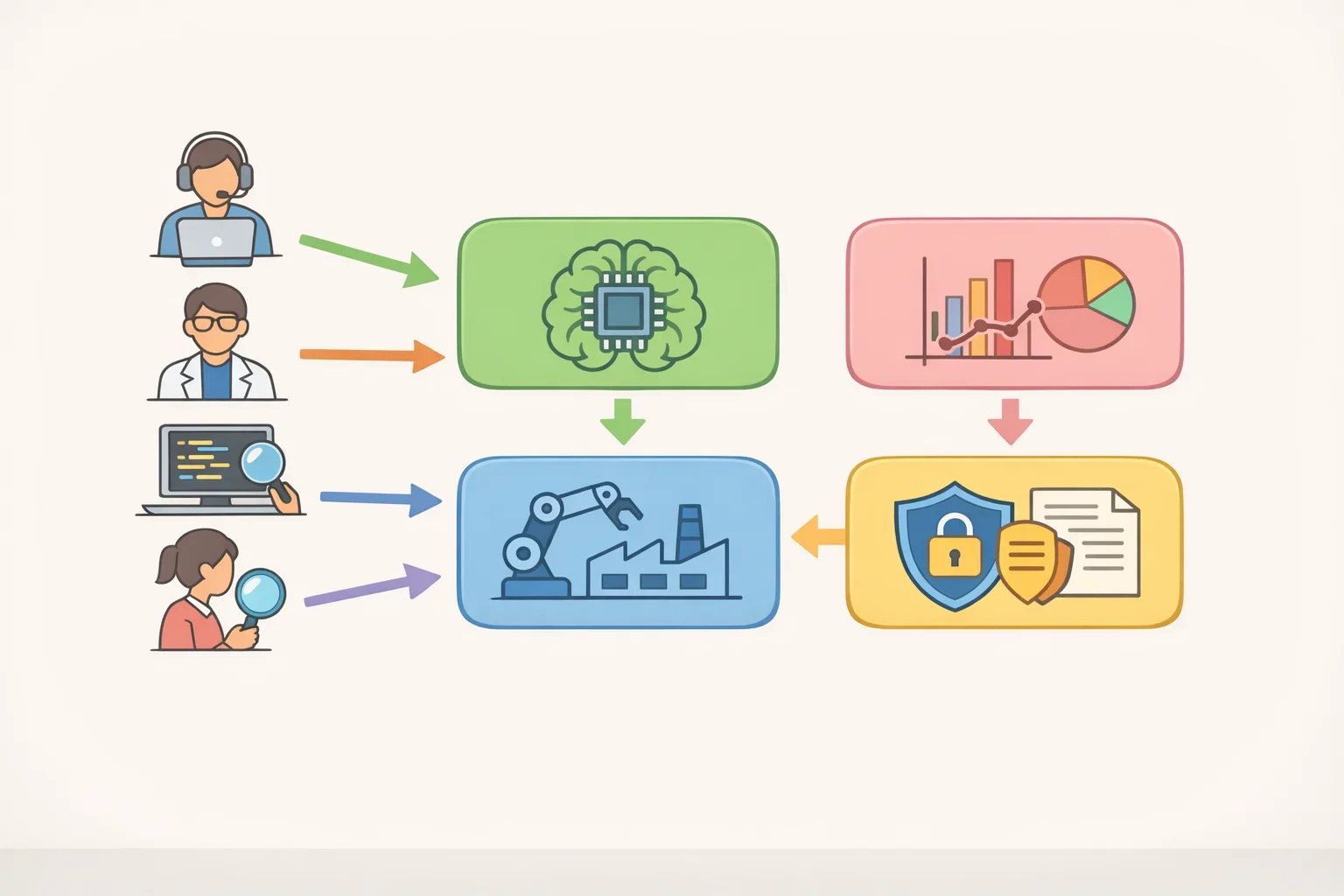
BLS ties AI-linked growth to five job titles across four occupation areas: software developers, data scientists, computer and information research scientists, and the paired roles of database administrators and database architects. The amount of federal detail available for each varies widely, and that gap is worth noting before comparing them.
Software developers. The research behind this article turns up the most detail for this title. O*NET, an occupational database maintained by the U.S. Department of Labor, describes the role as designing, updating, and integrating software systems, often coordinating database work and collaborating with hardware engineers on specifications. Common job titles include application developer, DevOps engineer, infrastructure engineer, and software architect, per the O*NET profile.
- 1,693,800 workers employed in 2024, with 115,200 projected openings from 2024 to 2034 and a 2025 median annual wage of $135,980, according to O*NET.
- A separate BLS review of the 2023-33 cycle projected 17.9% employment growth for software developers, well above the 4.0% average for all occupations in that cycle, according to BLS. That figure comes from an older projection cycle and shouldn't be added to the 2024-34 numbers above.
- O*NET reports a bachelor's degree as the education level most respondents associated with this occupation (85%), with associate's and master's degrees each cited by 5%, per O*NET. That's an occupational-profile measure, not a federal licensing rule or a guarantee that every employer requires a bachelor's degree.
- On the job itself, 71% of respondents rated contributing to a team as "extremely important" and 44% rated accuracy as "very important," per the same O*NET data. Those describe conditions reported by people already working in the role, not screening criteria. Separately, 40% described the field as "highly competitive," the one hiring-related data point in this profile.
Data scientists. BLS links this occupation's growth directly to demand for building AI models, analyzing data, and folding those results into business operations, projecting 33.5% growth from 2024 to 2034, the fastest rate in the mathematical science group and fourth-fastest of any occupation tracked, according to BLS.
No wage figure, education breakdown, or skills profile for data scientists appears in the sourcing used for this article. That gap means anyone considering this path should pull the O*NET data scientist profile directly rather than assume it mirrors software developer requirements.
Database administrators and database architects. These two titles appear in the BLS discussion of AI-related effects on the 2023-33 projections, alongside software developers, though the agency doesn't specify how much of their growth traces to AI-related data infrastructure demand versus broader IT growth. Database administrator employment was projected to grow 8.2% over that cycle, and database architect employment 10.8%, both faster than the 4.0% average across all occupations, according to BLS.
No wage or education data for either title appears in this article's sourcing. Readers weighing these paths should look up each occupation's individual O*NET profile before comparing pay or entry requirements to software developers.
Computer and information research scientists. BLS names this occupation directly as tied to AI-linked employment growth, alongside data scientists and software developers, per BLS 2024-34 analysis. No growth percentage, wage figure, or education breakdown for this occupation appears in the sources reviewed here. Anyone weighing this path should check the BLS Occupational Outlook Handbook and the O*NET profile directly before assuming anything about typical entry requirements.
What the growth numbers don't capture
BLS describes programming as one of many tasks AI is well suited to assist, letting software developers use it to draft, test, and document code, and even improve data quality, according to BLS. Despite that, the same review still projected 17.9% growth for the occupation over the 2023-33 cycle, evidence against the assumption that AI tools shrink demand for the underlying role.
Occupations rarely shift overnight. Even fast-moving technology takes time for employers and workers to fold into daily practice, according to BLS. That's part of why growth projections for AI-adjacent titles can look strong even as the underlying technology keeps changing.
Other occupations are moving the opposite direction. Medical transcriptionist employment was projected to decline 4.7% through 2033 as speech-recognition and AI transcription tools reduce demand for that work, according to BLS. Automated systems, including AI, are also expected to contribute to declining employment among office and administrative support workers, and rising AI use in sales calls and analysis is expected to limit demand for many sales occupations, according to BLS projections from last year.
Growth projections describe a decade-long trend across the whole labor market, not an individual applicant's odds of getting hired. High wages and strong projected growth can coexist with a competitive, closely evaluated hiring process for any single opening.
Verifying the technical skills required for AI jobs before you train
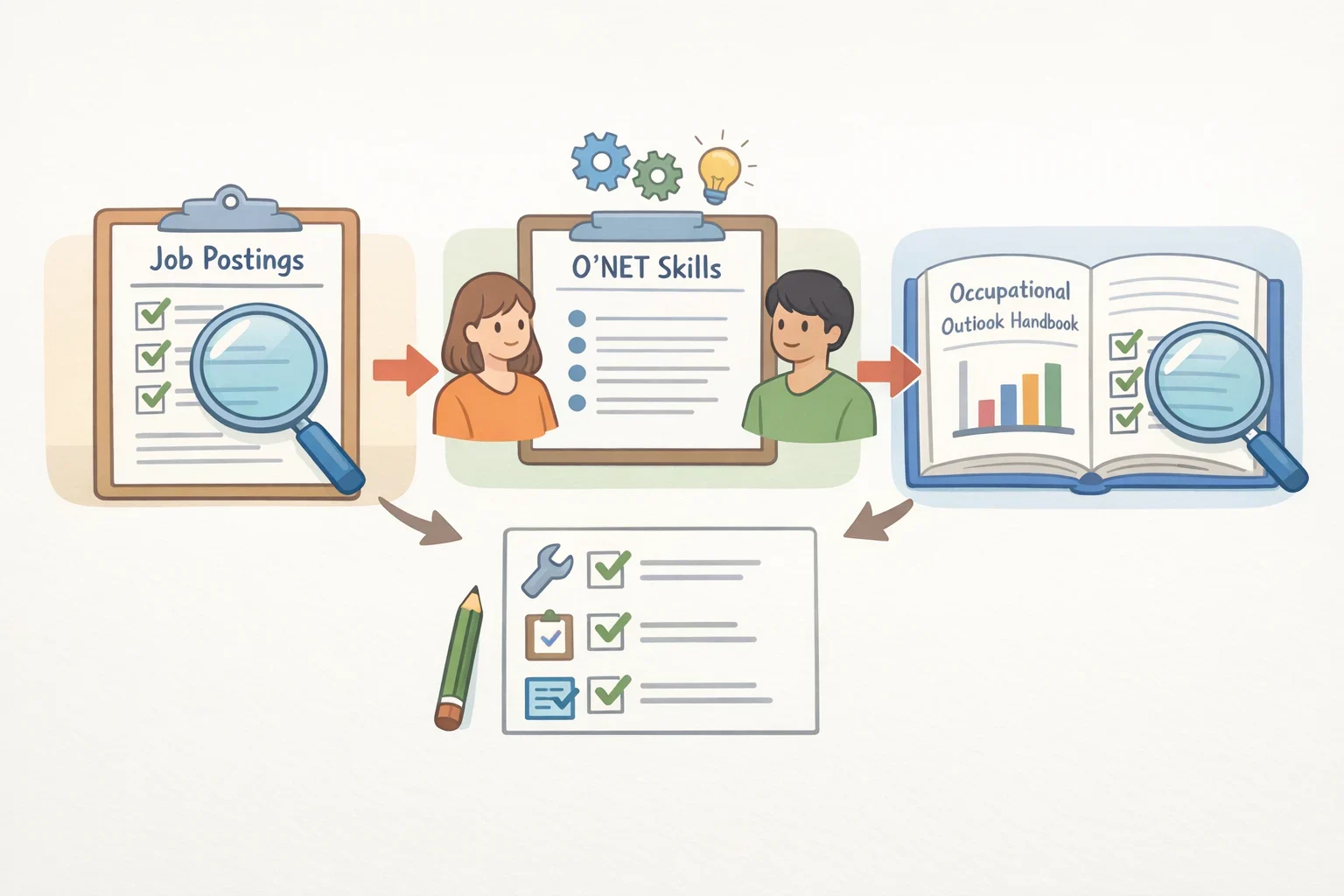
Federal data doesn't break down specific tools, languages, or platforms. There's no Python, SQL, cloud-platform, or machine-learning-framework tally anywhere in the sources above. BLS projections show occupation-level growth and the labor-market assumptions behind it; ONET adds duties, related titles, and entry-education detail, but only for software developers in this sourcing. Filling in the rest takes other research: current job postings, each occupation's ONET skills section, the BLS Occupational Outlook Handbook, relevant certifications, and employer career pages all add pieces the projections leave out.
For job seekers deciding whether to invest in a specific degree, bootcamp, or certificate, a few checks help close that gap:
- Review 10 to 15 current postings for one target title, separating entry-level from experienced listings. Treat the sample as a snapshot of what a handful of employers happen to be asking for, not a market-wide survey.
- Compare how often postings for that title list a bachelor's degree as required versus preferred, especially if you don't hold one, and note whether employers mention accepting equivalent experience or a project portfolio instead.
- Ask a recruiter or hiring manager directly whether a specific opening involves AI model development, work with data infrastructure that feeds AI applications, or conventional software or database work. The occupation title alone won't answer that.
Before applying to any title from this list, pull its O*NET profile and the BLS Occupational Outlook Handbook entry, then compare both against current local postings to see how closely they match what the federal data describes.
