

- Is It Worth Switching Jobs in 2026? Wage Data Explained
- What the wage-growth data actually shows
- Is it worth switching jobs in a low-hire labor market?
- How local demand shifts the odds of a better move
- Two decision paths: testing the market vs. evaluating an offer in hand
- Comparing an offer to your current role: a total-compensation method
- The decision comes down to the offer, not the average
Is It Worth Switching Jobs in 2026? Wage Data Explained
Every few months, a fresh batch of wage data reignites the same question for employed workers eyeing an exit: is it worth switching jobs right now, or does the safer move mean sitting tight? The honest answer depends less on a national average and more on what a specific written offer does to your actual paycheck and benefits. This analysis walks through what current Federal Reserve wage-tracking and labor-market research can and can't tell an individual job seeker, then lays out a decision framework for testing the market versus evaluating an offer already on the table.
Start with the volatility. In September 2025, workers who changed employers saw wages grow 4.6% year over year, compared with 3.8% for those who stayed put, a 0.8 percentage-point edge for switchers (Atlanta Fed). Five months earlier, the story flipped: switchers actually trailed stayers, 4.3% to 4.4% (Atlanta Fed). A swing that size in under half a year is exactly why the question of whether switching jobs pays off can't be settled with one monthly report, or with last year's job-hopping salary increase headlines.
Layer on the hiring picture and the case for caution grows. The Richmond Fed found that by July 2025, the wage gap between switchers and stayers had narrowed, "lessening the incentive to change jobs even further" (Richmond Fed). The Cleveland Fed reported last week that hiring, quitting, and layoffs are all running low at the same time nationally, a combination it calls historically unusual for an otherwise healthy labor market (Cleveland Fed). None of this means switching jobs never pays off. It means the decision has to rest on the specific offer in front of you, not on a government average.
What the wage-growth data actually shows
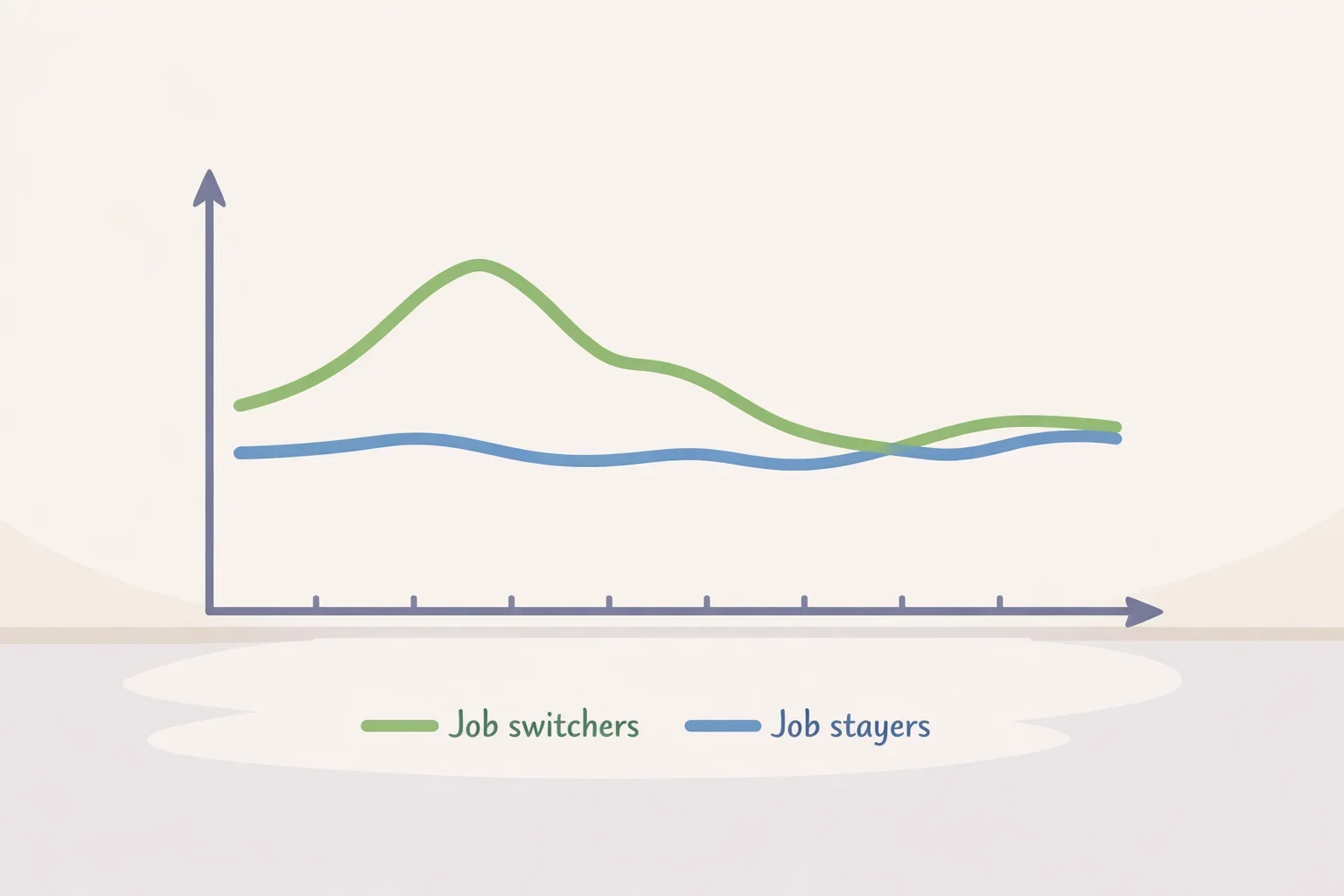
The Atlanta Fed's Wage Growth Tracker is an aggregate measure. It tracks median year-over-year wage growth for two broad groups nationally, people who changed employers and people who didn't. It does not predict what raise you personally would get by switching, and a single month's gap between the two groups doesn't prove that switching caused faster pay growth for the people in it.
Three readings show how much that gap actually moves. A year earlier, in October 2024, switchers led by a slim 0.1 point (4.7% versus 4.6%) (Atlanta Fed). By April 2025, switchers had fallen behind stayers, 4.3% to 4.4% (Atlanta Fed). Then, by September 2025, switchers had opened a much wider 0.8-point lead (Atlanta Fed). The Richmond Fed's separate finding, that the gap was narrowing again as of last summer, reinforces that any single month's reading is a snapshot rather than a dependable annual trend (Richmond Fed).
The practical takeaway isn't to ignore this data. It's to treat it as general context, then compare a specific written offer against your actual current pay, not against a national average that changes direction every few months.
Is it worth switching jobs in a low-hire labor market?
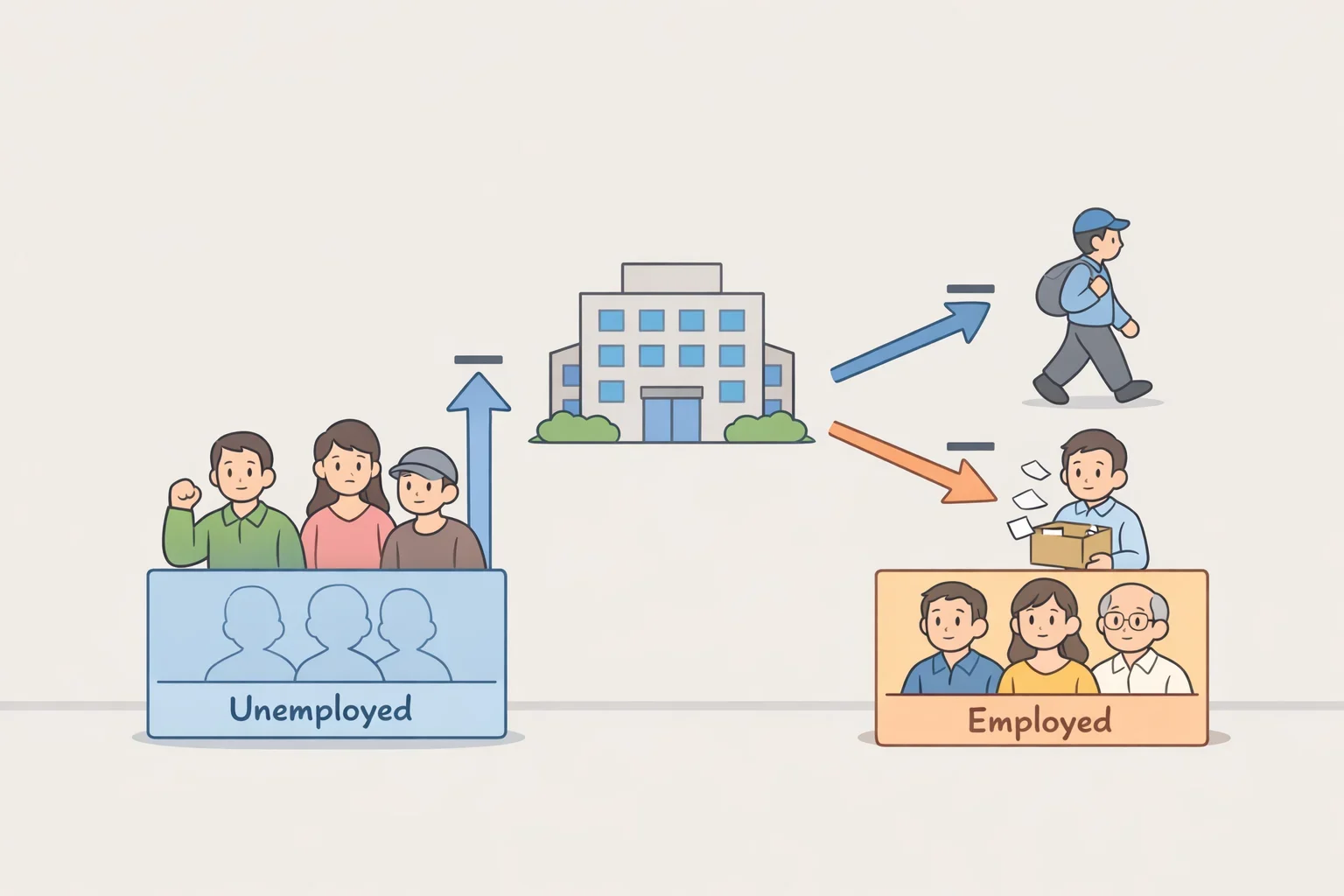
The Cleveland Fed reported last week that hiring, quitting, and layoffs are all running low at once nationally (Cleveland Fed). Low hiring and low quitting tend to move together, since employers typically hire to replace someone who quit, got promoted, or was let go. The unusual piece is the third one: layoffs are also low, in a labor market the bank describes as otherwise healthy.
The current hiring rate sits below levels seen during the strong labor markets of the 2000s and 2010s, and the quit rate is running below the late 2010s despite similar unemployment levels today (Cleveland Fed). Fed Chair Jerome Powell addressed this tension earlier this year, describing the balance as "unusual and uncomfortable" because people without jobs face a harder time breaking in when both hiring and quitting are this depressed (Cleveland Fed).
This isn't a new phenomenon tied to this year specifically. The Cleveland Fed traces it to a decades-long decline in labor-market "fluidity," the general rate at which workers move between jobs. Researchers attribute perhaps half of that long-run decline to an aging, more educated workforce; the rest isn't well understood (Cleveland Fed). That's a reason to expect the current caution to stick around rather than snap back to 2021-2022 conditions on its own.
None of this establishes whether your specific employer is stable. A low national layoff rate is an aggregate statistic covering every industry and company size in the country. Check for signals at your own organization, recent layoff announcements, hiring freezes, earnings or funding pressure, rather than assuming national numbers describe your job. With hiring this subdued overall, it may be prudent to plan for a less predictable search than what workers experienced a few years ago, even though the data here don't establish a specific number of weeks or months to budget.
How local demand shifts the odds of a better move

A Federal Reserve research paper published earlier this year found that a 10% increase in local job vacancies raises the unconditional probability of moving to a job with better pay, benefits, interest in the work, and advancement opportunities by an estimated 11% to 18% (Federal Reserve research paper). That's a shift in the overall probability of landing a better job, not a guaranteed raise of that size, and not a personal probability calculated from your résumé or field.
This is part of what determines when it's worth changing jobs even in a cooler national market: local demand, not the national headline number. The same research found that pay and non-pay job qualities, benefits, engagement, advancement, tend to improve in roughly similar proportion as local markets tighten (Federal Reserve research paper). That matters for anyone asking whether it's worth changing jobs for more money alone: comparing salary figures without factoring in benefits and growth potential can understate what a genuinely competitive local market is offering.
The Cleveland Fed's low-hire, low-fire finding is built on national government hiring data. It can't tell you whether hiring is stronger or weaker in your specific occupation or metro area, only that it's soft in the aggregate (Cleveland Fed). A national slowdown can still sit alongside a tight market for a specific role in a specific city.
Use current job-posting volume in your occupation, through your state workforce agency's job board or industry-specific listings, as one local demand signal. Postings measure vacancies, though counts can be inflated by duplicate listings, stale postings still marked open, or a single employer flooding a board with repeated requisitions. Separately, the Bureau of Labor Statistics' Occupational Employment and Wage Statistics program can give you metro-level pay benchmarks for your field. Neither source alone establishes your personal negotiating use, but together they offer a local reality check a national average can't provide.
Two decision paths: testing the market vs. evaluating an offer in hand
Whether switching jobs is worth it depends on which side of this line you're on: still testing the water, or holding a written offer that needs an actual answer. The two situations call for different information, and mixing them up is where a lot of job seekers talk themselves into a bad decision in either direction.
Path A: no offer yet, is job searching worth the time
Start with a bounded experiment instead of an open-ended search. Identify a batch of postings, roughly 10 to 15, that closely match your experience level and target pay, apply while staying employed, and track results over several weeks. This isn't a scientifically validated threshold from the research above; it's a starting structure that keeps the test measurable instead of dragging on indefinitely.
Track:
- How many applications you submitted, and to what type of role
- Recruiter or hiring-manager replies
- Screening interviews scheduled
- Later-round or final interviews
- Salary ranges disclosed during the process
- Any qualification employers repeatedly flag as missing
A strong response, multiple interviews, second-round callbacks, is a real local demand signal worth acting on. A weak response is worth investigating rather than treating as proof that national low-hire conditions describe your field specifically. Response rates also reflect résumé positioning, the pay level you're targeting, how selective you're being, and your location, so compare your results against actual postings in your occupation before concluding the market has closed to you.
Testing the market this way doesn't require resigning, so your paycheck keeps coming while you gather information. It isn't entirely without cost, though. Applying and interviewing while employed can raise confidentiality concerns if your employer finds out, and taking calls during work hours can affect how you're perceived if it isn't handled carefully. Weigh those workplace realities against your own employer's culture before you start.
Path B: offer in hand, is it worth taking
Once there's a written offer, the aggregate wage-growth comparisons from earlier in this piece stop being useful. A national tracker showing switchers ahead of or behind stayers in a given month can't predict what your individual raise should be, and it shouldn't be used to justify accepting or rejecting a specific number. The next step is a direct compensation comparison.
Comparing an offer to your current role: a total-compensation method
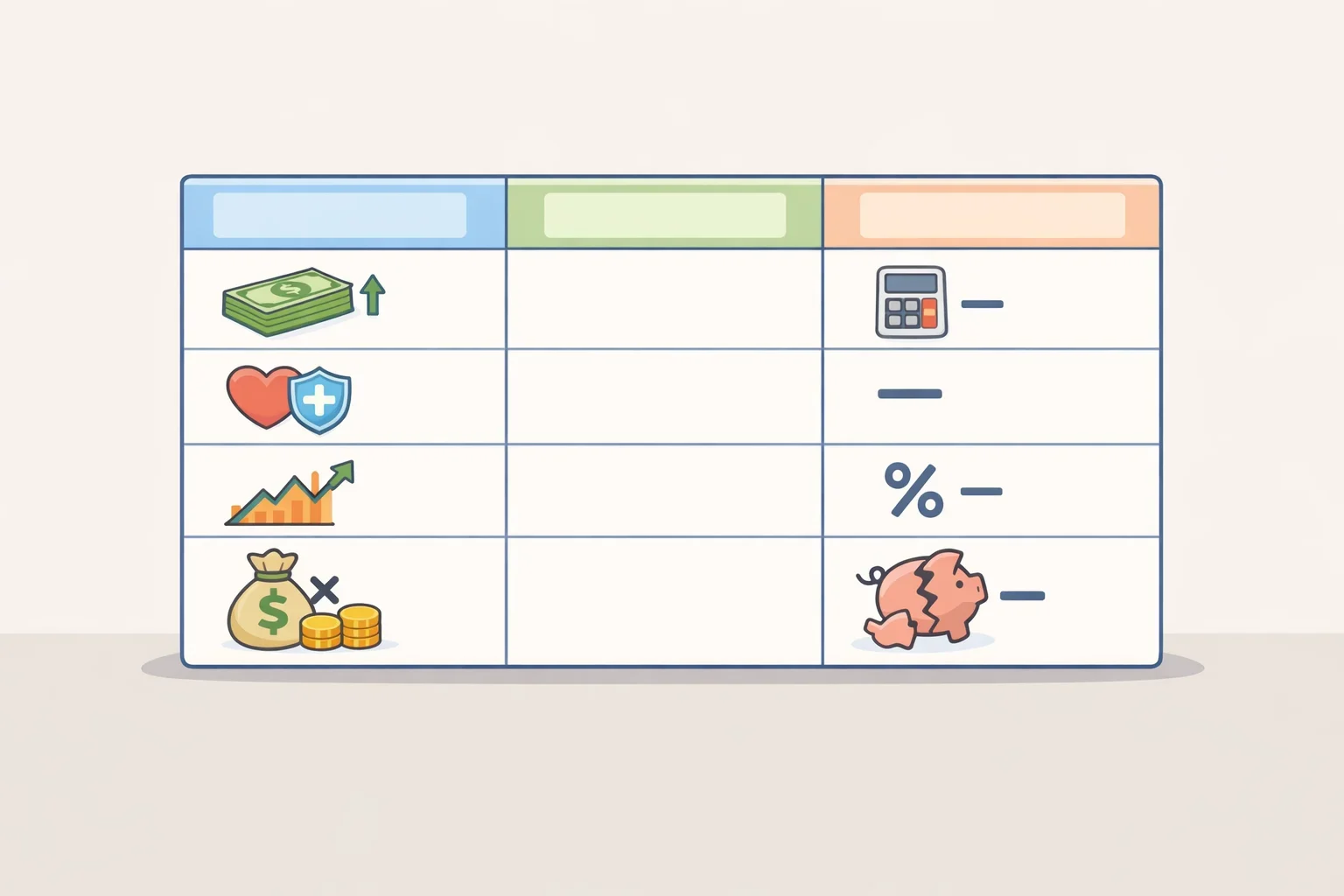
Build a simple three-column comparison, current role, new offer, difference, and fill in more than base salary:
- Base pay
- Bonus or commission structure, including how reliably it has historically paid out
- Equity and its vesting schedule
- Retirement match and any eligibility waiting period
- Health insurance premiums and deductibles
- Paid time off
- Estimated change in commute cost or remote-work expenses
Then account for what leaving would cost you outright: an upcoming bonus payout, unvested equity you'd forfeit, employer-paid benefits that reset with a new employer's waiting period, and any accrued but unused leave. Whether unused leave gets paid out when you leave depends on your employer's policy and, in some states, on state law, so check your handbook or ask HR rather than assuming you'll automatically lose it. Skipping this step can make a modest raise look bigger than it actually is once the one-time costs are subtracted.
A written offer isn't automatically a risk-free one. Offer letters can still be contingent on a background check, budget approval, or a confirmed start date, and exactly which conditions apply, and what happens if one falls through, varies by employer and sometimes by state. Ask directly what's still outstanding before giving notice, rather than assuming the offer is final simply because it's in writing.
The compensation table can tell you whether the money and benefits are genuinely better. It can't tell you whether the new job is more secure than your current one. That's a separate judgment call, one that depends on the employer's financial condition, how much turnover the team has seen, whether the role leans heavily on a single client or funding source, and how clearly the job itself has been defined. Assess those factors on their own before weighing them alongside the numbers in your table.
Set your own threshold for what counts as "worth it" before you know the number, based on your risk tolerance and how stable your current job actually is. The research reviewed here doesn't establish a standard minimum raise that applies to everyone, so don't borrow one from a headline. Resign only once every contingency is resolved in writing, not on a verbal offer or an informal start date.
The decision comes down to the offer, not the average
Wage-growth trackers and hiring reports are useful for understanding the broader climate, but they can't answer the only question that determines your outcome: what does a specific offer do to your total compensation, benefits, and career trajectory compared with staying where you are. That comes down to your own numbers and your own risk tolerance, not a monthly government release.
If there's no offer yet, run the search experiment above and track the response data for a few weeks before deciding how much more time to invest. If there's a written offer already on the table, build the total-compensation comparison, confirm every outstanding contingency in writing, and weigh the one-time costs of leaving against what the new role actually offers, before you respond.
