
- How to map an early path into the job market
- Follow the timeline
- Step 1: Choose target roles and compare the requirements
- Step 2: Build professional visibility and have useful conversations
- Step 3: Build evidence that closes a specific gap
- Step 4: Turn evidence into applications and interview preparation
- Start a seven-day plan
How to map an early path into the job market
A student with a year left before graduation does not need a perfect career plan. They do need a workable target, evidence of relevant skills, and enough time to improve weak spots before applications begin.
This guide lays out that sequence. Start by choosing target roles, compare current job postings with occupational resources, identify skill gaps, build evidence through projects or work, and then turn that evidence into applications and interview stories. The same process can help a recent graduate who has not started a job search yet. Career changers can use it too, but they will need to translate prior experience and create field-specific proof of ability rather than follow a college timeline.
The timing below is a planning framework, not a hiring rule. Hiring schedules, qualifications, and application processes vary by employer, industry, location, and career stage. Use current postings, a career-services office, and any relevant licensing board to check what applies to a particular field.
Follow the timeline
Use the stage that matches your situation. If graduation is close, begin with Step 1 and combine the steps rather than waiting for an ideal semester.
- Sophomore year: Explore roles, compare requirements, and start recording projects, coursework, and work accomplishments.
- Junior year: Build experience that addresses recurring requirements. Begin professional conversations and revise your résumé and online profiles.
- Senior year: Move from exploration to applications. Prepare role-specific materials, track applications, and practice interview answers.
- First months after graduation: Keep applying, ask for feedback, update evidence from new work or projects, and reassess the target if postings consistently require a different qualification.
A student who is already working full time can use the same structure over a shorter period. A career changer should add a translation step: identify which previous accomplishments demonstrate transferable skills, then add a project, course, credential, or portfolio sample that shows field-specific ability.
Step 1: Choose target roles and compare the requirements
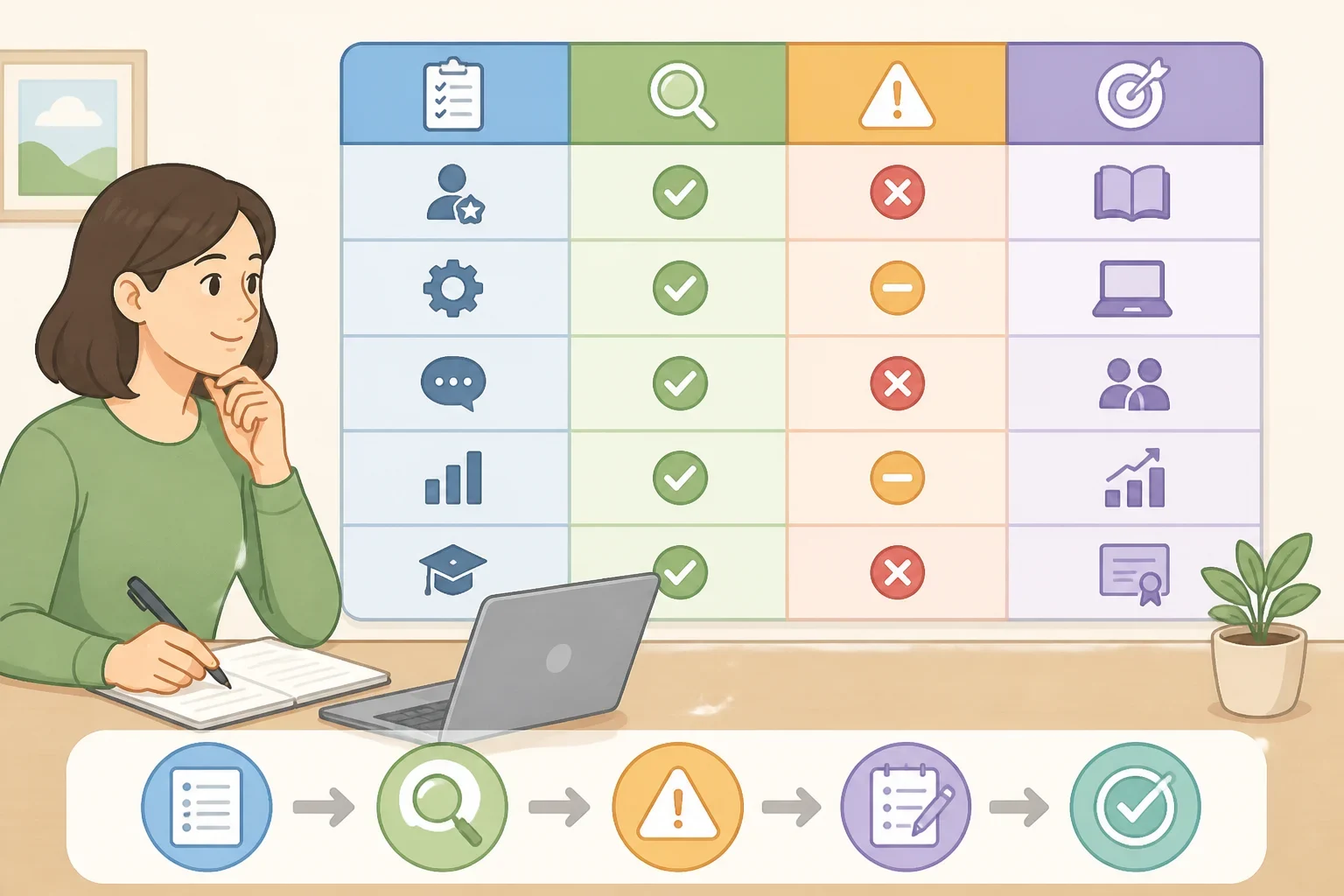
Begin with job titles, not a generic industry. Search for two or three roles that sound plausible, then collect current postings for each. That number is a planning choice, not a universal rule. The purpose is to spot recurring requirements without treating one employer’s preferences as standard for the whole field.
Use O*NET to examine tasks, skills, and tools associated with an occupation. Current postings show how individual employers describe their needs. Read both sources together, since an occupational profile can clarify the work while a posting shows the qualifications a particular employer is seeking.
Create a comparison sheet with columns such as:
Target role Requirements repeated across postings Evidence already available Gap-closing action Marketing coordinator Writing, spreadsheet use, campaign support Class project with audience research Build a short campaign sample and describe the decisions made Junior data analyst Spreadsheet or database work, reporting, attention to detail Coursework using spreadsheets Complete a small analysis project and save the final report Program assistant Scheduling, communication, documentation Part-time customer-service work Record an example of coordinating people, information, or deadlines
Look for requirements that appear across the postings you reviewed. Separate them into three groups:
- Required: A qualification the employer explicitly says candidates must have.
- Preferred: A qualification that may strengthen an application but is not presented as mandatory.
- Evidence of ability: A task, tool, project, or result the employer wants to see.
Do not assume every bullet point is a universal requirement. A healthcare or education role may involve licensing or supervised training. A design role may emphasize a portfolio. A small employer may combine duties that a larger organization assigns to several positions. Verify requirements with the employer or relevant licensing board when the distinction affects eligibility.
At the end of this step, choose one primary role and one backup role. Write a short working target, such as “entry-level marketing coordinator roles involving content, reporting, and campaign support.” That sentence gives the next steps something specific to build toward.
Step 2: Build professional visibility and have useful conversations

Create or update a LinkedIn profile before active applications begin. LinkedIn’s student resources and career guidance discuss profile elements such as a clear headline, summary, skills, education, and projects (LinkedIn Talent Blog, LinkedIn for students resources). Treat that advice as platform guidance, not proof that a profile guarantees recruiter attention or employment.
Make the profile easy to evaluate:
- Write a headline that names the target direction, such as “Accounting student focused on audit and financial reporting.”
- Add project descriptions that explain the task, tools used, and result.
- Place work in the section that accurately represents it. Coursework may belong under Education, a completed project under Projects or Featured, and community work under Volunteer Experience.
- Include a professional contact method and a link to a portfolio when the field uses one.
- List skills that can be supported by coursework, work, projects, or other experience.
A profile cannot replace a required credential, a portfolio, relevant experience, or a direct application. Its practical value is giving people a clear explanation of the work being pursued and the evidence already available.
Next, contact alumni or professionals with a focused request. Career centers identify informational interviews and alumni connections as useful ways to learn about roles and hiring practices (NACE). These are conversations, not disguised job applications.
A message can be brief:
Hello, I’m a student exploring entry-level program coordination roles. Your background in nonprofit operations caught my attention. Would you be willing to answer a few questions about the skills you use most and how you prepared for your first role?
Prepare questions before the conversation:
- Which tasks take up most of your time?
- Which skills show up repeatedly in entry-level postings?
- What would make a student project more useful to someone hiring for this work?
- What is commonly misunderstood about the role?
Contacting a few people each month can be a manageable routine for a student who has time to follow up. It is not a quota, and it does not guarantee a referral. Send a thank-you message that mentions one specific point from the conversation. If a contact suggests a resource or another person to speak with, record it in a simple networking log.
Networking norms differ. Some fields rely heavily on portfolios and direct outreach, while others use formal applications, placements, or supervised experience. Check those expectations with the school’s career office and people working in the target field.
Step 3: Build evidence that closes a specific gap

Choose experience because it demonstrates a requirement from Step 1. The experience might be a paid job, internship, volunteer responsibility, class project, campus position, freelance assignment, or personal project. Do not relabel part-time employment as an internship. Describe what the work actually involved.
Access matters, too. Unpaid work may not be practical or appropriate for every student. A paid job can still show communication, scheduling, customer service, reliability, analysis, or problem-solving. The goal is evidence of capability, not a particular title.
Match each opportunity to a gap:
- If postings repeatedly mention reporting, create a report from a class, campus, or community project.
- If they mention coordination, organize an event or scheduling process and document how it worked.
- If they mention a software tool, use it in a project that produces something an employer can review.
- If they mention writing, prepare a brief, web page, newsletter, or research summary for a real audience.
Record results while the details are fresh. For example:
- “Created a spreadsheet that reduced weekly reporting time from four hours to two.”
- “Coordinated volunteer scheduling for 15 participants.”
- “Reviewed customer questions and organized recurring issues for a supervisor.”
- “Produced a five-page market summary using publicly available information.”
Use only results that can be supported. If a project did not reduce time or increase an outcome, describe the work and the completed deliverable instead of inventing a metric.
At the end of each experience, save the job description, project brief, final work, feedback, and notes about the skills used. Career guidance on experiential learning treats projects, volunteer leadership, and employment as possible ways to demonstrate transferable skills (NACE guidance on experiential learning). The value depends on the work completed and how clearly it is explained.
Step 4: Turn evidence into applications and interview preparation
During the final semester or active job search, create a base résumé and adjust it for each credible target role. Tailoring does not mean copying a posting or adding skills that cannot be defended. It means using accurate language from the posting when it matches work already completed.
For example:
Before
- Helped with weekly reports and worked with customers.
After
- Created a weekly spreadsheet report, organized recurring customer issues, and summarized findings for a supervisor.
The second version names the work and the output. If the posting asks for reporting, spreadsheet work, or customer communication, those accurate terms make the connection easier to see.
Applicant tracking and screening practices differ by employer and system. Do not assume that repeating keywords will move an application forward. Use the posting’s language only where it accurately describes experience, keep the résumé readable, and place the strongest relevant evidence near the top.
Build an application tracker with these fields:
- Employer and role
- Date submitted
- Version of résumé used
- Contact or recruiter, if known
- Follow-up date
- Interview stage
- Next action
Prepare interview stories from work, projects, volunteering, or coursework. Use a simple situation, task, action, result structure. A story might explain how a scheduling problem appeared, what responsibility the candidate took, what steps were used, and what changed afterward.
Behavioral questions are one possible interview format, so preparation should not stop there. Technical roles may include skills assessments, while public-sector, education, healthcare, and other fields may use different stages or documentation. Ask the recruiter or hiring contact what the process includes and what preparation is expected.
Start a seven-day plan
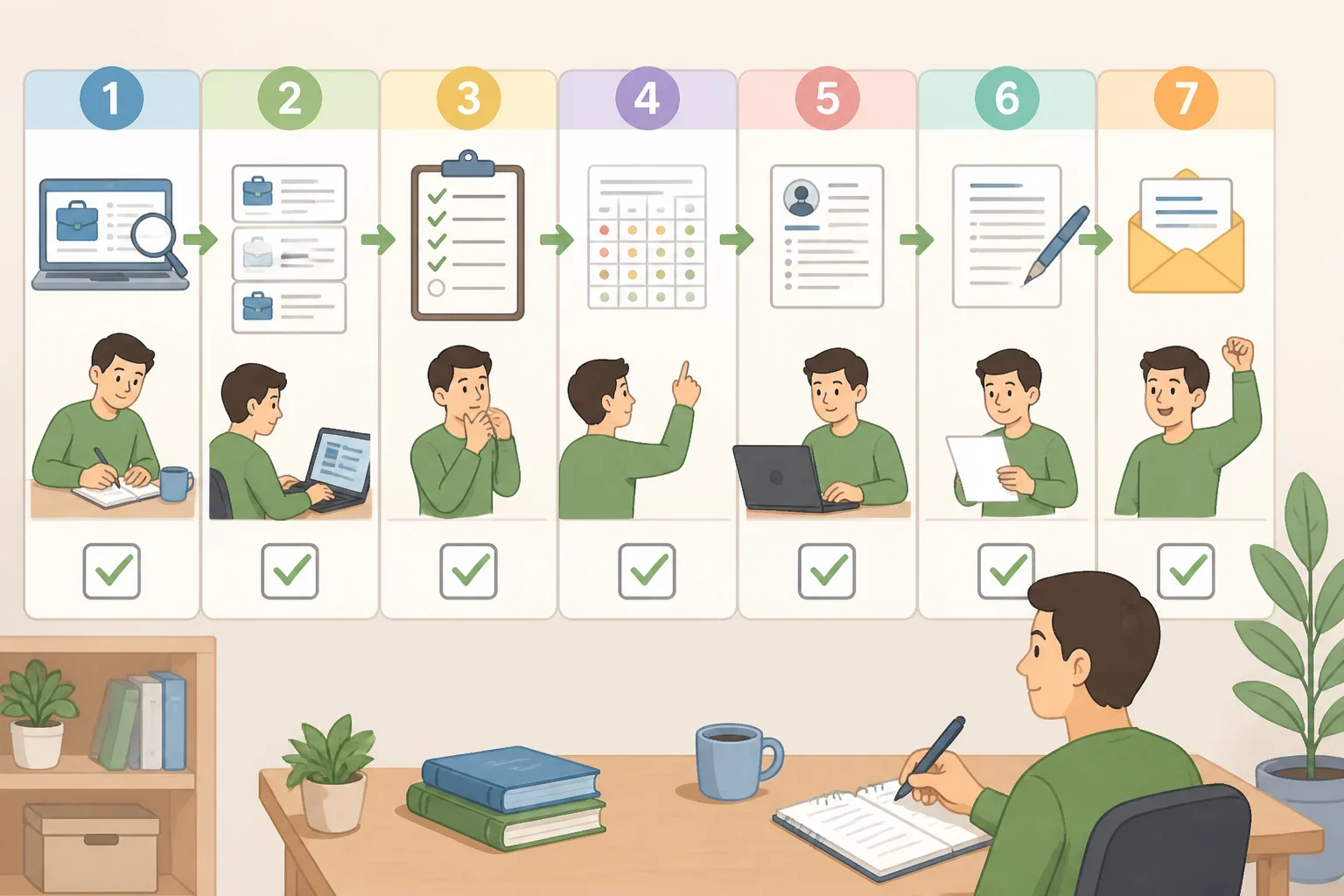
A practical first week can create a usable starting point:
- Choose one target role and one backup role.
- Collect current postings for the primary role.
- Mark recurring requirements and separate required qualifications from preferred ones.
- Compare the postings with relevant O*NET information.
- Identify one skill or evidence gap.
- Update one résumé bullet or profile project to reflect work already completed.
- Book a career-services appointment and ask what is standard for the major, location, or field.
Students can also use NACE Job Outlook survey materials and the NACE Student Survey to understand how particular surveys describe employer or student outcomes. Read the report year, population, and wording before applying a finding to every employer. LinkedIn’s LinkedIn Economic Graph research can provide labor-market context, but platform research should not be treated as a complete picture of entry-level hiring.
The useful result after the first week is not a finished career. It is a documented target, a visible gap, and a next action that produces evidence. Build the following week around that evidence.
