

- Do employers verify your college degree? What job seekers should know before applying
- How degree verification usually works
- When might an employer check?
- What documents should applicants prepare?
- Check the education section for discrepancies
- Degree checks and licensing are separate
- What if the degree cannot be verified immediately?
- How to explain an honest mismatch
- Checklist before submitting an application
Do employers verify your college degree? What job seekers should know before applying
A degree listed on a resume may be checked during hiring, especially when a job posting names education as a requirement. The process is not identical for every employer, so applicants should compare their resume with their school records, read the posting closely, and prepare to explain any mismatch.
Degree verification usually means confirming an education claim, such as the institution attended, the degree earned, the field of study, or the date the credential was awarded. An employer may handle the check internally, use a background-screening company, contact the school, or ask the applicant to provide documentation.
That makes this a practical preparation issue for recent graduates, career changers, and experienced applicants alike. The goal is not to gather every academic record before applying. It is to make sure the information submitted is accurate and to understand what may be requested later.
How degree verification usually works
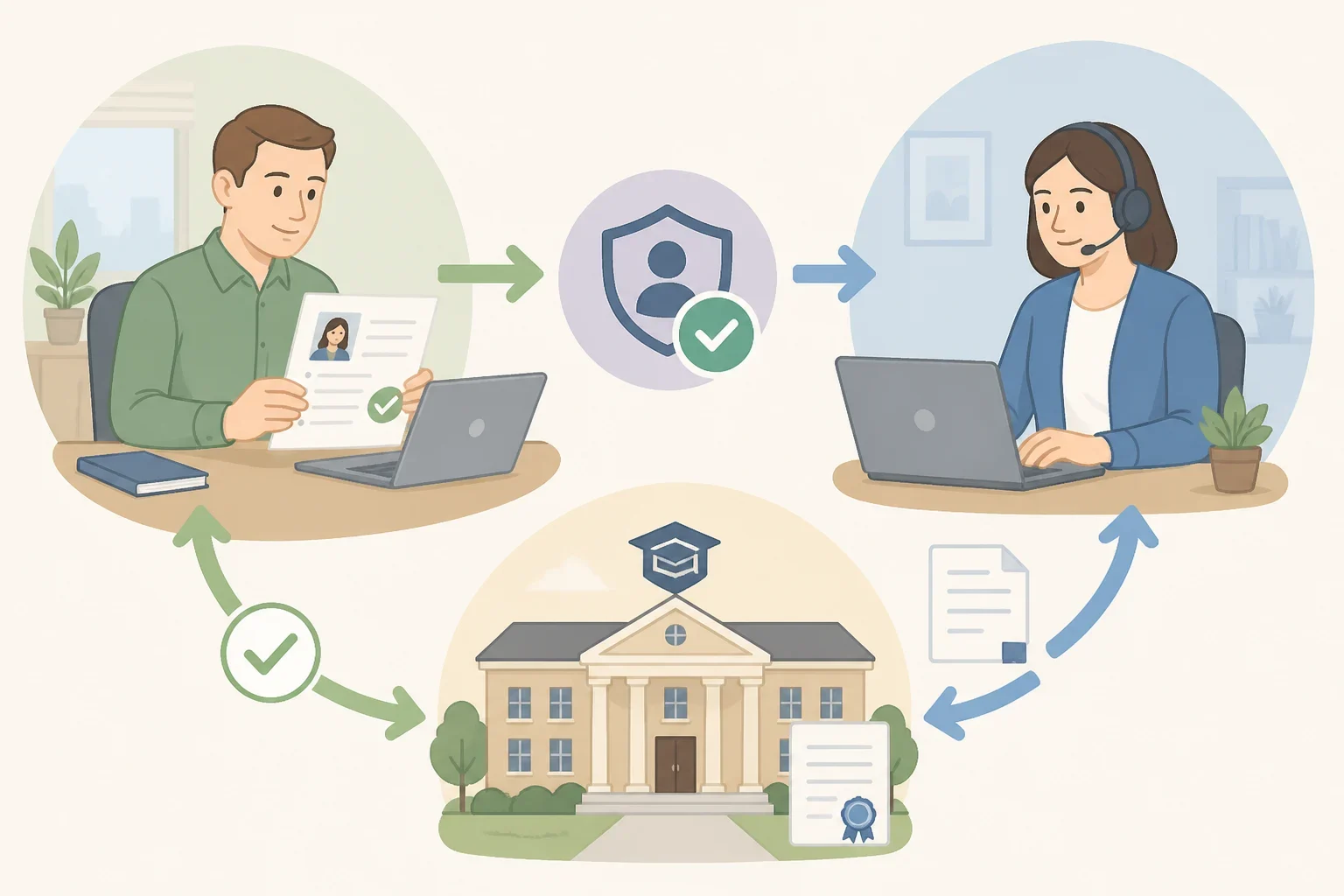
The person reviewing a resume may not be the person checking the education history. A hiring manager might evaluate the application, while a background-screening vendor handles education verification. In another process, the employer may ask the applicant to provide records or authorize the school to release information.
The information reviewed depends on the employer’s request and the role. A check may focus on questions such as:
- Did the applicant earn the degree listed?
- Which institution awarded it?
- What type of degree or credential was awarded?
- When was it officially awarded?
- Does the education history match the application?
A degree check does not automatically mean a review of every course, grade, academic standing, or class rank. Those details may require a different record or a more specific request. Before sending a transcript, ask what information the employer needs and whether a less detailed document will meet the request.
The verification process can also use different names for the same institution. A school may have merged, changed names, or become part of another institution. That does not necessarily create a problem, but the education entry should make the connection clear.
When might an employer check?

There is no single hiring sequence for every employer. Education verification may take place during a broader background check, after interviews, or near the point when an employer is preparing to finalize an offer. Some employers may request information during the application process, while others may wait until later.
A conditional offer can be one point at which screening begins or finishes. It is still risky to assume that every employer waits until after an offer, just as it is risky to assume that every application is checked as soon as it is submitted.
The job posting often provides useful clues:
- “Degree required” presents the credential as part of the stated qualifications.
- “Degree preferred” indicates that the employer wants the credential but may consider applicants with other backgrounds.
- “Equivalent experience accepted” suggests that relevant work history may be considered, although the employer decides what qualifies.
- “Official transcripts required” signals that the hiring or application process may include a document request.
These phrases do not have one universal meaning. Read the qualification section, application instructions, and notes about required documents. If the wording is unclear, ask the recruiter when education will be evaluated and what type of proof may be needed.
A simple question can prevent unnecessary preparation: “Could you explain whether education verification is part of the background check and what documents would be accepted?”
What documents should applicants prepare?

There is no single document that every employer accepts. Depending on the process, an employer may verify information directly with the institution or ask for a diploma copy, transcript, electronic credential, or another record. The employer’s instructions should determine what to order.
An official transcript may include courses and grades, which could be more information than the employer needs. A diploma may show that a credential was awarded without answering every question in a screening request. Neither document should be treated as automatically sufficient for every hiring process.
Before paying for a record or sending personal information, ask:
- Does the employer need direct verification from the school?
- Will a diploma copy be accepted?
- Must a transcript come directly from the institution?
- Is an electronic credential acceptable?
- What information must the record show?
- Is the document needed during the application or later?
- How should the record be submitted securely?
The school’s registrar or records office can explain its delivery methods and processing requirements. Keep a personal copy for reference, but follow the submission method identified by the employer or screening company. Do not send a transcript or other sensitive document to an unverified email address.
Preparing does not mean ordering every possible record in advance. First, determine what the employer wants. That can save money, reduce unnecessary disclosure, and keep the application focused.
Check the education section for discrepancies
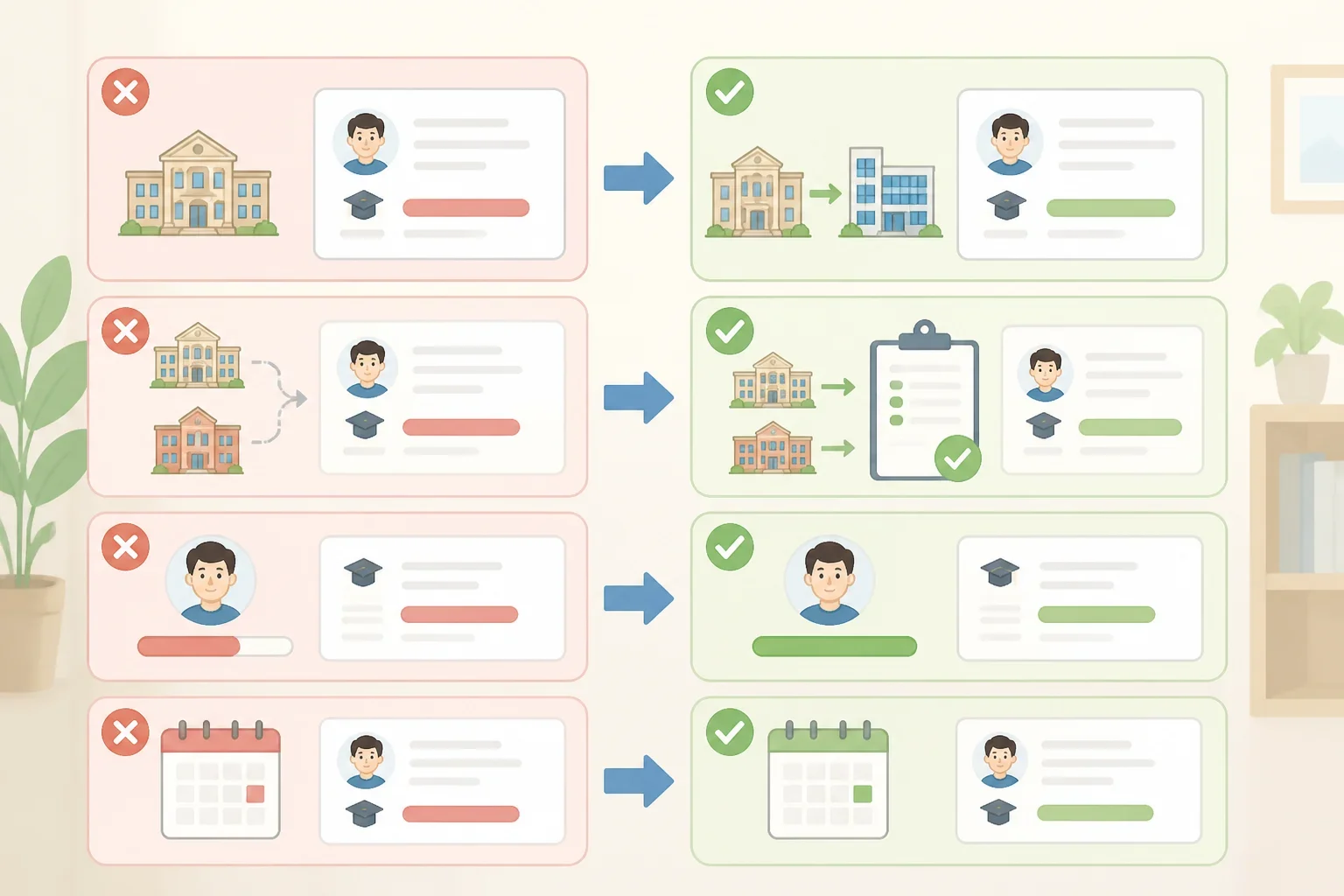
A discrepancy does not always mean an applicant intentionally provided false information. School names change, students transfer, and the date classes ended may differ from the date a degree was formally awarded. Accurate wording and supporting information can make these situations easier to explain.
A school changed its name
Use the name that makes the education entry clear, and keep the former name available if it appears in school records.
If an application asks for the institution attended, follow the form’s instructions. If the current and former names could cause confusion, include both in a short explanation rather than leaving the reviewer to work out the connection.
Transfer credits are involved
A student may attend more than one school but earn the degree from only one institution. If an application asks for every college attended, list each school accurately. If it asks where the degree was earned, identify the degree-granting institution.
Transferred credits are not the same as a completed degree from the school that accepted them. Keep those details separate on both the resume and application.
A degree program was not completed
An unfinished program should not be listed as a completed degree. It may be described as attendance in a field of study, completed coursework, or another accurate form of education history, provided the wording does not imply graduation.
Some postings allow equivalent experience instead of a degree. That may give an applicant another way to meet the stated qualification, but the employer decides whether the experience is equivalent. Ask before assuming that work history satisfies the requirement.
The graduation year is wrong
A resume may list the year classes ended instead of the official award year. An old resume or simple memory error can create the same problem.
Check the school’s record before applying. If an application has already been submitted, correct the information promptly and keep the explanation brief:
The graduation year on my earlier resume was incorrect. The school’s record shows that the degree was awarded in 2022.
Use the accurate year. A focused correction gives the employer something specific to review without turning the explanation into a long defense.
Degree checks and licensing are separate
A job can have an education requirement without being a licensed occupation. In a licensed career, the employer’s screening process and the licensing authority’s review are separate matters.
For example, an employer may verify that a degree appears to have been awarded, while a licensing authority may require additional documentation before deciding whether an applicant meets professional requirements. Completing one process does not automatically complete the other.
Applicants pursuing regulated work should contact the applicable state licensing board or credentialing organization directly. Do not assume that an employer’s background check replaces a licensing application, confirms eligibility for a license, or satisfies every document requirement.
Requirements can also differ by position and organization. A government agency, school, healthcare organization, financial company, or other regulated workplace may use procedures tied to the role. Another employer in the same industry may use a different process.
What if the degree cannot be verified immediately?
A school may need more information before responding to a verification request. Potential complications include a former school name, an incorrect date, a different name in the school record, or instructions directing requests to another office or service.
If an employer or screening company says the education history could not be verified, ask what information is missing and what documents will be accepted. Then contact the registrar or records office to confirm the correct verification process.
Gather the details most likely to help:
- the institution’s current and former names
- the exact degree or credential name
- the official award date
- any former name used in school records
- the registrar or verification office’s contact information
- instructions for submitting records securely
If a screening report contains a mistake, identify the specific error rather than disputing the entire report generally. Note whether the wrong school, degree, attendance period, or award date appears.
Correcting information with the school may not automatically update a separate screening report. Ask the employer or screening vendor where supporting information should be sent and follow the stated deadline. If the school needs time to review the record, ask whether the employer can note that review while the information is being confirmed.
Questions about formal screening procedures, report disputes, or licensing decisions should go to the employer, screening company, school registrar, relevant licensing board, or another qualified adviser.
How to explain an honest mismatch
A useful explanation identifies the inaccurate information, provides the correct information, and states what has been updated.
Examples include:
- “The school changed names after a merger. My degree was awarded by the institution now listed as the university’s successor.”
- “I attended two colleges and completed the degree at the second institution. The first school provided transfer credits.”
- “I completed coursework but did not earn the degree, so my resume now shows attendance rather than graduation.”
- “My resume listed the year I finished classes, but the official degree-award date was different. The application now uses the award date.”
Do not describe an in-progress program as completed or alter dates to make an education timeline look smoother. Correcting an error early is generally simpler than explaining an inaccurate entry after a screening issue has been raised.
Checklist before submitting an application
For a role with an education requirement:
- Compare the resume with the school’s records.
- Confirm the exact degree name and official award date.
- Check whether a former school name needs explanation.
- List transfer schools and unfinished education according to the application’s instructions.
- Note whether the posting says required, preferred, or equivalent experience accepted.
- Ask the recruiter what type of education verification may be used.
- Confirm whether additional documents or authorization may be requested.
- Check the relevant licensing board separately for regulated work.
- Prepare a short explanation for any honest discrepancy.
Degree verification is an employer-specific process, not a single standardized event. Before an offer deadline creates pressure, review the education section against the school’s records, identify anything that needs clarification, and ask the employer or screening vendor which documentation it accepts.
