

- How to Disagree Respectfully With Performance Review Comments
- 1. Classify the disagreement before responding
- 2. Check the employer’s process
- 3. Prepare evidence that fits the issue
- 4. Use language that matches your goal
- 5. Decide what to do after the conversation
- Avoid responses that weaken your point
- What to do before the review meeting
How to Disagree Respectfully With Performance Review Comments
By the end of this guide, you will have a way to classify the disagreement, check your employer’s process, prepare relevant evidence, choose an appropriate response, and follow up without turning the review into a broader workplace dispute.
This approach applies to employees who want to correct a factual error, add context to a subjective comment, or ask how a rating was determined. It does not cover discrimination, retaliation, harassment, or other legally sensitive concerns. If the issue may involve one of those categories, consult your handbook, HR, a union representative where applicable, or a qualified employment professional. Do not assume that an informal rebuttal is the right or safest channel, particularly if the concern involves HR or another person responsible for handling complaints.
Resources such as SHRM and Harvard Business Review can provide general background on performance management and feedback conversations. Their broad guidance should not replace your employer’s policy or situation-specific advice.
A respectful disagreement may result in a corrected statement, additional context, clearer expectations, or a documented difference of opinion. It does not guarantee a changed rating.
1. Classify the disagreement before responding

Start by deciding what you are trying to change. Most disagreements fit into one or more of these categories:
- Factual error: The review contains a statement that can be checked against a record.
- Subjective assessment: You disagree with how your manager interpreted your behavior or performance.
- Rating concern: You believe the overall score or performance category should be reconsidered.
The category determines the evidence and the request.
A factual error might involve an incorrect project date, a deliverable described as incomplete, or an outcome attributed to the wrong period. A project timeline, approved deliverable, status update, or other relevant record may help establish the correction.
A subjective assessment may involve communication, initiative, collaboration, or leadership. A record showing when a task was completed may not settle whether your communication was effective. For that concern, a meeting example, client response, project update, or other relevant feedback may provide context, but it may not prove that an overall rating is wrong.
A rating concern is broader. Before asking for a change, identify the specific comments or examples you believe should affect the rating. “The rating is unfair” is difficult to evaluate. “The review says the project missed its deadline, but the approved timeline shows delivery on the agreed date” gives the conversation a clear starting point.
Do not try to resolve every disagreement in the same way. Correct a verifiable error directly. Discuss an interpretation with context. Treat a rating request as a question about the reasoning and standards behind the result.
2. Check the employer’s process

Find out what your employer allows before deciding whether to speak, write, or submit a formal response.
Check the employee handbook, review instructions, performance-management system, or documents attached to the evaluation. If the answer is unclear, ask HR or your manager a neutral process question, such as:
“Could you clarify the steps for adding comments or responding to a performance review?”
Confirm the following:
- Whether signing the review acknowledges receipt, discussion, agreement, or something else
- Whether you may add comments in the review system
- Whether written responses are accepted
- Whether there is a deadline
- Who can see a submitted response
- Whether the response may be retained with the review
- Whether the company has a separate process for rating disputes
- Whether you must acknowledge the review before submitting comments
Do not assume that signing means agreement, or that refusing to sign creates a formal objection. The meaning depends on the employer’s language and procedure. Ask before acting.
Your employer may expect a verbal discussion, require written comments within a specified period, or provide no formal rebuttal process. If there is no appeal process, ask where a factual correction or employee response can be documented. That question does not assume the company must create a formal appeal.
This step also helps with timing. If the review must be acknowledged before comments are submitted, ask how to complete both actions. If a deadline has passed, ask whether the company will still accept a clarification. Keep the request focused on procedure rather than treating the process question as an accusation.
3. Prepare evidence that fits the issue
Gather only the material that helps answer the specific disagreement. A long collection of unrelated documents can obscure a strong point.
For a factual error, identify:
- The exact statement in the review
- The record that conflicts with it
- The correction you are requesting
For example:
“The review states that the client deliverable was submitted after the deadline. The approved project timeline lists the delivery date as May 14, and the client update from that day confirms submission. I am requesting that the statement be corrected.”
For a subjective comment, prepare one or two examples that add context. If the review says communication was inconsistent, identify a specific project update, meeting, escalation, or decision log that shows how information was shared. Avoid claiming that communication was always strong. The goal is to show why the comment may not describe the full situation.
For a rating concern, ask what evidence influenced the rating and what expectations were applied. A manager may have considered several observations, priorities, or examples. You may disagree with the conclusion, but understanding the basis gives you a more useful response than arguing about the score alone.
Write down three items before the conversation:
- The statement or rating you want to discuss
- Two or three relevant examples
- One realistic outcome
The outcome could be a corrected sentence, added context, clearer expectations, a review of the rating, or a documented response. Keep the request narrow enough to explain in a few sentences.
4. Use language that matches your goal

Raise the issue without assigning motives or attacking the manager’s judgment.
Correct a factual error
“I noticed the review states [X], but the record shows [Y]. Here is the relevant documentation. Can this part be updated?”
If the error concerns a date, deliverable, or measurable result, name the record rather than presenting every document from the review period.
Add context to a subjective comment
“I understand how that came across in [situation]. I would like to share some additional context from [specific example] that may help explain what happened.”
This acknowledges the manager’s observation without agreeing that it is a complete description. Keep the example connected to the comment. Do not use it as an opening to list every contribution that was omitted from the review.
Ask how a rating was determined
“Can you walk me through what led to this rating?”
Follow with a more specific question if needed:
“Which examples had the greatest effect on the rating, and what expectations should guide my work going forward?”
Questions can reveal whether the disagreement concerns a factual error, an unclear expectation, or a broader assessment. They also give you information to use in a follow-up plan.
Request context when the rating will not change
“I understand the rating is staying the same. Given [specific example], would it be possible to add this context to the review or development plan?”
The manager may decline. The request still separates two issues: whether the rating changes and whether the written record or future plan reflects relevant information.
Practice the wording once or twice, but do not memorize a speech. The aim is to stay precise if the conversation becomes tense.
5. Decide what to do after the conversation
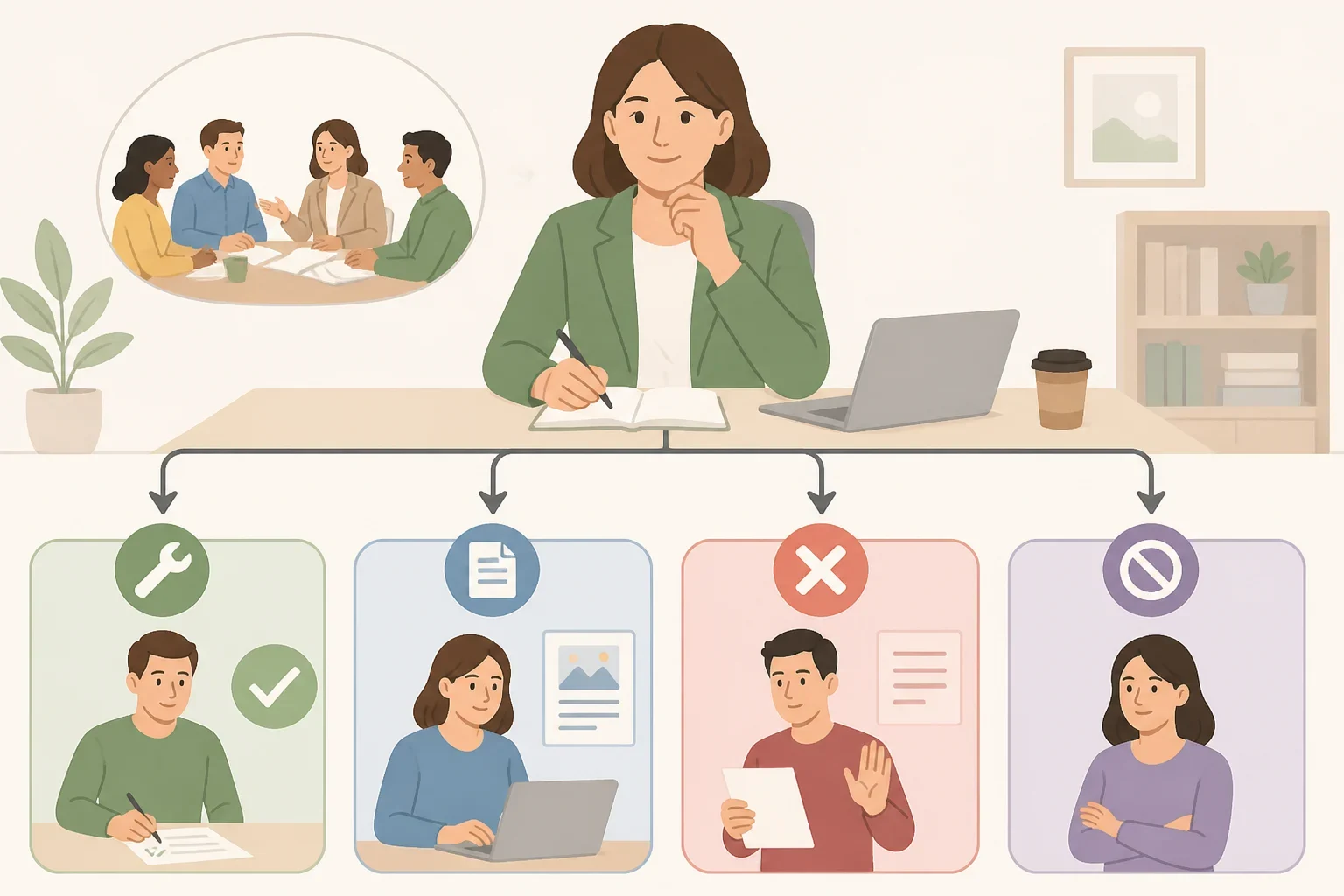
The next step depends on the response.
If the error is corrected, ask how the updated version will appear and whether you will receive confirmation. Keep a copy of your request and the response in accordance with your employer’s policies. Do not remove or alter company records on your own.
If the manager agrees that the context is relevant but will not change the rating, ask whether the information can be added to the review, employee comments, or development plan. If it cannot be added, ask what measurable expectations will apply during the next review period.
If the manager rejects the evidence, avoid repeating the same argument indefinitely. Send a factual summary if the employer’s process permits it, then ask what evidence or performance expectations will be used going forward. A documented difference of opinion may be the available outcome.
If there is no formal rebuttal process, ask whether the review system accepts employee comments or whether the manager can note that the issue was discussed. If neither option exists, keep your own factual notes and focus future conversations on specific expectations and results. Do not describe the absence of an appeal process as proof that the review was improper.
When a verbal conversation is possible and appropriate, use writing to confirm rather than replace it. A short follow-up might say:
“Following our conversation on [date], I wanted to confirm that [specific correction or context]. Please let me know whether this can be reflected in the review or development plan.”
Before sending, check who may have access to the message and how the employer handles retention. A written response may be visible beyond the direct manager under some systems, but that depends on the employer’s procedures.
Avoid responses that weaken your point
Keep the discussion about your work and the accuracy of the review.
- Do not compare yourself with named coworkers. “I performed better than [coworker]” shifts the focus away from your evidence and introduces another employee’s performance into the discussion.
- Do not challenge every sentence. Prioritize the comments that affect your record, advancement, compensation, or understanding of expectations.
- Do not use labels in place of evidence. Replace “biased,” “ridiculous,” or “unfair” with the exact statement, the relevant record, and the correction or clarification requested.
- Do not assume documentation guarantees a new rating. A record may establish a date or deliverable status without resolving a broader judgment about performance.
- Do not send an angry response immediately. Draft it, remove unrelated frustrations, and check that every sentence supports the outcome being requested.
A focused response is easier for a manager, HR representative, or other authorized reviewer to evaluate. It also gives the next review period a clearer starting point.
What to do before the review meeting
Check the company’s acknowledgment and response policy before the meeting. Then identify whether the issue is factual, subjective, or rating-related, and prepare the evidence that fits that category.
During the discussion, ask for clarification before demanding a result. Afterward, request confirmation of any correction, ask whether relevant context can be documented, and clarify the measurable expectations that will apply next. If the concern involves discrimination, retaliation, harassment, or another sensitive workplace issue, pause the informal rebuttal and seek situation-specific guidance from an appropriate qualified source.
