

- Automation Engineer Career Journey: Skills That Transfer
- Which past job experience actually maps onto QA tasks
- What a software QA automation career path requires beyond transferable skills
- Building a readiness checklist that turns experience into evidence
- How career growth in test automation can broaden the role over time
- Next step
Automation Engineer Career Journey: Skills That Transfer
Anyone plotting an automation engineer career journey has probably heard that every job teaches something worth carrying forward. The more useful question isn't whether that's true. It's which parts of past work connect to real QA tasks, and which technical skills still need to be proven before an employer takes the connection seriously.
The O*NET occupation used as this article's baseline, Software Quality Assurance Analysts and Testers, combines diagnosis, documentation, testing, and communication tasks that show up across many unrelated jobs. Its highest-rated core task is identifying, analyzing, and documenting program problems, scored 93 out of 100 for importance (O*NET's current occupation data). That occupation employed 201,700 people in 2024, with growth classified as "much faster than average" from 2024 to 2034 (O*NET).
"Software Quality Assurance Analysts and Testers" is the government occupation code behind this data. "Automation engineer" is a title employers assign on top of it, and the tools, languages, and frameworks tied to that title vary by company. This article treats the occupation data as a baseline and treats specific job postings as the place to confirm what a given employer actually means by "automation engineer."
Holding a past job in an unrelated field doesn't automatically produce QA-ready skills in a form an employer can verify. In last year's World Economic Forum employer survey, respondents said 50% of their workforce had completed training as part of learning-and-development initiatives, up from 41% in 2023 (World Economic Forum). That's a global, cross-industry finding, not a QA-specific hiring standard, but it supports treating recent, deliberate skill-building as evidence worth having on hand.
This piece maps specific prior-job experience onto documented QA tasks, shows where that mapping holds and where it breaks down, and gives career changers a way to identify the gaps still standing between them and a QA automation application.
Which past job experience actually maps onto QA tasks
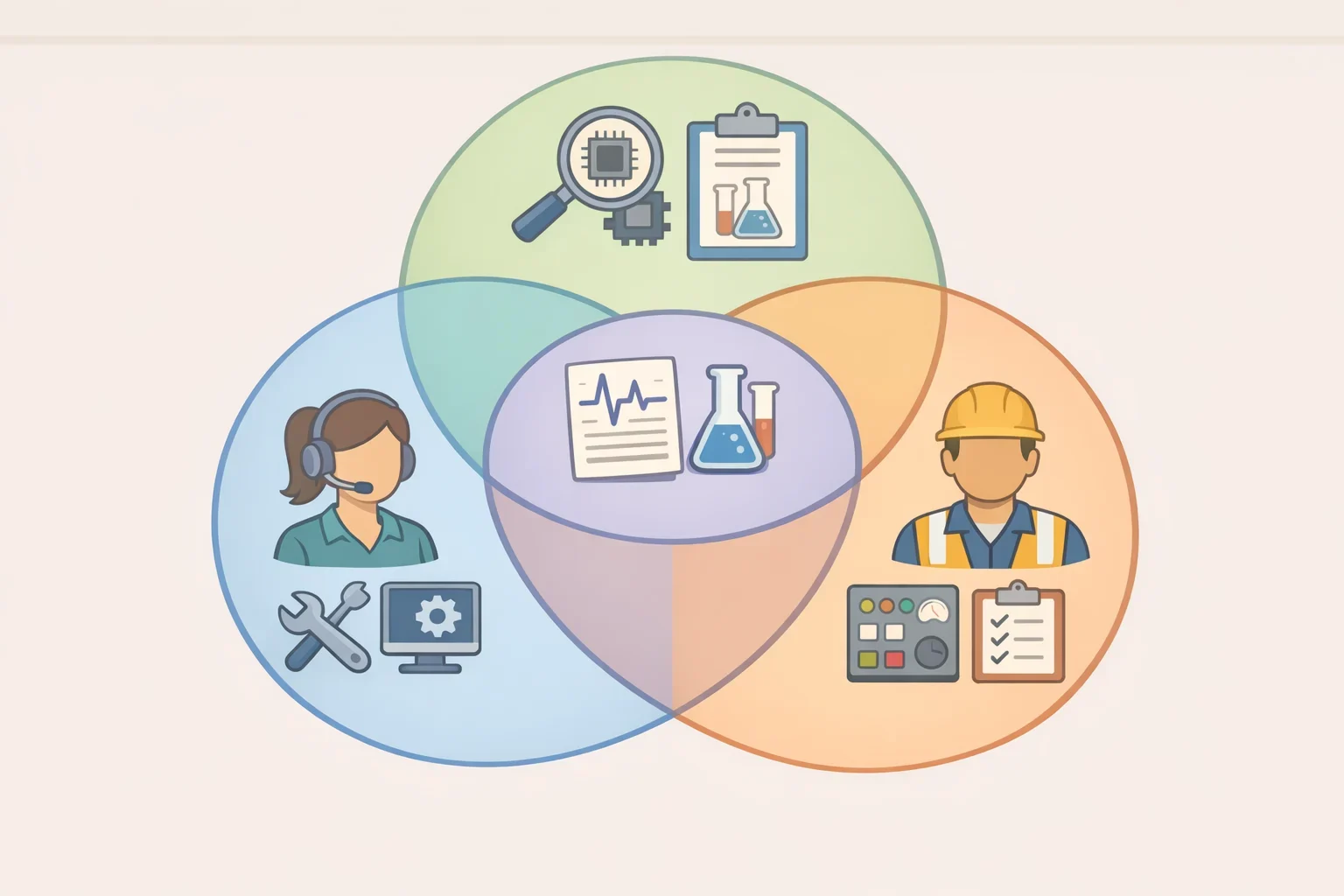
Two potentially relevant non-QA backgrounds show real, task-specific overlap with the occupation, though the overlap is partial rather than complete.
Customer support and help-desk work lines up with "investigate customer problems referred by technical support" (importance score 70) and the top-rated task of identifying, analyzing, and documenting program problems (93) (O*NET). Both tasks can give support workers relevant examples of diagnostic work, the kind of ticket triage and root-cause thinking that carries over even when the original job had nothing to do with software testing.
Operations and process-documentation roles map onto "design test plans, scenarios, scripts, or procedures" (84) and "document test procedures to ensure replicability and compliance with standards" (83) (O*NET). The connection is an analogy more than a proven equivalence: writing a standard operating procedure and writing a test procedure both involve breaking a process into repeatable steps, even though the two documents serve different readers and different purposes.
Neither mapping is complete. Customer support experience doesn't necessarily bring fluency with bug-tracking software or writing reproducible test steps. Operations documentation doesn't teach automated test design or scripting. The overlap is real, but it's task-specific, not a blanket claim that any past job prepares someone equally for QA work.
Before applying, pull one or two accomplishments from past roles that resemble these exact tasks. Write them with the tool, the process, and the outcome named, not a vague line like "solved problems for customers."
What a software QA automation career path requires beyond transferable skills
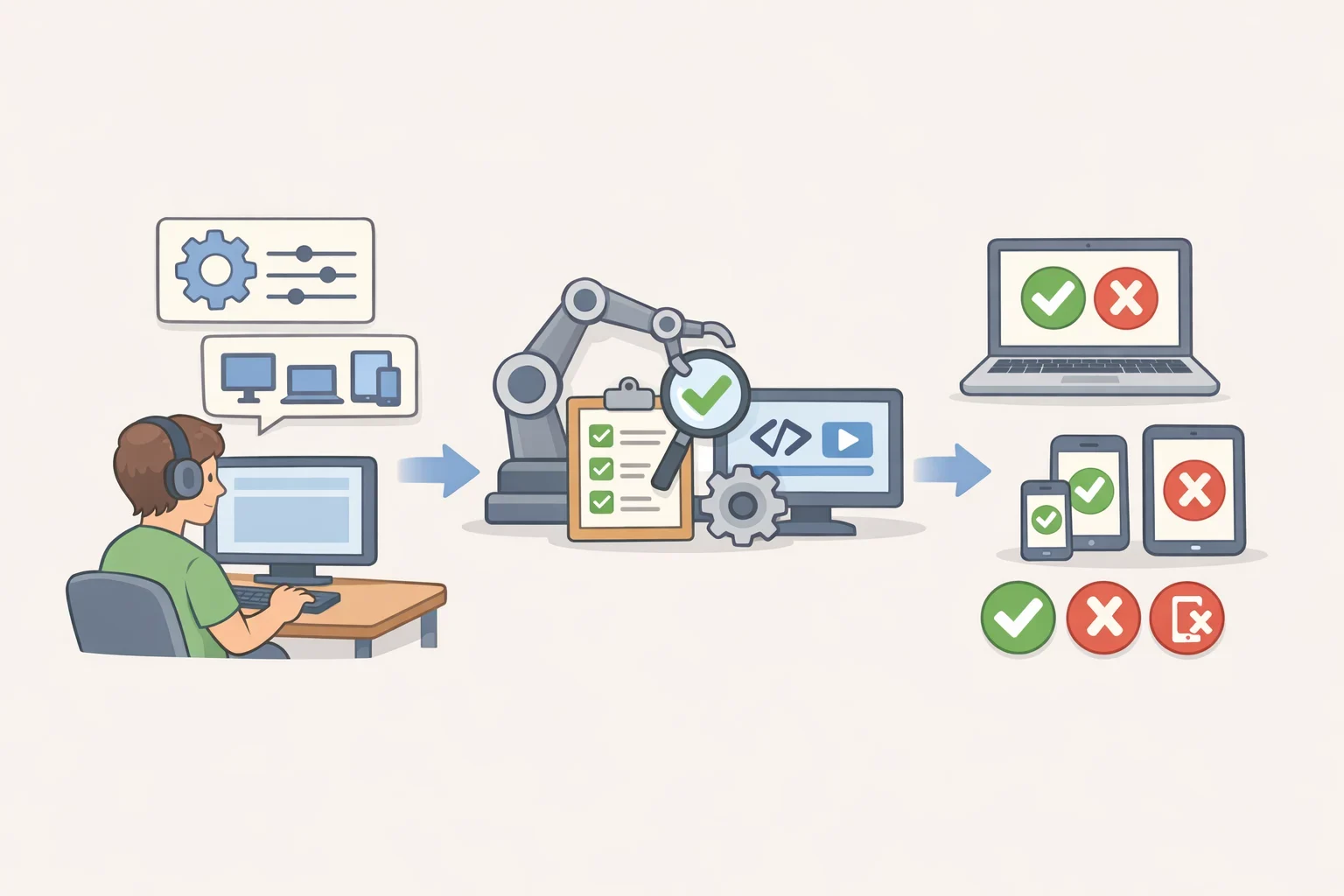
Soft-skill overlap is real, but it doesn't establish technical qualification. The occupation's core task list also includes work that customer support and operations roles often don't provide: installing, maintaining, or using software testing programs (importance score 82), designing or developing automated testing tools (65), and performing initial debugging by reviewing logs, configuration files, or code (67) (O*NET). Those tasks call for technical evidence that customer-service or operations experience alone may not demonstrate.
The list continues with conducting software compatibility tests across platforms (72) and installing or configuring test environments that mirror production (61) (O*NET). These are hands-on technical setup tasks, and prior non-technical roles vary widely in how much exposure they give someone to work like this. Occupation-wide data can describe the tasks; it can't teach the skill itself.
The supplied O*NET task list also does not identify which programming languages, test frameworks, CI/CD tools, or version-control systems a given employer wants. That detail shows up in current job postings, and sometimes in employer career pages or technical role descriptions, so it's worth checking more than one listing before assuming readiness.
Transferable skills from a past role support an application. They don't replace technical evidence. To find out what's actually expected in a target market, pull three to five current listings for "QA automation engineer" or "automation test engineer" in the location and industry of interest, list every required tool or language mentioned, and compare that list against current skills before deciding whether to apply now.
Building a readiness checklist that turns experience into evidence
The mapping exercise from the first two sections only becomes useful once it produces something an employer can actually evaluate. O*NET's core task list ranges from documenting defects (92) to test-plan design (84) to tool use (82) (O*NET), which means no single past job covers the full set. Most career changers will walk in with partial evidence, not complete evidence, and that's normal.
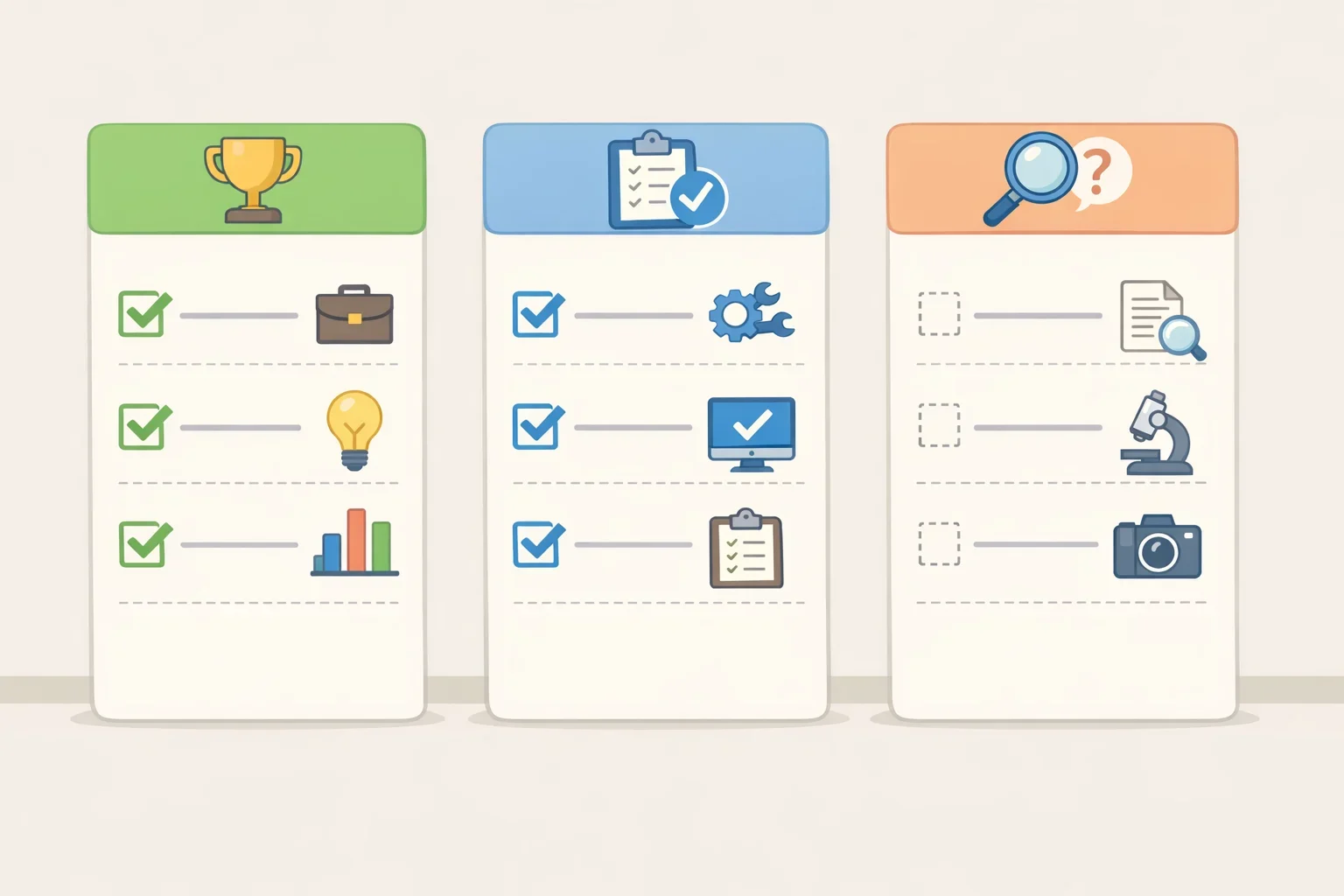
A simple three-column table makes the gap visible. The entries below are illustrative examples, not verified case studies, meant to show how a mapped skill turns into a checklist item:
Past accomplishment (illustrative) Related QA task Evidence still needed Resolved recurring account-access issues by reproducing steps, documenting patterns, and escalating defects to engineering Investigate customer problems referred by technical support (score 70) A reproducible test case and a written bug report, plus a small test repository showing the same defect logged and tracked Wrote standard operating procedures for a fulfillment team, including step-by-step verification checkpoints Design test plans, scenarios, scripts, or procedures (score 84) A sample test plan for a real or practice application, built to the same level of detail as the SOP Trained new hires on troubleshooting a shared software tool Provide feedback and recommendations to developers on usability (score 82) A documented usability review of an app or website, written in the format a QA team would actually submit
A small portfolio project is often the fastest way to fill that third column. A useful one includes a working test framework, test cases written clearly enough for someone else to follow, setup instructions, at least one documented bug report, and code kept in version control with evidence that the tests actually run and pass. That combination gives an employer something concrete to look at instead of a claim to take on faith.
Once the gaps are listed, three realistic paths open up: apply directly to automation-specific roles now if the gaps are small, target adjacent manual-QA or support-testing roles as a bridge if the gaps are moderate, or spend a defined stretch of time building that portfolio project before applying if the technical gaps are large.
How career growth in test automation can broaden the role over time
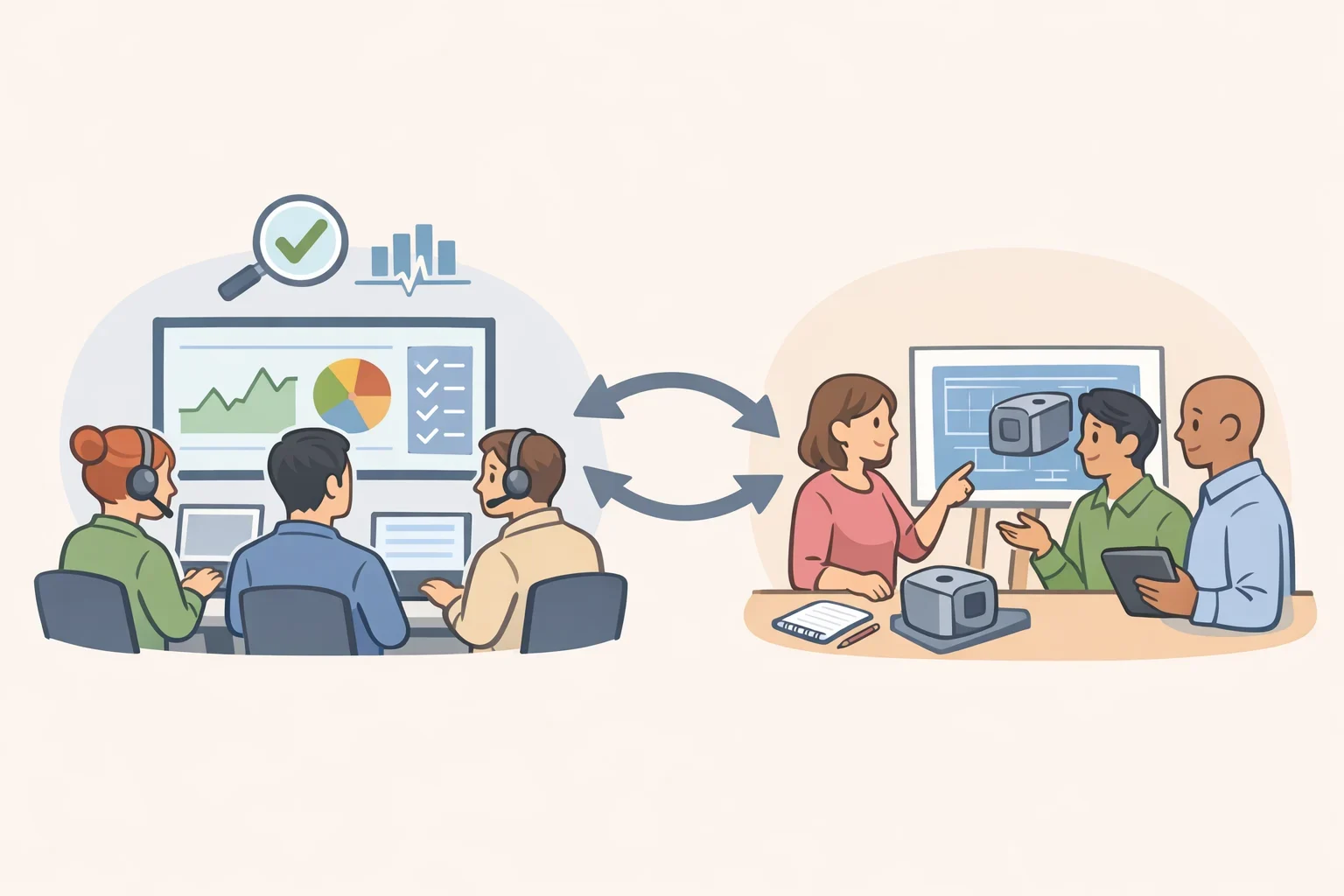
Once someone lands a QA or automation role, the same habit of naming a specific task and matching it to specific evidence keeps mattering. Some responsibilities in the occupation's task list may become more prominent with experience, including developing or specifying standards and procedures for product quality and release readiness (importance score 78) and monitoring bug-resolution efforts across a team (78) (O*NET).
The list also includes participating in product design reviews to flag functional risks before release (76) and providing usability feedback directly to developers (82) (O*NET). These responsibilities extend past running tests, but ONET reports occupation-wide task importance, not a verified breakdown of entry-level versus senior duties. Promotion timing, title changes, and who gets assigned this kind of strategic work vary by employer; ONET confirms these tasks exist somewhere in the occupation, not that every automation engineer reaches them on a set schedule. Anyone looking for senior automation engineer career advice should treat this as a plausible direction the role can grow in, not a guaranteed ladder tied to years on the job.
The discipline that gets someone into an entry-level QA role, naming a specific task and pointing to specific evidence, is the same discipline that later supports a move into broader quality-strategy work.
Next step
Build the three-column checklist using actual job history, not a hypothetical one. Pull three to five current listings for automation-engineer or QA-analyst roles in the target market, note which tools and languages keep showing up across those postings, and use that pattern, not a single listing, to decide whether to apply now, start with an adjacent manual-QA role, or spend a defined period completing a small test-automation project first.
