
- 3 alternative careers for teachers who want to stay in schools
- How these jobs for teachers outside the classroom compare
- School counselor: staying closest to individual students
- Instructional coordinator: moving from classroom to curriculum systems
- Librarian and library media specialist: choosing the school path over public libraries
- Choosing a next step
3 alternative careers for teachers who want to stay in schools
Leaving the classroom doesn't have to mean leaving K-12 education. Teachers researching alternative careers for teachers usually find lists that mix school-based jobs with private-sector pivots like corporate training or instructional design, roles whose credentials and pay data don't line up for a direct comparison.
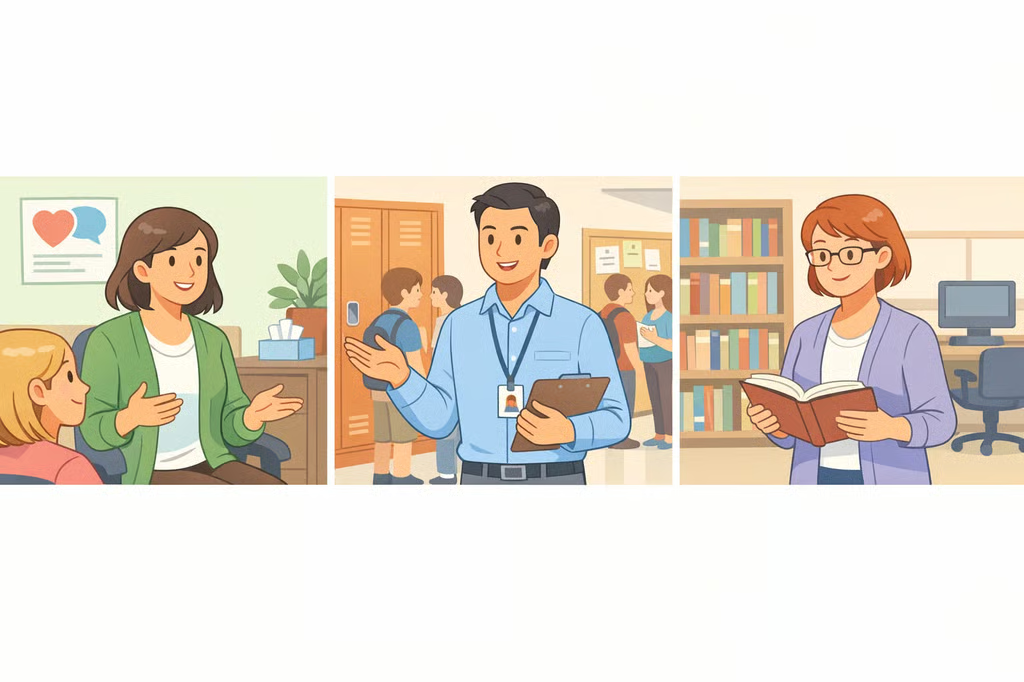
This article narrows the field to three career alternatives for teachers that keep a person inside a school system: school counselor, instructional coordinator, and librarian or library media specialist. All three have government-sourced licensing or education requirements. Two of them, instructional coordinator and librarian, also have confirmed national wage and outlook data from the U.S. Bureau of Labor Statistics. The sourcing available for this article didn't turn up a matching BLS wage and outlook page for school counselors specifically, so that comparison stops at requirements and schedule for that role. This narrower scope isn't a judgment that these paths beat a move into corporate training or edtech; those routes depend heavily on the hiring company and deserve their own separate research.
Teachers asking what else they can do with a teaching degree usually want a direct answer: what the job involves, what credential it requires, and what it pays. Here's how three non-teaching jobs for teachers compare, and where a teaching credential does or doesn't carry over.
How these jobs for teachers outside the classroom compare
Teaching experience counts differently depending on which credentialing body reviews the application. Some licensing boards and employers formally credit classroom years toward a specific requirement; others don't. The BLS names "related work experience, such as teaching," as qualifying background for instructional coordinators. Arizona lists three years of full-time teaching experience as one option for its school counselor practicum requirement, according to the Arizona Department of Education. New Mexico's primary counseling route, by contrast, lists a master's degree in school counseling and a passing PRAXIS score as its core requirements, without naming teaching experience as an alternative path (NMPED).
These are documented examples of specific credentialing bodies giving credit for classroom background, not a general rule that applies everywhere. Classroom management experience and familiarity with child development are worth raising in an interview as transferable strengths. But only where a licensing board or employer has said so in writing should a reader expect those years to count toward a formal requirement.
National BLS medians also describe an entire occupation, not a starting offer at any single district or library system. Treat the figures below as a reference point for comparing against local job postings, not a prediction of personal pay.
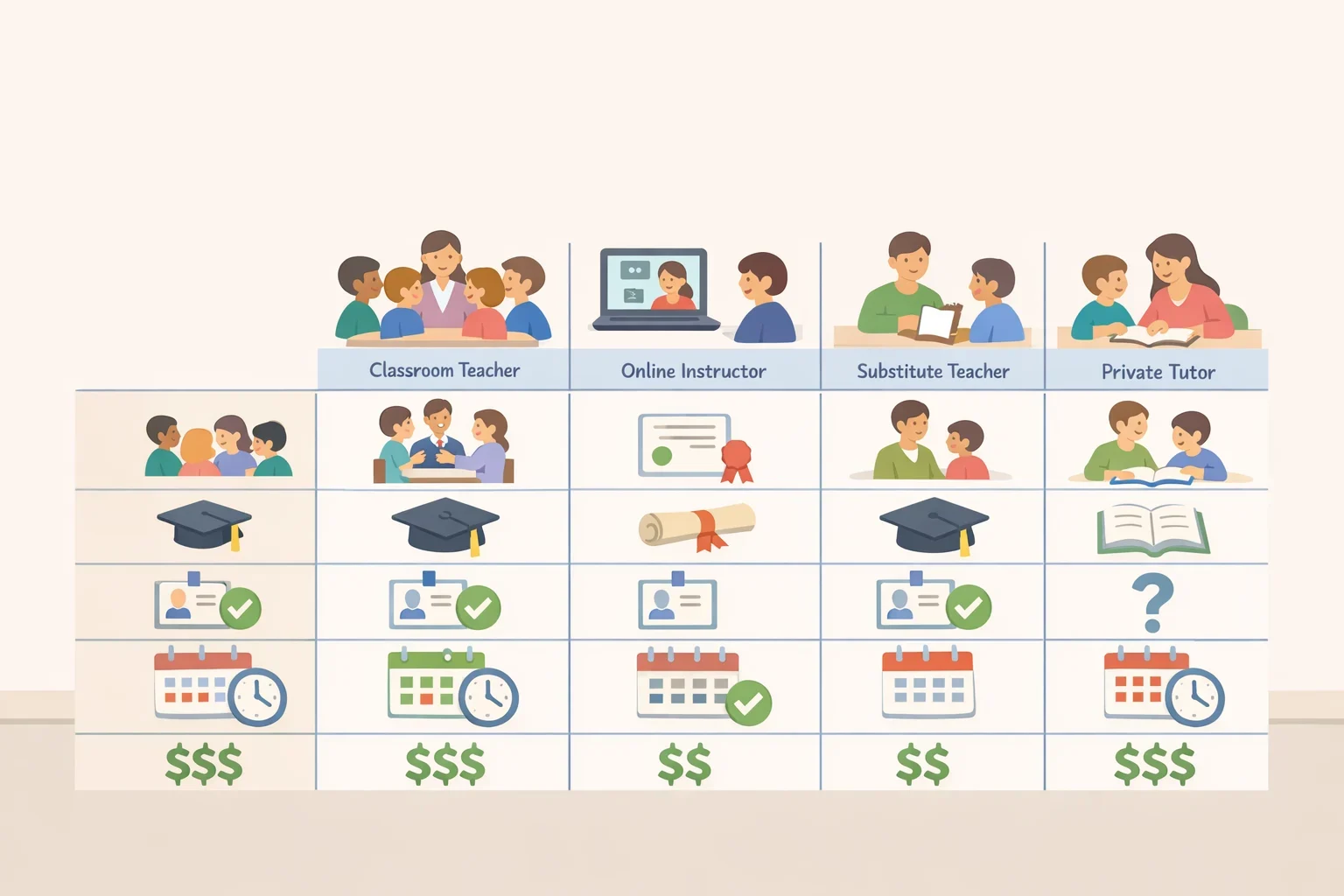
Factor School counselor Instructional coordinator Librarian / library media specialist (school path) Student contact Direct, individual and small-group support Mainly indirect; works with teachers and administrators, may meet outside classroom hours Direct, group and research-based support Added education Typically a master's in school counseling; specifics vary by state Typically a master's degree Bachelor's or master's in a related field plus a teaching certificate; varies by state License/certification State school-counselor license; exam often required (for example, PRAXIS 5422 in New Mexico) May require a state license in public schools Teaching certificate generally required; some states add a test such as PRAXIS II Library Media Specialist Schedule Not established in the sourcing for this article; verify locally Typically full time, year-round, no standard summer break Typically follows the same school-year and vacation schedule as teachers Pay and outlook Not covered in this comparison's sourcing; see BLS's page for school and career counselors and advisors for current figures Median $74,720 (May 2024); 1% projected growth 2024-34; about 21,900 openings a year (BLS) Median $64,320 (May 2024, combined occupation); 2% projected growth 2024-34; about 13,500 openings a year (BLS)
School counselor: staying closest to individual students
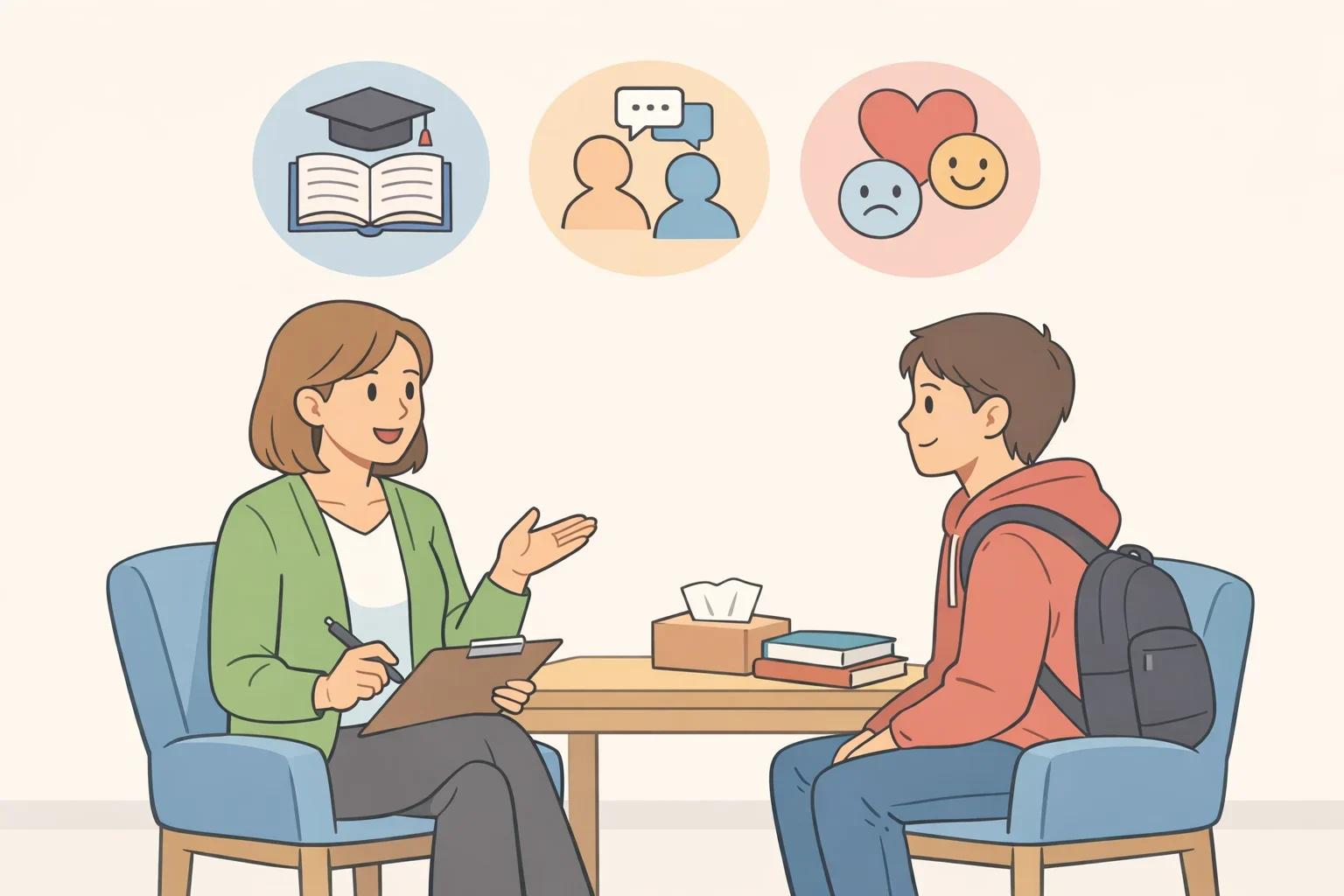
New Mexico's school counselor license authorizes support for students' academic, social, emotional, and vocational growth, guided by American School Counselor Association standards (NMPED). That description centers on individual student growth rather than whole-class instruction, so readers who want more one-on-one contact than a classroom allows may want to look closely at this path.
Licensing requirements vary sharply by state, and Arizona and New Mexico show how differently two states treat a teaching background. Arizona's PreK-12 school counselor certificate lists three years of full-time teaching experience as one option for meeting its practicum/experience requirement, alongside a supervised counseling practicum or two years of full-time school-counseling experience, per the Arizona Department of Education. Six semester hours of coursework in school counseling, college and career guidance, or academic advising still applies as an allowable deficiency under any of those options, and Arizona gives applicants three years from the certificate's issue date to finish it; missing that window puts the certificate on non-disciplinary suspension until the coursework is completed, the department notes. The certificate costs $60 to apply for and lasts 12 years, renewable with 15 hours of professional development a year, though the Arizona Department of Education points out that these terms are set in state statute and administrative code and may change.
New Mexico's primary route works differently. It requires a master's degree in school counseling and a passing score on the PRAXIS School Counselor exam, without listing teaching years as a substitute. Other New Mexico routes recognize an existing state-issued mental health counselor or clinical mental health counselor license paired with six semester hours of school-counseling coursework, or a National Certified School Counselor credential paired with a passing PRAXIS score. New Mexico issues a three-year Level 1 license, then nine-year Level 2 and Level 3 licenses; advancing to the next level requires three full school years of licensure at the preceding one. The application carries a $150 non-refundable fee (NMPED).
- Work changes: Trades full-class instruction for one-on-one and small-group sessions built around a student's academic, social, emotional, and career development.
- Verify before applying: Which practicum or experience option the target state's licensing board recognizes for former teachers, what coursework or exam it still requires on top of that, and what license term and renewal cycle apply once it's issued.
Instructional coordinator: moving from classroom to curriculum systems

Instructional coordinators, also called curriculum specialists, evaluate the effectiveness of curricula and teaching techniques set by school boards, states, or federal programs, and develop instructional materials to match. They work mainly with teachers and administrators, and may meet with them outside classroom hours, rather than working directly with students, according to the BLS.
The BLS names "related work experience, such as teaching or school administration," directly as qualifying background for this role, the clearest documented credit among the three paths here. That experience supplements, rather than replaces, the required master's degree, and coordinators in public schools may also need a state-issued license.
A master's degree is the typical entry credential, but BLS doesn't specify how long a given program takes, so check individual program lengths rather than assume a standard timeline. Instructional coordinators generally work full time and year-round, without the summer break many teachers count on (BLS).
The median annual wage was $74,720 in May 2024. Employment is projected to grow 1% from 2024 to 2034, slower than average for all occupations, though about 21,900 openings are still expected annually, mostly from workers leaving the field rather than new positions being created (BLS).
- Work changes: Stops delivering daily lessons to one class and starts evaluating curricula, building instructional materials, and coordinating with teachers and administrators, sometimes outside school hours.
- Verify before applying: Whether the posted position requires a state license on top of the master's degree, and whether the district counts prior teaching years toward the "related work experience" BLS describes or expects separate administrative background.
Librarian and library media specialist: choosing the school path over public libraries
The BLS tracks librarians and library media specialists as one combined occupation spanning schools, local governments, and other organizations, so its national pay and outlook figures reflect the whole field rather than school libraries specifically.
For a teacher who wants to keep a school calendar and stay in daily contact with students while shifting from lesson delivery to research support, the school-library route is the one to check first. School librarians and library media specialists typically need a related bachelor's or master's degree plus a teaching certificate, with exact requirements varying by state, and some states also require passing a standardized test such as the PRAXIS II Library Media Specialist exam (BLS).
Librarians working outside schools generally follow a different route. BLS lists a master's degree in library science as the typical requirement there, a program that usually takes one to two years to complete, while school-library requirements instead lean on a teaching certificate and state-specific coursework rather than a separate library degree (BLS).
The combined occupation's median annual wage was $64,320 in May 2024, with the lowest 10% earning under $38,920 and the highest 10% earning over $100,880. Pay for a specific school-district role depends on that district's salary schedule, not this blended national median (BLS).
Employment is projected to grow 2% from 2024 to 2034, with about 13,500 openings expected annually. School librarians generally keep the same work and vacation schedule as teachers, including summers off (BLS).
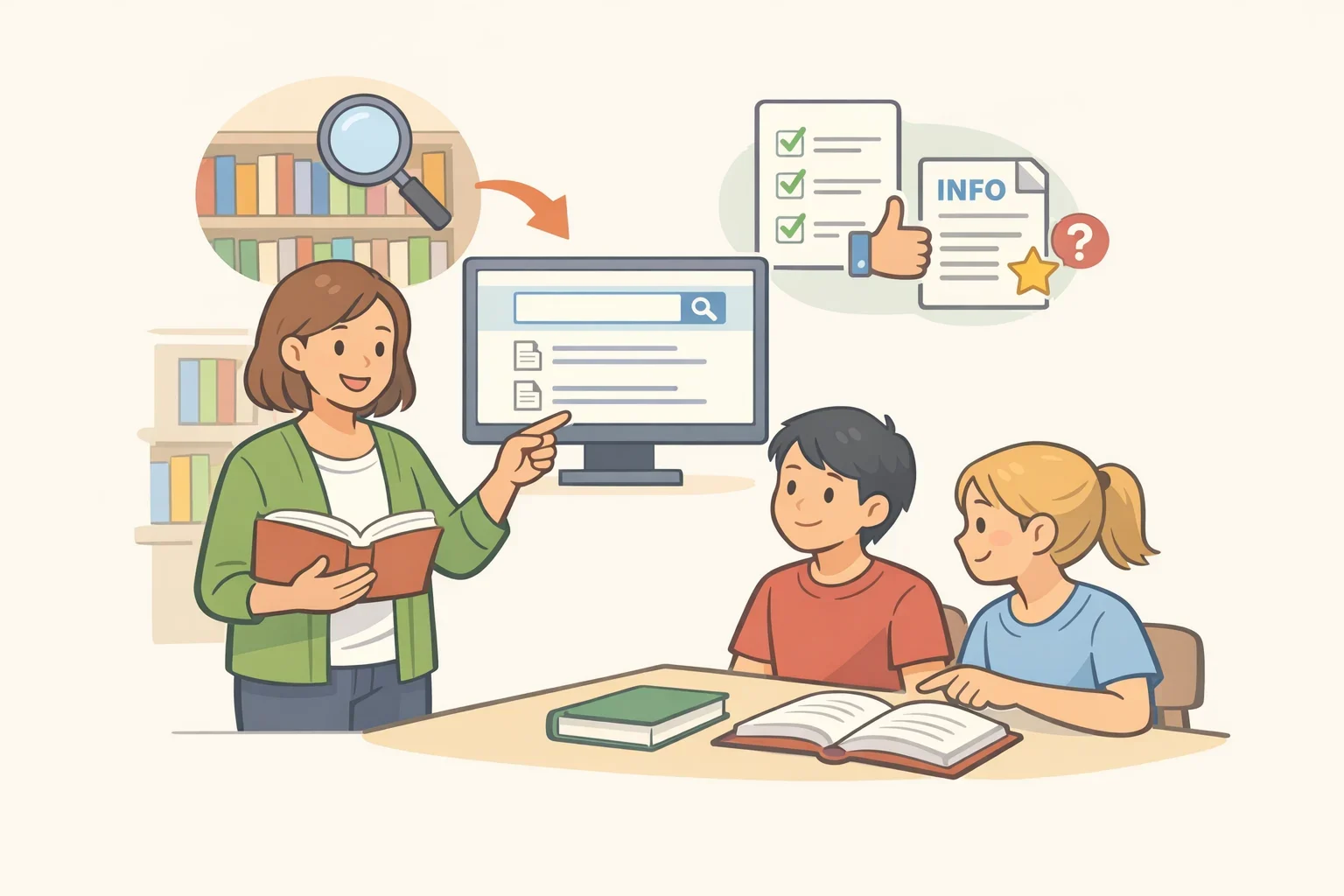
- Work changes: Moves from lesson planning and grading toward collection management, research support, and helping students and staff find information.
- Verify before applying: Whether the state education agency accepts an existing teaching certificate directly for a school library media position or requires added coursework, and whether it also requires a separate media-specialist exam.
Choosing a next step
Between the two paths with confirmed national wage data, instructional coordinators report the higher median: $74,720 versus $64,320 for librarians, a figure that blends school and public-library work (BLS; BLS). Instructional coordinator work also typically runs year-round, while school librarian roles usually keep a teacher's calendar with summers off. School counseling isn't part of this pay comparison, since the sourcing available for this article didn't include a matching BLS wage and outlook figure for that occupation specifically.
None of these figures is a promised local salary, and moving into any of these roles isn't a guaranteed upgrade over teaching. What matters most for an individual decision is what a specific district or library system is actually offering right now.
Pull current job postings for each title in the districts or library systems under consideration. Compare four things against the current teaching position: the credential actually listed as required, not preferred; the posted salary or salary schedule; the contract length and calendar; and whether the move changes seniority, tenure, benefits, or retirement credit. That last question is worth putting directly to HR or a union representative, since it depends on each district's contract rather than any national standard.
Then call the relevant state department of education, library certification board, or counselor licensing office to confirm which teaching credits, license, or years of experience would count toward that specific role, and to check current wage and outlook figures directly, including the BLS page for school and career counselors and advisors if counseling is on the list. That call can also show whether additional coursework is required before enrolling in anything.
